日本語
日本語 English

Rural Properties and Wastewater Systems in Japan
When people think of toilets in Japan, many imagine them as clean and highly advanced. However, this is not always the case in older houses in rural areas.
Water supply and sewage systems in Japan began to spread in urban areas in the late 1880s, but their expansion into rural regions was much slower. Most infrastructure development took place during the period of rapid economic growth from the 1950s to the 1970s. Today, the coverage rate for tap water is approximately 98%, while the sewerage coverage rate is approximately 80%, which is somewhat lower. (In rare cases, some houses are not even connected to the public water supply and instead rely on well water or natural spring water pumped for use.) In municipalities with populations under 50,000, sewer systems tend to be less developed.
As a result, it is not uncommon in rural areas to find houses that are connected to the water supply but not to a sewer system. In such cases, toilets are typically either pit latrine systems or septic tank systems.
A pit latrine system is a very simple method in which waste is collected in a tank beneath the toilet and periodically removed by a service before the tank becomes full.
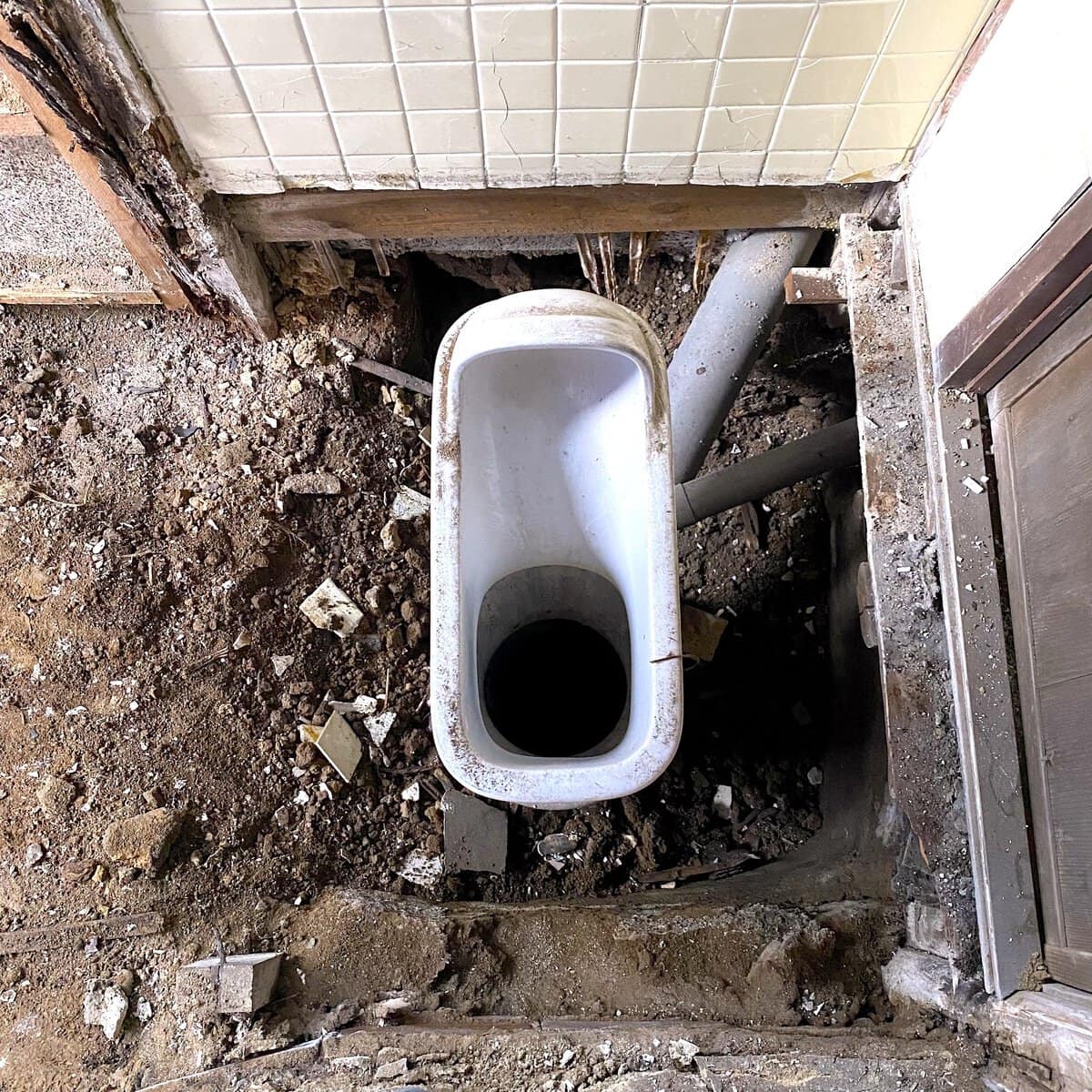
An old-style Japanese squat toilet. (The floor has been removed for construction work, but originally the fixture sits on top of the floor.) The user squats over the toilet and relieves themselves into a tank below, and as the tank fills up, waste can sometimes splash back. Although there is usually a ventilation system, strong odors are still common.
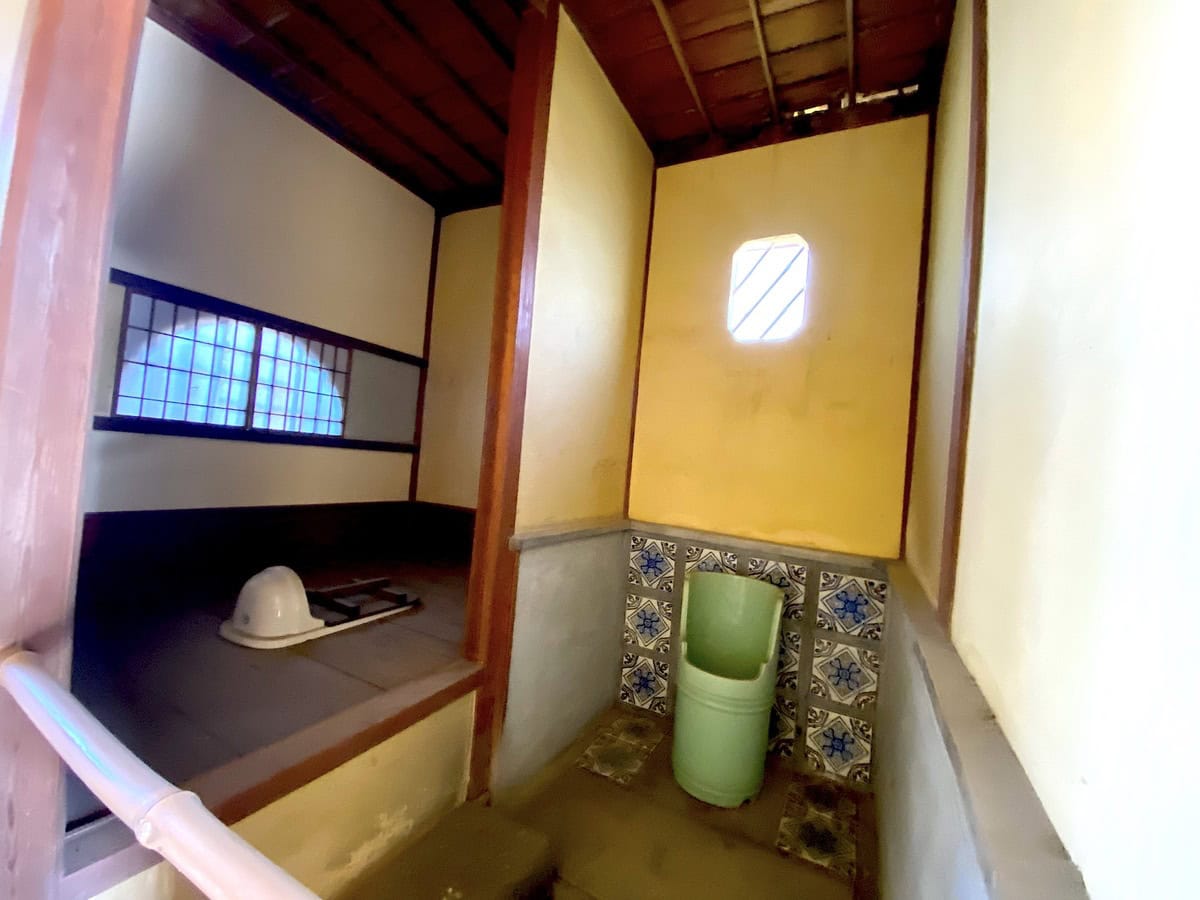
Ceramic urinals and a toilet preserved and displayed in an old sake brewery in their original condition. Ceramic toilets began to spread in Japan after the 1890s, and were considered luxury items at the time.
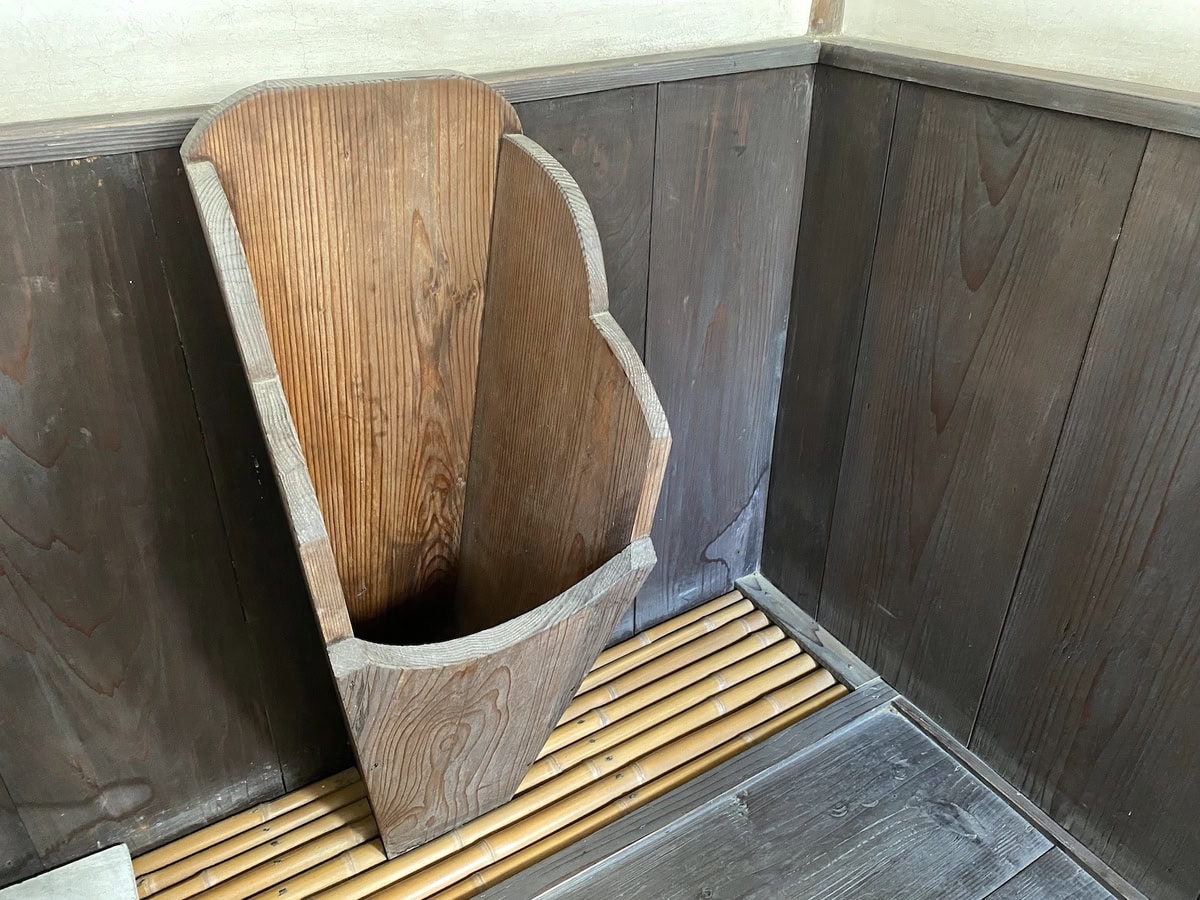
A wooden urinal preserved and displayed in an old samurai residence. Fixtures of this kind were intended for people of high status, and it was not until the modern era that ordinary people began using such well-crafted toilets.
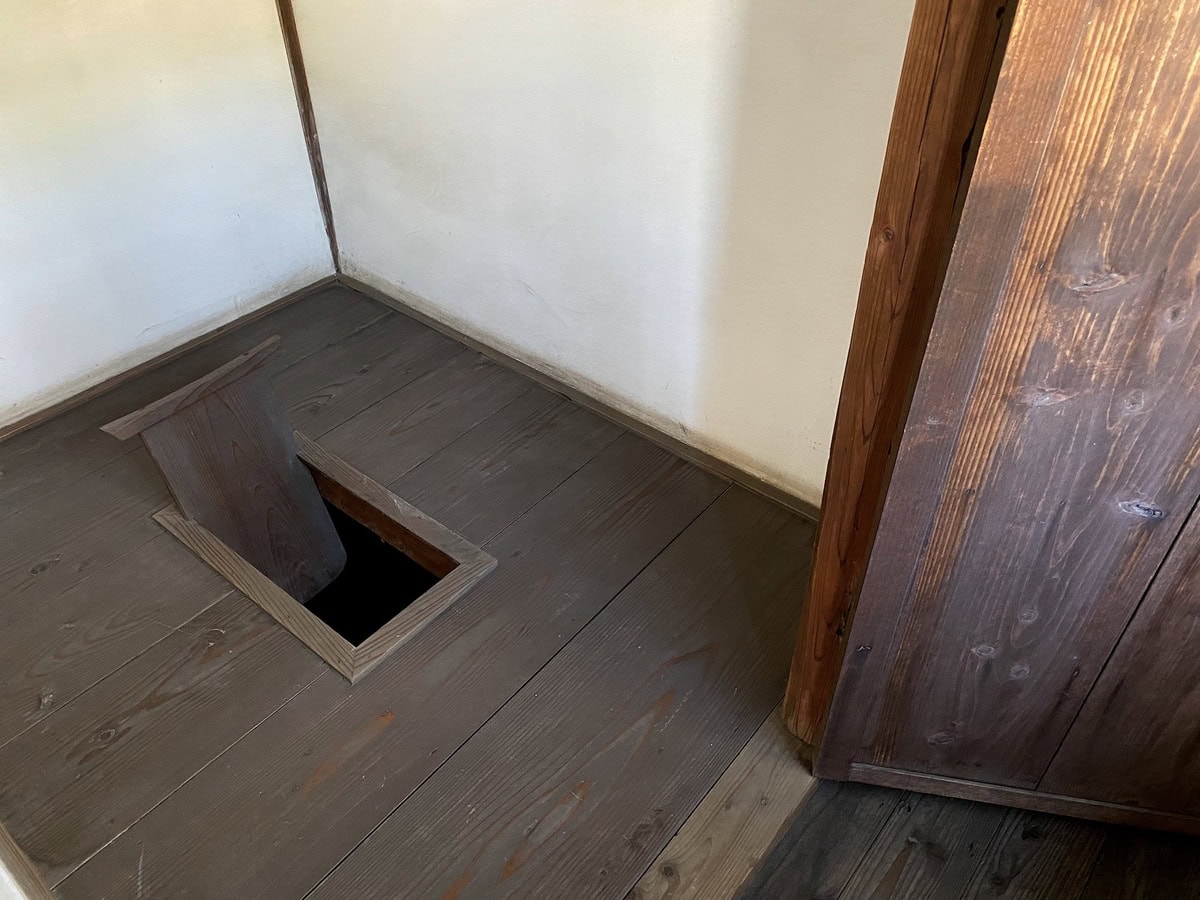
A wooden toilet preserved and displayed in an old samurai residence. Also this was used by people of high status. Samurai and wealthy individuals typically had more nutritious diets than commoners, and as a result, their human waste contained more nutrients and was traded at high prices as fertilizer.
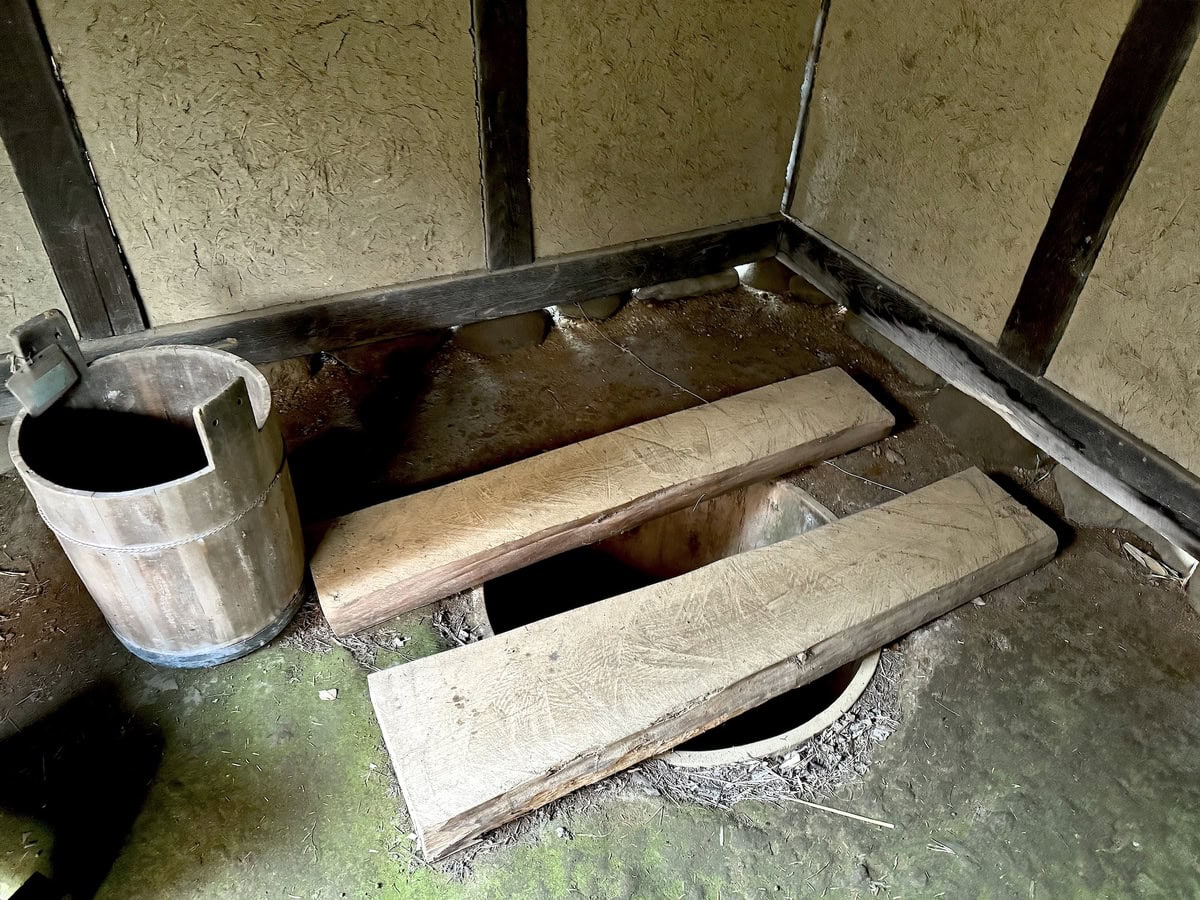
A farmer’s toilet. Two wooden planks are placed over a large container, and the user squats on top to relieve themselves. The waste collected in the container was later used as fertilizer.
Simple Flush Toilets
There are simplified flush toilets that use a small amount of water and can be installed with pit latrine systems. These are the cheapest option in terms of installation cost. However, if the storage tank is small, it fills up quickly even with minimal water use, making this option unsuitable for properties with frequent use.
When using a pit latrine (vault toilet), it is necessary to sign a contract with a waste collection company. The collected waste is typically pumped out using a vacuum truck once a month or every few months.
In most areas, collection is carried out on a fixed schedule for the entire neighborhood. As a result, if the tank becomes full and an unscheduled pickup is required, an additional fee—often significantly higher than the regular service cost—may be charged.
Problems are particularly likely to occur during the rainy season. In some cases, rainwater can enter the waste tank, causing it to fill up unexpectedly and rendering the toilet unusable.
Connecting to Sewer Systems
If you purchase a property with a traditional pit latrine, you will likely want to upgrade to a modern flush toilet.
If a sewer line runs along the road in front of the property, it is strongly recommended to connect to it. The cost of connection typically ranges from several hundred thousand yen to around one million yen. While not inexpensive, it is often cheaper in the long run than installing and maintaining a septic system.
Various procedures and applications are required for sewer connection, but if you hire a licensed contractor, they will usually handle these processes for you. In Japan, it is illegal for unlicensed individuals to perform water or sewer connections, so this work must always be carried out by certified professionals.
Septic Tank Systems (Johkasou: 浄化槽)
A septic tank system consists of a tank buried underground near the toilet. Microorganisms inside the tank break down human waste, and the treated water is discharged into roadside ditches or waterways, eventually flowing into rivers or the sea.
During this process, sludge and scum accumulate in the tank. Therefore, regular maintenance is required, including sludge removal, inspection and adjustment of microbial activity, checking that equipment is functioning properly, and replenishing disinfectants. The frequency of maintenance depends on the tank size and usage, but in general, routine inspections are carried out about three to four times a year, along with one legally required annual inspection. Local governments provide instructions regarding maintenance, and these rules must be followed.
Because of these requirements, annual maintenance costs typically range from around 50,000 to 90,000 yen, making septic systems more expensive to operate than sewer connections. However, in areas without sewer infrastructure, installing a septic tank is essential if you want a flush toilet.
Septic tanks also require a continuously running air pump to supply oxygen to the microorganisms. If a property has been vacant and the electricity has been shut off, the microorganisms inside the tank may have died, rendering the system nonfunctional. In such cases, the tank must be serviced by a maintenance company, and a notification of resumed use must be submitted to the local municipality.
Japan regulates septic systems under the Johkasou Act, and installation or use always requires notification to the local government. Violations can result in fines or even criminal penalties.
Installing a Septic Tank
If there is no sewer system nearby, installing a septic tank becomes the primary option.
The installation cost depends on the size of the tank and site conditions, but tank size is legally determined based on the total floor area of the building.
For example:
- Buildings under 130㎡ typically require a 5-person tank
- 130–200㎡ require a 7-person tank
- Over 200㎡ require a 10-person tank
Although smaller 2-person tanks exist, their use must be approved by the local municipality.
A typical 5-person septic tank costs approximately 700,000 to 1,200,000 yen to install. However, since the tank must be buried underground, costs can vary significantly depending on whether heavy machinery can access the site. In some cases, there may not even be enough space to install the tank, requiring additional planning.
When combined with the cost of replacing an old pit toilet with a modern flush system, total expenses can easily reach around 2 million yen.
If replacing an existing septic tank, additional costs for removing and disposing of the old tank will apply. If you are considering purchasing a property with a septic system, it is important to confirm whether it can still be used.
Costs, Subsidies, and Choosing Contractors
Both sewer connection and septic installation often cost over one million yen. However, depending on your eligibility—such as being married to a Japanese national or meeting local residency requirements—you may qualify for government subsidies that cover part of the cost. It is worth consulting your local municipality.
In any case, the first step is to contact a waterworks contractor to determine whether sewer connection is possible, whether a septic system is more realistic, and how much the work will cost.
Be aware that some contractors charge excessively high fees. In Japan, municipalities can provide a list of certified waterworks contractors, so it is safest to choose from those officially designated providers.
Finally, if your property is equipped with a septic tank, you should never turn off its power supply—even when you are away from the house for an extended period. The electricity that runs the air pump must be kept on at all times to prevent the microorganisms inside the tank from dying. A short power outage of around three days may still be manageable, but if the electricity has been off for more than a month, the system will almost certainly stop functioning.