

 日本語
日本語 English

The Magic of Cartier’s Artisans
Where the invisible art of savoir-faire takes shape
Craftsmanship has always fascinated me, ever since I was a child. Seeing how materials, shaped through the mastery of small human gestures, become masterpieces of jewelry, haute couture, or otherwise, is a wonderful experience. You have the opportunity to create something new and extraordinary.
The Cartier event “The Magic of Cartier's Artisans” hosted at the French Maison's Ginza boutique from February 7th to 23rd, explores - through photographs, workshops, and hands-on demonstrations - everything behind the grandeur of a brand that has shaped jewelry history.

Photo @ Matteo Belfiore
The exhibition, curated by YOKOMAE et BOUAYAD, unfolds across three levels, taking visitors on a journey through nature, architecture, and craftsmanship. The central element of the event is Cartier's most emblematic jewel: La Panthère.
The event welcomes visitors with a photography exhibition by Japanese photographer Rinko Kawauchi. The key moments in the making of La Panthère are recounted through delicate shots that capture moments of absolute concentration: hands carving, polishing, and shaping document the process of creating this jewel, which, even today, years later, continues to enchant us.

Photo @ Matteo Belfiore

Photo @ Valentina Cannava

Photo @ Valentina Cannava

Photo @ Valentina Cannava

Photo @ Matteo Belfiore
Venturing to the second floor, visitors find themselves immersed in an installation composed of faces. Female faces hidden behind every single carving, every inlay. A celebration of women, those who have played a fundamental role in the history of Cartier, like Jeanne Toussaint, mother of La Panthère.
A simple yet impactful installation. A sinuous path, reminiscent of the movement of a feline, punctuated by stones and photographs of the “Women of Cartier” - allow me a poetic license.

Photo @ Matteo Belfiore

Photo @ Matteo Belfiore

Photo @ Matteo Belfiore

Photo @ Matteo Belfiore

Photo @ Matteo Belfiore

Photo @ Matteo Belfiore

Photo @ Matteo Belfiore

Photo @ Matteo Belfiore
Stone, the material from which everything is born, is the element that gives life to the jewel, as Master Glyptician Philippe Nicolas, appointed Maître d’Art in 2008, explains.
It is the stone that dictates the jewel, not the other way around. The stone is chosen - it must possess very specific characteristics - and only once selected, usually in Tucson, USA, does the project begin and the decision on what to create is made.
I confess that I always thought the process was reversed: first the design, then the material. It was a great discovery and a magnificent experience listening to Philippe Nicolas talk about his work. What struck me most was his passion, perceptible in every word, along with the energy with which he described the various phases of the creative process.

Photo @ Matteo Belfiore
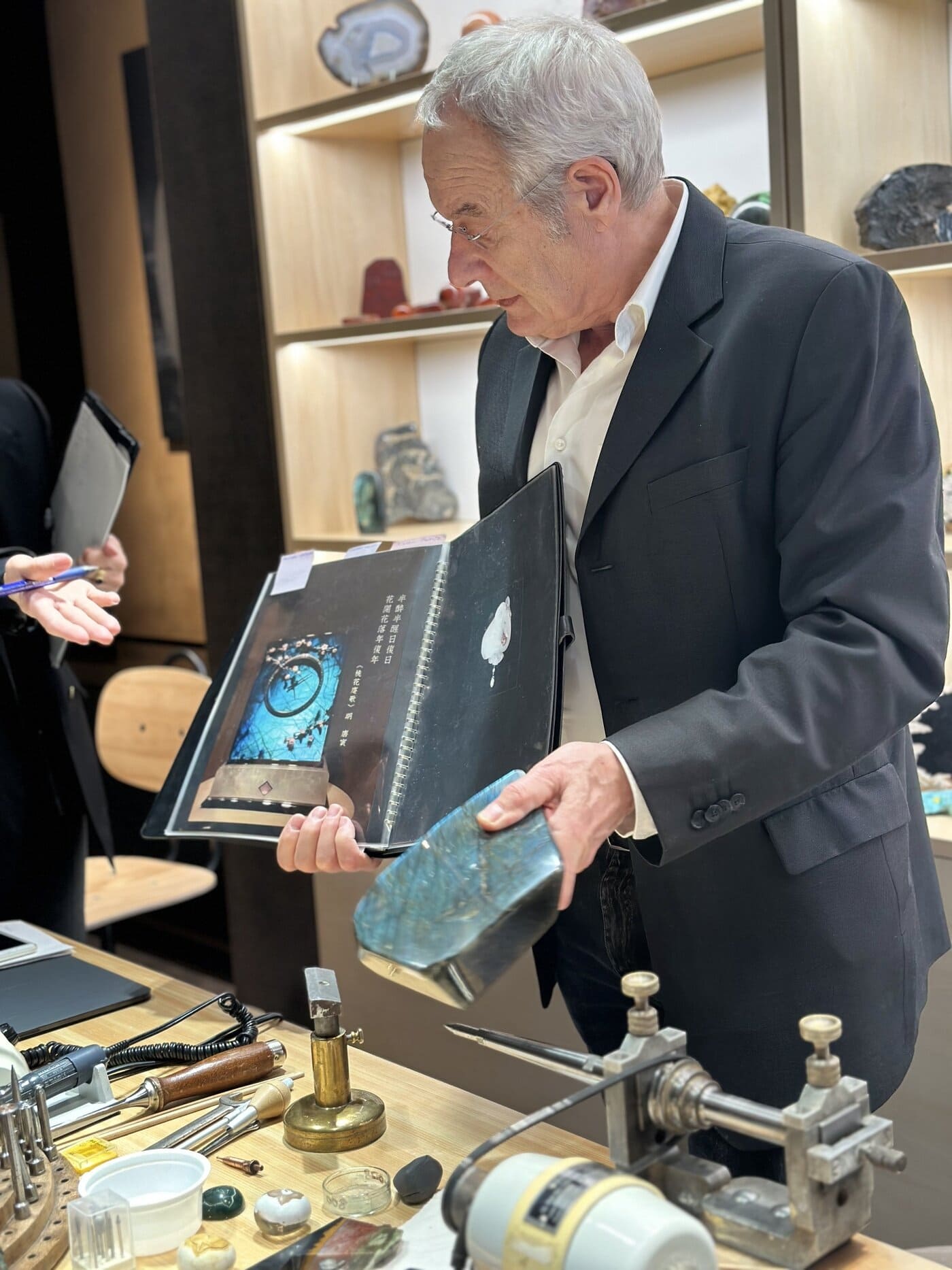
Photo @ Valentina Cannava

Photo @ Valentina Cannava
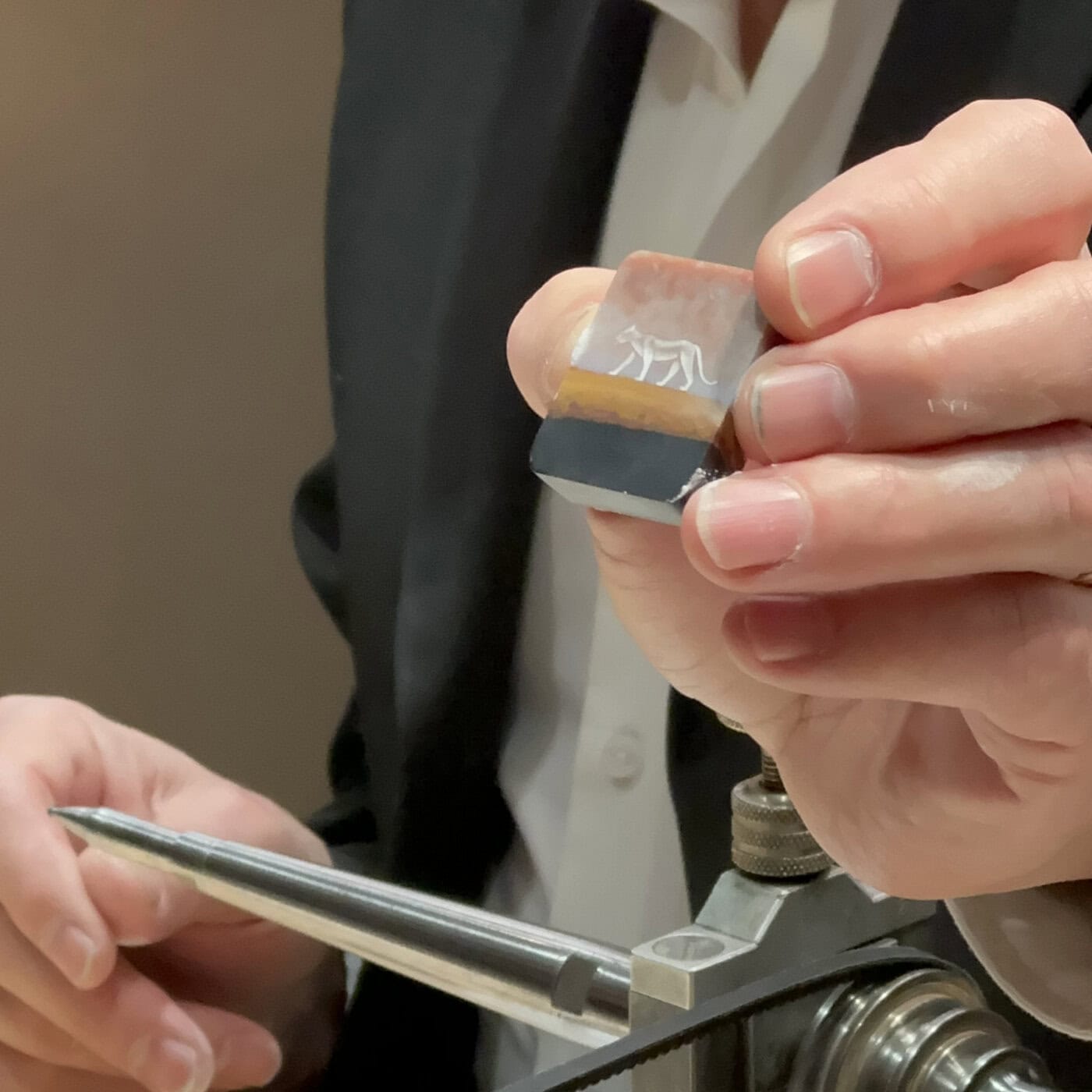
Photo @ Valentina Cannava
The top floor hosts seven international artisans from diverse fields and disciplines, including metalwork, decorative painting, and rye crafting. Each brings with them specific knowledge, built on handed-down skills, technical precision, and a profound sensitivity to the material.
Among the artisans present is Xiaobei Dong, a Chinese artist specializing in decorative painting and embroidery, who has been collaborating with Cartier since 2023.
From Japan, Ryo Hikosaka, a master of metalwork and patinas, began his collaboration with the French Maison more recently, in 2025.
From France, Atelier Lison de Caunes (Maître d'Art – straw marquetry), present from February 7th to 15th, has been collaborating with Cartier since 2019.
Also from France, Hervé Obligi, a Maître d'Art specializing in lapidary and semiprecious stone marquetry, has been collaborating with the Maison since 2001.
From Togo, Sika Viagbo (Maître d'Art – mosaic), present from February 18th to 23rd, has worked with Cartier since 2015, bringing a unique vision that blends tradition and modernity.
Also from France, Jean-Noël Turquet, representing Atelier Midavaine (lacquer art, February 7-15), has collaborated with Cartier since 2015; one of his works is also visible inside the elevator of the Ginza boutique.
Cédric Peltier, a French artist specializing in decorative painting and gold leaf, will close the exhibition from February 17th to 23nd and has been collaborating with Cartier since 2021.
Live demonstrations transform the exhibition space into a true open laboratory. Here, the creative process takes shape before the public's eyes, where technique and intuition interact in real time.
The visitor is thus invited to witness a rare and precious moment, where the boundary between exhibition and creation dissolves, restoring craftsmanship to its most authentic value: that of making, of knowledge, and of the transmission of knowledge.

Photo @ Valentina Cannava
Xiaobei Dong

Photo @ Valentina Cannava Xiaobei Dong

Photo @ Matteo Belfiore
Atelier Lison de Caunes
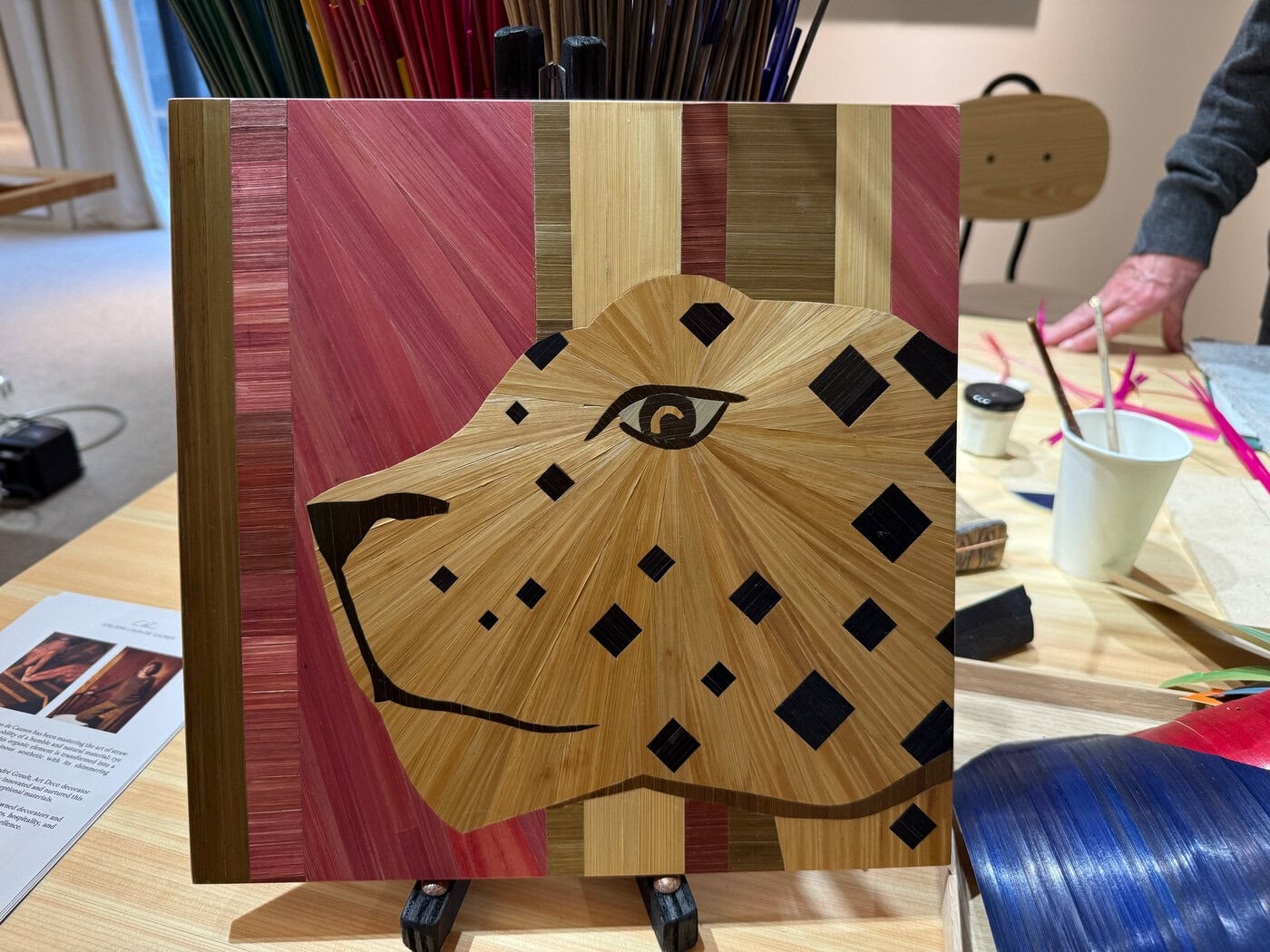
Photo @ Matteo Belfiore
Atelier Lison de Caunes

Photo @ Matteo Belfiore
Atelier Midavaine
“The Magic of Cartier's Artisans” is a reflection on the value of time, the responsibility of design, and the centrality of manual skill in an age dominated by speed and reproducibility. It's an invitation to slow down, observe, and recognize that true luxury today lies in the quality of the process as much as the final result.

