

 日本語
日本語 English

In his famous essay Orientalism (1978), the American writer Edward Said examined the ways in which Western thought has gradually fashioned a monolithic and stereotyped conception of the ‘East’. Across many centuries, literature, the visual arts and popular culture - from Rudyard Kipling to Gustave Flaubert - contributed to the consolidation of a fixed and recurring set of images: exotic figures, static and absolute moral codes, and societies portrayed as fixed in character and immutable over time …
The figure of the samurai, deeply rooted in Japanese history, has also gradually entered these representational dynamics. Idealised as the embodiment of an ‘ancient and spiritual’ Japan or shaped into the archetype of an exotic and enigmatic warrior, the figure of the samurai has often been reimagined through an external perspective that has emphasised its most symbolic traits. Whilst it is true that also in modern Japan, even amid the transformations of the Meiji period, tradition underwent new interpretations, the consolidation and broad circulation of this representation occurred chiefly in the Western world, where it was propagated through in literature, scholarly studies and, later, popular culture.
An exhibition at the British Museum in London, open until May 2026, sets out to explore the history of the samurai, examining the enduring fascination they hold in Europe while also challenging the myths that have grown around them, thereby offering a nuanced perspective that brings together historical inquiry and cultural impact.
The stage is set! Once past the spectacular Great Court designed by Norman Foster, the curtain rises and visitors are transported into the world of the samurai, which in this exhibition has been skilfully arranged into three major ‘acts’: war (800–1600), peace (c. 1600–1850) and myth (from 1876 onwards). From the very entrance - where a complete suit of armour with an iron helmet, silk, wool, leather, gold and lacquer stands on display - visitors learn that the terms used in Japan to designate this warrior class are bushi (武士) and musha (武者). The world ‘samurai’, though derived from the Japanese verb saburau, meaning ‘to serve’ – gained wide currency in the West primarily as a label for the myth that arose from it …

Figura 1 Suit of armour and helmet Iron, silk, wool, leather, gold and lacquer, Japan, 1519 (helmet), 1696 (armour) and
1800s (textiles) Purchase made possible by the JTI Japanese Acquisition Fund. © The Trustees of the British Museum

Figura 2 Samurai Exhibition © The Trustees of the British Museum
The first part of the exhibition contextualises the formative years of these skilled warriors who, as imperial power declined, increasingly asserted their dominance through military force, beginning with the Minamoto shogunate in 1191. Bows, swords, armour with finely woven lacquered plates and related artefacts on display in the exhibition crystallise this martial dimension of the samurai, the aspect most familiar to Western audiences. Yet for a visitor in London, a more unexpected revelation emerges: battlefield success alone did not define a samurai. The legitimisation of one’s warrior supremacy also relied upon fervent cultural engagement. The exhibition demonstrates how interactions between shoguns, daimyo and various allies were structured around highly ritualised social gatherings, centred on the preparation of tea, set in venues richly furnished with tea sets and folding screens, often adorned with springtime motifs …

Figura 3 Folding screen Ink, silver and gold on paper, Japan, 1500–1600 © The Trustees of the British Museum
Visitors to the exhibition can thus see that the role of the samurai extended far beyond to the art of warfare. These warriors were also patrons and promoters of sophisticated artistic and cultural forms: they sponsored Nō theatre, encouraged new interpretations of Zen, and actively engaged in the spiritual life of their time. Some even embarked in diplomatic missions to Europe, acting as a bridge between distant cultures: most notably the 1585 mission, which reached Pope Gregory XIII, and the 1613 mission, of a more commercial nature, which involved Spain and Italy. The samurai’s far-reaching connections reveal then a world in which Japan and were far from impermeable, but already engaged in dialogue and exchange …
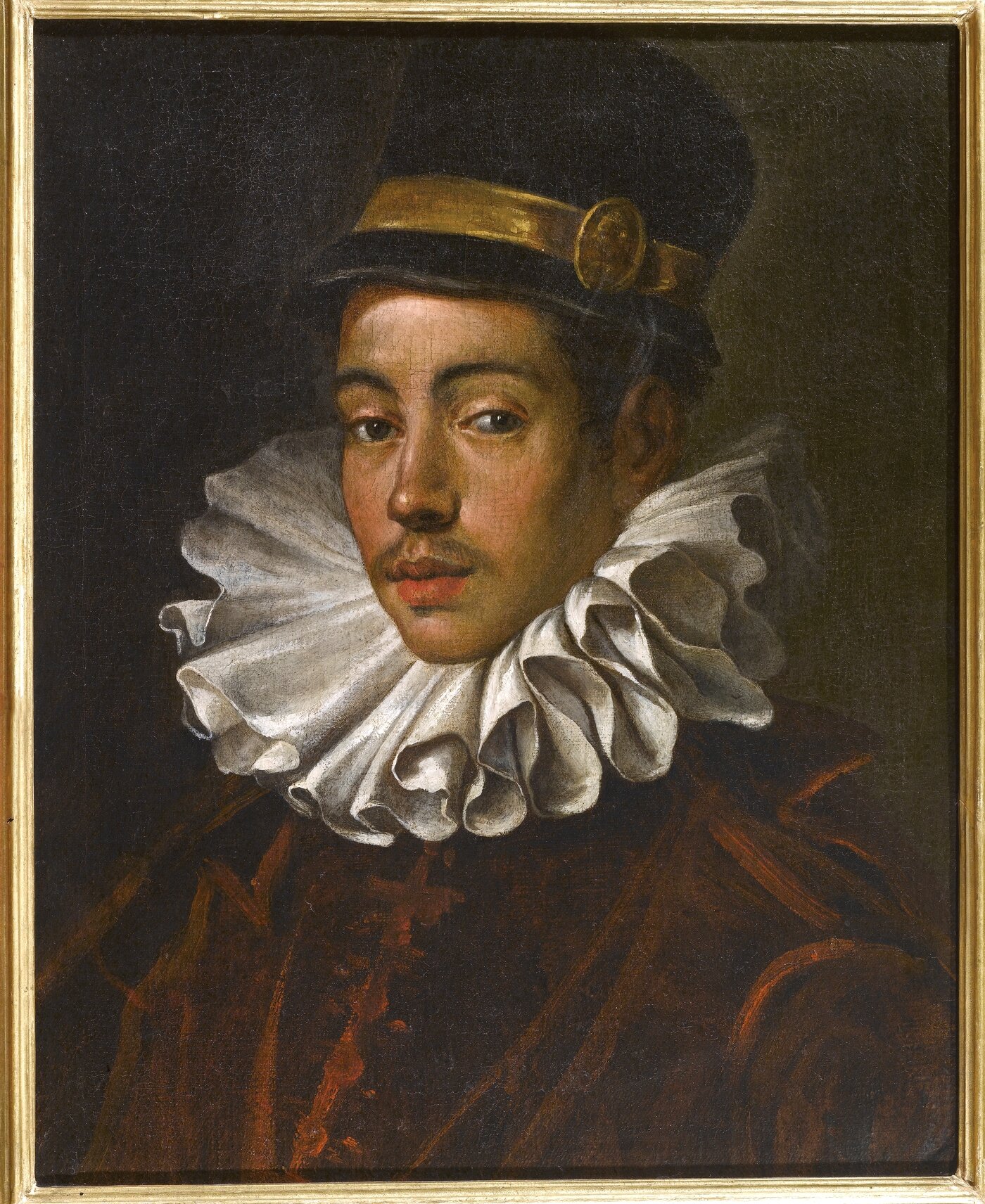
Figura 4 Domenico Tintoretto, Portrait of Itō Mancio Oil on canvas, Italy, 1585 Property of Fondazione Trivulzio, Milan

Figura 5 Samurai Exhibition © The Trustees of the British Museum
Against the backdrop of military leader Tokugawa Ieyasu’s triumph in 1615 and the establishment of the Tokugawa Shogunate, the exhibition examinates how the role of the samurai evolved during this era of peace and prosperity. With the end of the constant conflicts between rival clans, the samurai’s role shifted from open warfare to the management of lands and the administration of domains, encompassing a vast array of civil and bureaucratic duties. Remarkably, women made up half of this class, highlighting their active participation in the social and administrative life of the period …

Figura 6 Samurai Exhibition © The Trustees of the British Museum
This transformation, which challenges the purely masculine and warlike ideal of the samurai often portrayed in the West, is illustrated by a variety of artefacts on display, such as a woman’s firefighting jacket and hood from an all-female firefighting company, whose duties included raising the alarm, supervising firefighting and evacuations, and preventing looting…

Figura 7 Woman's firefighting jacket and hood Wool, satin-weave silk appliqué, and silk- and goldthread embroidery, Japan,
1800–50 John C. Weber Collection. Photo © John Bigelow Taylor.
Visitors to the British Museum can explore how Edo, the seat of shogunate power, became the world’s largest urban centre over these centuries, animated by a class of samurai who devoted themselves not only to their institutional duties, but also to the arts, the consumption luxury goods, and also the pleasures of the kabuki theatre and the flesh in the floating world of Yoshiwara …

Figura 8 Samurai Exhibition © The Trustees of the British Museum
As the pax nipponica guaranteed by the Tokugawa period took hold, and the memory of centuries of civil wars faded into the shadows of the past, many works of art were created to commemorate the memory of the samurai. Among the highlights of the exhibition is a hanging scroll by Hokusai depicting Minamoto no Tametomo in the act of confronting the inhabitants of the Isle of Demons …

Figura 9 Katsushika Hokusai, Minamoto no Tametomo on the Isle of Demons Hanging scroll painting, ink and colours on
silk, Japan, 1811 © The Trustees of the British Museum
And so the myth of the samurai took even firmer hold - a theme explored in the third and final section of the exhibition. Following the opening of Japan’s ports to European and American trade in 1850s, and the radical social upheavals that culminated in the fall of the shogunate, the samurai class was officially abolished in 1869 …

Figura 10Samurai Exhibition © The Trustees of the British Museum
In an era of profound change, how should one relate to a figure so deeply embedded in history and significance? Nitobe Inazō offered his answer with the publication of the book Bushido: The Soul of Japan, portraying a chivalrous vision of Japan and drawing several parallels with the European Middle Ages … This reinvigorated ethos, imbued with strength, valour and courage, was layer harnessed to foster a growing nationalist patriotism, as evidenced in the exhibition by this 1939 disc featuring a statue of Kusunoki Masashige …

Figura 11 Dish with statue of Kusunoki Masashige Porcelain, Japan, 1939 © The Trustees of the British Museum
On other continents – such as Europe, where the exhibition is taking place – the expanding circulation of knowledge, images and cultural products fuelled by globalization contributed to the establishment of a similar, yet still partial, portrayal of the samurai, which identified them almost exclusively as warriors associated with the art of the sword. This perception has been reinforced by several incubators of modern mass culture: from Darth Vader (a veritable samurai of the Galactic Empire) to Hollywood productions such as The Magnificent Seven or The Last Samurai, and even by video games like Nioh 3, which allow teenagers worldwide to become samurai from the comfort of their own homes …

Figura 12 Still from the videogame Nioh 3, 2026 Koei Tecmo

Figura 13 Modern times … Duck and Man 2025, by Noguchi Tetsuya. Photograph: The Trustees of the British Museum
In conclusion, this exhibition reveals how samurais were much more than warriors, as they are often misunderstood. Their true history is, in fact, one of evolution and adaptation, from their original role as medieval mercenaries sensitive to their later role as refined administrators, patrons of the arts, and guardians of civic and cultural life ... In an age when their legend continues to be an inexhaustible source of fascination, one question naturally arises: how will the representations of the samurai evolve in the future?

Figura 14 Samurai Exhibition © The Trustees of the British Museum
