日本語
日本語 English

Due to population decline caused by factors such as young people moving to urban areas and a declining birthrate, vacant houses have been increasing in rural parts of Japan. As a result, properties can sometimes be purchased at surprisingly low prices.
Among these properties, some are hidden gems, while others can become nothing more than financial burdens after purchase. One of the most typical examples of problematic properties is what is commonly referred to as a “non-rebuildable property.”
In this article, I will explain what non-rebuildable properties are and why they can be risky.
To understand why such properties exist, it is important to know that Japan’s Building Standards Act is revised frequently. As regulations are updated, buildings that complied with older standards may no longer meet current ones. These buildings are generally referred to as “non-conforming existing buildings.” In fact, most second-hand properties in Japan fall into this category.
Although these buildings do not meet current standards, they are not considered illegal as long as they complied with the regulations at the time they were built. Therefore, buying and selling such properties is legally permitted.
However, problems arise when carrying out large-scale renovations. In such cases, a building confirmation application is required, and the building must be upgraded to meet current standards. Whether this is possible or not becomes a critical issue.
A non-rebuildable property goes a step further: the land itself does not meet current building regulations. As a result, once the building is demolished, it is no longer possible to construct a new building on that land.
There are two main types of non-rebuildable properties:
- Properties that do not have at least 2 meters of frontage on a road that is at least 4 meters wide
- Properties located in areas where residential construction is not permitted, such as agricultural land
In the second case, the issue can often be resolved if the land use can be changed to residential zoning. Therefore, it is important to confirm whether such a change is possible before purchasing. These types of properties are sometimes found in rural farming areas or industrial zones.
The more problematic case is the first one, which relates to the “road access requirement.” This rule exists to ensure that emergency vehicles such as fire trucks and ambulances can reach buildings in the event of disasters or medical emergencies. However, many older neighborhoods were built before cars became common, and they often contain narrow alleys where vehicles cannot pass. Buildings located in such areas may become non-rebuildable if demolished.
In the past, the requirements for building confirmation applications were less strict, and many small two-story wooden houses could be renovated without such approval, even if they were on nonrebuildable land. However, due to revisions to the Building Standards Act in 2025, the requirements have become stricter. Now, even for two-story wooden buildings, if more than half of the structure is renovated, a building confirmation application is required, and the building must comply with current standards. As a result, large-scale renovations of non-rebuildable properties have become more difficult.
That said, even if a property does not meet the road access requirement, it may still be possible to rebuild or carry out major renovations if additional adjacent land is purchased to secure the required access. In some cases, buyers purchase both a property facing a road and a non-rebuildable property behind it, thereby satisfying the requirement and making use of what would otherwise be a problematic asset.
Because of their limitations, non-rebuildable properties are often sold at extremely low prices, given away for free, or even transferred along with a financial incentive. Property ownership in Japan is subject to annual fixed asset taxes, but such taxes may be lower for non-rebuildable land.
In rare cases, groups of young people with limited financial resources renovate these properties themselves and move in, gradually forming creative or cultural communities. This can occasionally turn areas filled with what were once considered liabilities into popular neighborhoods.
However, in most cases, the disadvantages outweigh the benefits. Owners often face difficulties not only in rebuilding or carrying out major renovations but also in reselling the property or obtaining mortgage financing.
It is also important to understand that if a non-rebuildable property is destroyed by disaster or collapse, rebuilding may not be permitted under current regulations.
In addition, Japan’s tax system provides significant reductions for land with residential buildings. If the building is removed, these tax benefits are lost, and property taxes and city planning taxes can increase to three to six times their previous amount. This means that if a non-rebuildable property is cleared, the owner may be left paying high taxes on land that cannot be used for construction. At the same time, leaving a deteriorating building in place poses risks to surrounding properties.
Another factor to consider is that demolition costs tend to be much higher, as many of these properties are located in areas inaccessible to vehicles or heavy machinery.
What should you do if you unknowingly purchase a non-rebuildable property?
The first option many people consider is selling it, even at a low price. In some cases, buyers can still be found if the building is in good condition, offers a desirable location or view, or can potentially meet road access requirements when combined with neighboring land.
However, if these conditions are not met, finding a buyer can be very difficult.
As a last resort, there is a system known as the “Land Inheritance to the National Government System,” which allows owners to transfer unwanted land to the government after demolishing any existing structures. However, this system does not guarantee acceptance. The government will review each application and only accept land that meets certain conditions.
For example, applications may be rejected if property boundaries are unclear, if there are existing mortgages, if the land is contaminated or contains buried objects, or if management costs are expected to be high. In such cases, the owner may be left with vacant land and increased tax burdens.
It is also important to note that this system does not involve the government purchasing the land. Instead, the owner must pay a fee to transfer ownership, including administrative costs and an amount equivalent to approximately ten years of land management expenses, typically totaling several hundred thousand yen. The review process itself can take around eight months.
If you are considering purchasing inexpensive real estate in Japan, it is essential to fully understand why the property is priced so low before making a decision.
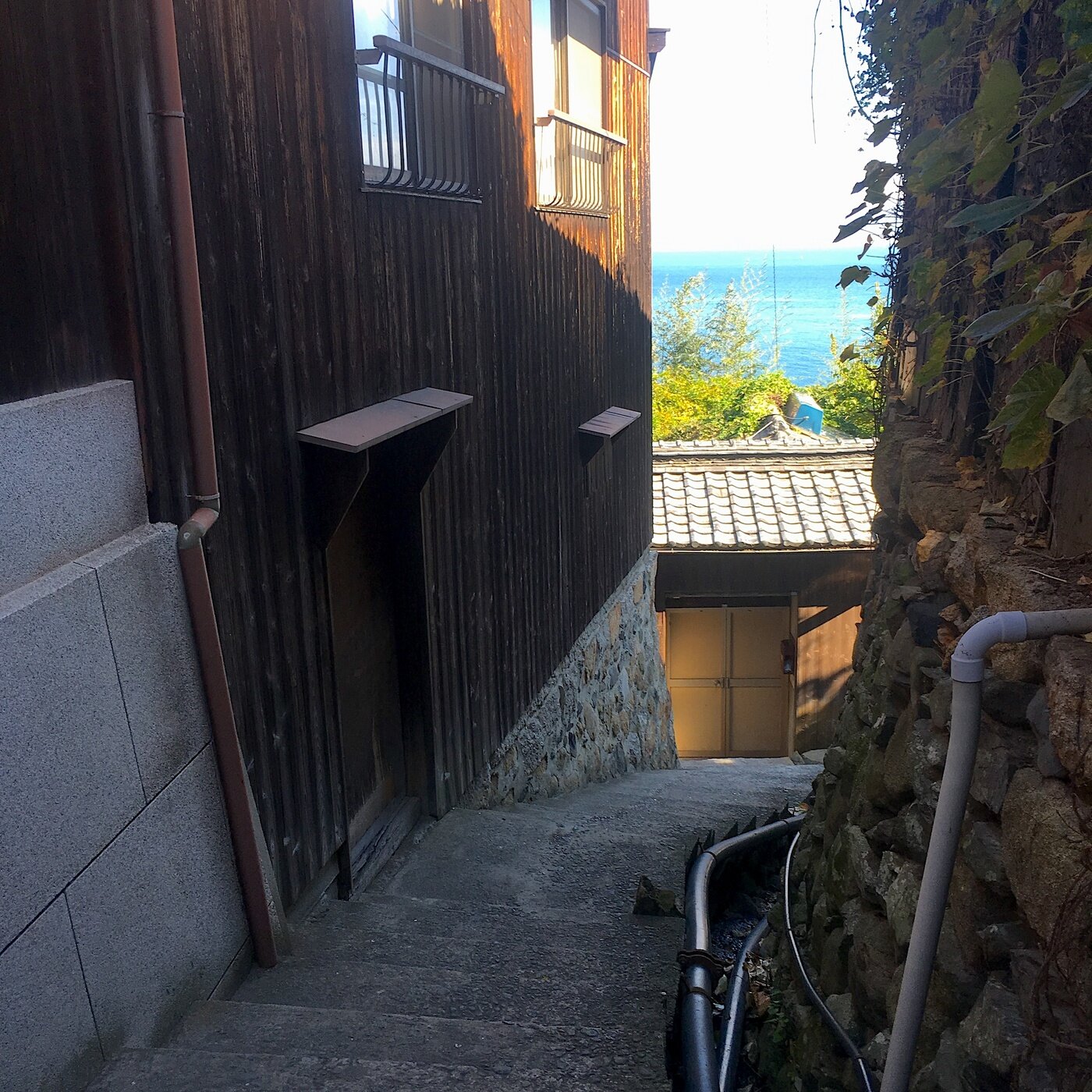
Narrow alleys and intricate stairways woven between old Japanese houses create beautiful and atmospheric scenery. However, Japan’s current building regulations leave little room for preserving such environments. Only in rare cases—when buildings or streetscapes are officially recognized and protected as cultural assets—are exceptions granted that relax these regulations for properties otherwise classified as non-rebuildable.