

 日本語
日本語 English

レジリエントな未来のための遺産の再構築: イル・ベルテ島における建築の刷新
カナダ東部に流れるセント・ローレンス川に浮かぶ、わずか50人の定住者しかいない小さな島、イル・ベルテで、先見性のある建築プロジェクトが、消えつつある島の風土遺産に新たな命を吹き込んだ。アトリエ・ピエール・ティボーが率いるこのプロジェクトは、「ブーカナリー」と呼ばれる古い魚の燻製小屋を、地域社会を巻き込み、持続可能な将来の用途を探求するコンセプチュアルなインスタレーションに再解釈した。気候の問題、文化の喪失、地方の孤立に対する深い回答を表すプロジェクトとして2025年にヴェネチア・ビエンナーレで開催される第19回国際建築展で、コルデリー・デル・アルセナーレにおいて2025年5月10日(土)から11月23日(日)まで展示されている。
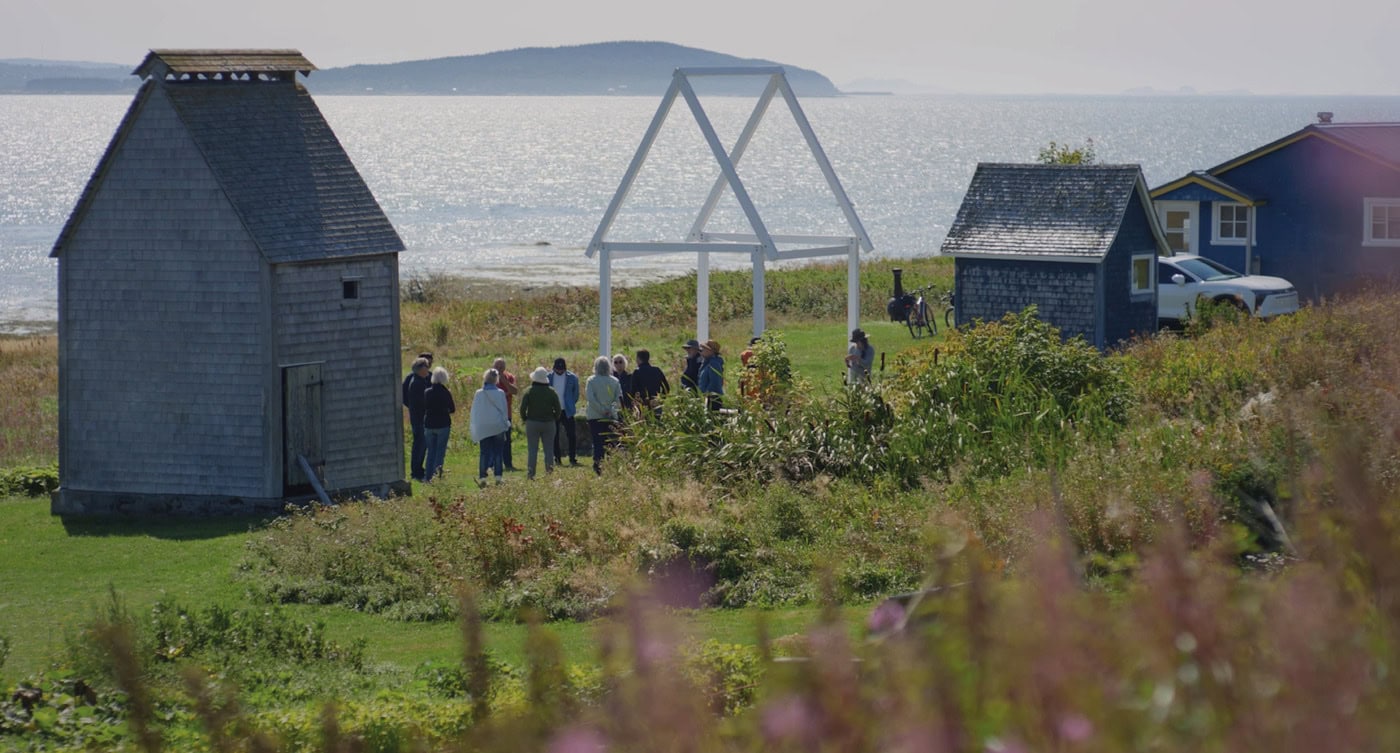
Documentary freeze-frame. Community dialogue. Meeting with the residents of Île Verte
Photo credit: Atelier Pierre Thibault
The Atelier Pierre Thibault team and intern students from Université Laval.
Photo credit: Alex Lesage
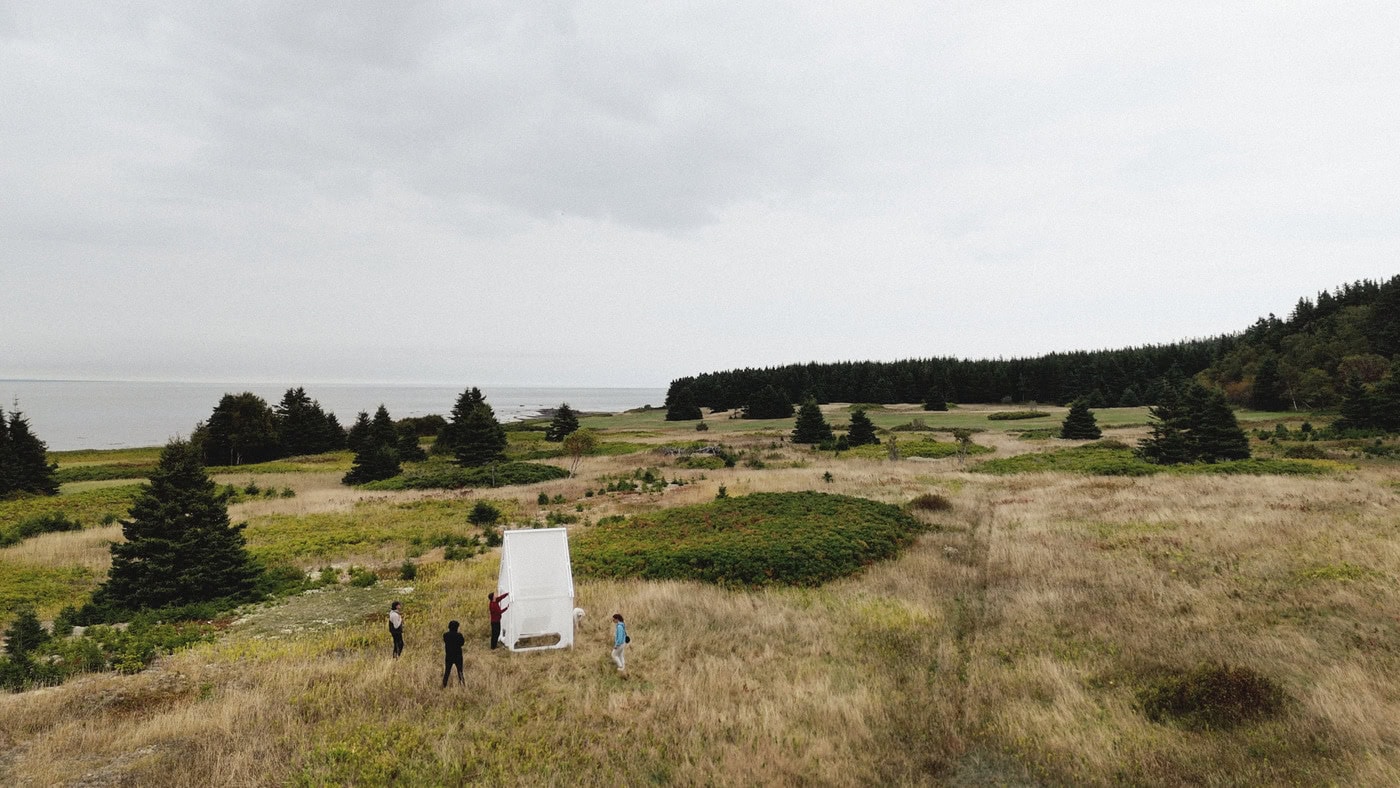
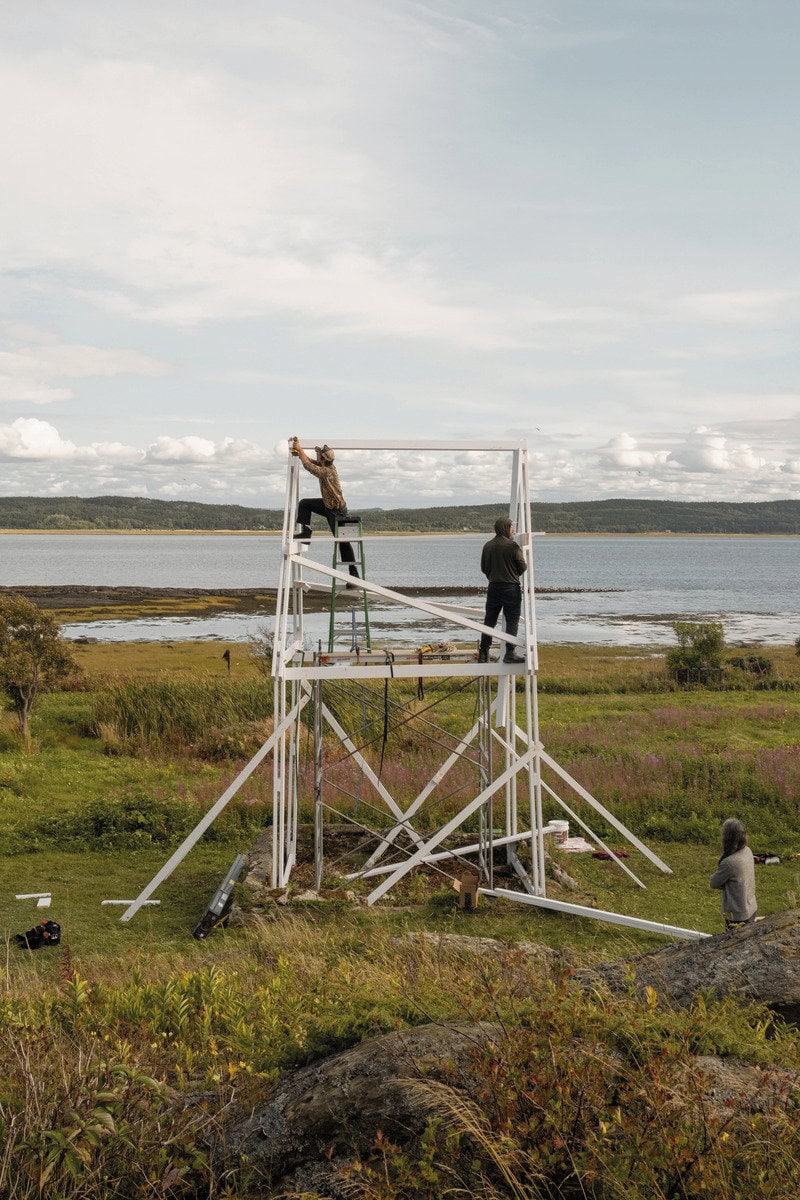
Assembling of one of the four architectural installations
Photo credit: Alex Lesage
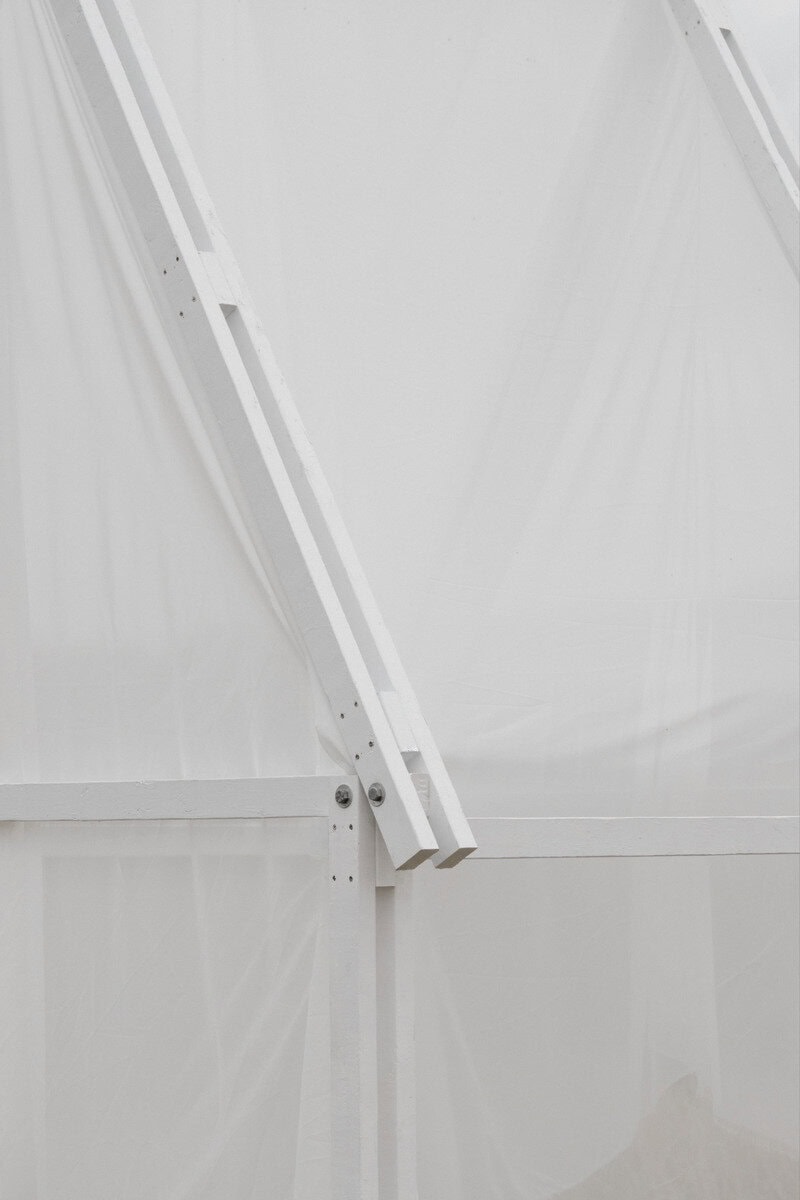
Echoing the spirit of the original vernacular structures, these new installations embraced the simplicity and efficiency of contemporary timber construction.
Photo credit: Alex Lesage
危機に瀕した脆弱な遺産
イル・ベルテには、1920年代から1980年代にかけて建てられたブーカナリーが12軒残っており、かつては島の経済と文化に欠かせないものだった。2023年に建築家であり遺産の専門家であるパスカル・レトゥルノーは、これらの建物のうち10棟が高い遺産価値または特別な遺産価値を保持していると報告している。しかし、その多くは老朽化が進んでおり、少なくとも1つは崩壊。劣化が進んでいるにもかかわらず、ブーカナリーは、高くて狭い形、屋根の棟の開口部、乾燥と湿度調整のためのシステムなど、ユニークな建築的特徴を保っていた。
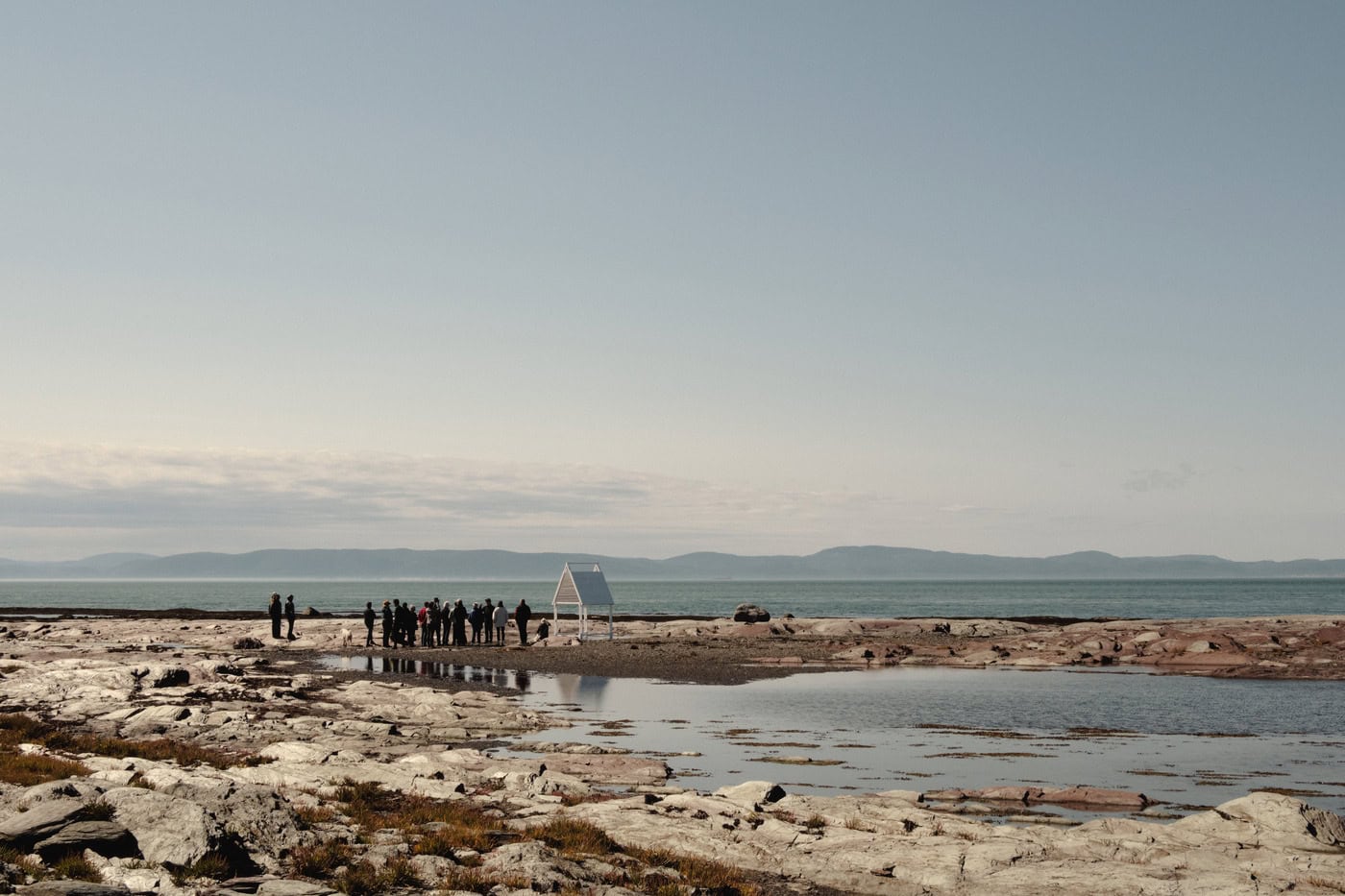
Community dialogue through participatory discussion sessions
Photo credit: Alex Lesage
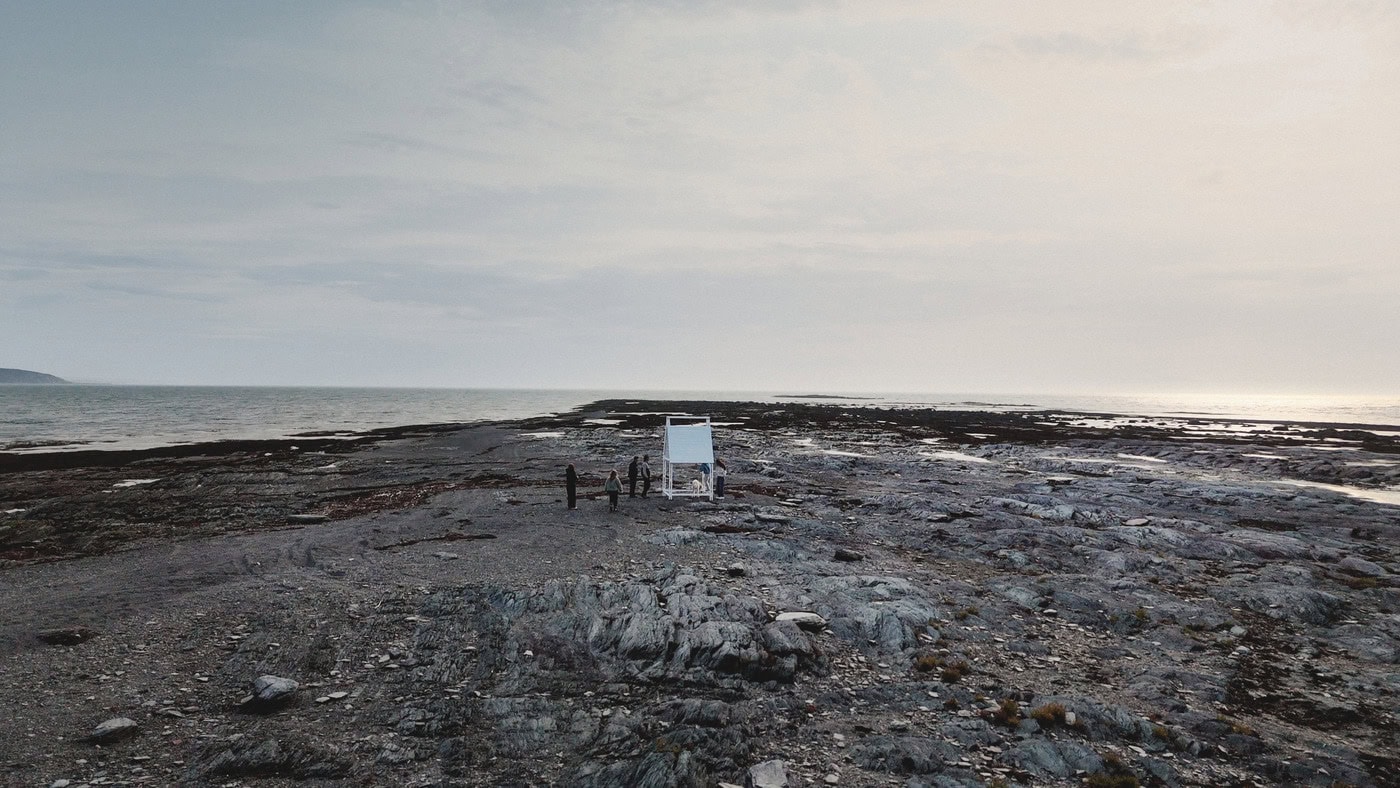
Photo credit: Alex Lesage
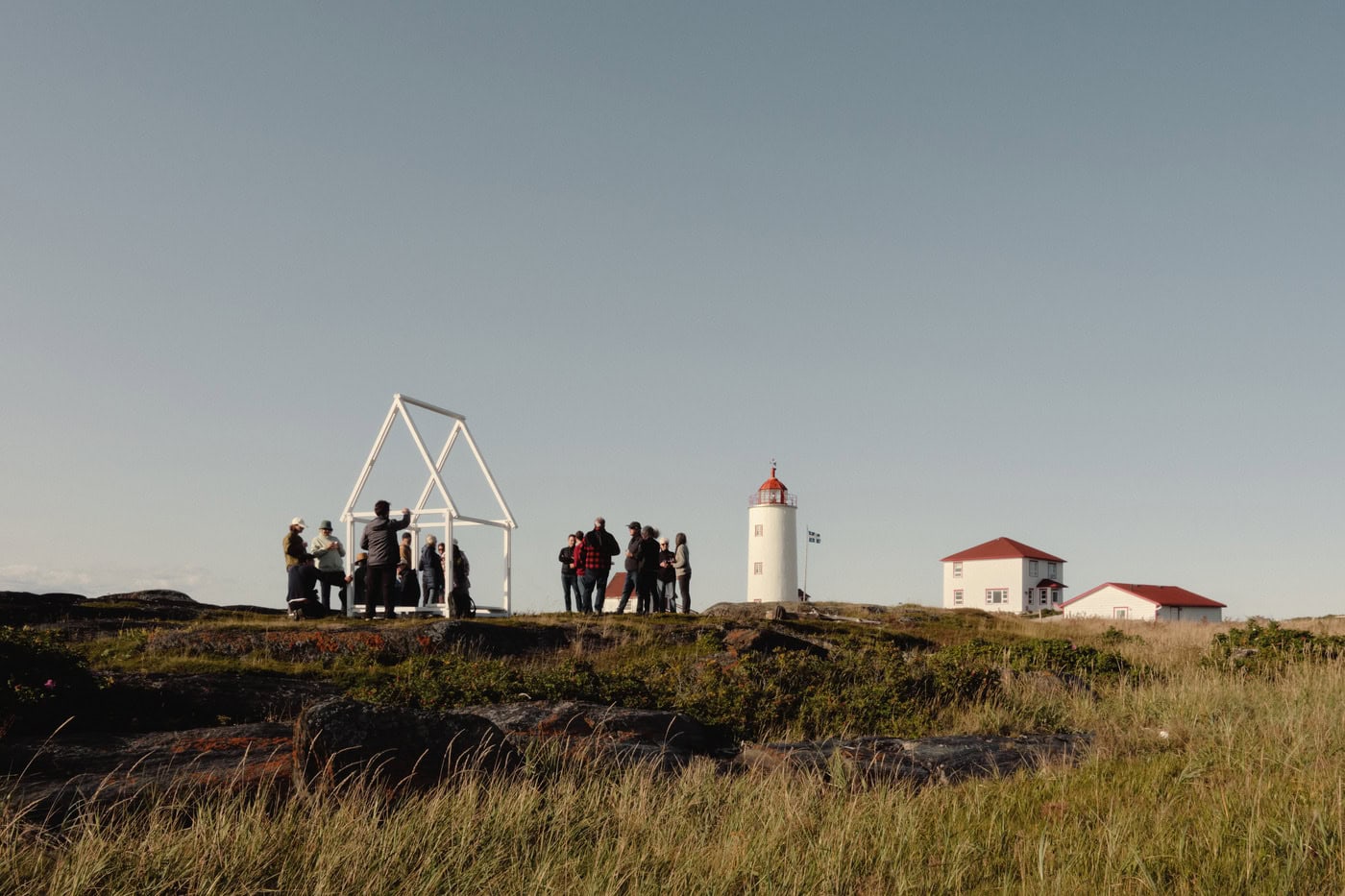
Community dialogue through participatory discussion sessions
Photo credit: Alex Lesage
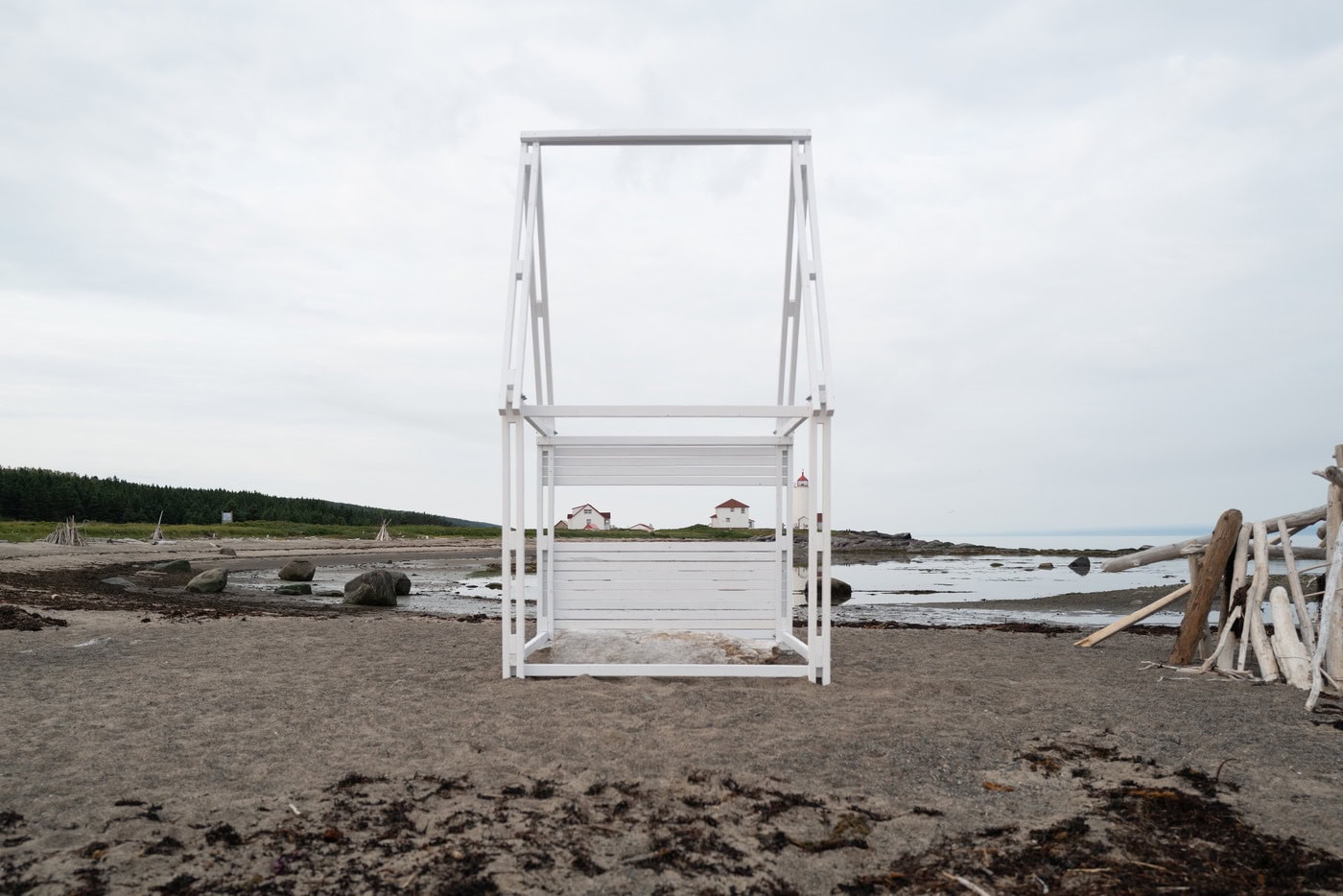
Though originally intended to be dismantled after the architects’ departure, some of the structures were embraced by the community and left standing, adopted as tangible markers of the boucaneries’ untapped potential—keeping the island’s collective memory and core values vibrantly alive.
Photo credit: Alexis Boivin
コミュニティ主導の保存と参加
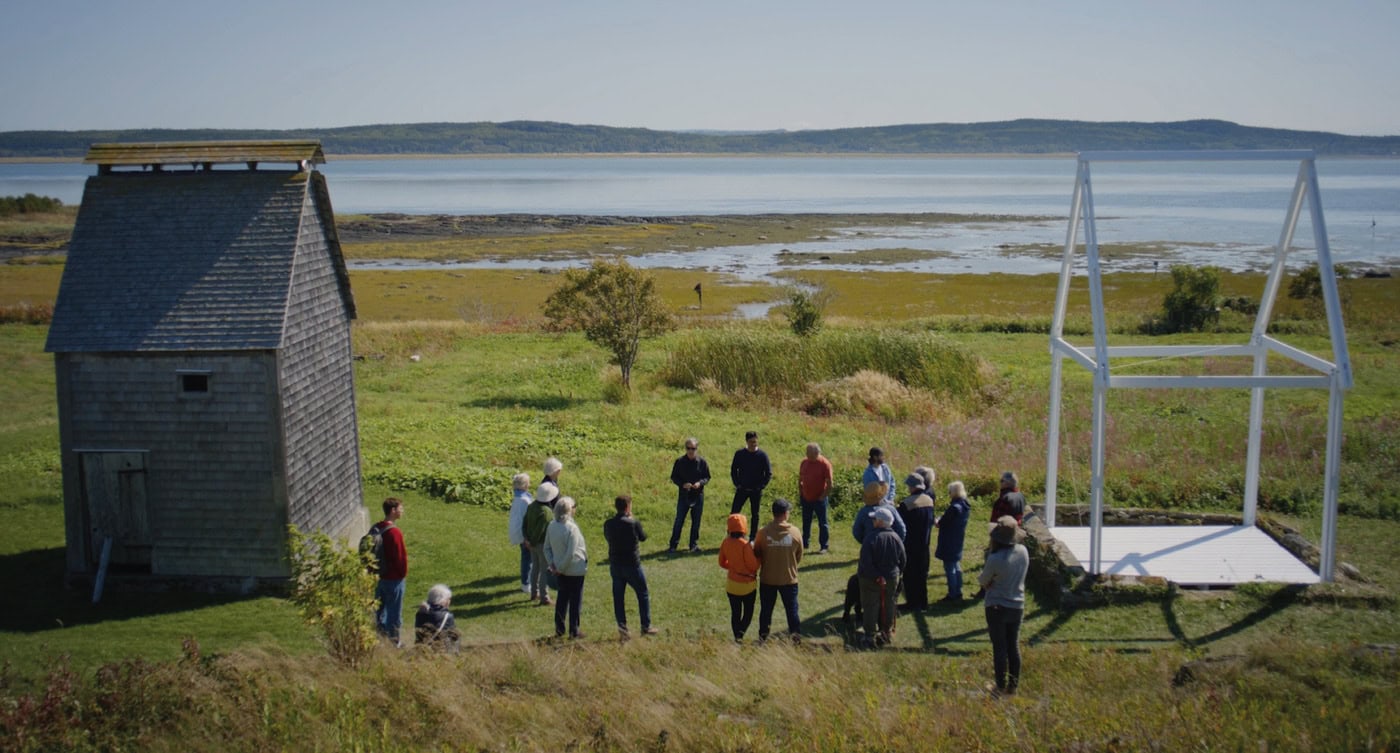
本プロジェクトでは伝統的な意味でこれらの建造物を修復するのではなく、機能的で未来志向の空間として再解釈することを目指している。アトリエ・ピエール・ティボーは、2024年に数ヶ月にわたる没入型のフィールドワークと参加型のデザイン・セッションを通じて、住民と緊密に協力し、創造的で持続可能な改修を模索した。コミュニティからはブーカナリーを温室、アーティスト・スタジオ、文化スペースや集いの場に変え、島の自治と回復力を強化するアイデアなどが挙げられた。
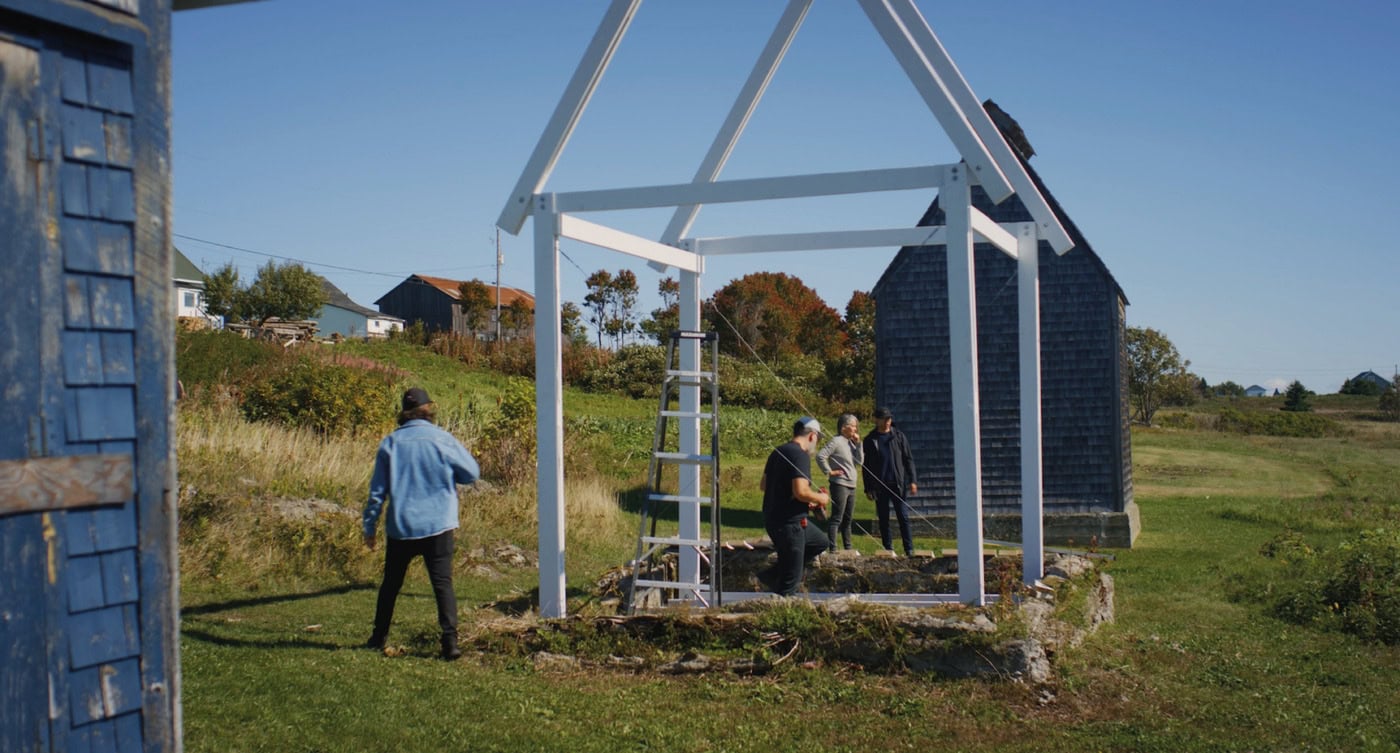
Documentary freeze-frame. Assembling one of the four architectural installations next to an existing smokehouse.
Photo credit: Atelier Pierre Thibault
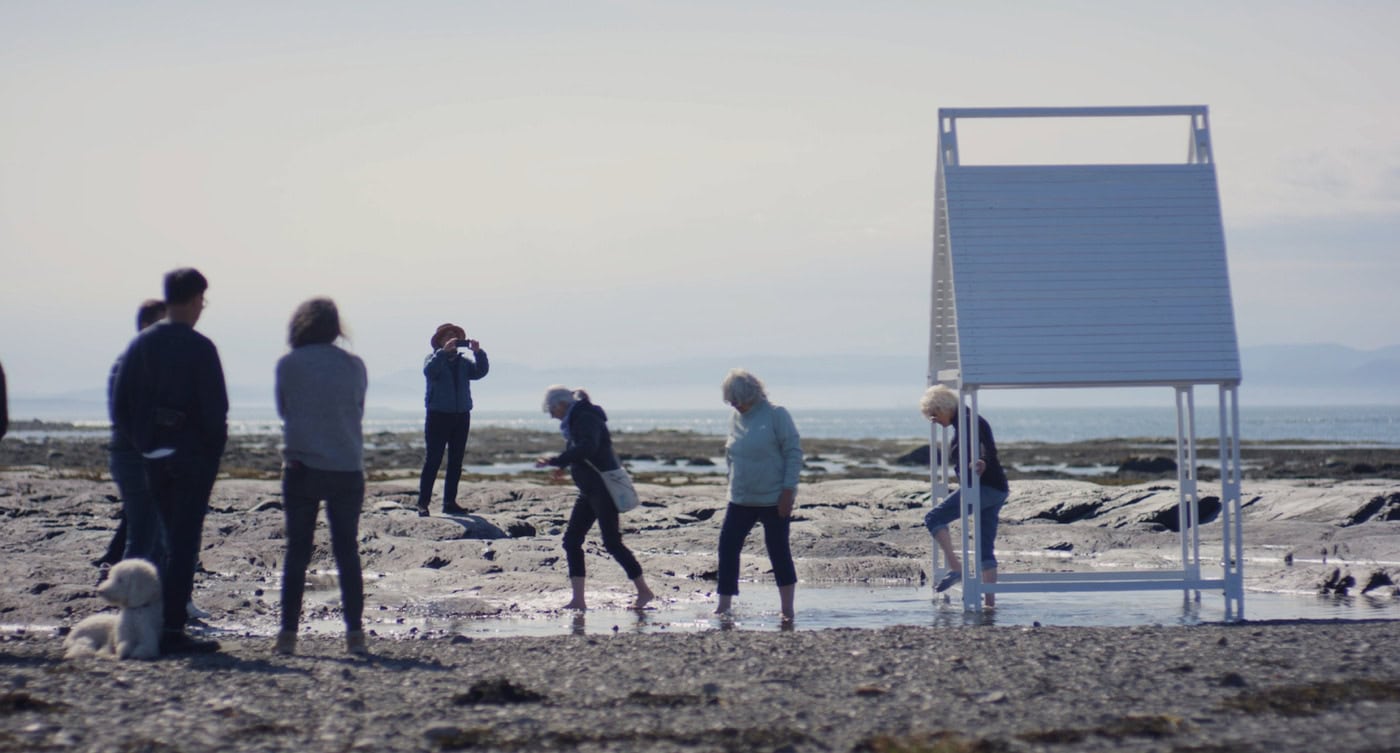
Documentary freeze-frame. Community dialogue. Meeting with the residents of Île Verte. Harnessing the power of abstraction in architectural expression, the reinterpretations served as conceptual canvases—inviting the Verdoyants to reconnect with their cultural and architectural heritage through a hopeful, forward-looking lens.
Photo credit: Atelier Pierre Thibault
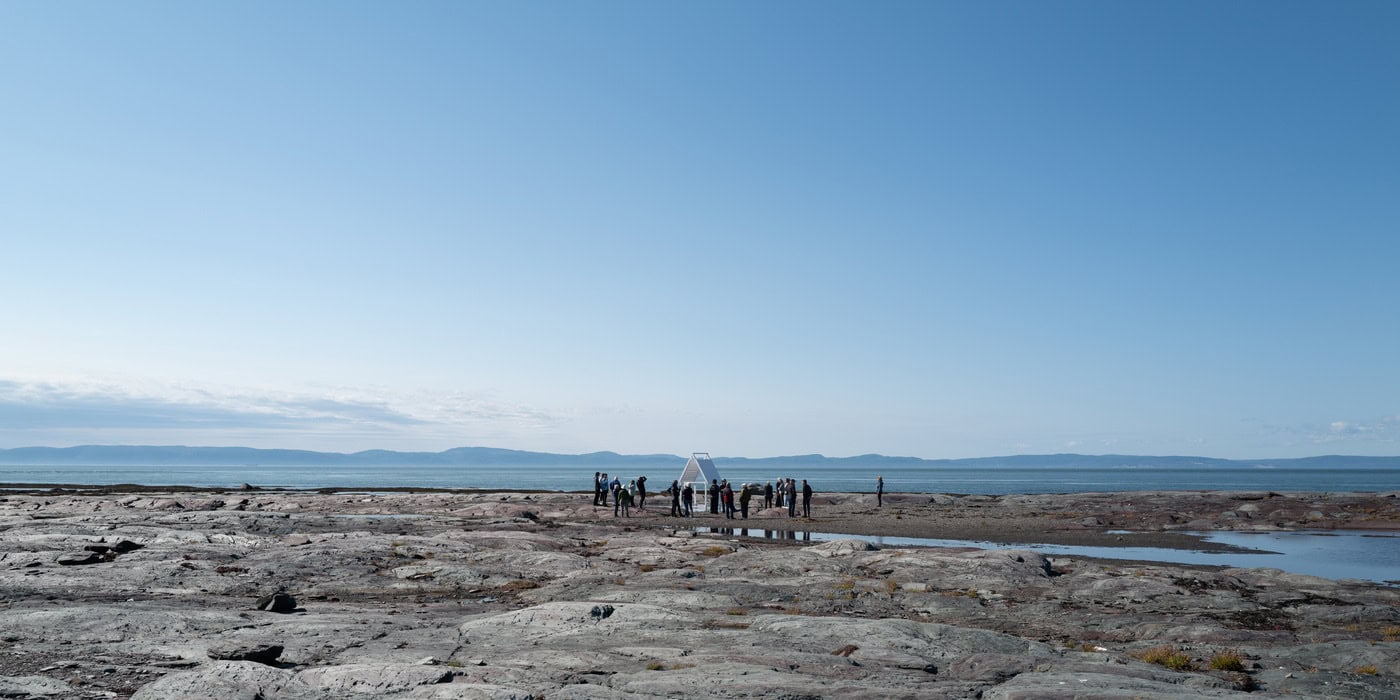
The Atelier Pierre Thibault will return to the island this summer to continue this conversation, following the many concrete ideas proposed by residents—particularly those centered on food autonomy, a pressing issue in isolated environments. More broadly, the project has sparked renewed appreciation for a threatened vernacular heritage, while encouraging the intergenerational transmission of knowledge linked to the boucaneries.
Photo credit: Alexis Boivin
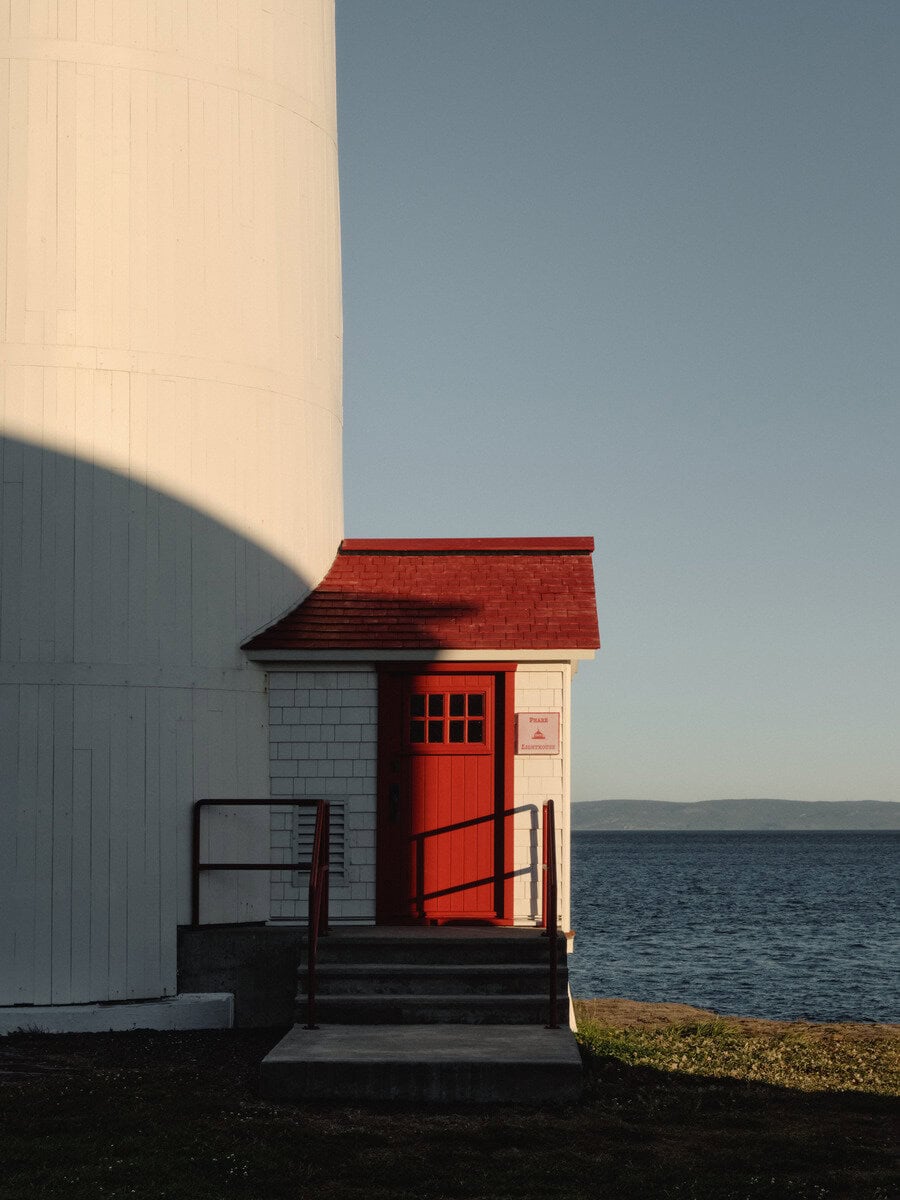
Architectural detail of the Île Verte Lighthouse. The Île Verte Lighthouse was the very first to be built along the St. Lawrence River. Constructed between 1806 and 1809, it housed several lighthouse keepers until 1972. It has been designated a National Historic Site of Canada since 1974, and since 2021, both the Lighthouse and the Lighthouse Station have been classified as heritage properties by Quebec’s Ministry of Culture and Communications. Today, it remains a prime destination for visitors from Quebec and beyond.
Photo credit: Alex Lesage
気候変動と自給自足の必要性
イル・ベルテにとって、孤立と気候変動は差し迫った現実である。冬にはフェリーでのアクセスが途絶え、ヘリコプターでの移動が本土との唯一のつながりとなる。氷の橋のような伝統的な適応方法は地球温暖化のためにもはや信頼できない。その結果、自立、地元での食料生産、創造的な文化生活というテーマがコミュニティが自分たちの未来を想像する方法の中心となっている。この変化を触媒する手段として建築を使用し、記憶を可能性に変えようとしていた。
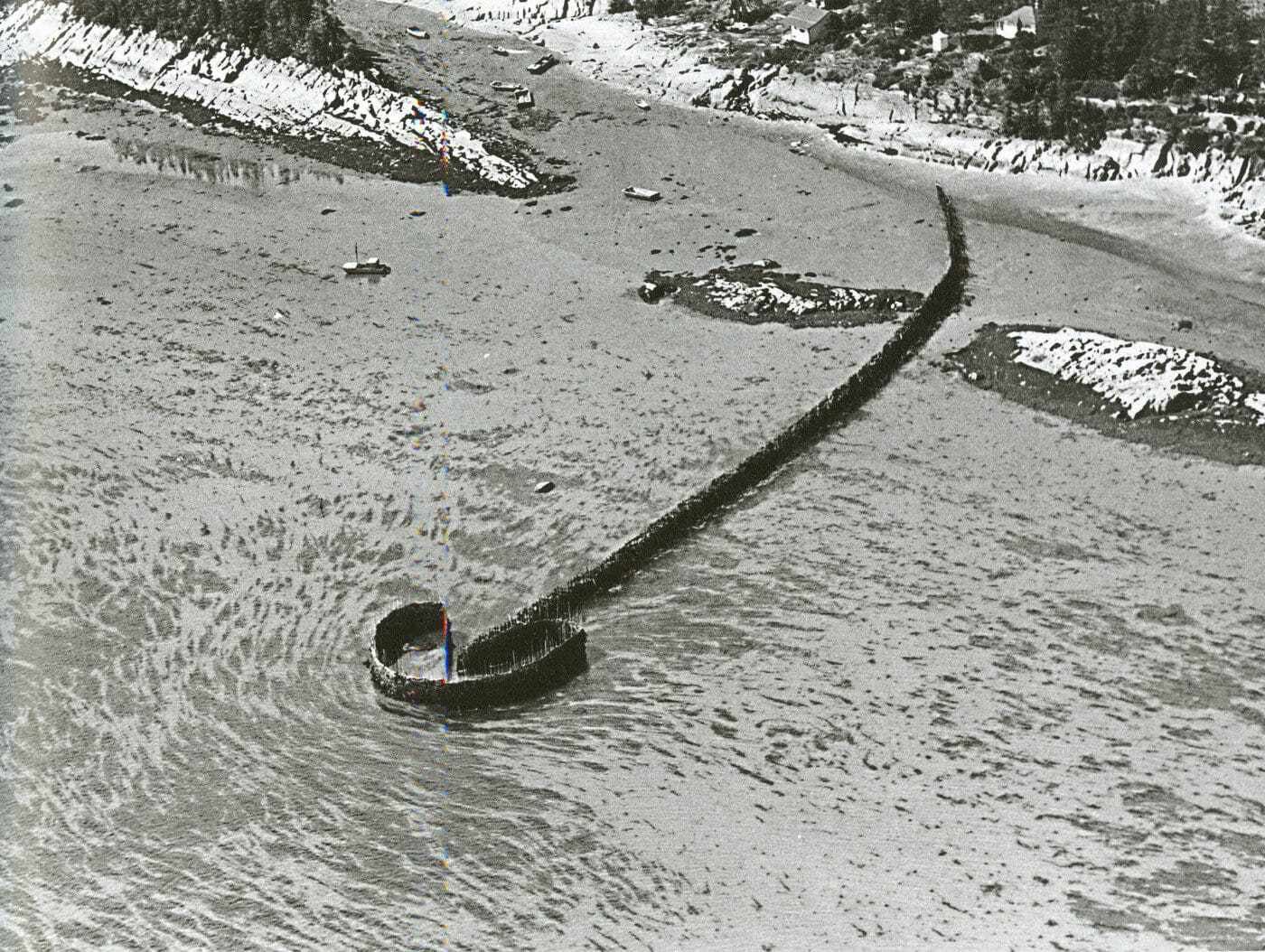
Once integral to the practice of weir fishing, fish smoking was both an economic driver and a cultural hallmark of life on Île Verte.
Photo credit: Jean-Marie Cossette
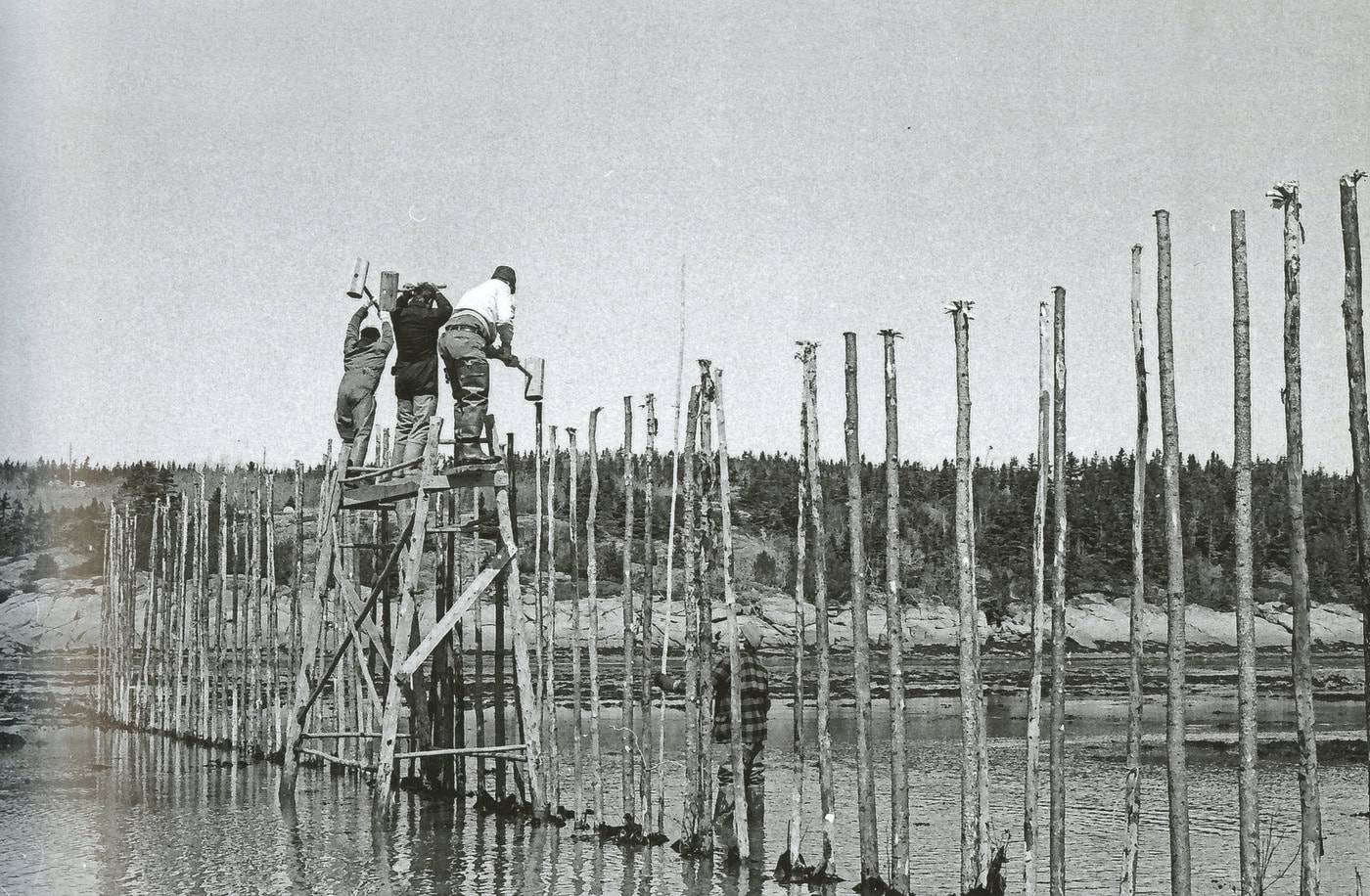
Once integral to the practice of weir fishing, fish smoking was both an economic driver and a cultural hallmark of life on Île Verte.
Photo credit: Jean-Marie Cossette
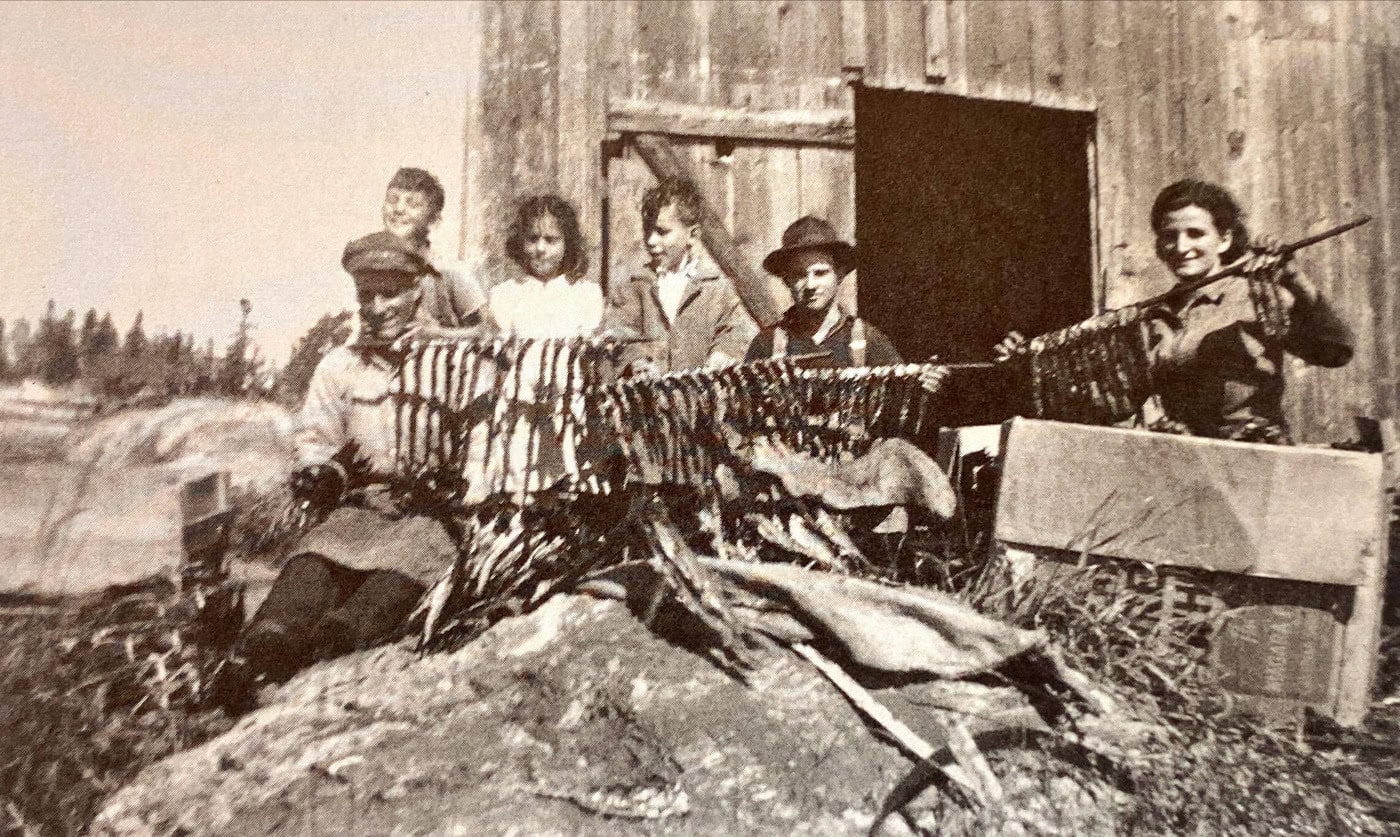
Once integral to the practice of weir fishing, fish smoking was both an economic driver and a cultural hallmark of life on Île Verte.
Photo credit: Mireille Caron
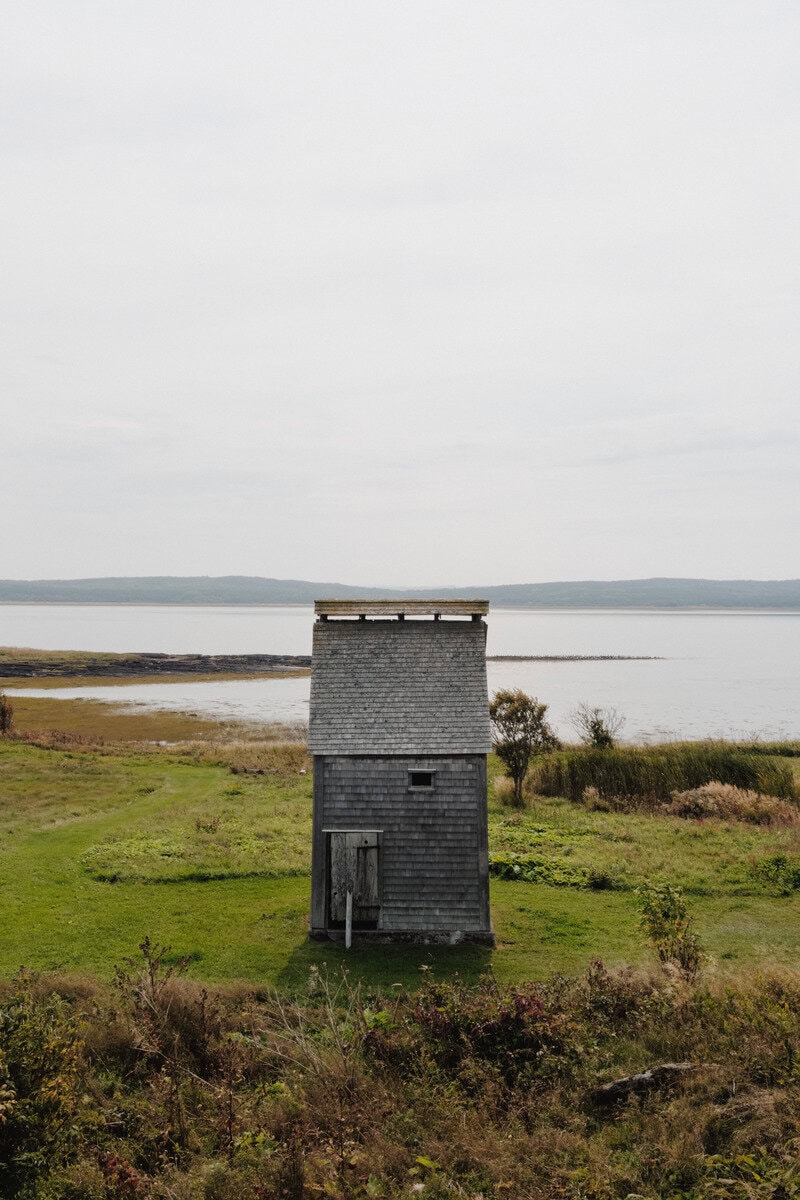
Known as boucaneries, these vernacular buildings, inspired by traditional smokehouses, were constructed between the 1920s and 1980s to withstand the island’s particularly harsh climatic conditions. Once integral to the practice of weir fishing, fish smoking was both an economic driver and a cultural hallmark of life on Île Verte.
Characterized by their windowless façades and vertically elongated forms, the boucaneries gradually fell into disuse. Changes in hygiene regulations, along with the decline of the local fishing industry, rendered them obsolete. Since then, wind, snow, and rain have continued to erode these symbolic structures, which, for decades, had remained without a renewed purpose.
Photo credit: Alex Lesage
永続的なインパクトを持つ儚い建築
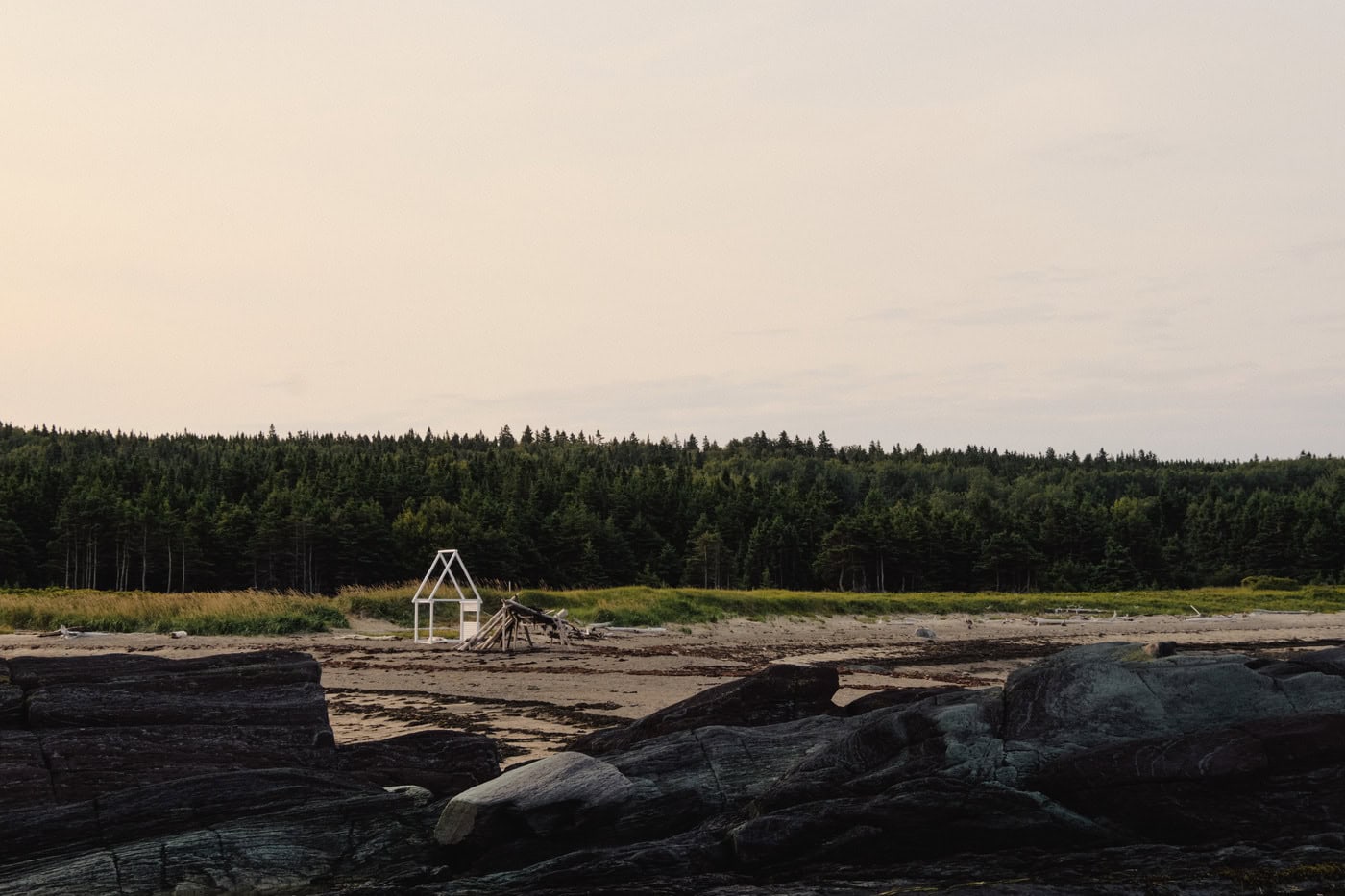
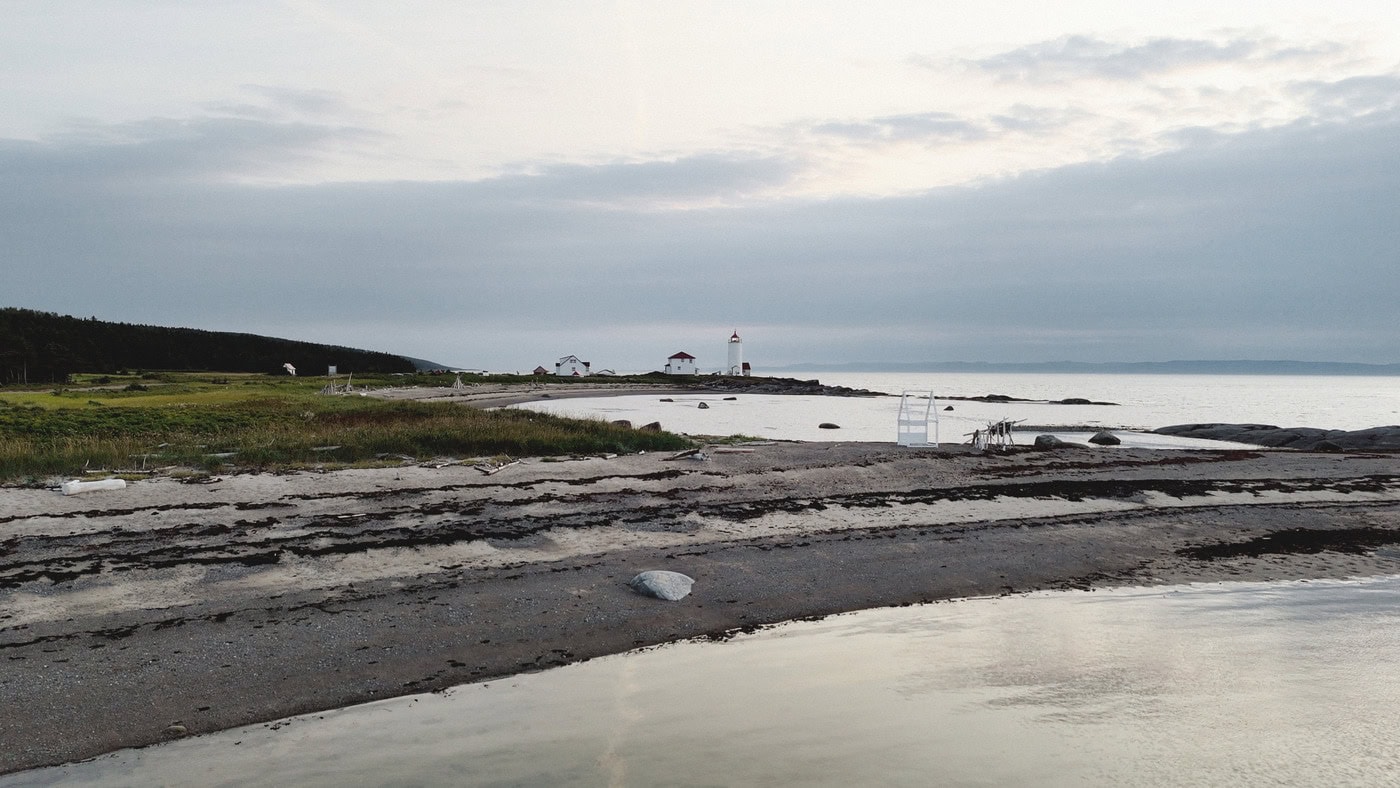
2024年9月、アトリエ・ピエール・ティボーは海岸線から内陸の牧草地まで、主要な場所に設置された軽量で持ち運び可能な儚い白い木造建築を携えて島に戻った。これらのインスタレーションは、ブーカナリーのフォルムを抽象的に反響させ、内省、対話、想像を誘う。一時的なものでありながら、コミュニティによって採用され、そのまま残されたものもあり、過去の永続的な関連性と再発明の可能性を象徴している。
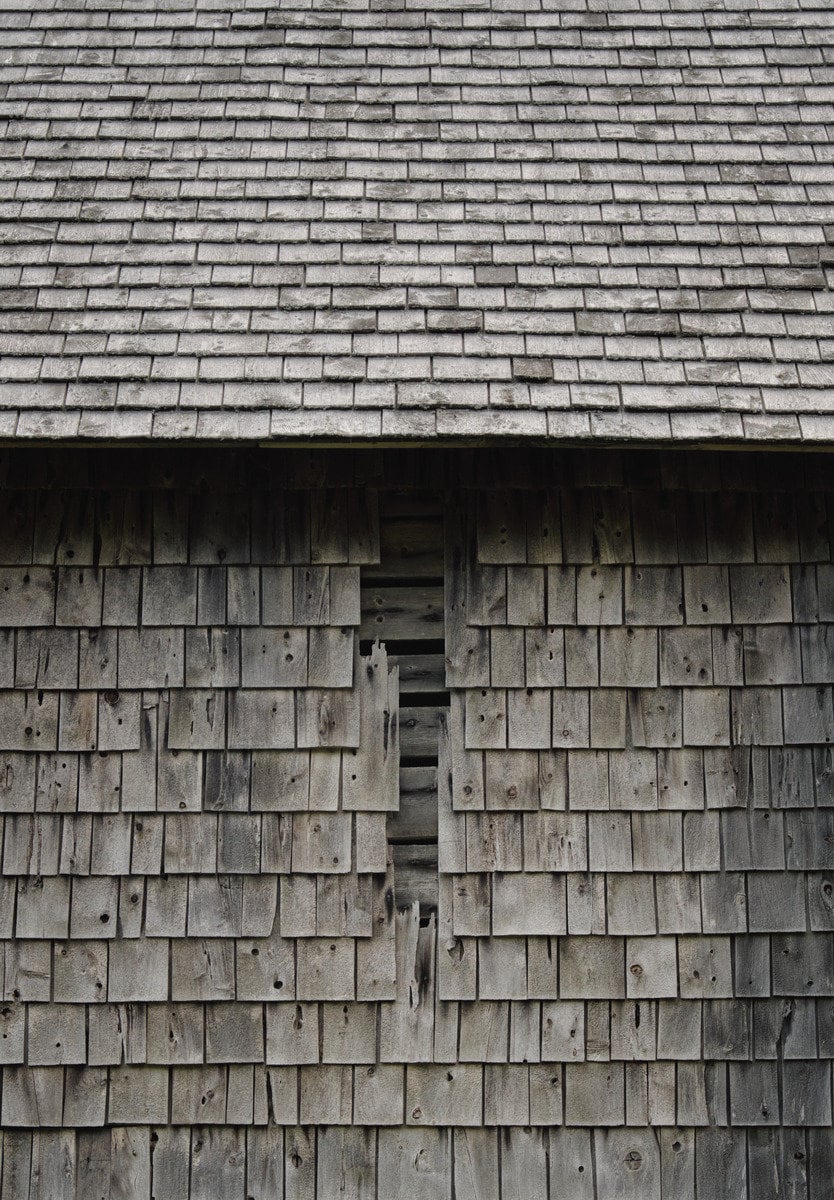
A 2023 report by architect Pascal Létourneau, a specialist in heritage conservation, revealed that among the twelve remaining smokehouses on Île Verte, four possess exceptional heritage value, while six are considered to have high heritage value. Key architectural features such as their pronounced verticality, roof ridge openings, drying pole systems, and humidity control mechanisms were identified as elements worth preserving. Unfortunately, half of these boucaneries are now in an advanced or critical state of deterioration—one even collapsed a few years ago.
Photo credit: Alex Lesage
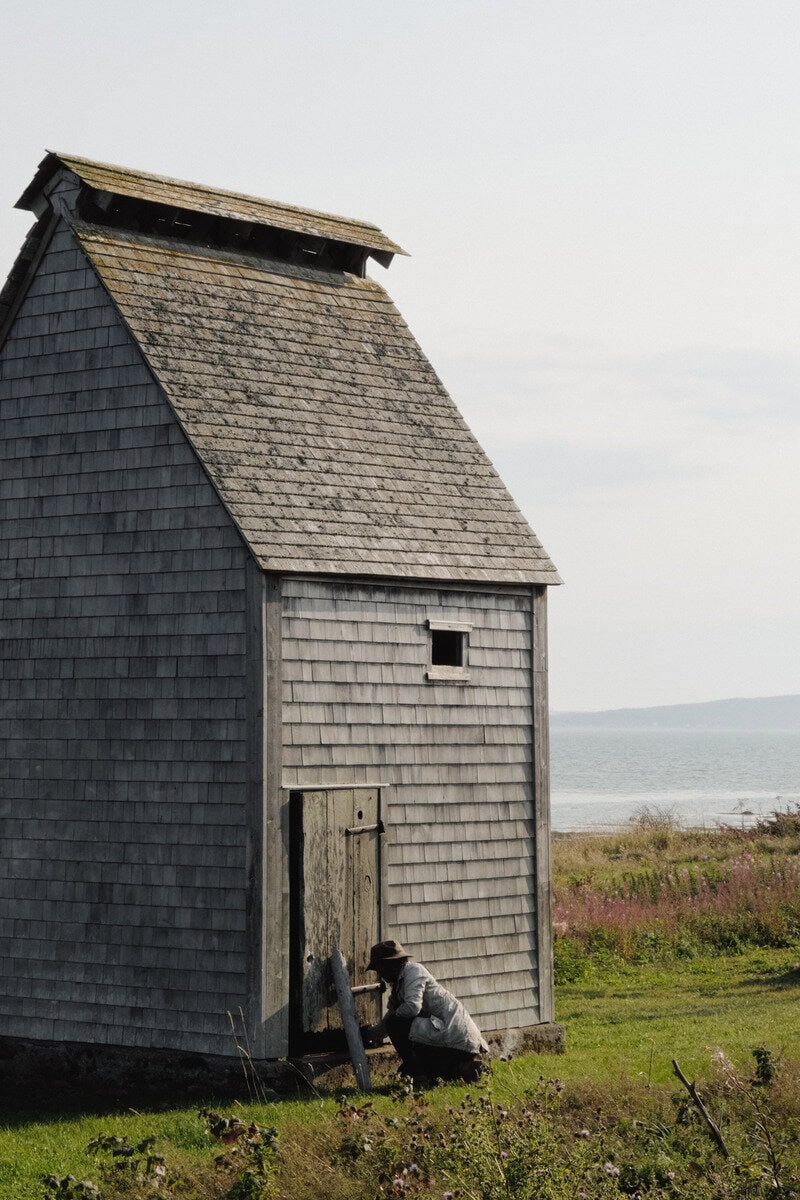
In response to the Verdoyants’ strong desire to preserve and revitalize this unique built heritage, the Atelier launched a participatory design project aimed at exploring new uses for these structures. At the heart of the initiative lies a central question: How can these silent witnesses of the past help shape the future?
Photo credit: Alex Lesage
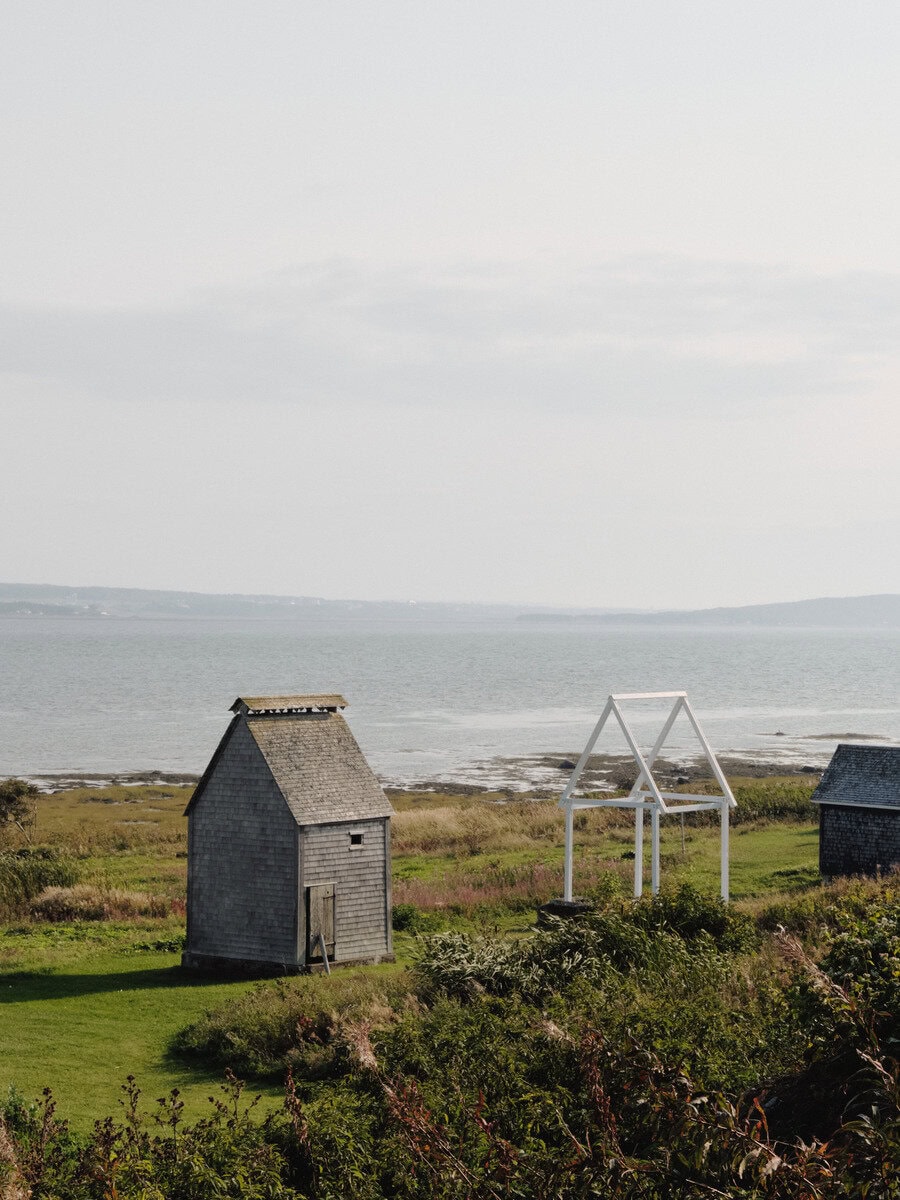
Architectural installations to reveal new relationships between landscape, volume, uses, and people
Photo credit: Alex Lesage
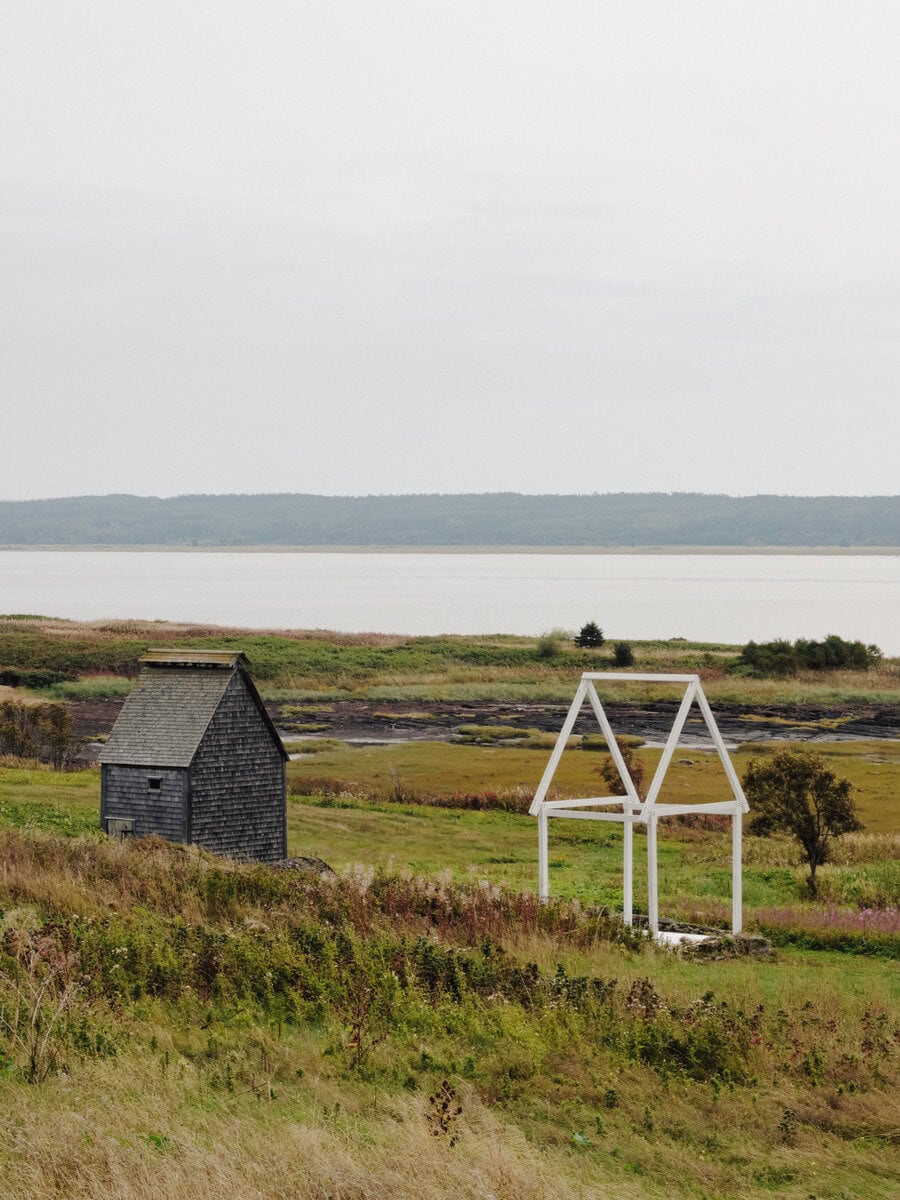
Architectural installations to reveal new relationships between landscape, volume, uses, and people
Photo credit: Alex Lesage
アイデアの実験室
こうした介入により、以下の実用的かつ象徴的な提案が生まれた。
- 温室:ブーカナリーをポリカーボネートのパネルで改造し、湿度を調節して年間を通して栽培できるようにする。
- アートスタジオ:物干し竿をアート作品の支柱として再利用し、最小限の開口部から光を取り入れる。
- 燻製施設の再生: 伝統的な魚の燻製を、現代の防火安全基準に適合させて復活させる。
- 日常用途: ブーカナリーを鶏小屋、ニンニク乾燥小屋、倉庫に改造することを住民が提案し、文化遺産に日常的な機能性を加える。
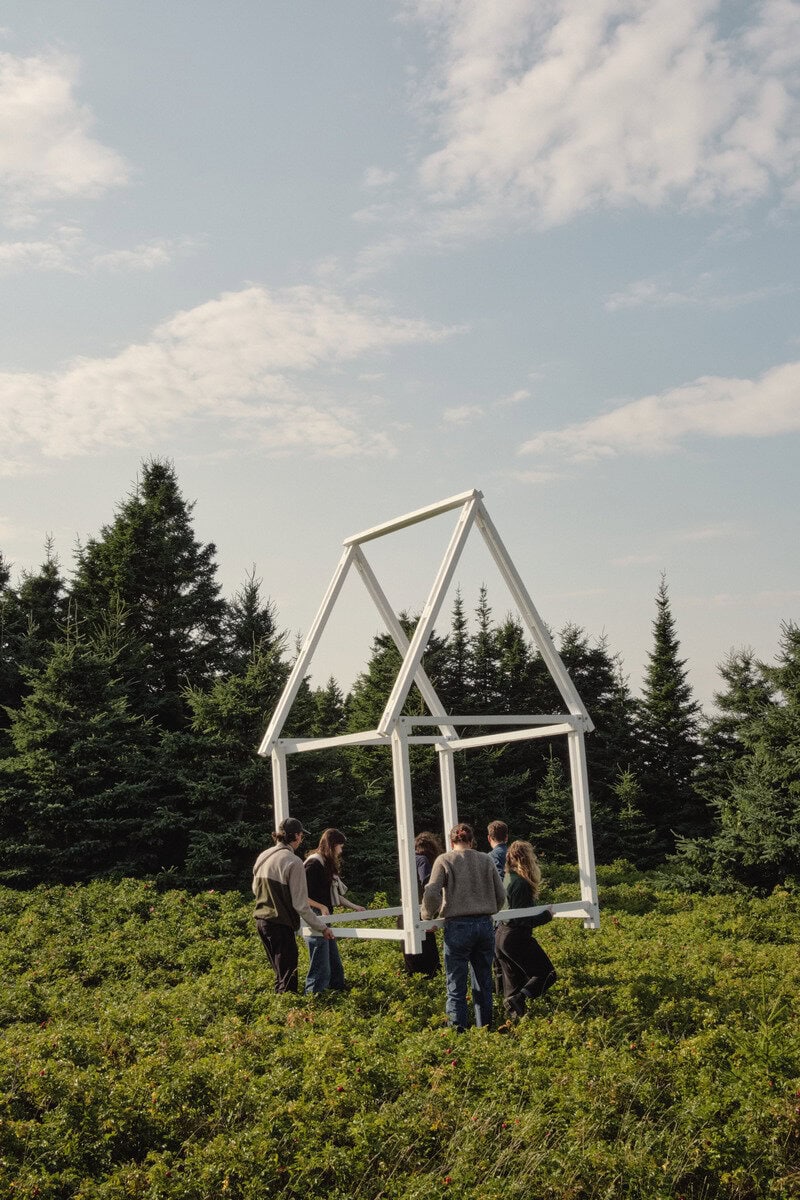
Lightweight and easily transportable, the installations were moved across the island—from the shoreline to fields and meadows—like evocative, nomadic figures.
Photo credit: Alex Lesage
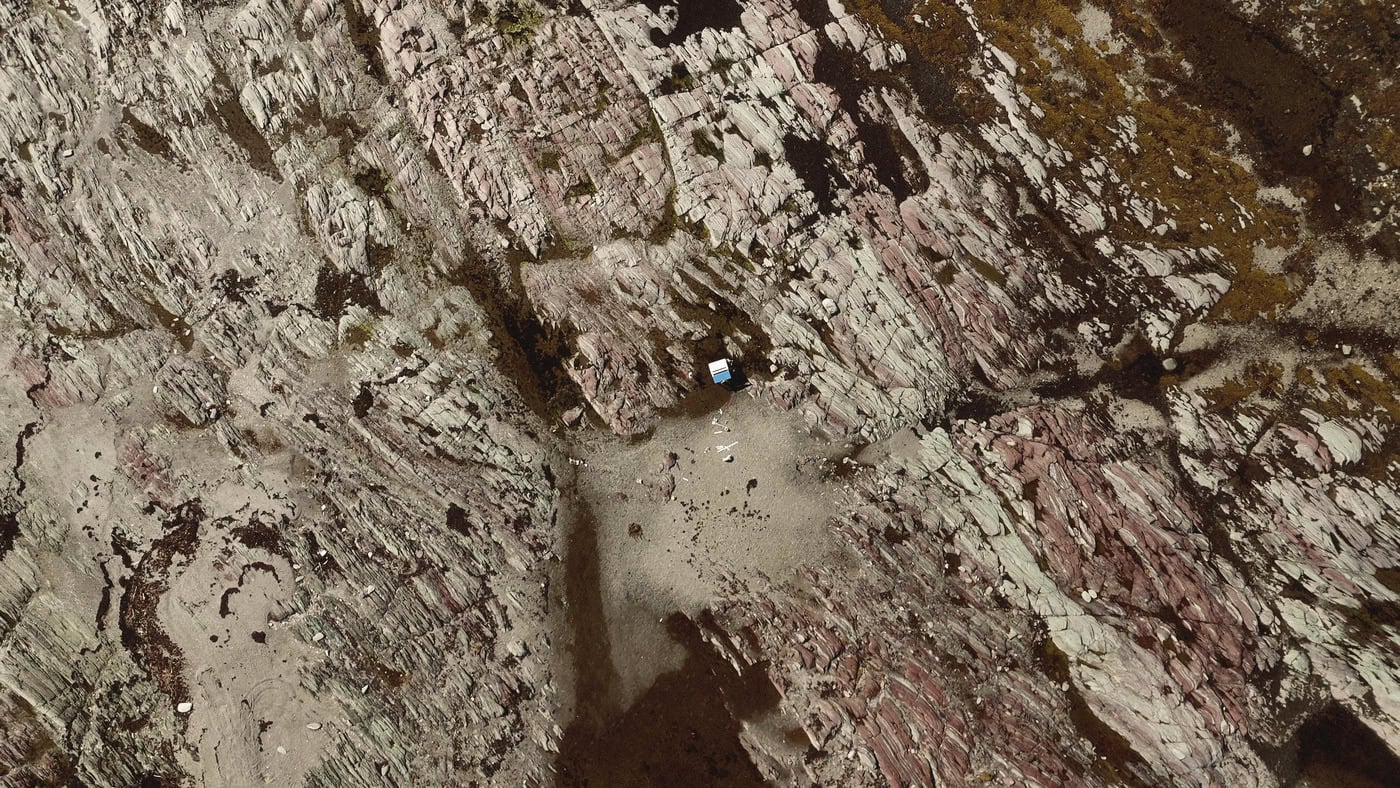
Lightweight and easily transportable, the installations were moved across the island—from the shoreline to fields and meadows—like evocative, nomadic figures.
Photo credit: Alex Lesage
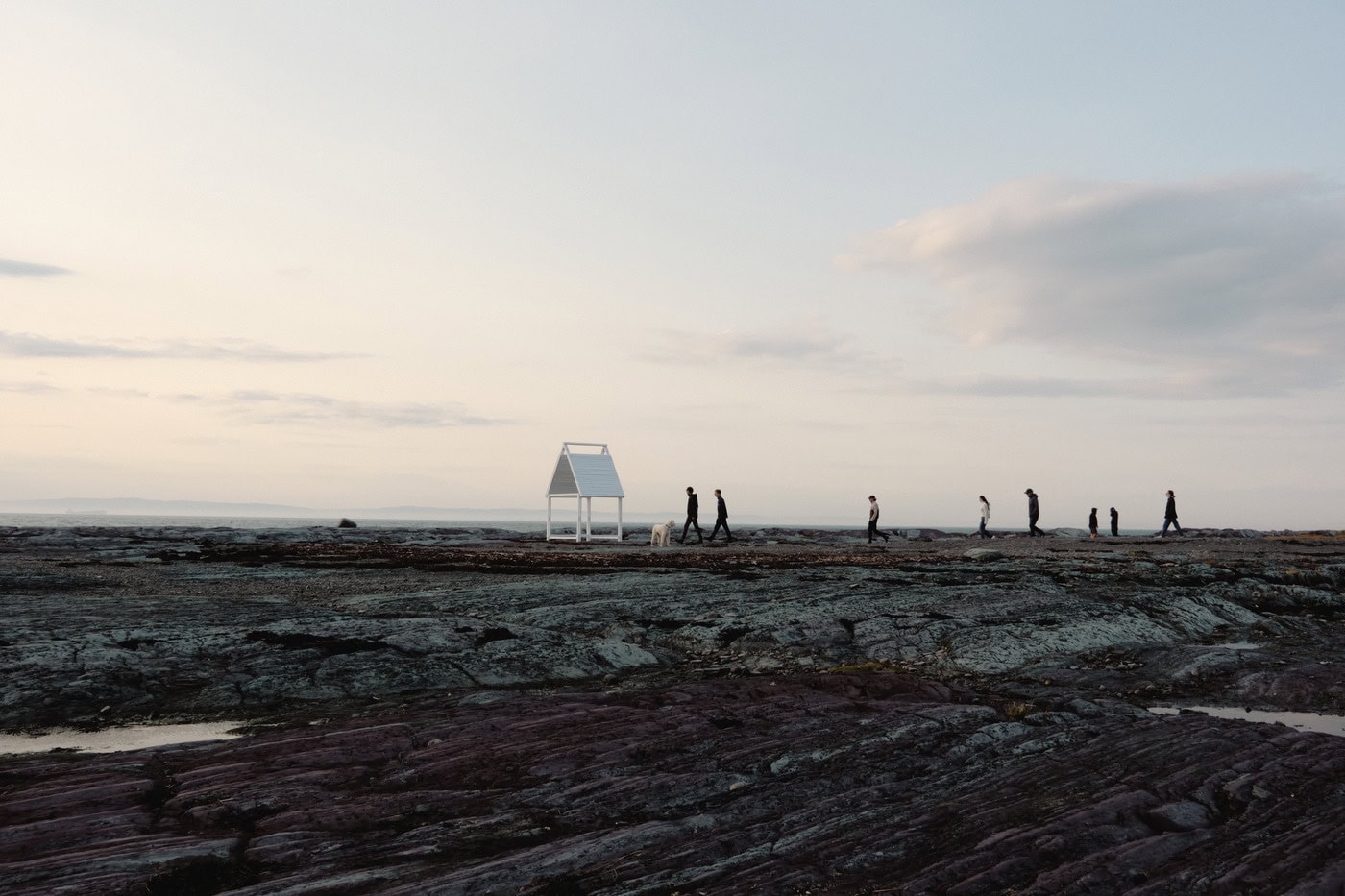
Community dialogue through participatory discussion sessions
Photo credit: Alex Lesage
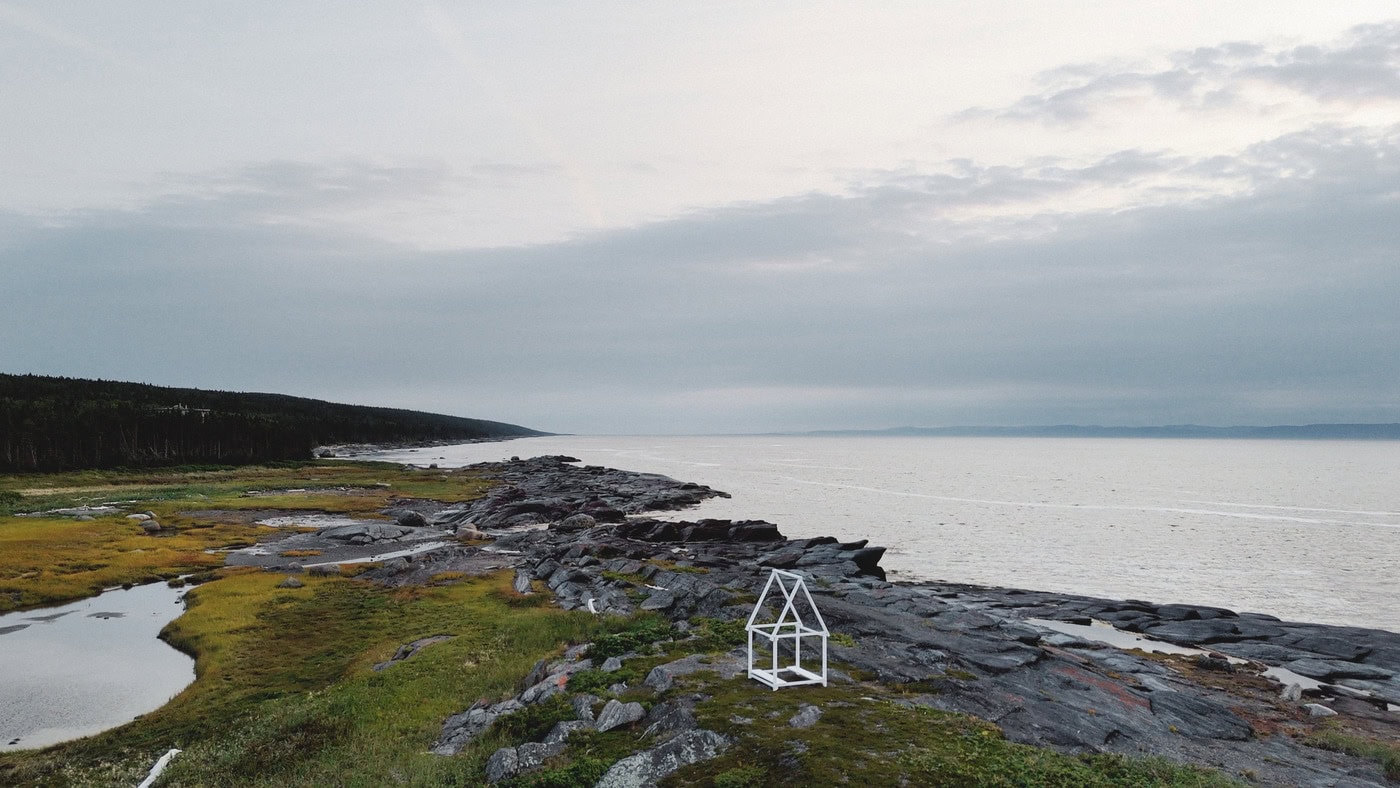
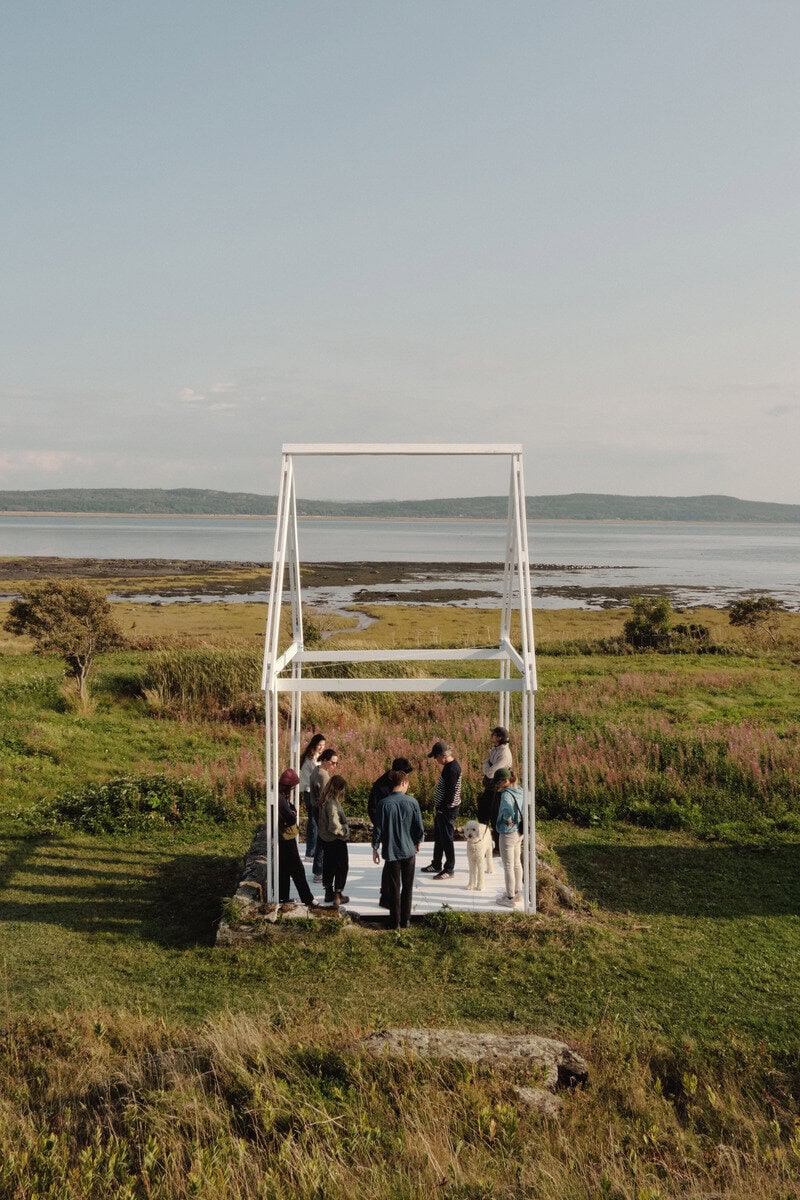
The result: elegant, open frameworks that stood as inspiring visions of the future, thoughtfully integrated into the island’s varied landscapes. These temporary structures revealed new relationships between landscape, built form, and community.
Photo credit: Alex Lesage
場所との詩的なつながり
イル・ヴェルテでは潮の満ち引き、季節、風と同調して生きることが求められる。険しい海岸線、トウヒの森、厳しい冬から回復するタフさが必要となる。傾聴、地元の参加、感受性を通して、この環境を反映した建築物は、物理的なデザインであると同時に、コミュニティのエンパワーメントにもつながることとなる。
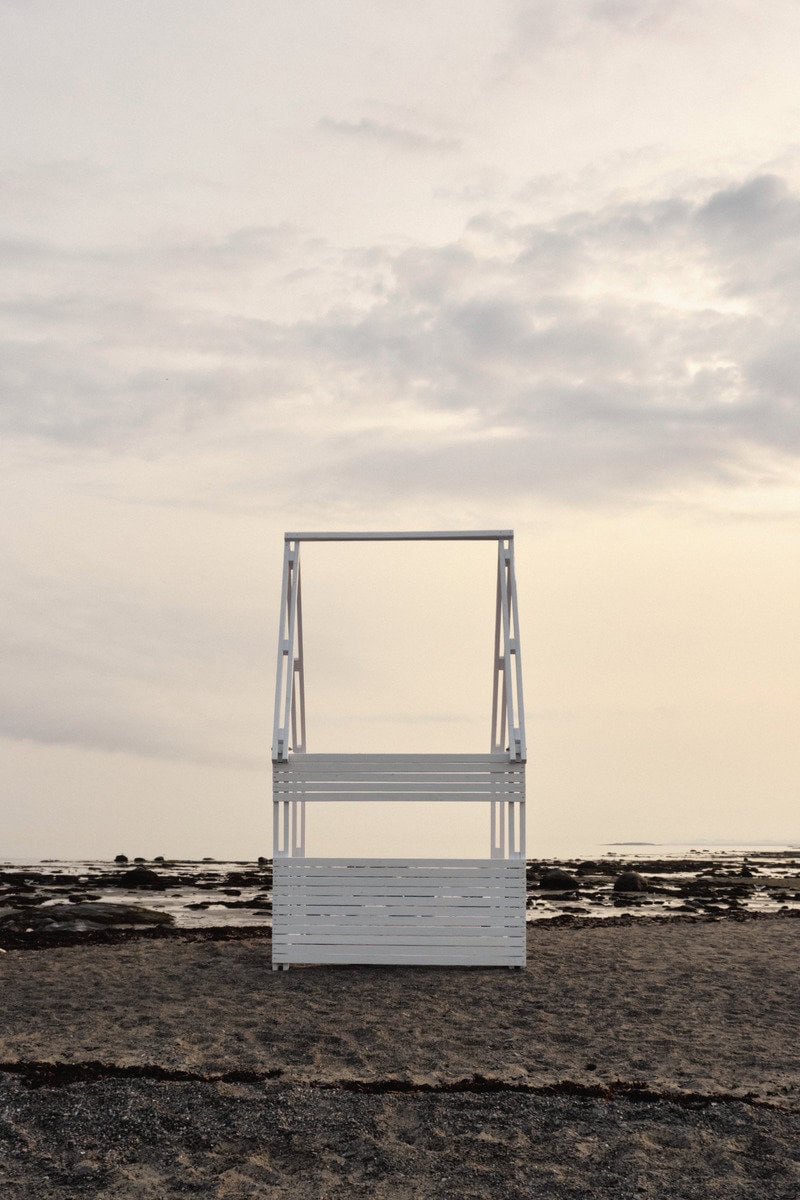
The result: elegant, open frameworks that stood as inspiring visions of the future, thoughtfully integrated into the island’s varied landscapes. These temporary structures revealed new relationships between landscape, built form, and community.
Photo credit: Alex Lesage
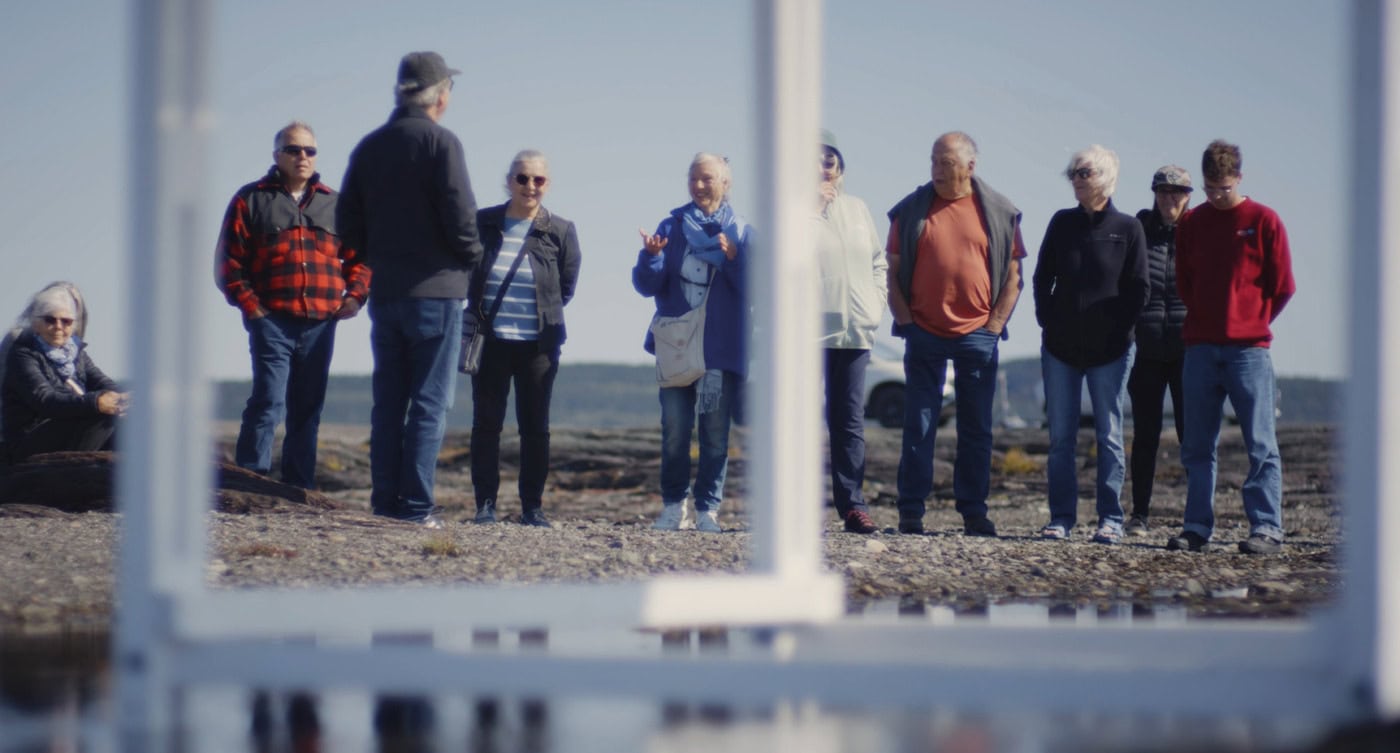
Documentary freeze-frame. Community dialogue. Meeting with the residents of Île Verte
Photo credit: Atelier Pierre Thibault
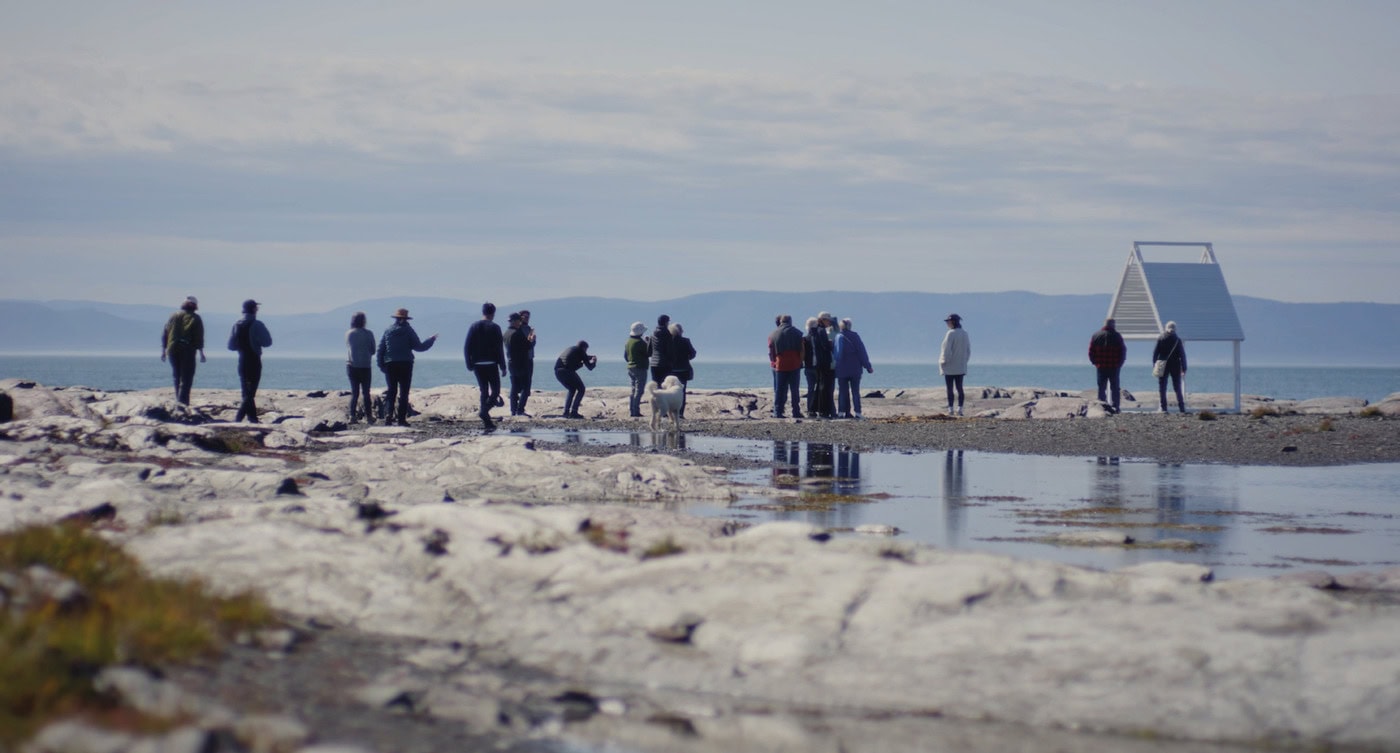
Documentary freeze-frame. Community dialogue. Meeting with the residents of Île Verte. Harnessing the power of abstraction in architectural expression, the reinterpretations served as conceptual canvases—inviting the Verdoyants to reconnect with their cultural and architectural heritage through a hopeful, forward-looking lens.
Photo credit: Atelier Pierre Thibault
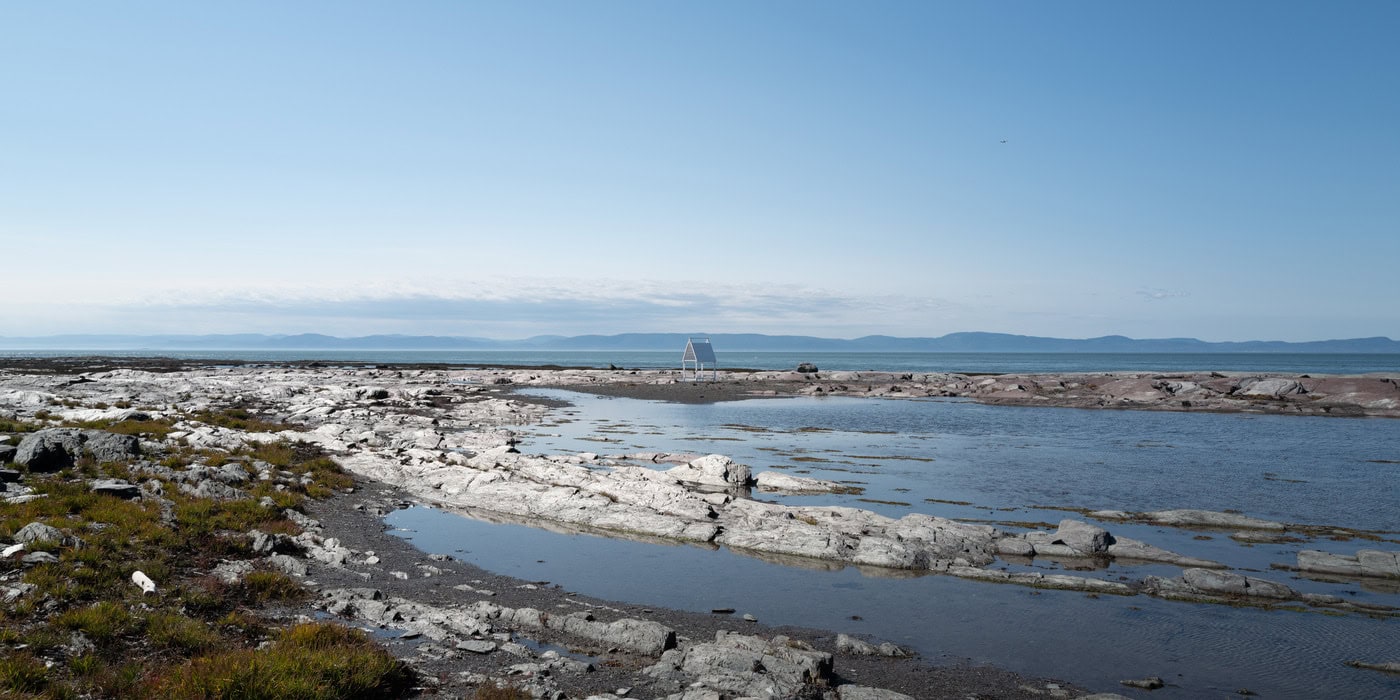
Though ephemeral by design, the project on Île Verte has left lasting and meaningful traces. Some of the installations remain standing, having been spontaneously adopted by the community, while others were dismantled—prompting reflection on their potential future. In a creative gesture to sustain public engagement, the municipality of Notre-Dame-des-Sept-Douleurs recently raffled off two of the structures to residents, free of charge. For the mayor, this initiative offers an original way to extend the dialogue around built heritage.
Photo credit: Alexis Boivin
結論:記憶、適応、想像力
遺産保護の取り組みとして始まった本プロジェクトは、集団的想像力を深める結果となった。伝統に根ざしつつも変化する可能性を秘めた儚いインスタレーションは、建築がいかに記憶とビジョンの役割を果たすことができるかを示している。ブーカナリーはもはや単なる遺物ではなく、共有された創造性とデザインによって、住民が気候や社会の変化に直面したときの回復力、自律性、文化的継続性を示す器となったのである。
For the Atelier Pierre Thibault team, this collective experience reinforced their cohesion, nurtured their initiative, and deepened their commitment to an architecture grounded in lived experience and local realities. Above all, the project affirmed architecture’s role as a tool for social and cultural mediation—capable of opening spaces for encounter, remembrance, and imagination for the future.
Photo credit: Alexis Boivin
The result: elegant, open frameworks that stood as inspiring visions of the future, thoughtfully integrated into the island’s varied landscapes. These temporary structures revealed new relationships between landscape, built form, and community.
Photo credit: Alex Lesage
Documentary freeze-frame. Community dialogue. Meeting with the residents of Île Verte
Photo credit: Atelier Pierre Thibault
The result: elegant, open frameworks that stood as inspiring visions of the future, thoughtfully integrated into the island’s varied landscapes. These temporary structures revealed new relationships between landscape, built form, and community.
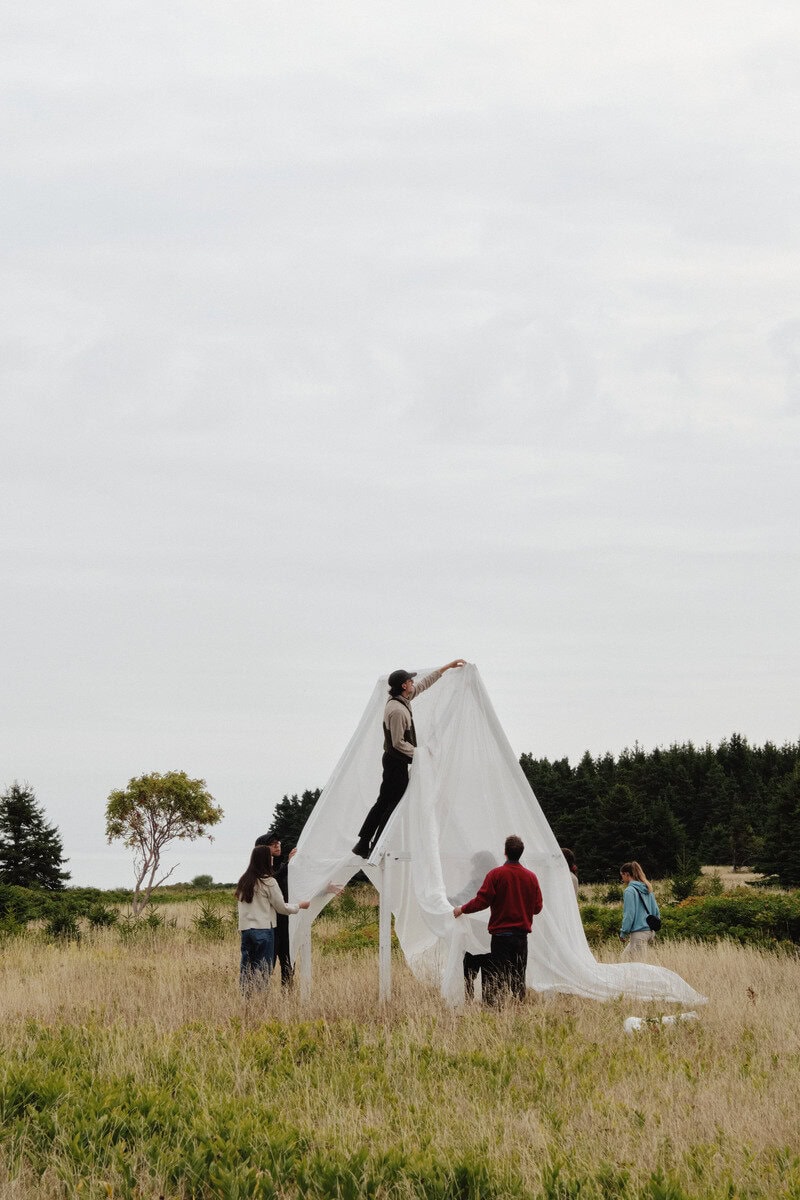
Lightweight and easily transportable, the installations were moved across the island—from the shoreline to fields and meadows—like evocative, nomadic figures.
Photo credit: Alex Lesage
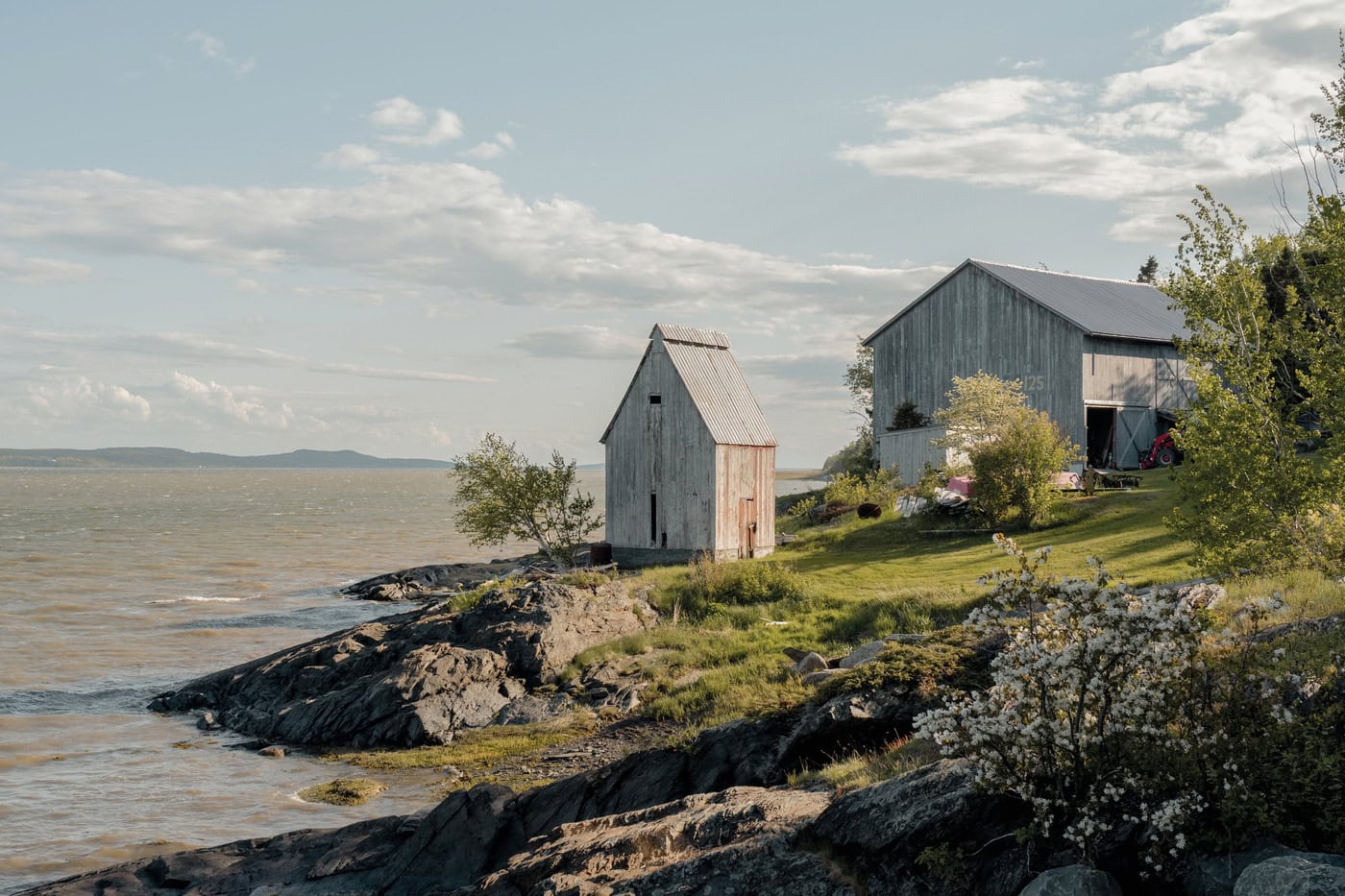
During visits to Île Verte and through conversations with the Verdoyants—as the island’s residents are known—twelve captivating structures were (re)discovered. Known as boucaneries, these vernacular buildings, inspired by traditional smokehouses, were constructed between the 1920s and 1980s to withstand the island’s particularly harsh climatic conditions.
Photo credit: Alexis Boivin
アトリエ・ピエール・ティボー
アトリエ・ピエール・ティボーは、季節が持つ独特の変幻自在な力を利用し、雪に照らされた冬の光の峻厳な透明感、秋の紅葉の高揚感、夏の柔らかな静寂、春の生き生きとした新緑など、つかの間の瞬間を捉える空間を卓越した感性でデザインしている。
アトリエの特徴的な作品群は、サン=ジャン=ド=マサのヴァル・ノートル=ダム修道院やジヴェルニー財団の美術館など、建築インスタレーションから大規模な依頼まで多岐にわたる。カナダ全土で100を超えるプロジェクトを完成させ、そのひとつひとつが、風景とそこに住む人々との有意義な対話を育む機会となっている。

