

 English
 日本語
日本語

Reimagining Heritage for a Resilient Future: An Architectural Renewal on Île Verte
On Île Verte, a small island in the Saint Lawrence River with just fifty permanent residents, a visionary architectural project has breathed new life into the island’s disappearing vernacular heritage. Spearheaded by Atelier Pierre Thibault, the initiative reinterprets the island’s boucaneries—old fish smokehouses—into conceptual installations that engage the community and explore sustainable future uses. Unveiled at the 19th International Architecture Exhibition at La Biennale di Venezia in 2025 for May 10 to November 23, the project is a profound response to climate challenges, cultural loss, and rural isolation.
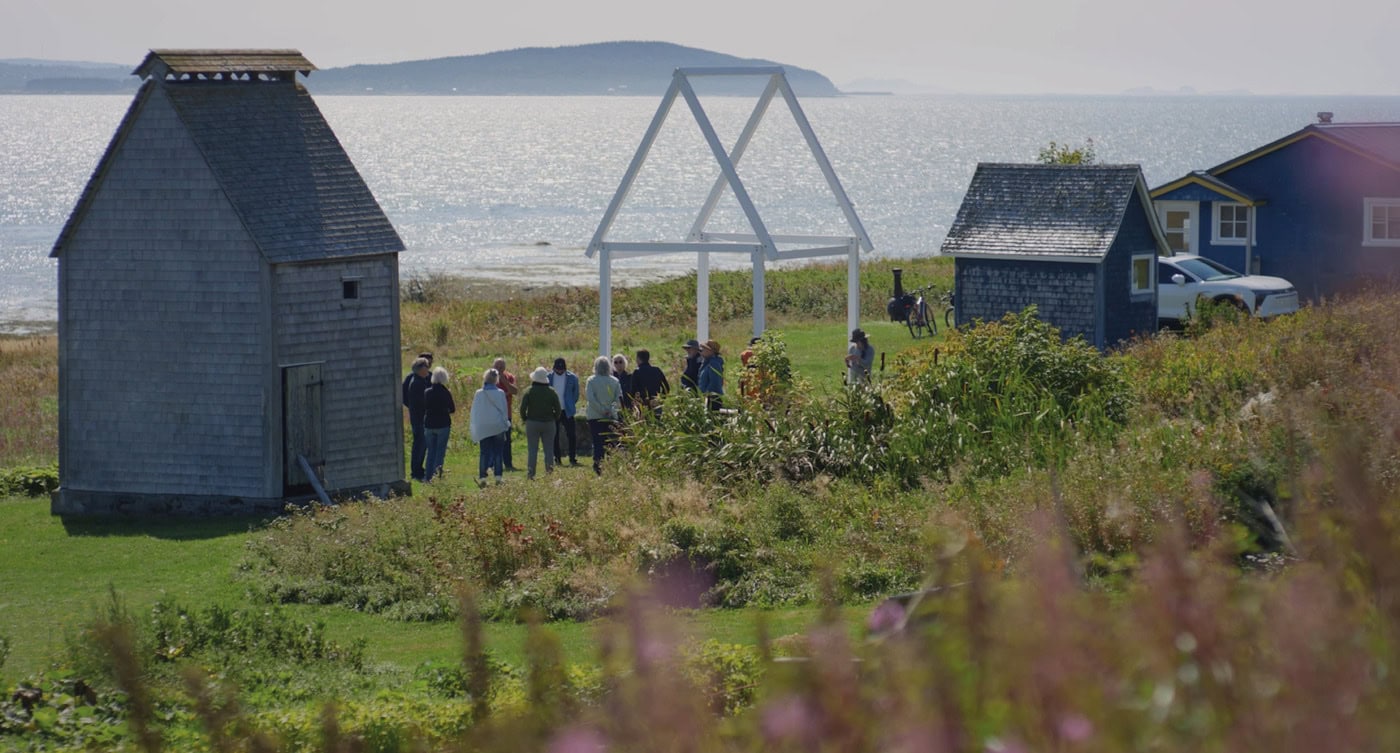
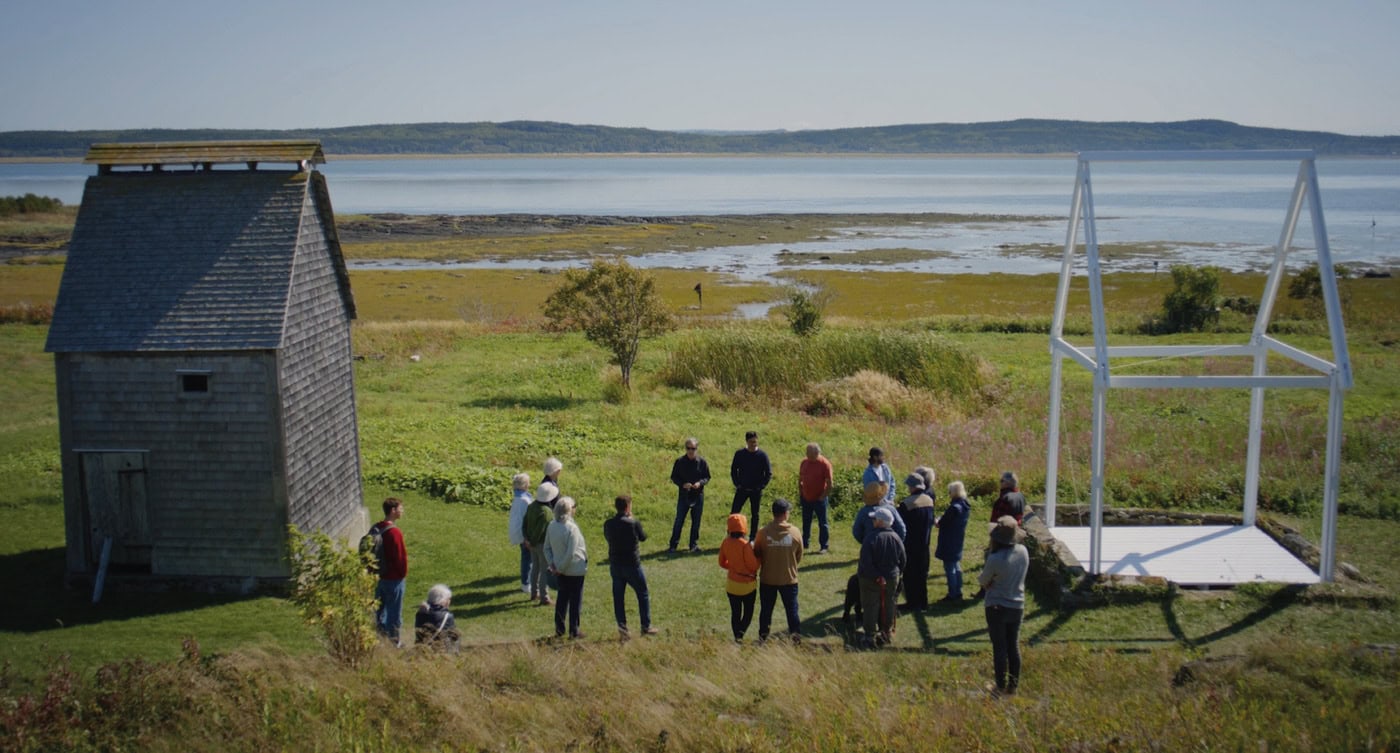
Documentary freeze-frame. Community dialogue. Meeting with the residents of Île Verte
Photo credit: Atelier Pierre Thibault
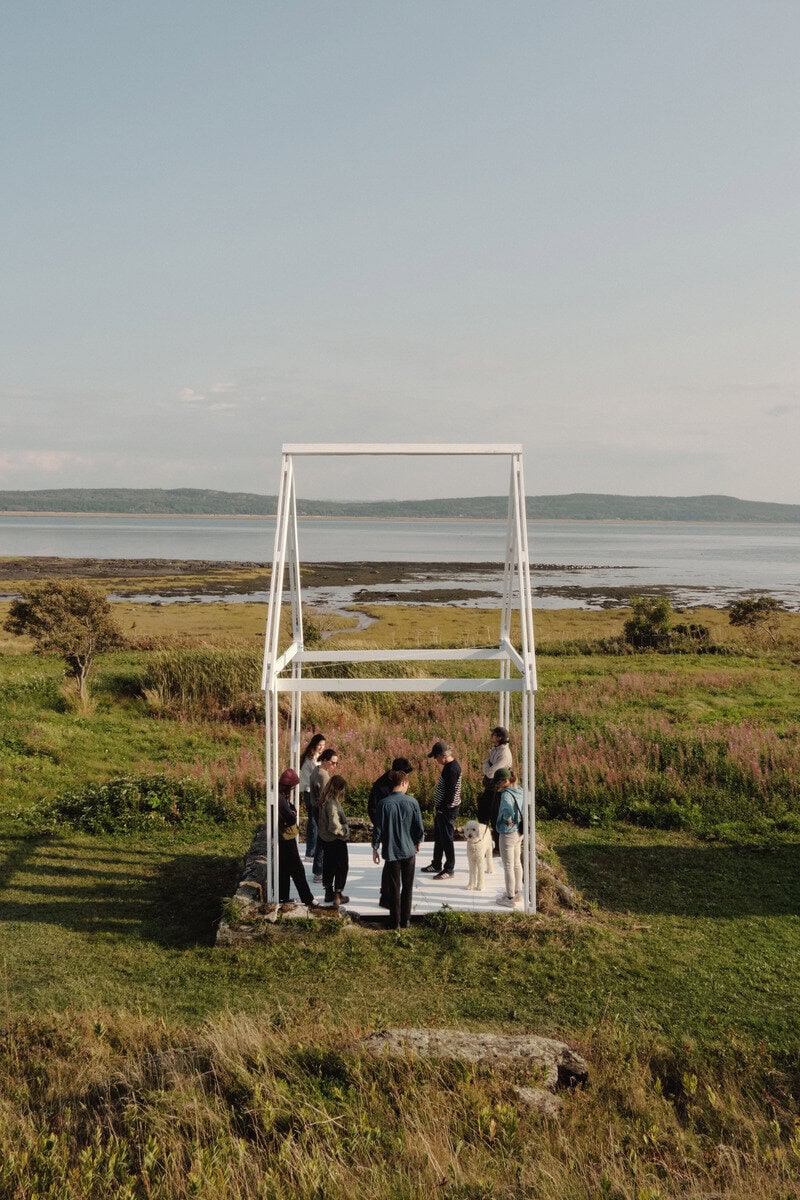
The Atelier Pierre Thibault team and intern students from Université Laval.
Photo credit: Alex Lesage
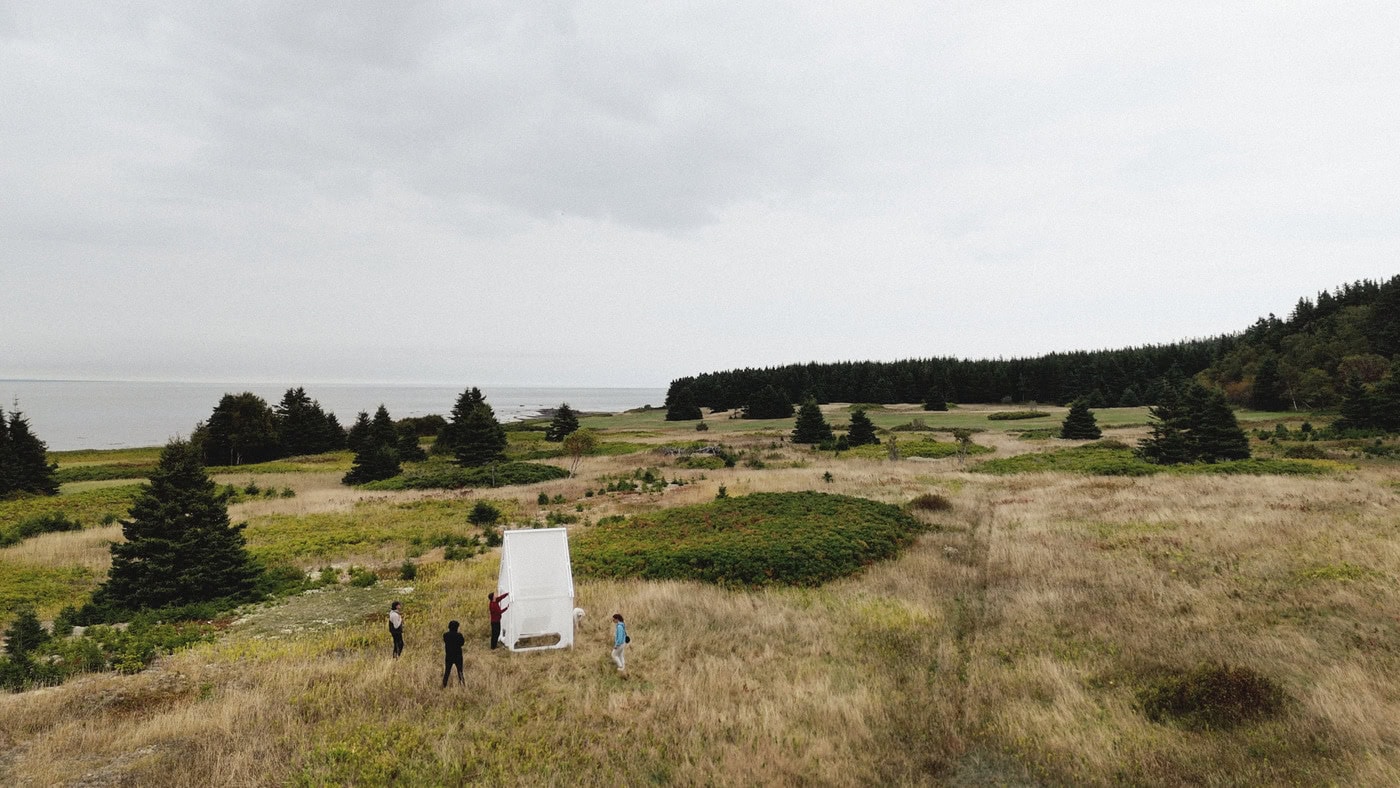
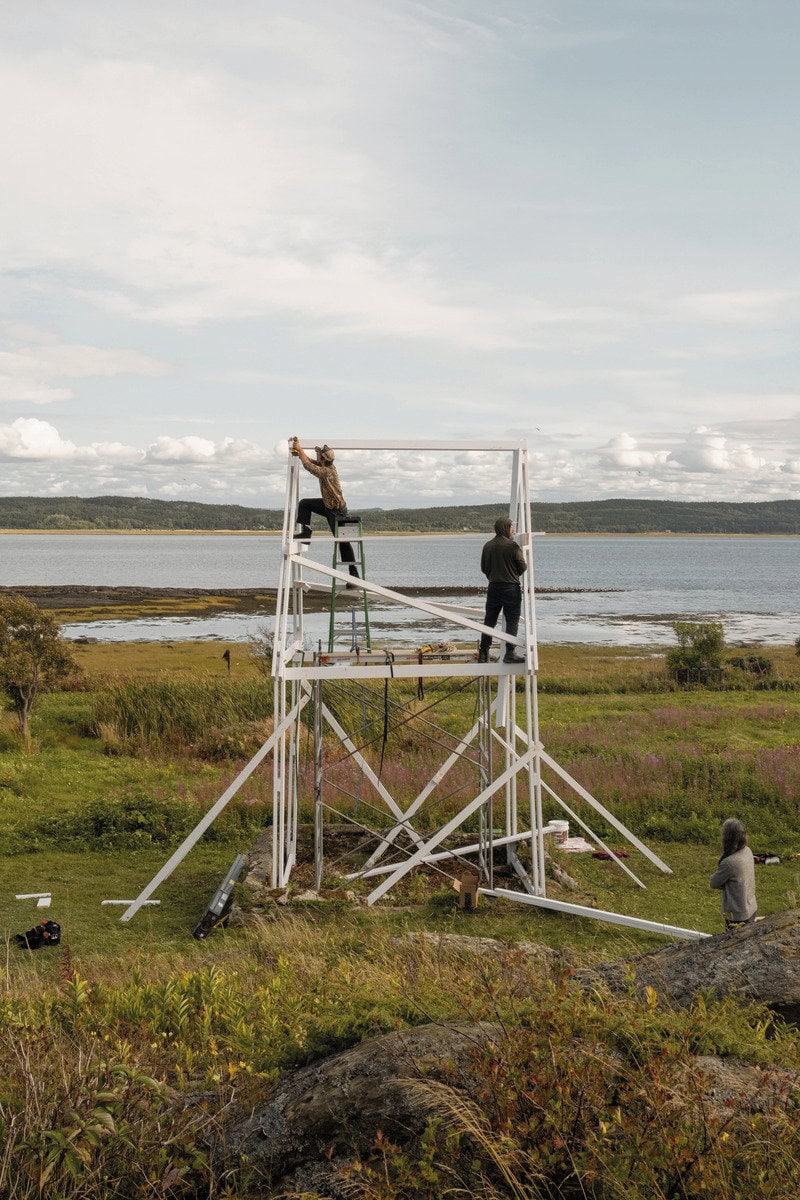
Assembling of one of the four architectural installations
Photo credit: Alex Lesage
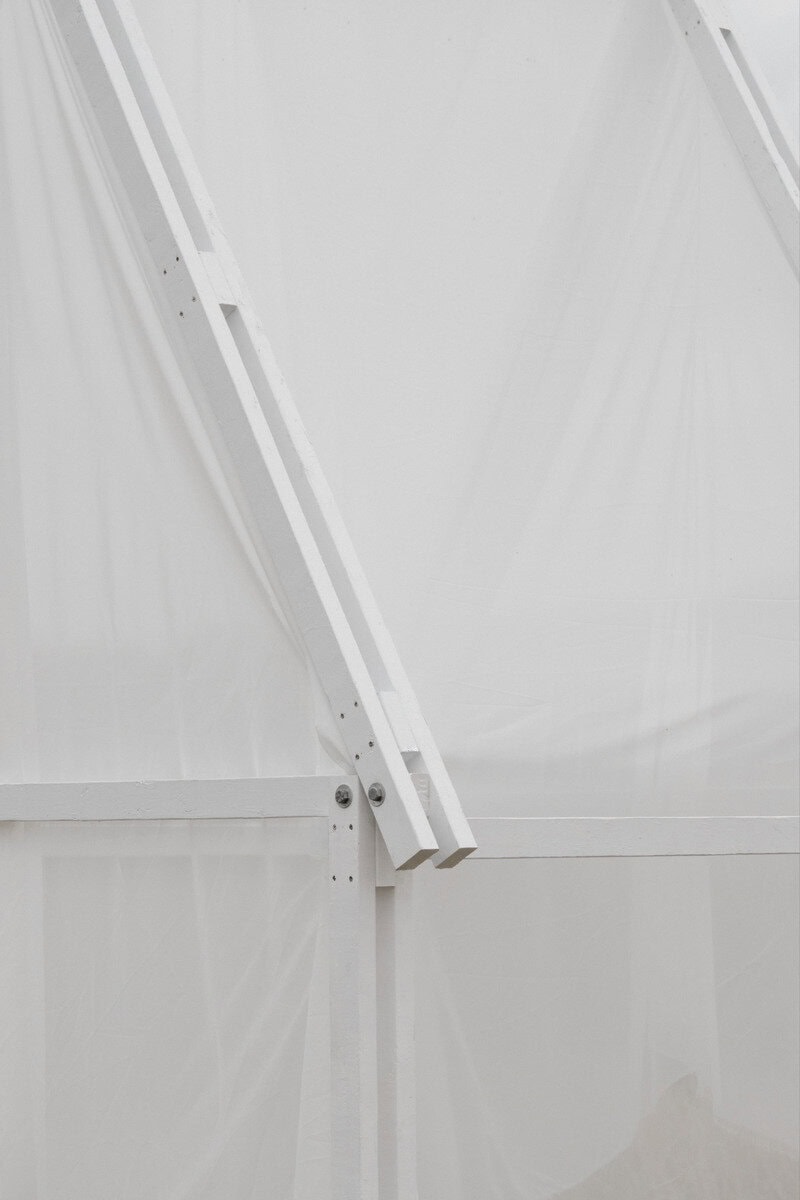
Echoing the spirit of the original vernacular structures, these new installations embraced the simplicity and efficiency of contemporary timber construction.
Photo credit: Alex Lesage
A Fragile Heritage at Risk
Île Verte is home to twelve remaining boucaneries, structures built between the 1920s and 1980s for fish smoking, once vital to the island's economy and culture. Architect and heritage expert Pascal Létourneau reported in 2023 that ten of these buildings retain high or exceptional heritage value. However, many are now in advanced states of decay, with at least one having collapsed. Despite their deterioration, the boucaneries retain unique architectural features—tall, narrow forms, roof ridge openings, and systems for drying and humidity control.
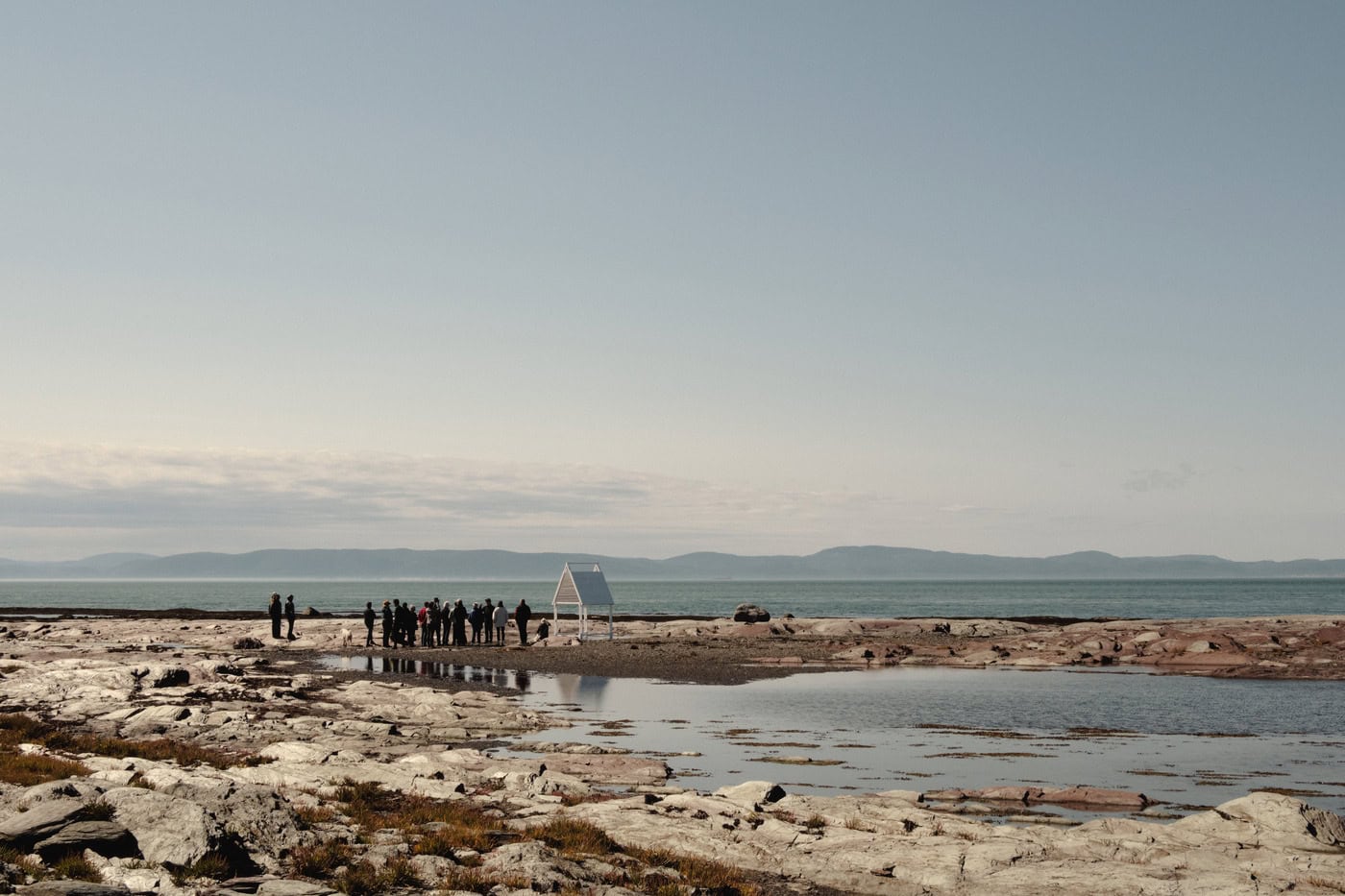
Community dialogue through participatory discussion sessions
Photo credit: Alex Lesage
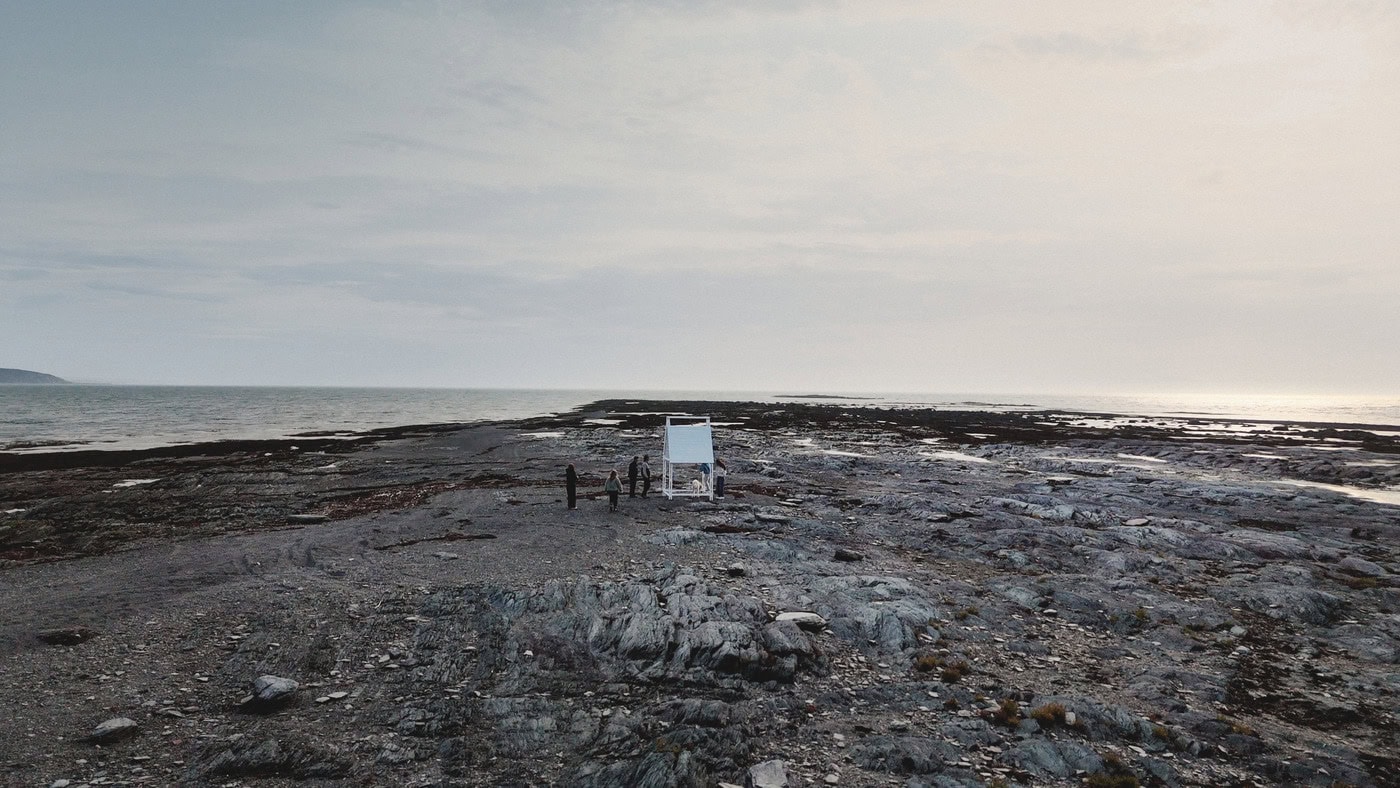
Photo credit: Alex Lesage
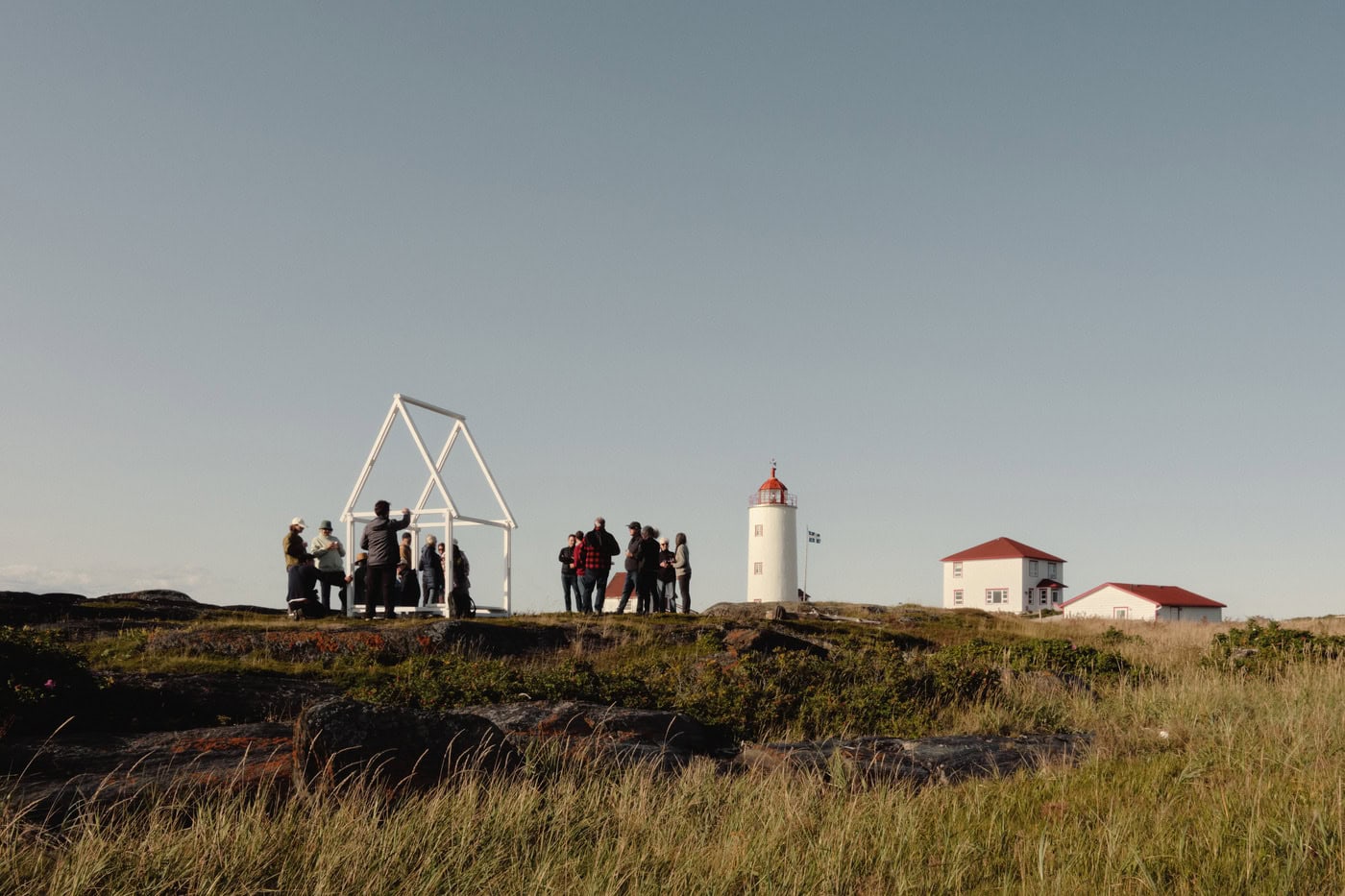
Community dialogue through participatory discussion sessions
Photo credit: Alex Lesage
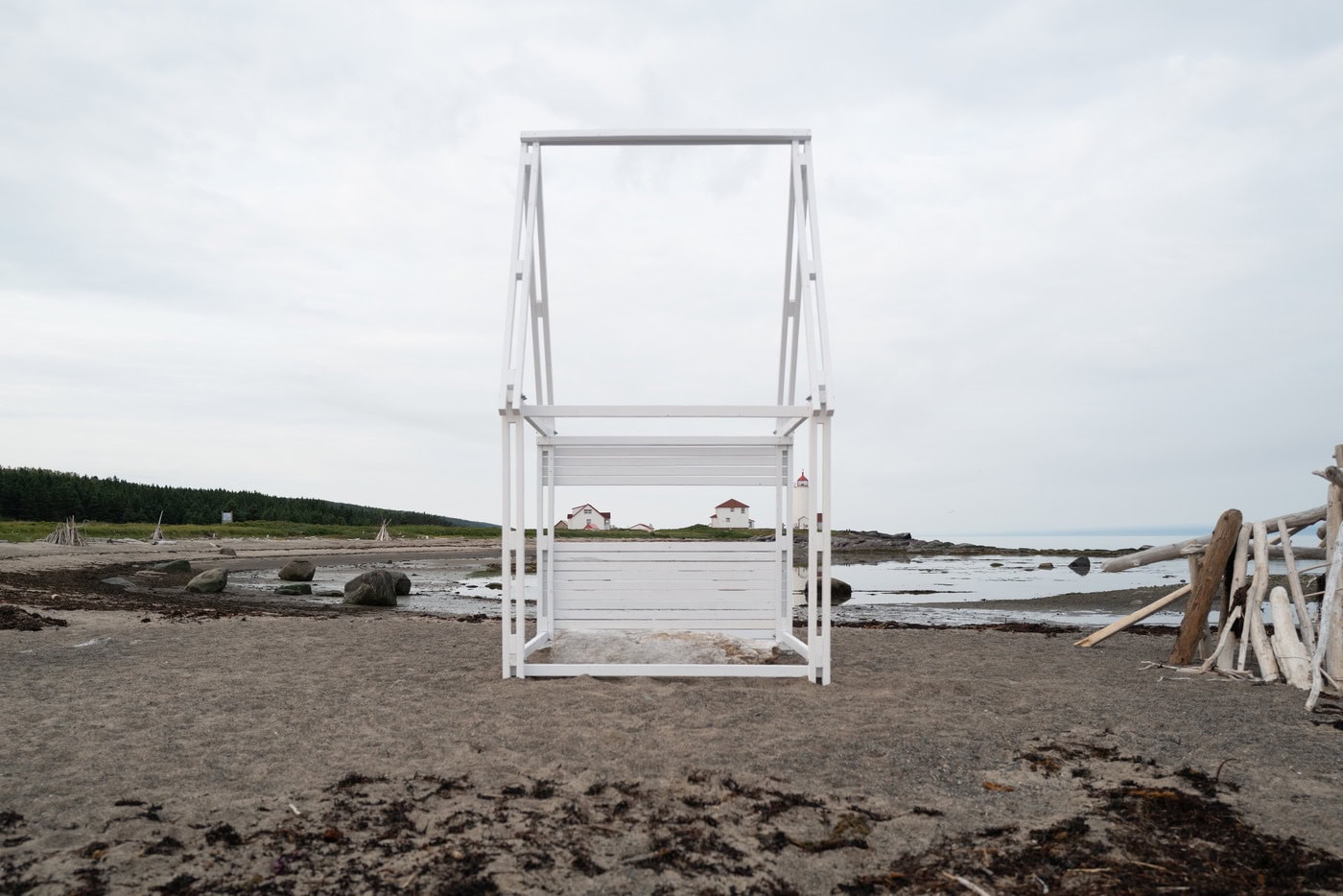
Though originally intended to be dismantled after the architects’ departure, some of the structures were embraced by the community and left standing, adopted as tangible markers of the boucaneries’ untapped potential—keeping the island’s collective memory and core values vibrantly alive.
Photo credit: Alexis Boivin
Community-Driven Preservation and Participation
Rather than restore these structures in a traditional sense, the project seeks to reinterpret them as functional, future-oriented spaces. Through months of immersive fieldwork and participatory design sessions in 2024, Atelier Pierre Thibault collaborated closely with the Verdoyants—as the residents are called—to explore creative and sustainable adaptations. Ideas emerging from the community included transforming boucaneries into greenhouses, artist studios, cultural spaces, and gathering areas, thus strengthening the island’s autonomy and resilience.
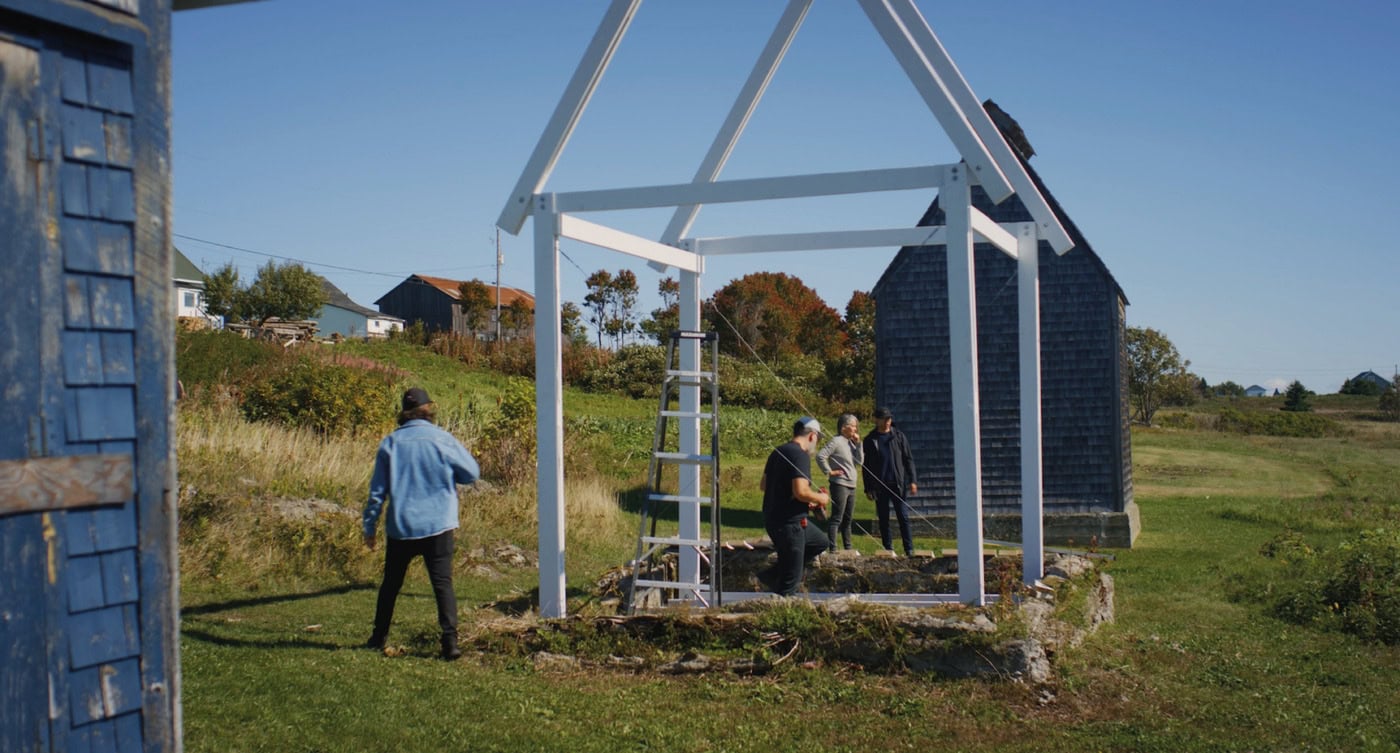
Documentary freeze-frame. Assembling one of the four architectural installations next to an existing smokehouse.
Photo credit: Atelier Pierre Thibault
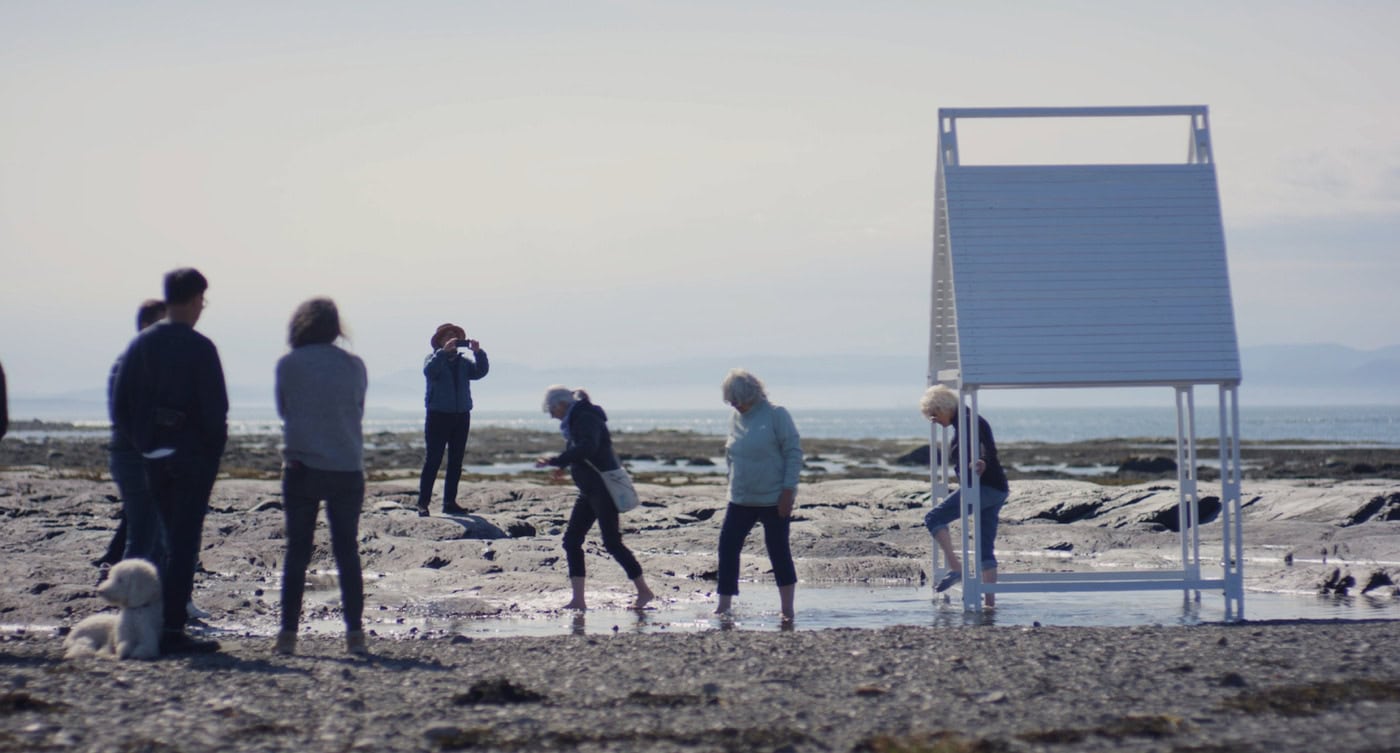
Documentary freeze-frame. Community dialogue. Meeting with the residents of Île Verte. Harnessing the power of abstraction in architectural expression, the reinterpretations served as conceptual canvases—inviting the Verdoyants to reconnect with their cultural and architectural heritage through a hopeful, forward-looking lens.
Photo credit: Atelier Pierre Thibault
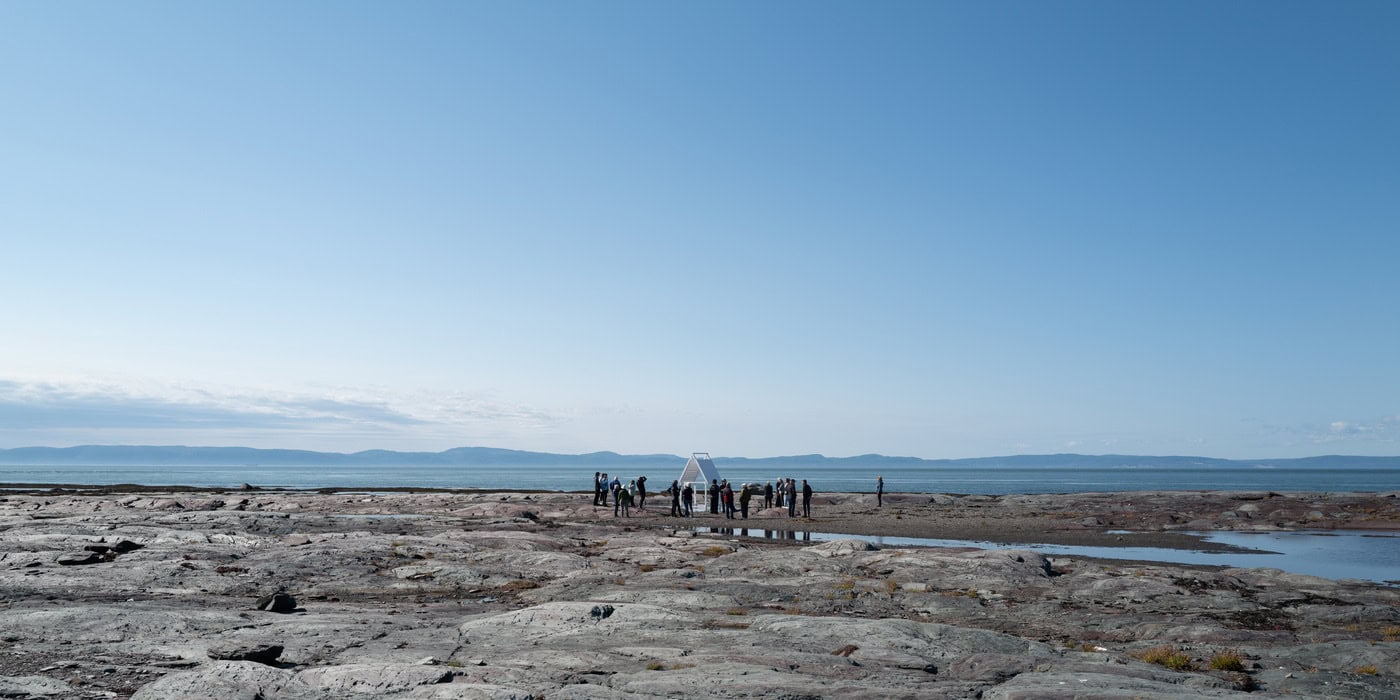
The Atelier Pierre Thibault will return to the island this summer to continue this conversation, following the many concrete ideas proposed by residents—particularly those centered on food autonomy, a pressing issue in isolated environments. More broadly, the project has sparked renewed appreciation for a threatened vernacular heritage, while encouraging the intergenerational transmission of knowledge linked to the boucaneries.
Photo credit: Alexis Boivin
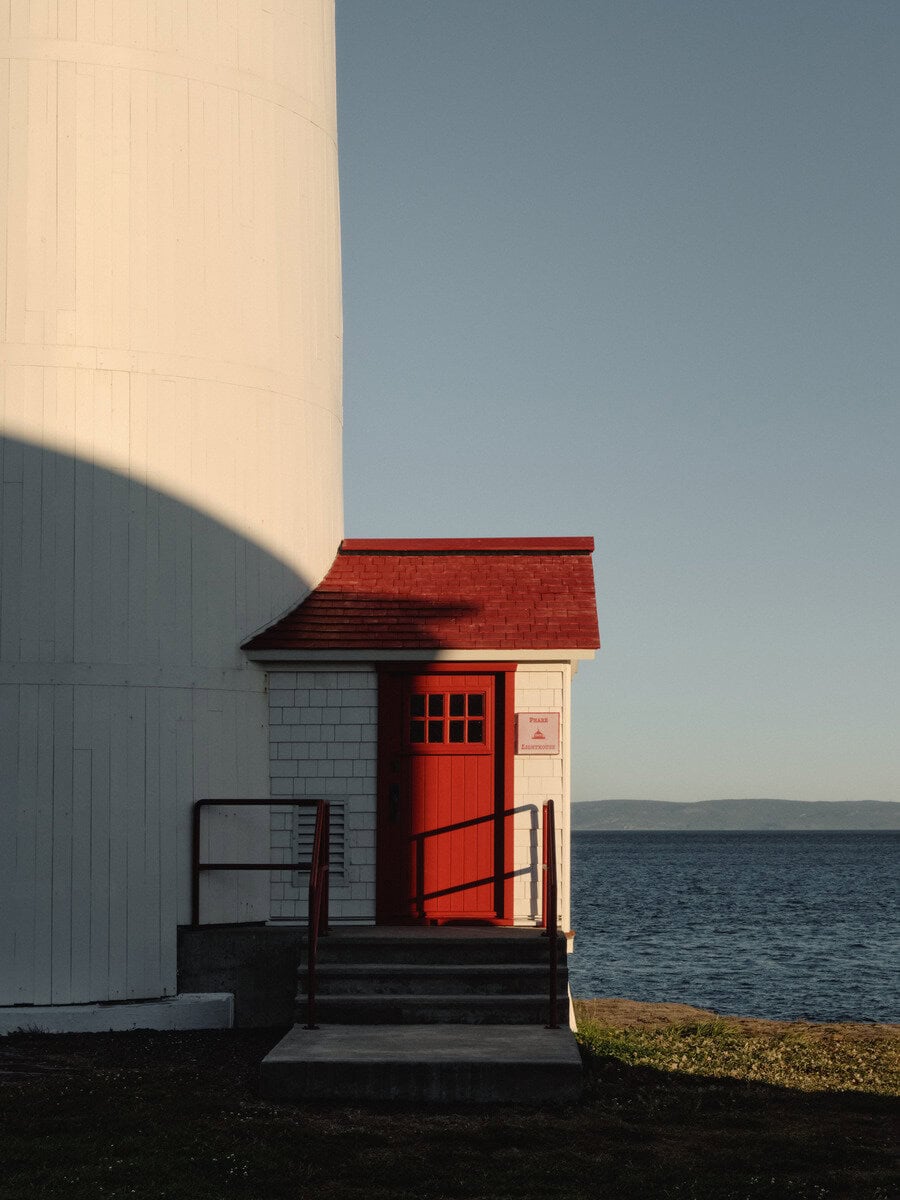
Architectural detail of the Île Verte Lighthouse. The Île Verte Lighthouse was the very first to be built along the St. Lawrence River. Constructed between 1806 and 1809, it housed several lighthouse keepers until 1972. It has been designated a National Historic Site of Canada since 1974, and since 2021, both the Lighthouse and the Lighthouse Station have been classified as heritage properties by Quebec’s Ministry of Culture and Communications. Today, it remains a prime destination for visitors from Quebec and beyond.
Photo credit: Alex Lesage
Climate Change and the Need for Self-Sufficiency
Isolation and climate change are pressing realities for Île Verte. In winter, ferry access is cut off and helicopter travel becomes the only connection to the mainland. Traditional adaptation methods, like ice bridges, are no longer reliable due to global warming. As a result, themes of self-reliance, local food production, and creative cultural life are now central to how the community imagines its future. The project uses architecture as a means to catalyze this shift, turning memory into possibility.
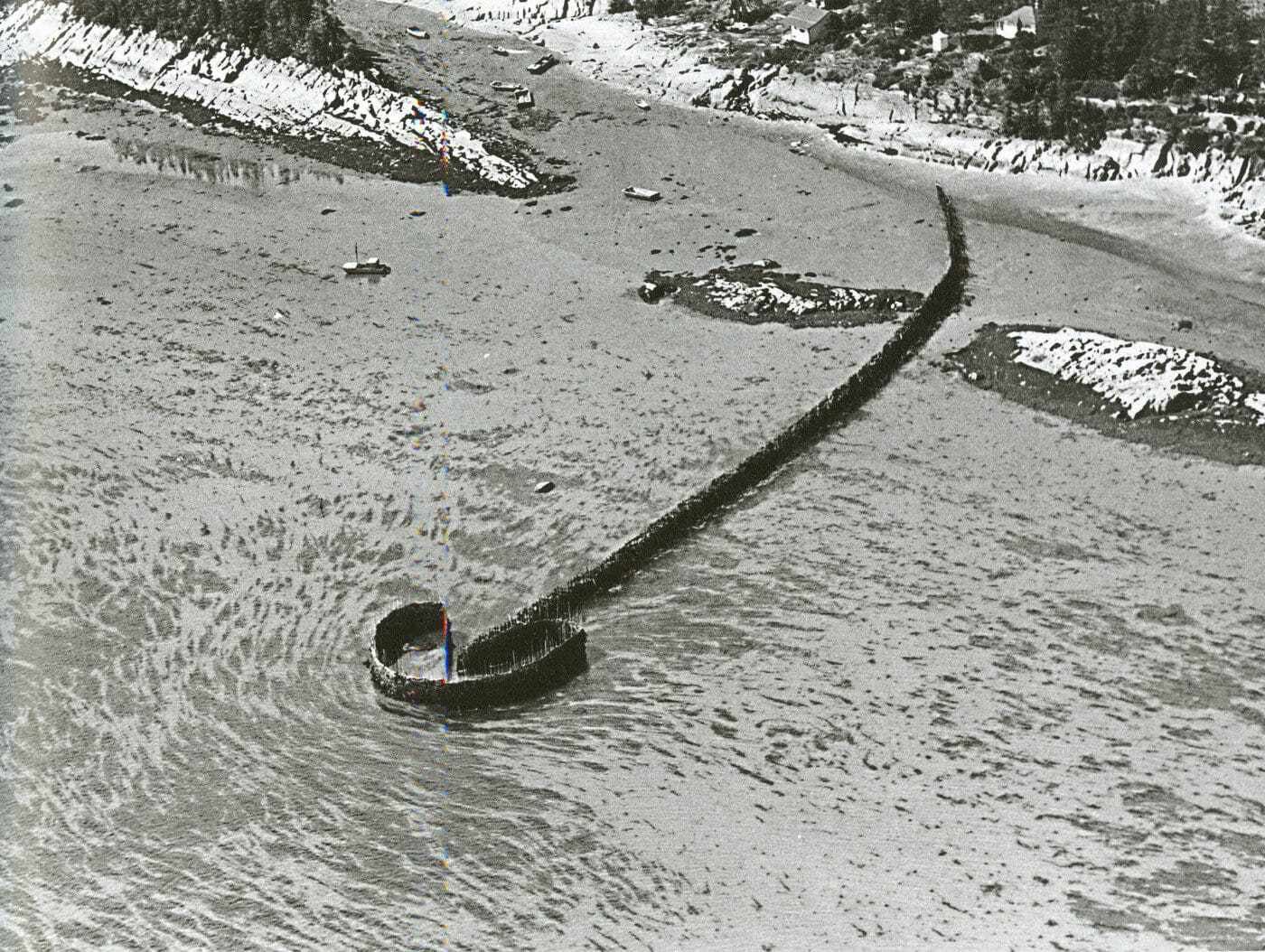
Once integral to the practice of weir fishing, fish smoking was both an economic driver and a cultural hallmark of life on Île Verte.
Photo credit: Jean-Marie Cossette
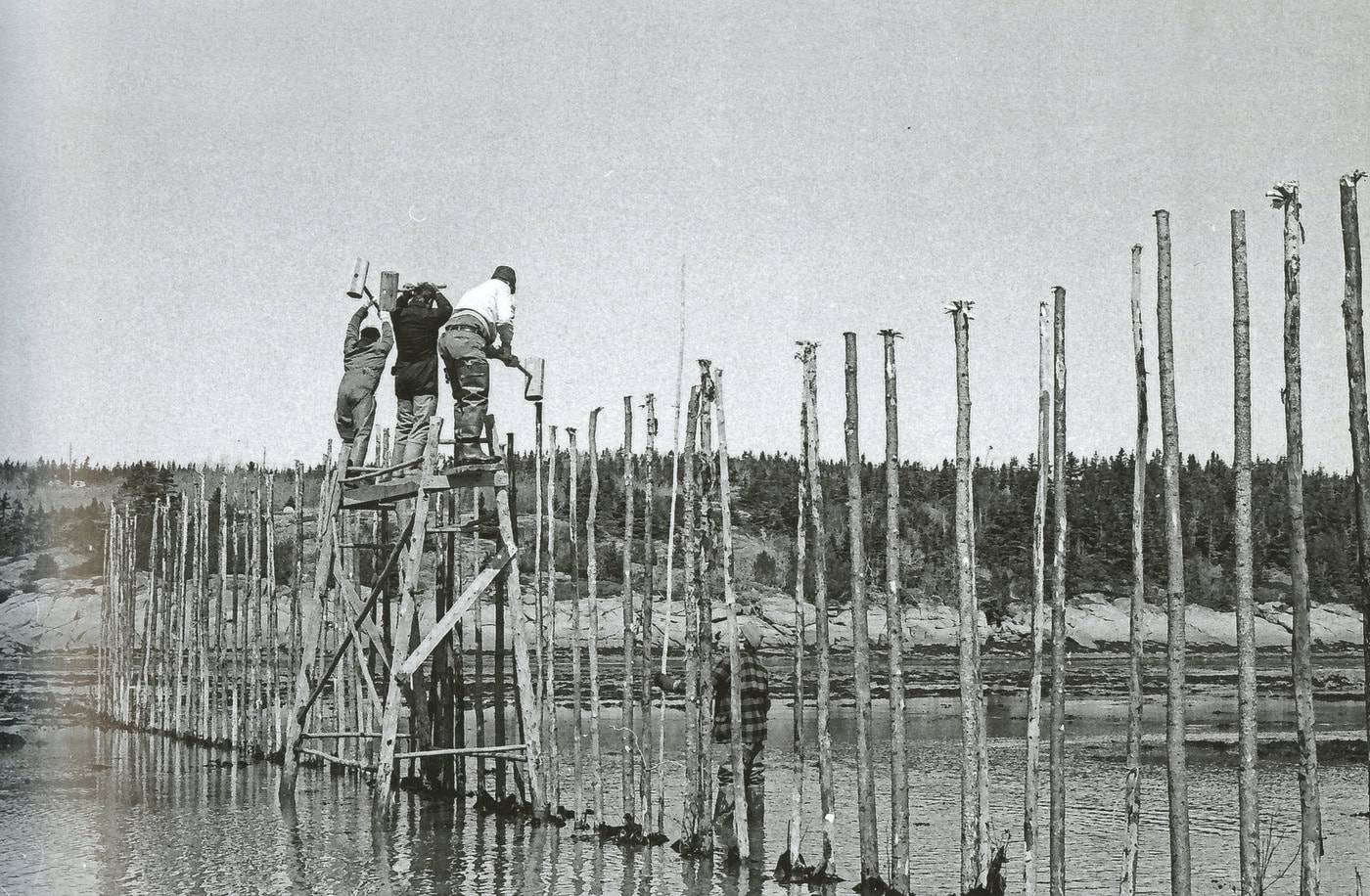
Once integral to the practice of weir fishing, fish smoking was both an economic driver and a cultural hallmark of life on Île Verte.
Photo credit: Jean-Marie Cossette
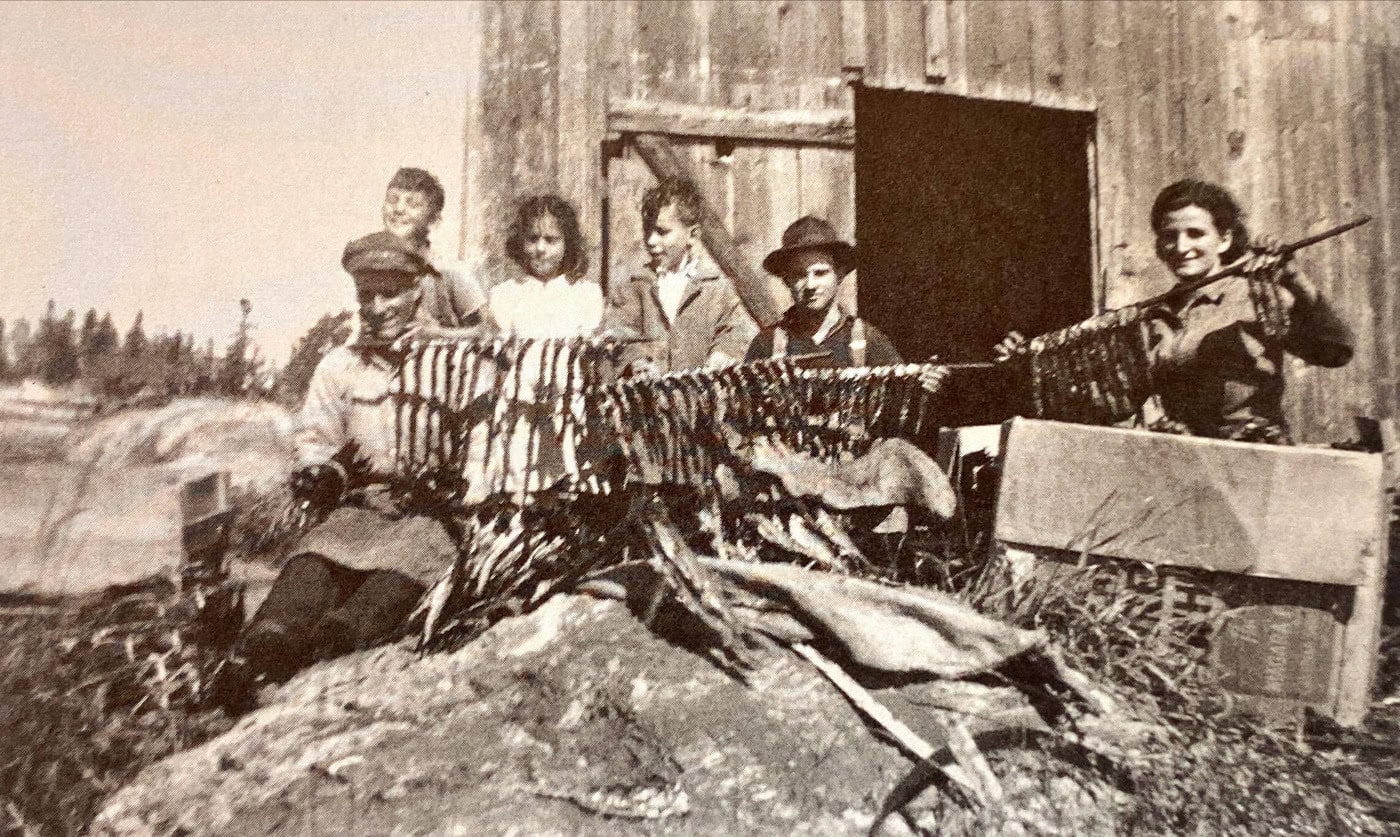
Once integral to the practice of weir fishing, fish smoking was both an economic driver and a cultural hallmark of life on Île Verte.
Photo credit: Mireille Caron
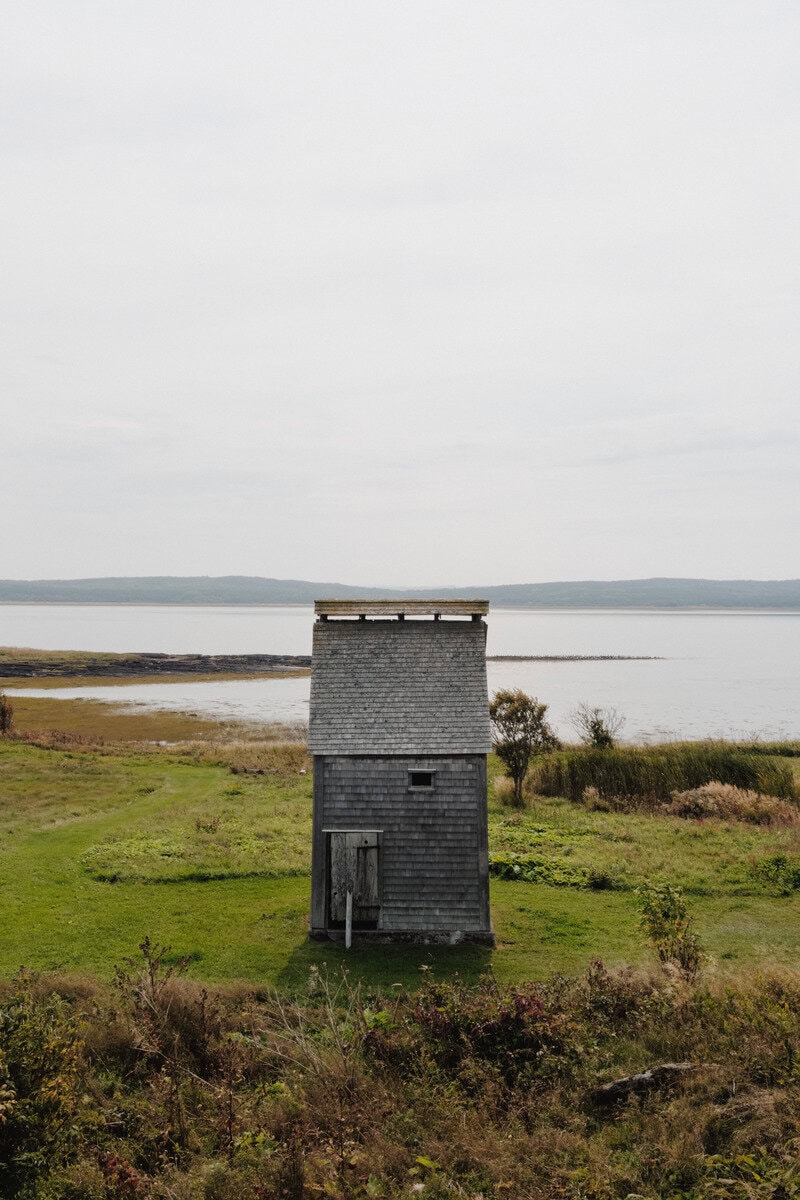
Known as boucaneries, these vernacular buildings, inspired by traditional smokehouses, were constructed between the 1920s and 1980s to withstand the island’s particularly harsh climatic conditions. Once integral to the practice of weir fishing, fish smoking was both an economic driver and a cultural hallmark of life on Île Verte.
Characterized by their windowless façades and vertically elongated forms, the boucaneries gradually fell into disuse. Changes in hygiene regulations, along with the decline of the local fishing industry, rendered them obsolete. Since then, wind, snow, and rain have continued to erode these symbolic structures, which, for decades, had remained without a renewed purpose.
Photo credit: Alex Lesage
Ephemeral Architecture with Lasting Impact
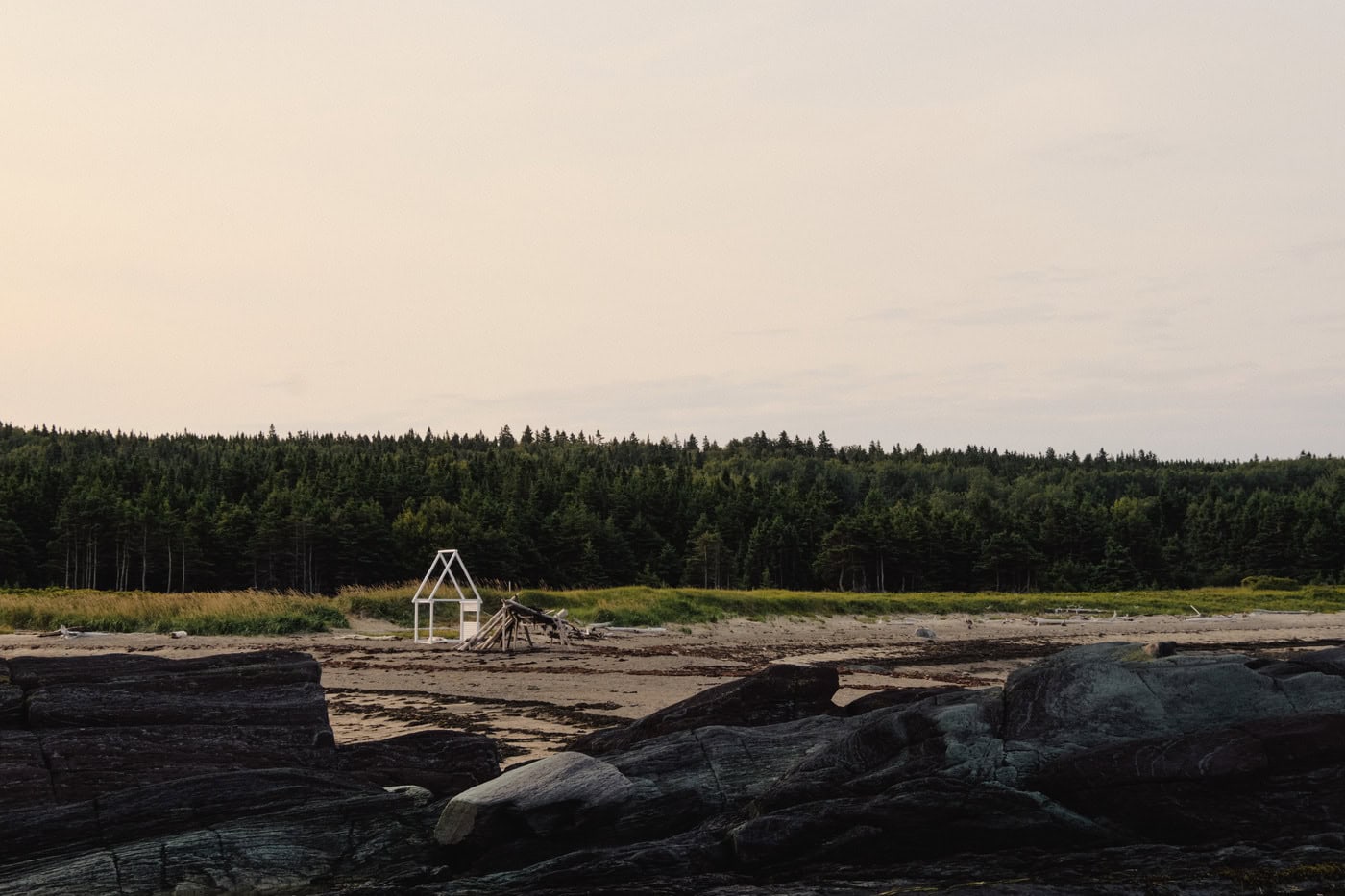
In September 2024, Atelier Pierre Thibault returned to the island with ephemeral, white timber structures—lightweight and transportable—installed at key locations from the shoreline to inland meadows. These installations abstractly echoed the boucaneries' forms and invited reflection, dialogue, and imagination. While designed to be temporary, some structures were adopted by the community and left standing, symbolizing the enduring relevance of the past and the promise of reinvention.
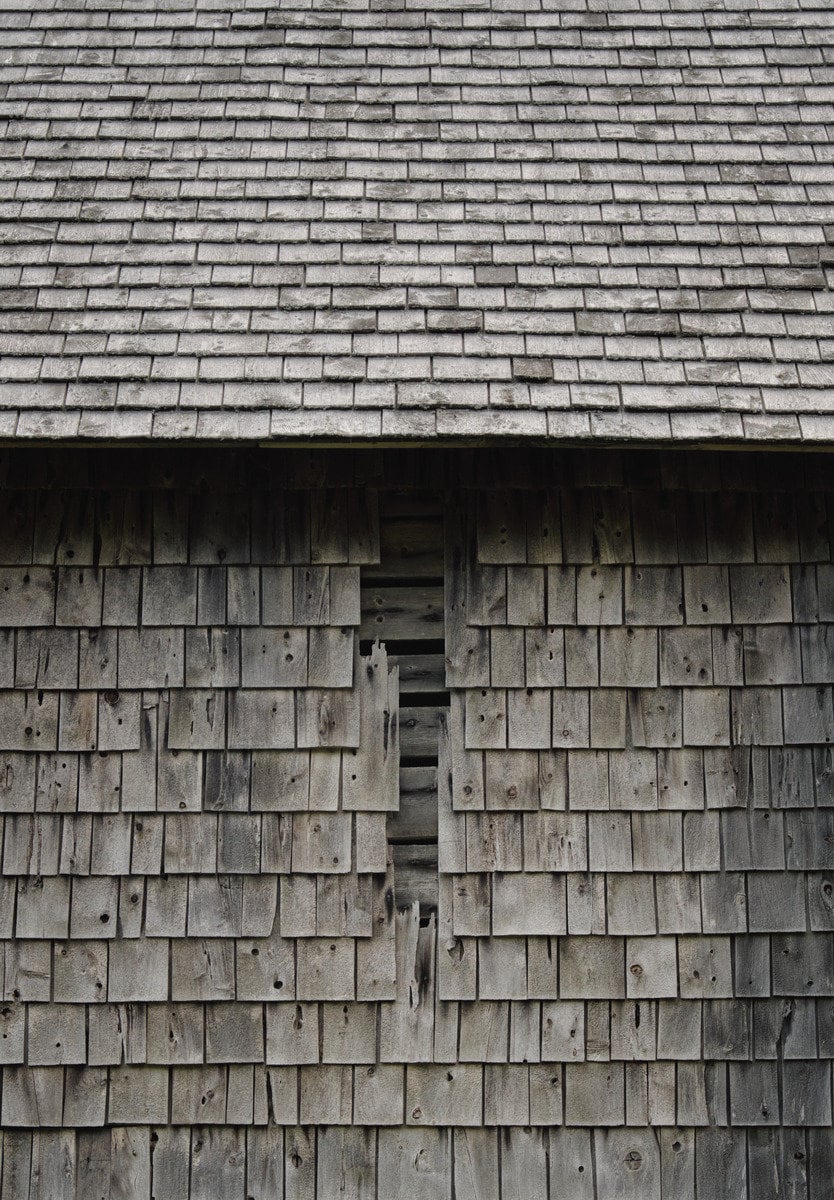
A 2023 report by architect Pascal Létourneau, a specialist in heritage conservation, revealed that among the twelve remaining smokehouses on Île Verte, four possess exceptional heritage value, while six are considered to have high heritage value. Key architectural features such as their pronounced verticality, roof ridge openings, drying pole systems, and humidity control mechanisms were identified as elements worth preserving. Unfortunately, half of these boucaneries are now in an advanced or critical state of deterioration—one even collapsed a few years ago.
Photo credit: Alex Lesage
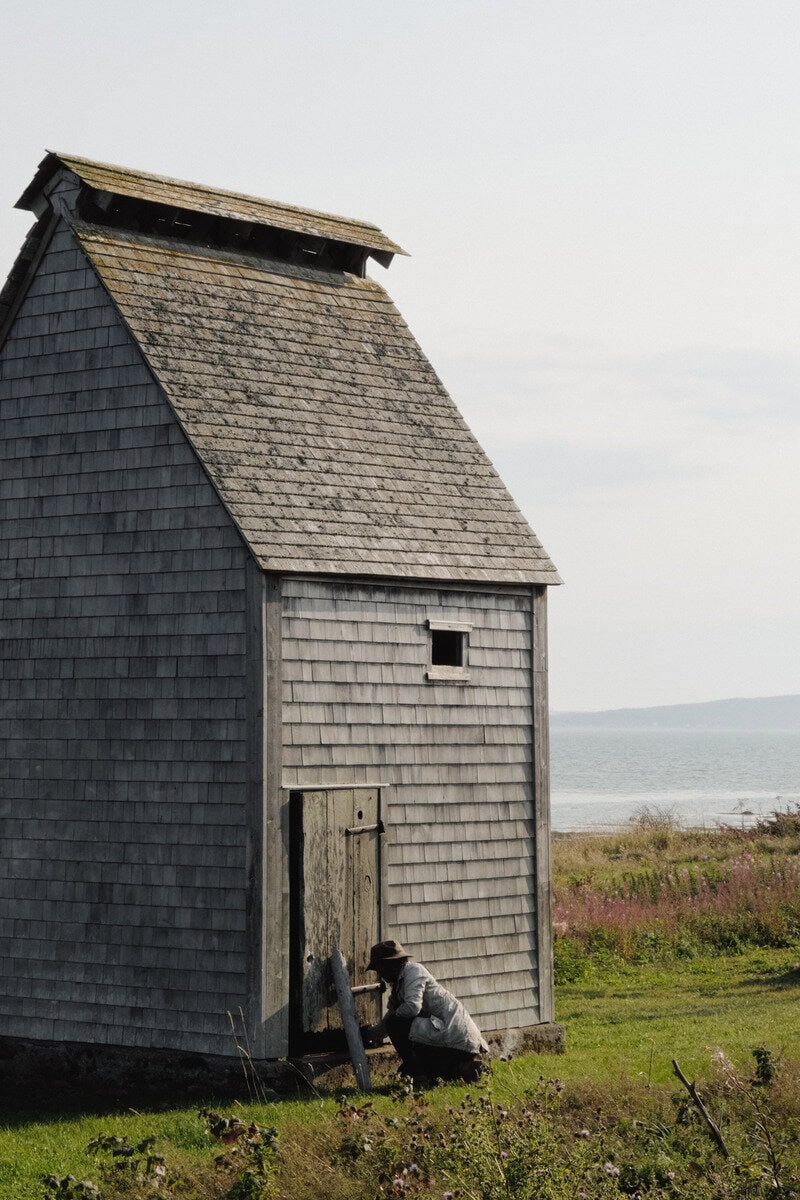
In response to the Verdoyants’ strong desire to preserve and revitalize this unique built heritage, the Atelier launched a participatory design project aimed at exploring new uses for these structures. At the heart of the initiative lies a central question: How can these silent witnesses of the past help shape the future?
Photo credit: Alex Lesage
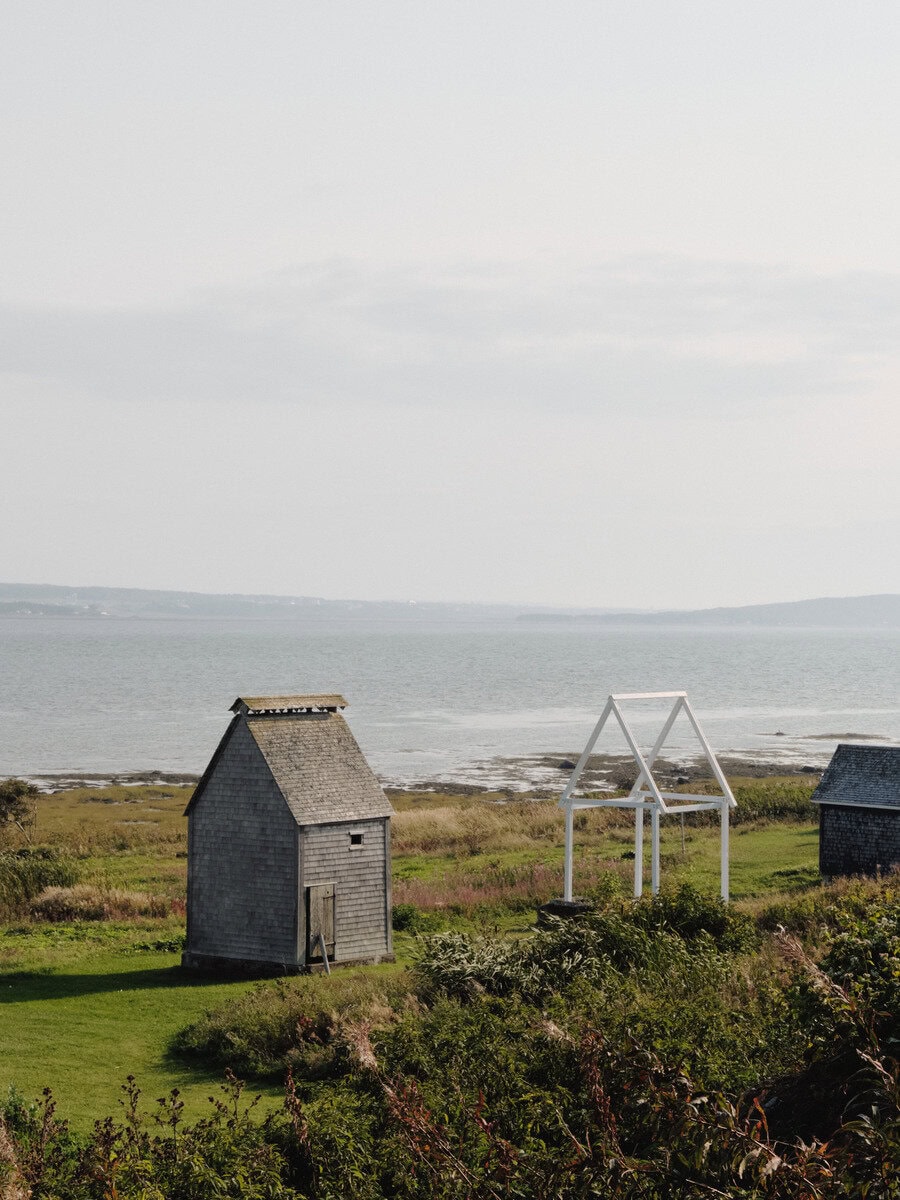
Architectural installations to reveal new relationships between landscape, volume, uses, and people
Photo credit: Alex Lesage
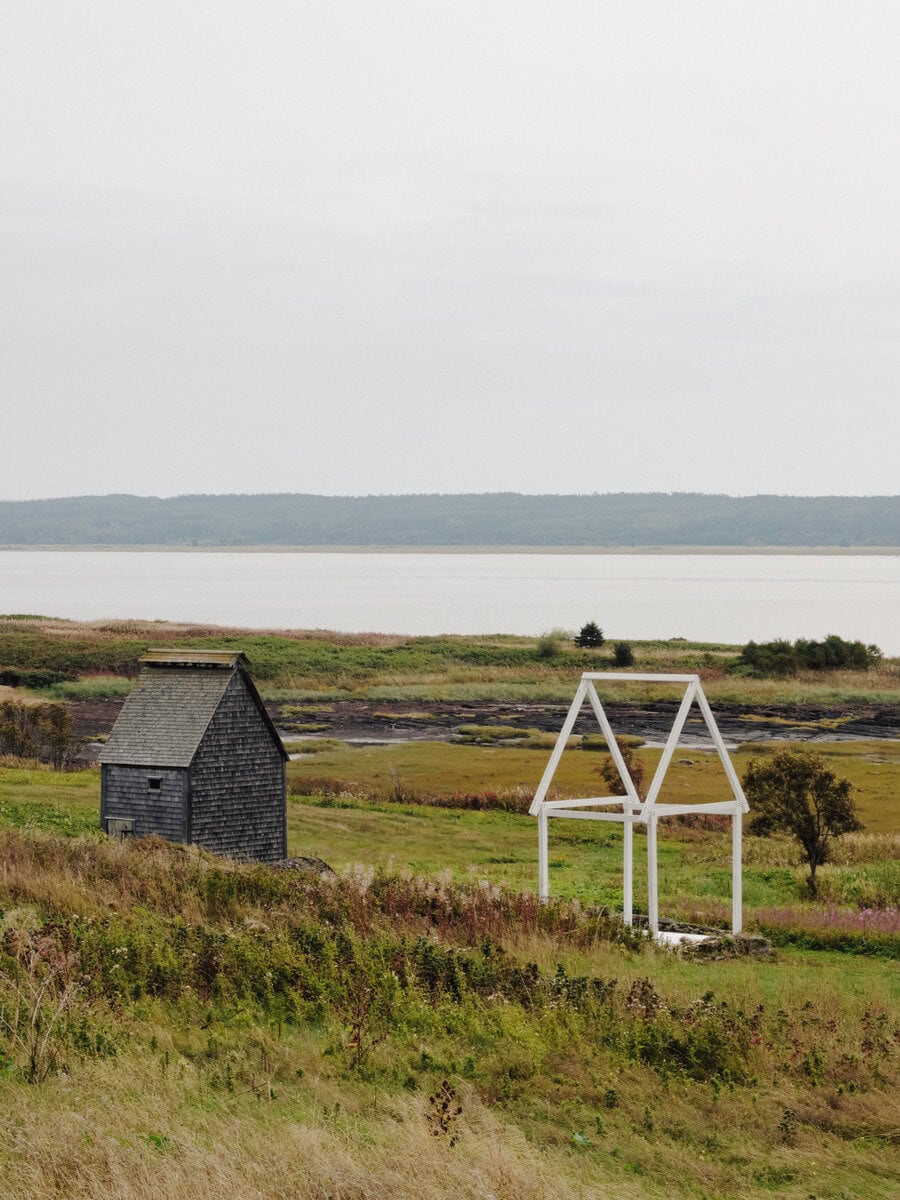
Architectural installations to reveal new relationships between landscape, volume, uses, and people
Photo credit: Alex Lesage
A Laboratory of Ideas
From these ephemeral interventions, several practical and symbolic proposals emerged:
- Greenhouses: Converting boucaneries with polycarbonate panels to regulate humidity and allow year-round cultivation.
- Art Studios: Repurposing drying poles for supporting artworks, while adding light through minimal openings.
- Renewed Smoking Facilities: Reviving traditional fish smoking, adapted to modern fire safety standards.
- Everyday Uses: Residents proposed transforming boucaneries into chicken coops, garlic-drying sheds, and storage areas, adding everyday functionality to cultural heritage.
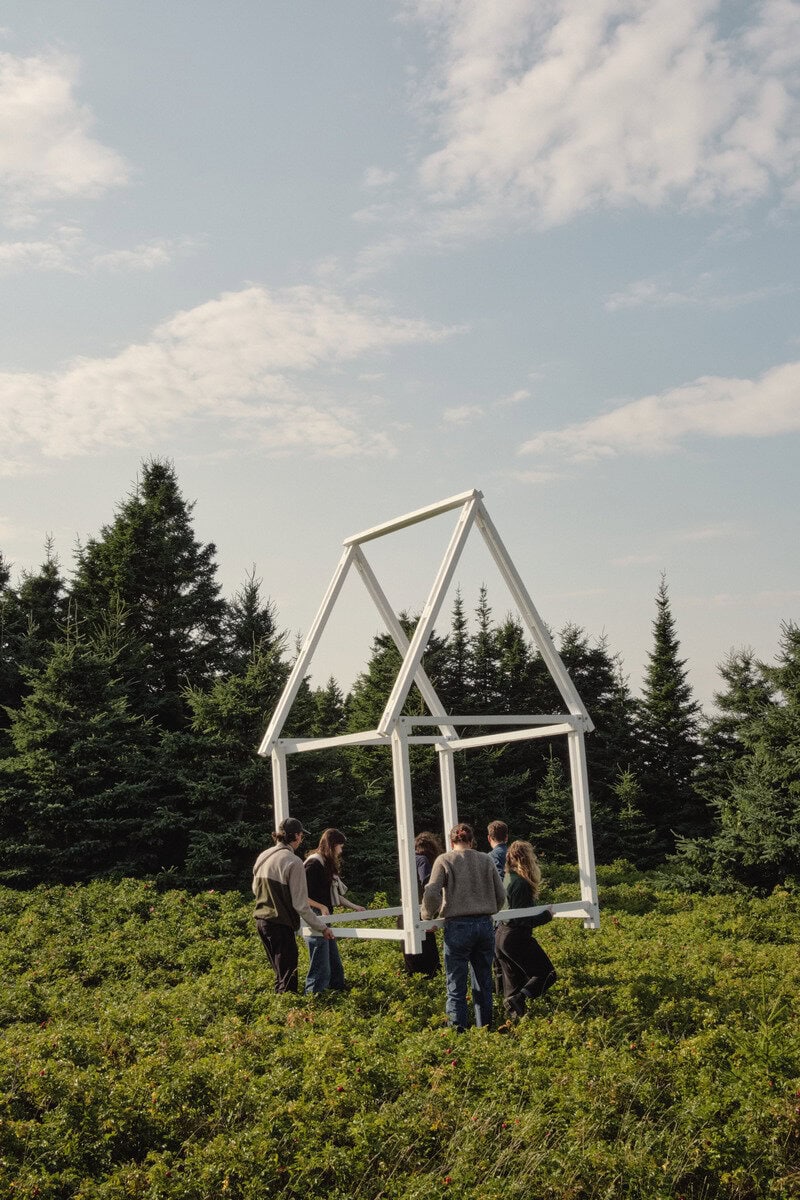
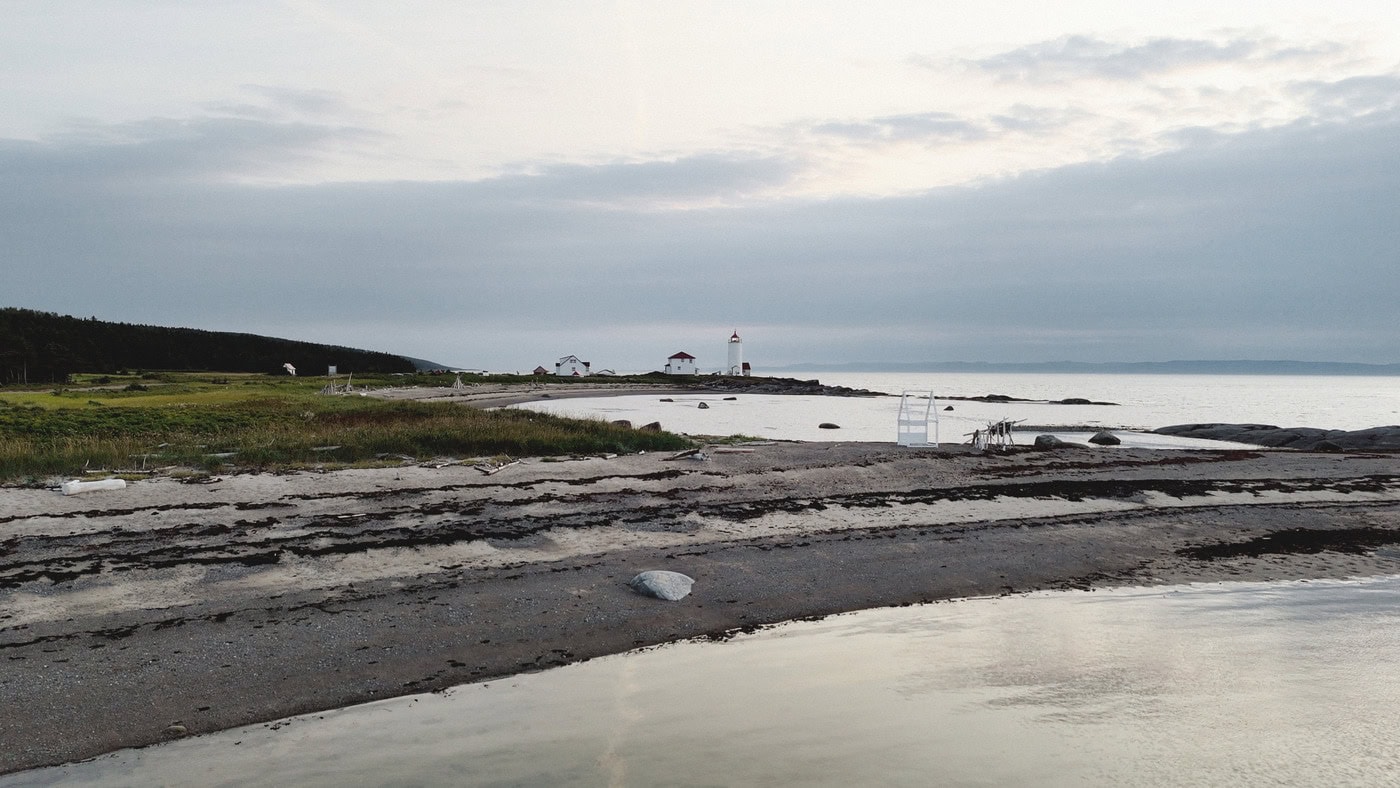
Lightweight and easily transportable, the installations were moved across the island—from the shoreline to fields and meadows—like evocative, nomadic figures.
Photo credit: Alex Lesage
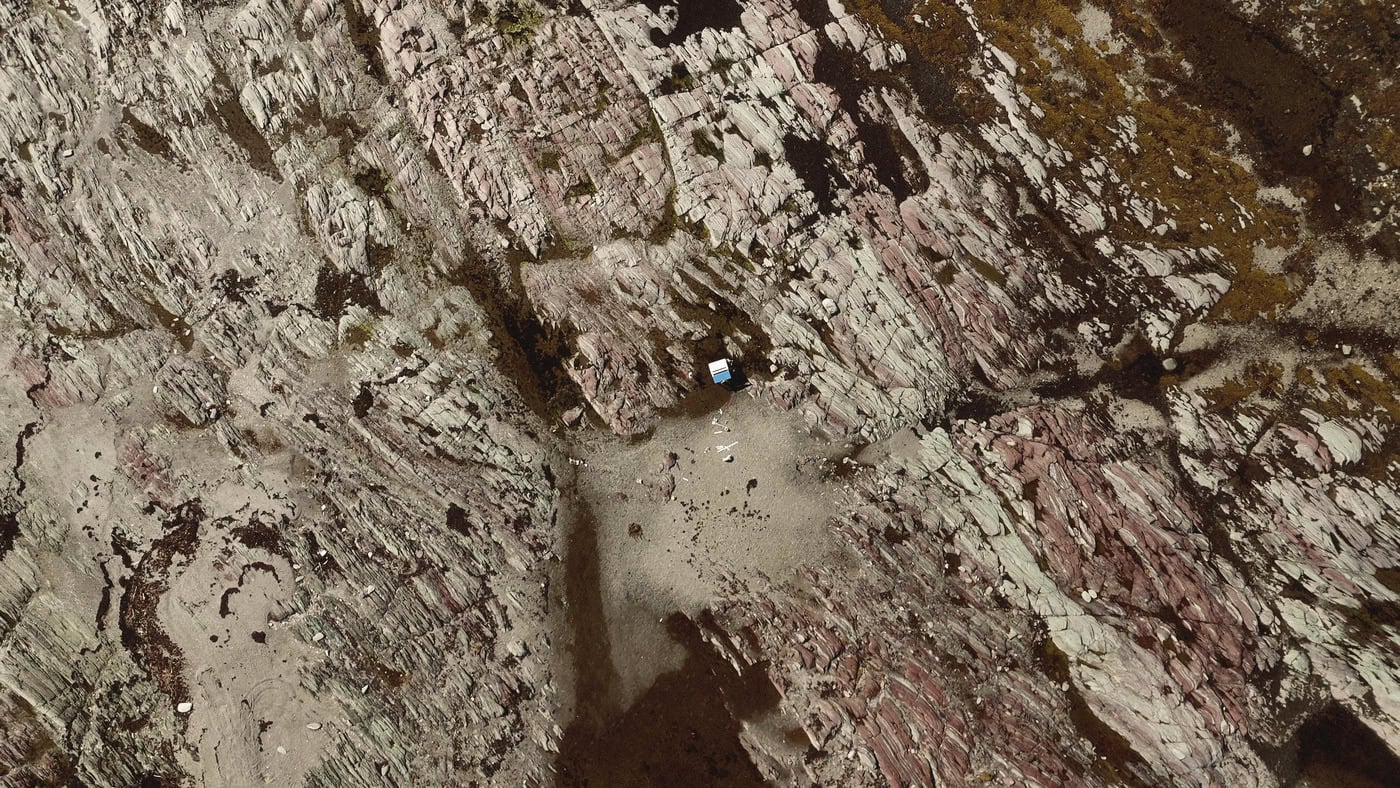
Lightweight and easily transportable, the installations were moved across the island—from the shoreline to fields and meadows—like evocative, nomadic figures.
Photo credit: Alex Lesage
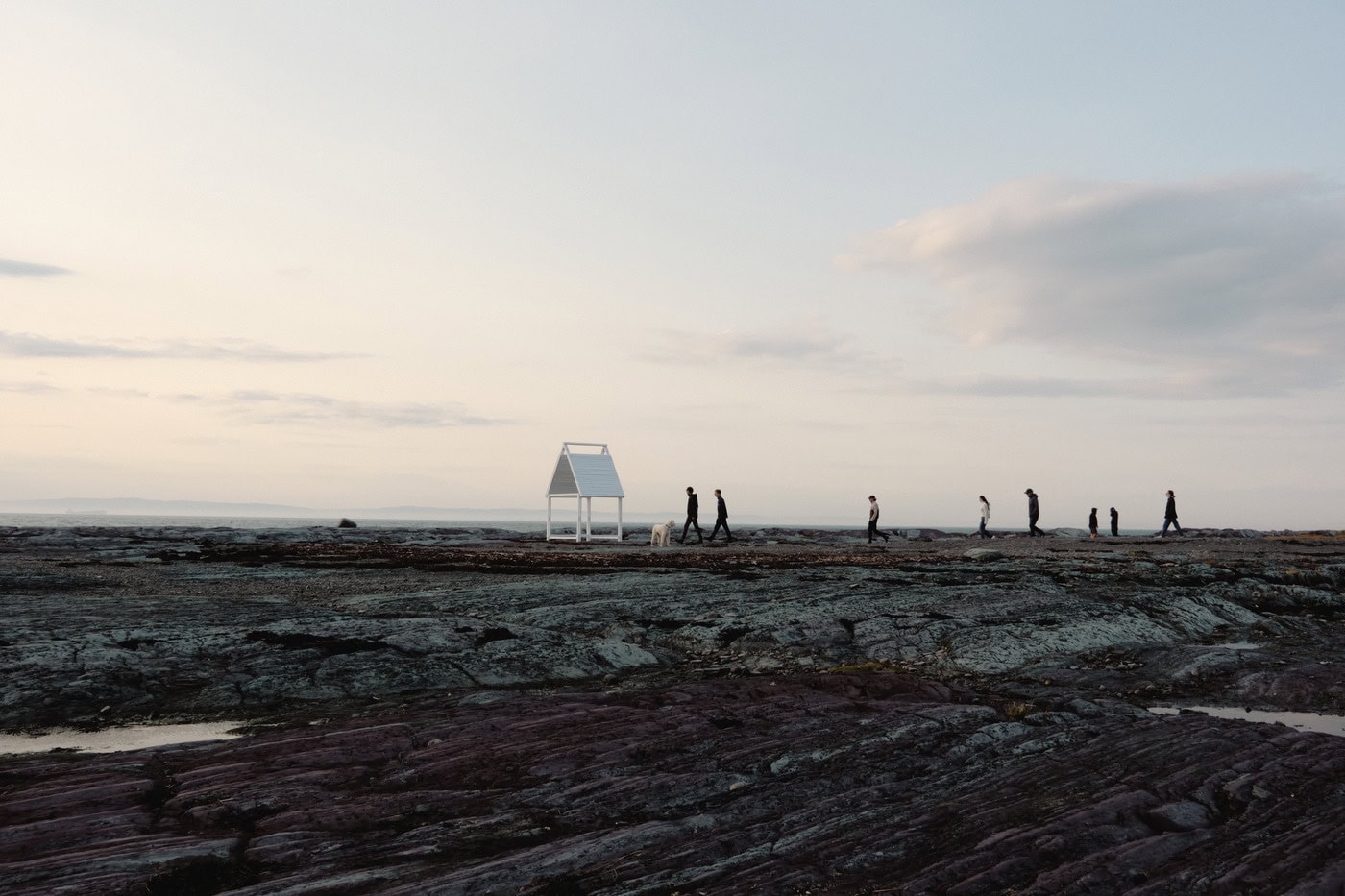
Community dialogue through participatory discussion sessions
Photo credit: Alex Lesage
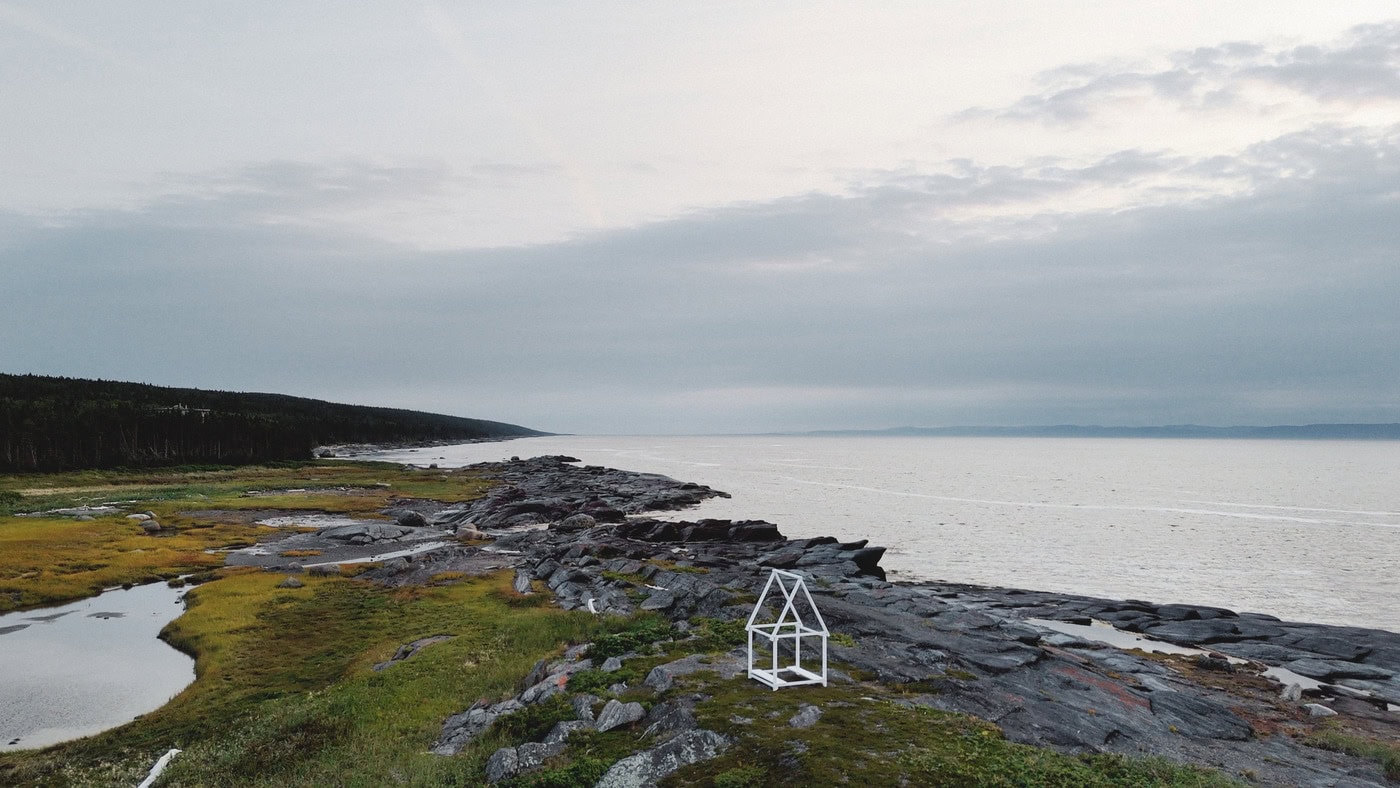
The result: elegant, open frameworks that stood as inspiring visions of the future, thoughtfully integrated into the island’s varied landscapes. These temporary structures revealed new relationships between landscape, built form, and community.
Photo credit: Alex Lesage
A Poetic Connection to Place
Living on Île Verte means existing in sync with tides, seasons, and wind. With its rugged coastlines, spruce forests, and harsh winters, the island demands resilience. The project reflects this environment not only through architectural form but also through process—deep listening, local involvement, and sensitivity to rhythm and need. The resulting structures are as much about community empowerment as they are about physical design.
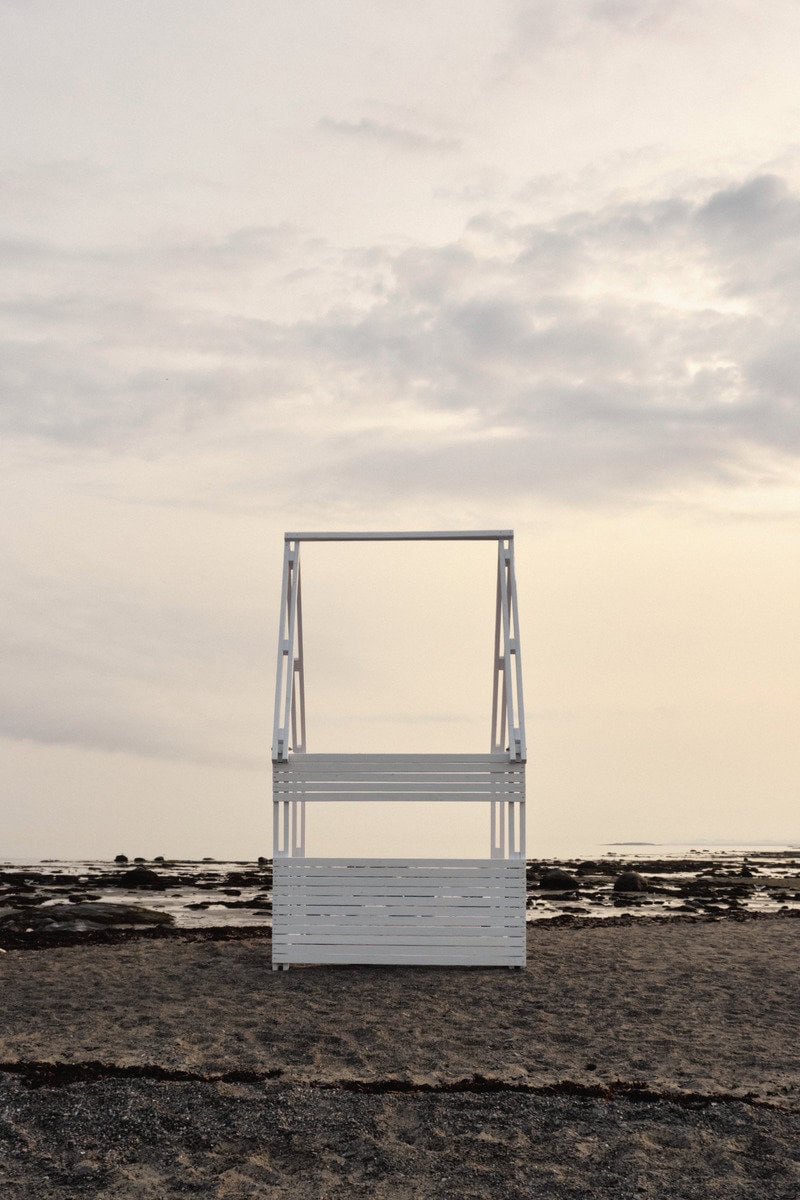
The result: elegant, open frameworks that stood as inspiring visions of the future, thoughtfully integrated into the island’s varied landscapes. These temporary structures revealed new relationships between landscape, built form, and community.
Photo credit: Alex Lesage
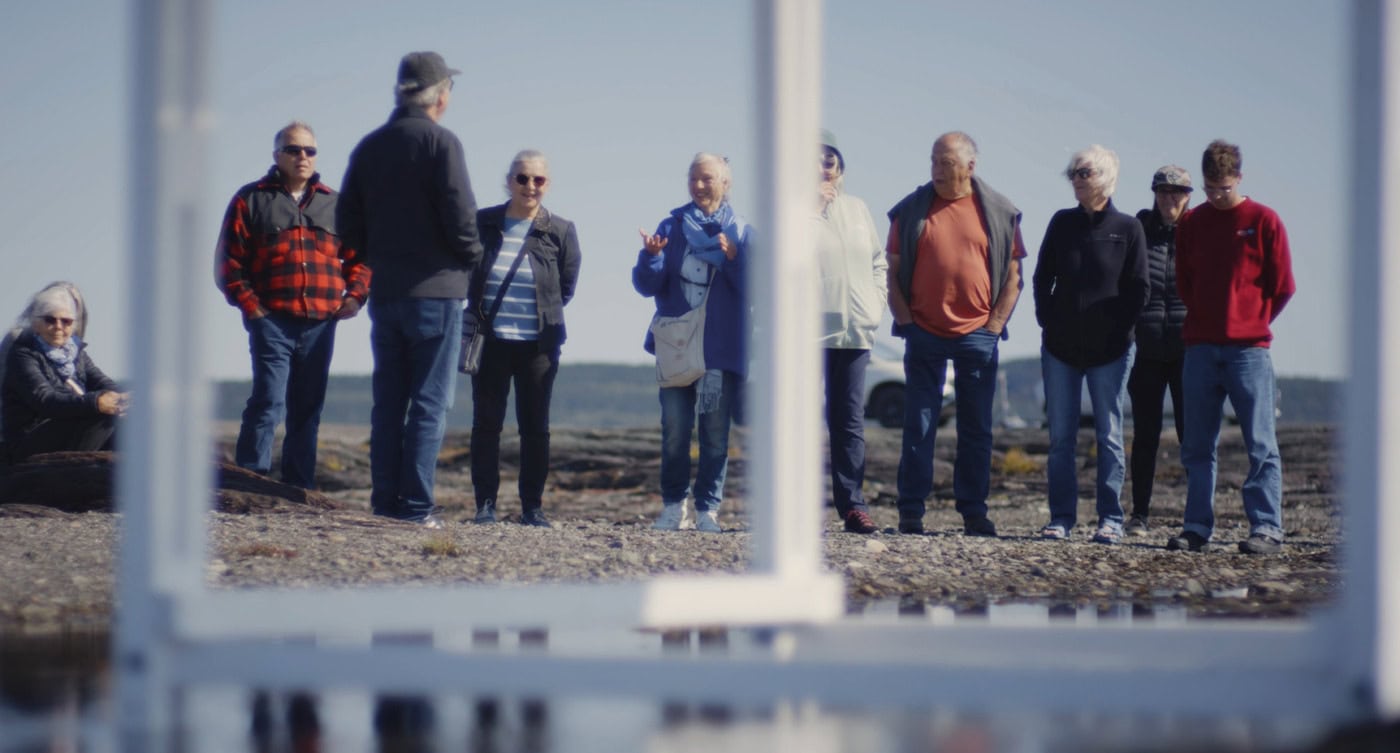
Documentary freeze-frame. Community dialogue. Meeting with the residents of Île Verte
Photo credit: Atelier Pierre Thibault
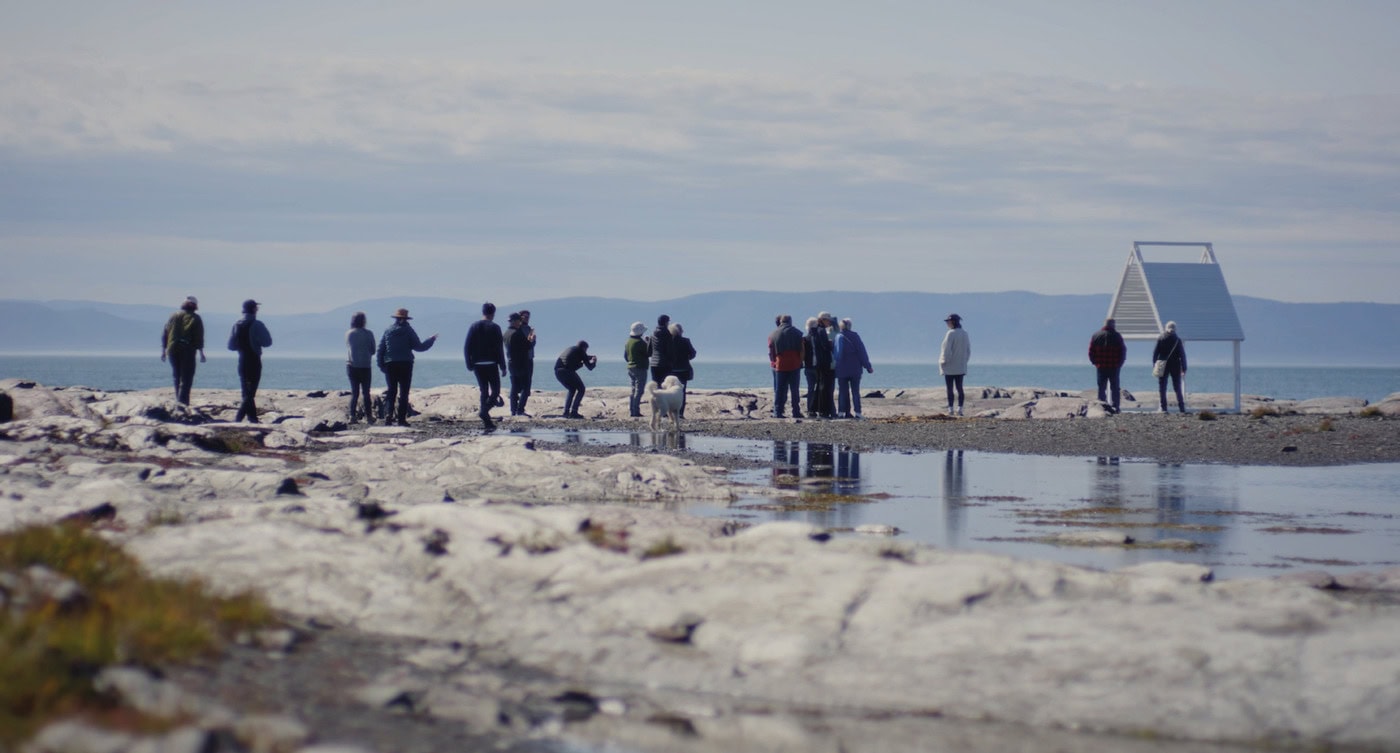
Documentary freeze-frame. Community dialogue. Meeting with the residents of Île Verte. Harnessing the power of abstraction in architectural expression, the reinterpretations served as conceptual canvases—inviting the Verdoyants to reconnect with their cultural and architectural heritage through a hopeful, forward-looking lens.
Photo credit: Atelier Pierre Thibault
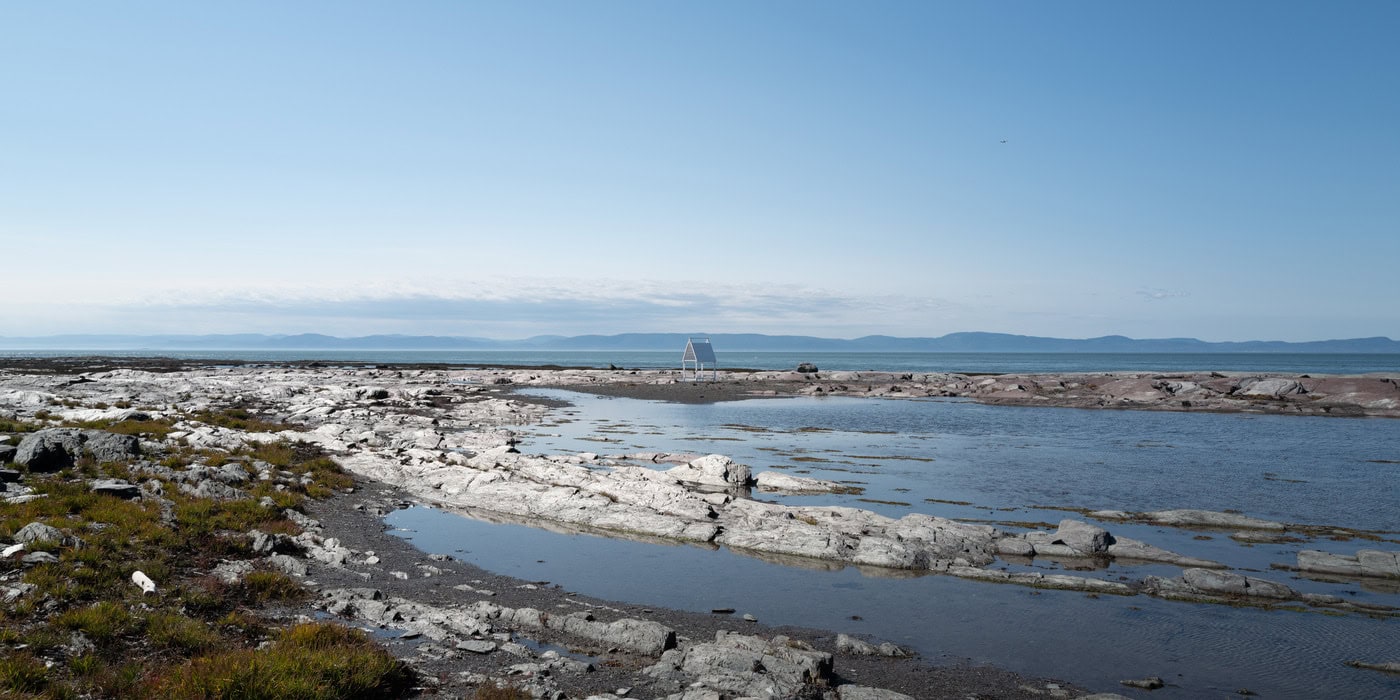
Though ephemeral by design, the project on Île Verte has left lasting and meaningful traces. Some of the installations remain standing, having been spontaneously adopted by the community, while others were dismantled—prompting reflection on their potential future. In a creative gesture to sustain public engagement, the municipality of Notre-Dame-des-Sept-Douleurs recently raffled off two of the structures to residents, free of charge. For the mayor, this initiative offers an original way to extend the dialogue around built heritage.
Photo credit: Alexis Boivin
Conclusion: Memory, Adaptation, and Imagination
What began as a heritage conservation effort became a profound act of collective imagination. The ephemeral installations, rooted in tradition yet open to change, demonstrate how architecture can serve as both memory and vision—honoring the past while empowering communities to adapt to the future. On Île Verte, the boucaneries are no longer just relics. Through shared creativity and design, they have become vessels for resilience, autonomy, and cultural continuity in the face of climate and social change.
For the Atelier Pierre Thibault team, this collective experience reinforced their cohesion, nurtured their initiative, and deepened their commitment to an architecture grounded in lived experience and local realities. Above all, the project affirmed architecture’s role as a tool for social and cultural mediation—capable of opening spaces for encounter, remembrance, and imagination for the future.
Photo credit: Alexis Boivin
The result: elegant, open frameworks that stood as inspiring visions of the future, thoughtfully integrated into the island’s varied landscapes. These temporary structures revealed new relationships between landscape, built form, and community.
Photo credit: Alex Lesage
Documentary freeze-frame. Community dialogue. Meeting with the residents of Île Verte
Photo credit: Atelier Pierre Thibault
The result: elegant, open frameworks that stood as inspiring visions of the future, thoughtfully integrated into the island’s varied landscapes. These temporary structures revealed new relationships between landscape, built form, and community.
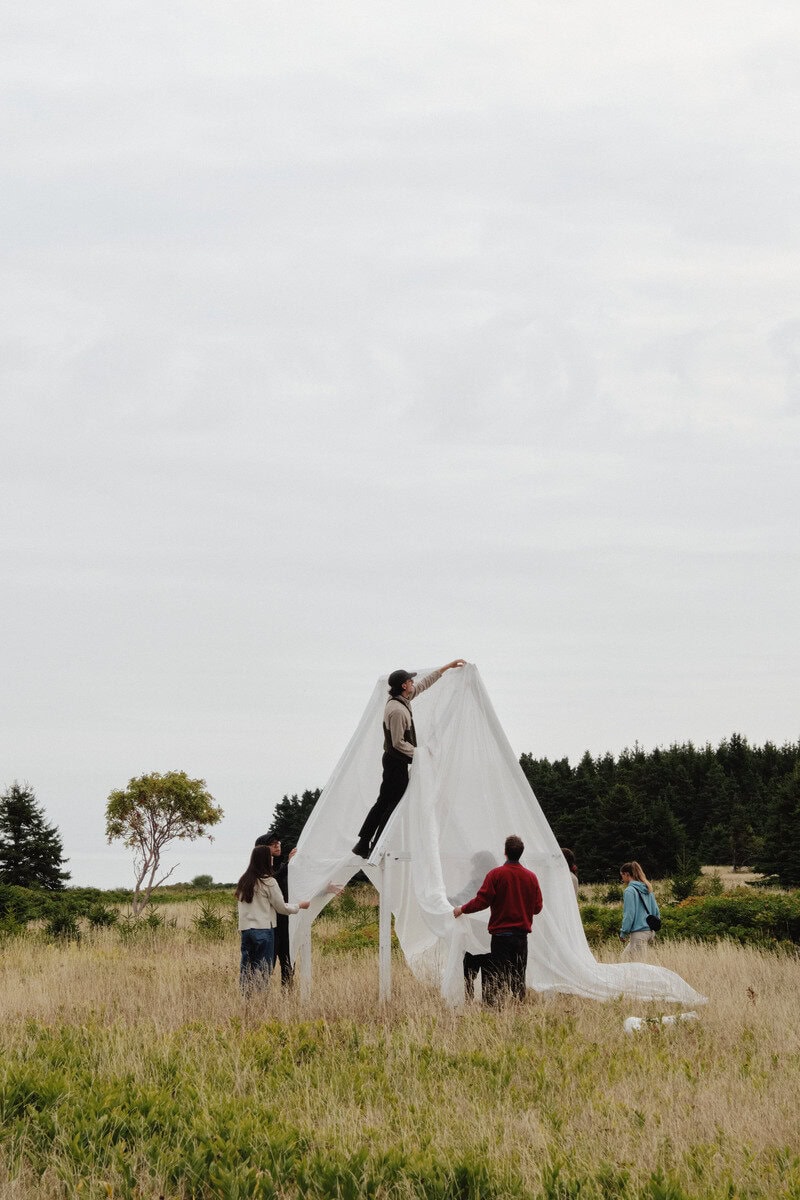
Lightweight and easily transportable, the installations were moved across the island—from the shoreline to fields and meadows—like evocative, nomadic figures.
Photo credit: Alex Lesage
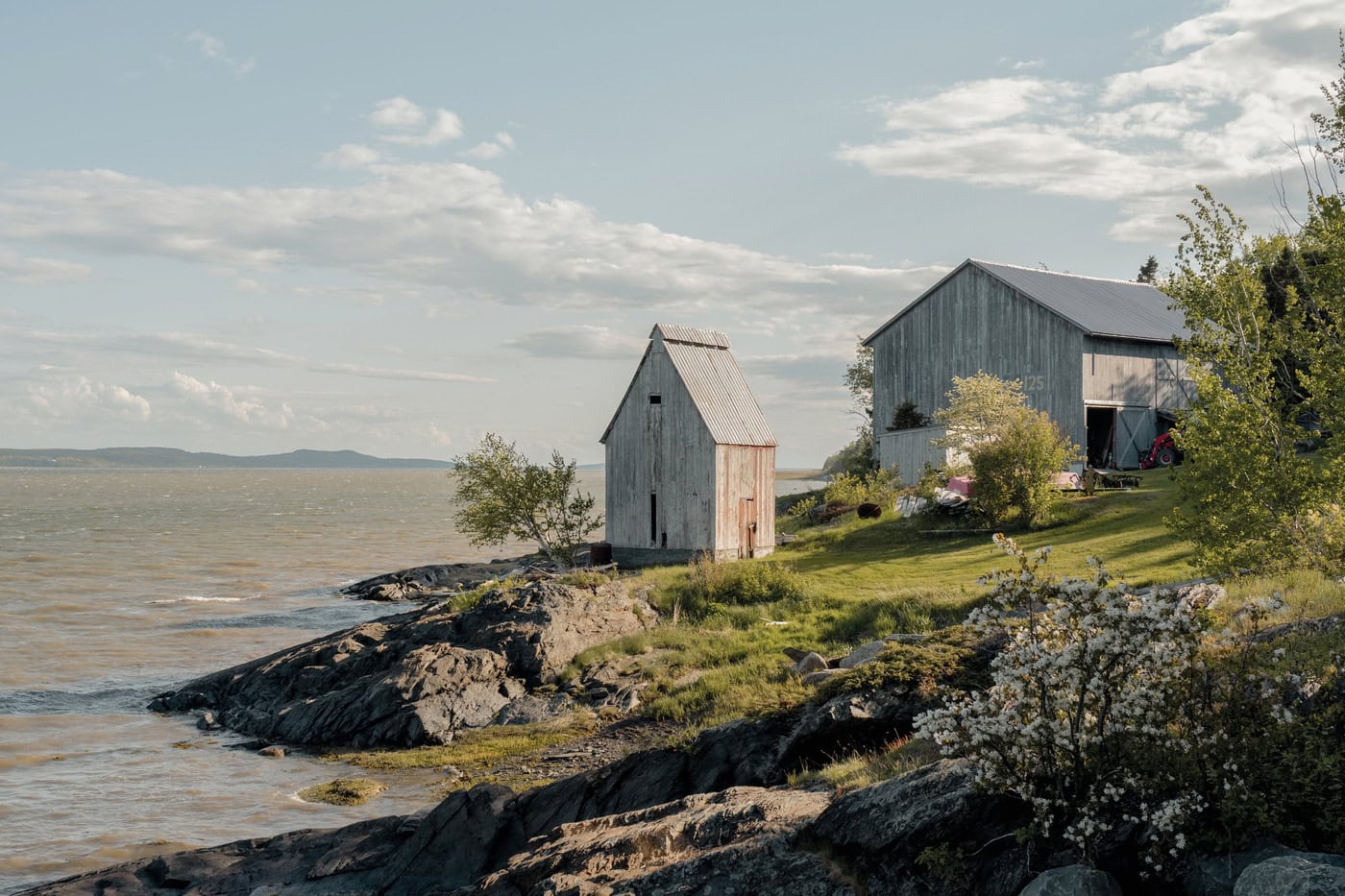
During visits to Île Verte and through conversations with the Verdoyants—as the island’s residents are known—twelve captivating structures were (re)discovered. Known as boucaneries, these vernacular buildings, inspired by traditional smokehouses, were constructed between the 1920s and 1980s to withstand the island’s particularly harsh climatic conditions.
Photo credit: Alexis Boivin
Atelier Pierre Thibault
Atelier Pierre Thibault draws on the unique, transformative power of the seasons to design spaces that capture fleeting moments with remarkable sensitivity—whether it’s the stark clarity of winter light on snow, the exuberance of autumn foliage, the soft quietude of summer, or the vibrant renewal of spring.
The Atelier’s distinctive body of work spans from architectural installations to major commissions, including the Val Notre-Dame Abbey in Saint-Jean-de-Matha and a museum for the Giverny Foundation. With more than 100 projects completed across Canada, each undertaking becomes an opportunity to cultivate a meaningful dialogue between landscape and those who inhabit it.

