

 日本語
日本語 English

Material Entanglements and Forms of Belonging at the Shanghai Biennale
Contemporary art practices have become a key site for exploring the tensions, connections, and synergies between the human sphere and the other. They open new ways to reflect on our relationship with the unknown, and more specifically with other forms of intelligence, animal, natural, and artificial, that share the planet with us.
This perspective is grounded in the concept of a “more-than-human world,” a term coined by eco-philosopher David Abram to describe a worldview that recognises the agency and presence of non-human life. This idea forms the conceptual basis of the 15th Shanghai Biennale, titled Does the Flower Hear the Bee?
Curated by Kitty Scott, the exhibition opened on November 8 and will run until March 31, 2026. It draws inspiration from recent scientific discoveries regarding the interactions between various life forms. Like the flower that “hears” the vibrations of a bee’s wings, the Biennale explores the intersection of different forms of intelligence, both human and non-human, creating an embodied and interconnected space in which new forms of community can emerge.
Unfolding like an open landscape and spread across Shanghai’s urban network, the Biennale is rooted in a main exhibition at the Power Station of Art, yet it extends to several venues throughout the city.
This article focuses on the exhibition presented at the Jia Yuan Hai Art Museum, a museum completed in 2023 and designed by the world-renowned architect Tadao Ando. During the Biennale, the museum’s spaces host artists of international calibre, including Theaster Gates, Maxime Cavajani, and Liu Shuai, among others. Their works explore how belonging, territory, and spirituality shape artistic practice and personal experience, particularly when operating across cultural and geographic contexts.
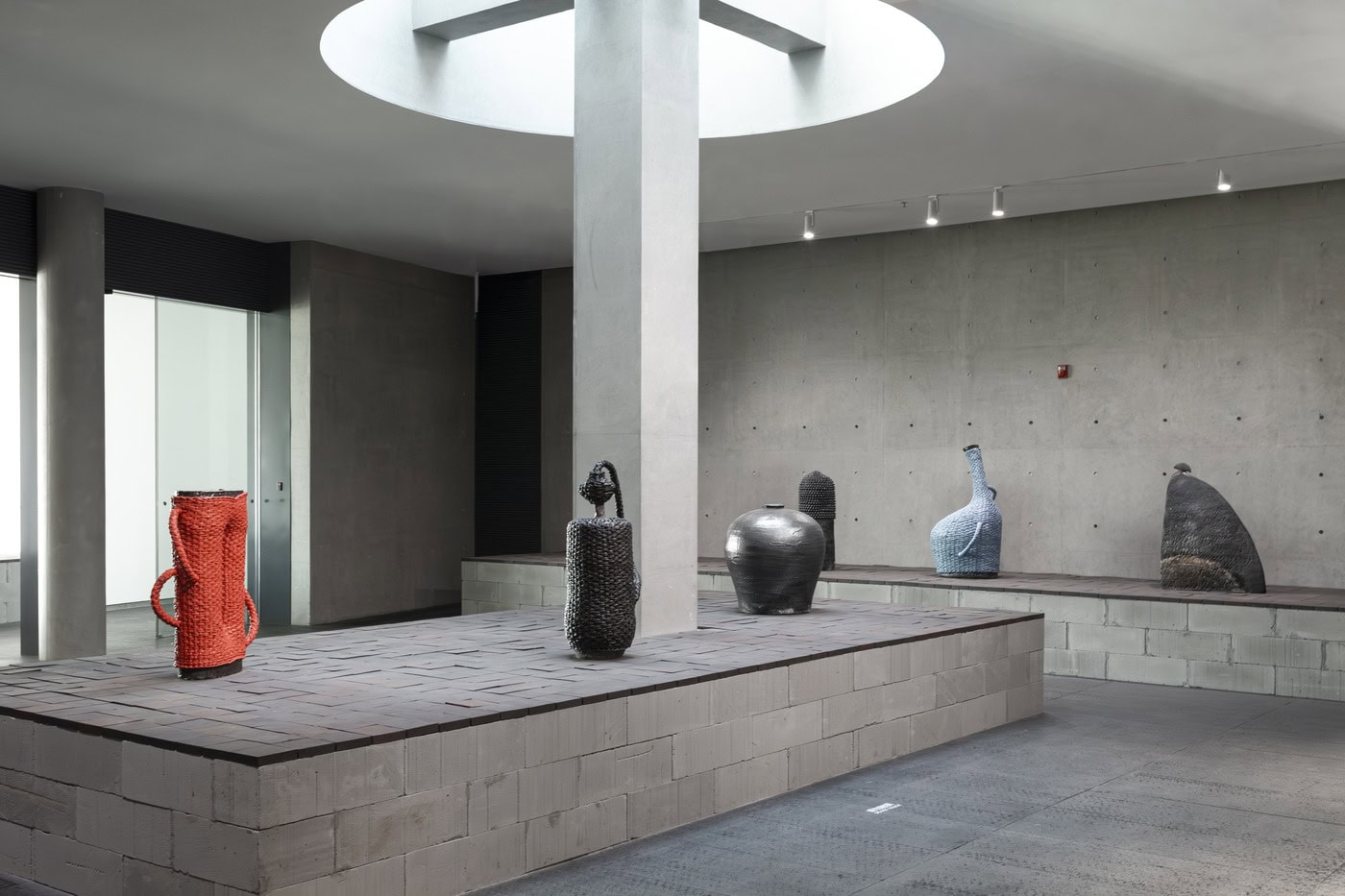
Composite Meditation, Theaster Gates, 2025, Photo Credit: Amedeo Martines
Upon entering the exhibition, these themes begin to unfold spatially. The display opens into a central space where light filters from above through a circular aperture in the ceiling. Within this environment, several large-scale ceramic vessels by Theaster Gates are arranged with a quiet sense of order.
Titled Composite Meditation, the works reflect on the artist’s twenty years of experience in Tokoname, Japan, a small town known for its industrial ceramic production and large storage vessels. During this time, Gates reflected on his position as a person of colour in the United States, and on how craft practices can reshape both material and cultural understandings of the world.
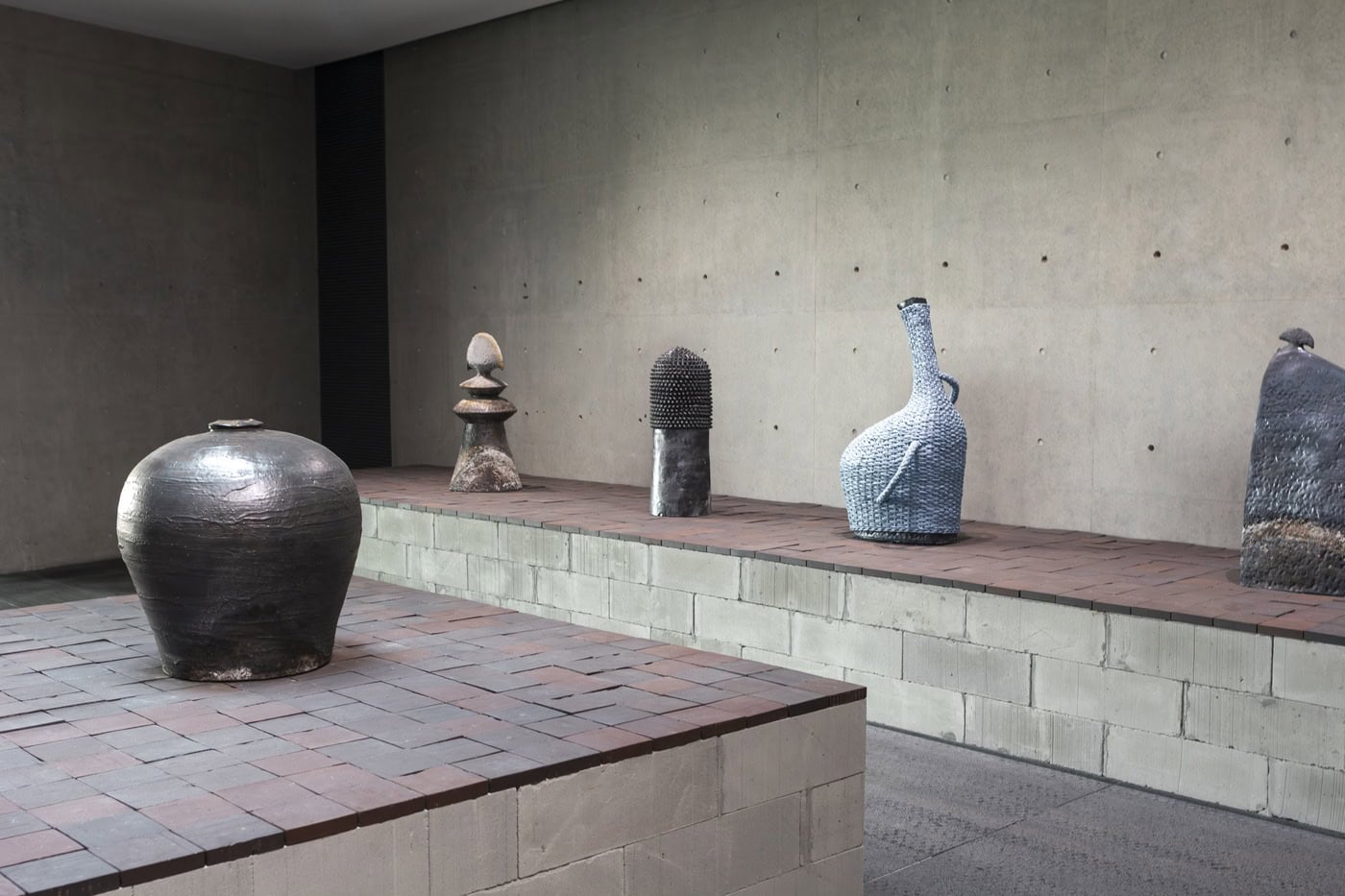
Composite Meditation, Theaster Gates, 2025, Photo Credit: Amedeo Martines
Each pot weaves together different cultural references. They combine elements of Japanese ceramic heritage, such as glazing and firing techniques, with archetypal African forms, essential symbolism, decoration, and anthropomorphic shapes. Some of the pots are further wrapped with braided rubber and woven leather yarn, introducing a tactile layer that extends the language of the ceramic surface and hybrid heritage.
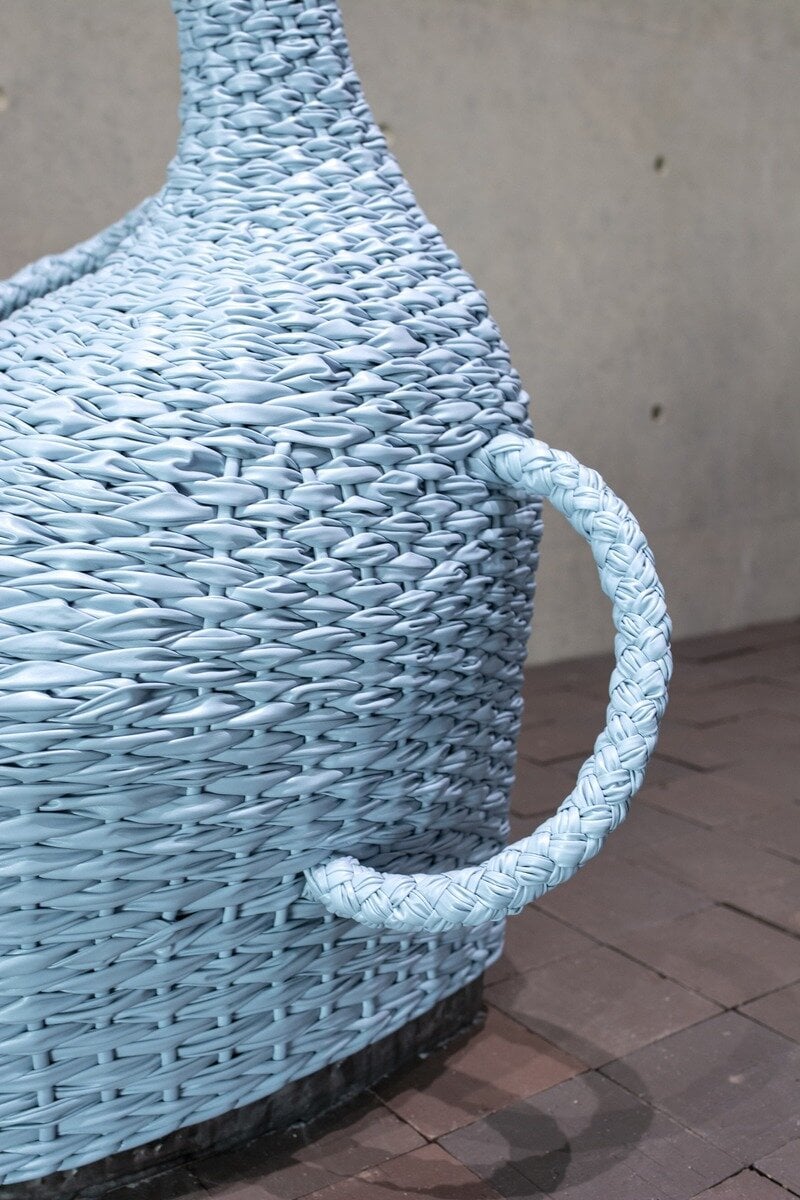
Composite Meditation, Theaster Gates, 2025, Photo Credit: Amedeo Martines
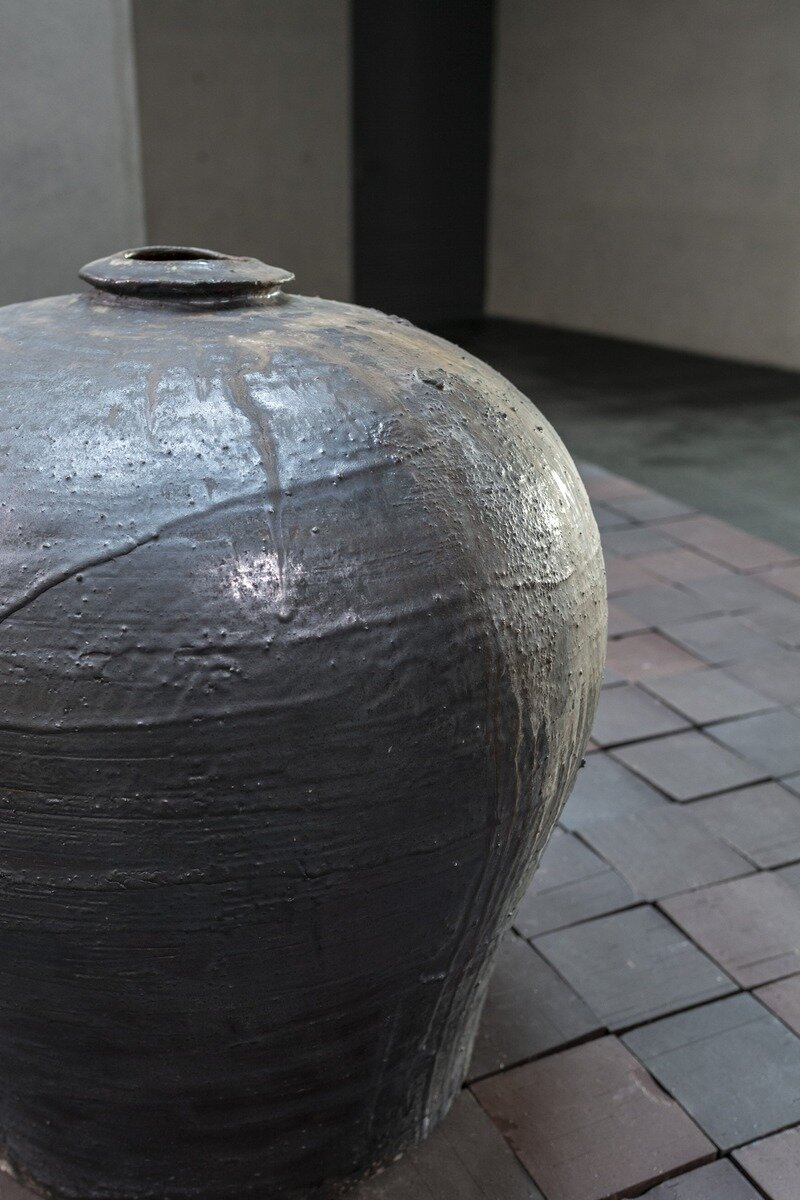
Composite Meditation, Theaster Gates, 2025, Photo Credit: Amedeo Martines
The monumental scale of the vessels and of the installation as a whole makes visible this dialogue between cultures. Through the language of craft, the work evokes an almost spiritual encounter, suggesting a renewed collaboration between different histories, traditions, and materiality.
Part of Composite Meditation is another work: a roughly sketched human figure seated in contemplation in the adjacent gallery. Acting almost as a threshold, the sculpture separates the previous dark space from a brighter one beyond. Facing a window placed directly in front of it, the figure turns outward while quietly inviting visitors to pause, reflect, and set aside external distractions in favour of a more introspective state.
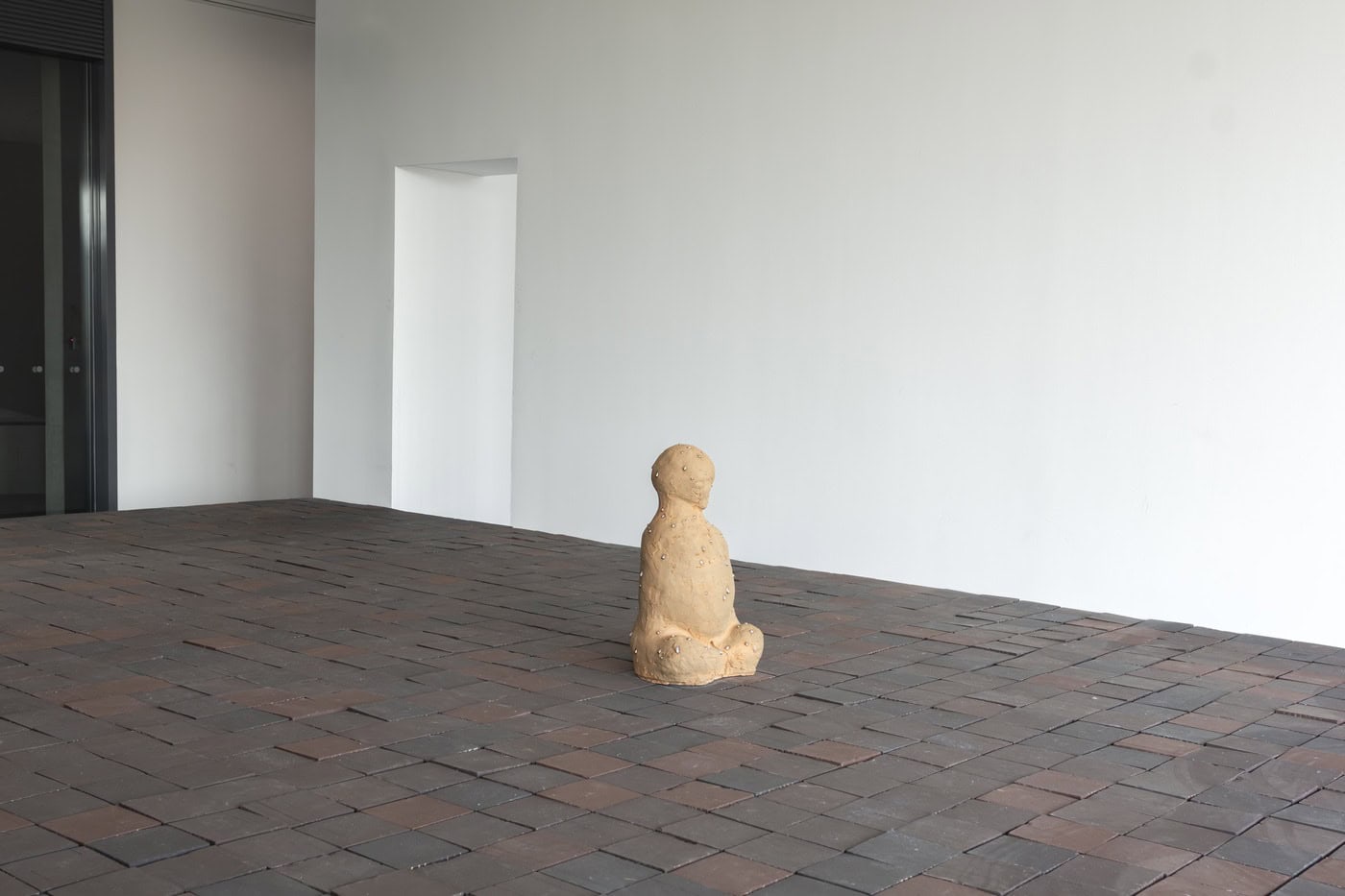
Composite Meditation, Theaster Gates, 2025, Photo Credit: Amedeo Martines
The material qualities of the work further heighten this sense of contemplation. The terracotta sculpture, realised in collaboration with Takuro Kuwata, uses local clay from Tokoname and is adorned with delicate drops of metallic glaze that appear to seep from the body of the figure. The combination of raw earth and luminous metallic pearls creates a subtle tension between humility and sacredness.
The praying figure, as Theaster Gates describes, marks a moment of re-sacralisation or perhaps post-sacralisation, within the exhibition. It quietly echoes the historical movement of Buddhism across Asia, from India to China and Japan, and back again, evoking a circulation of spiritual ideas that continues to shape and influence cultural and material knowledge.
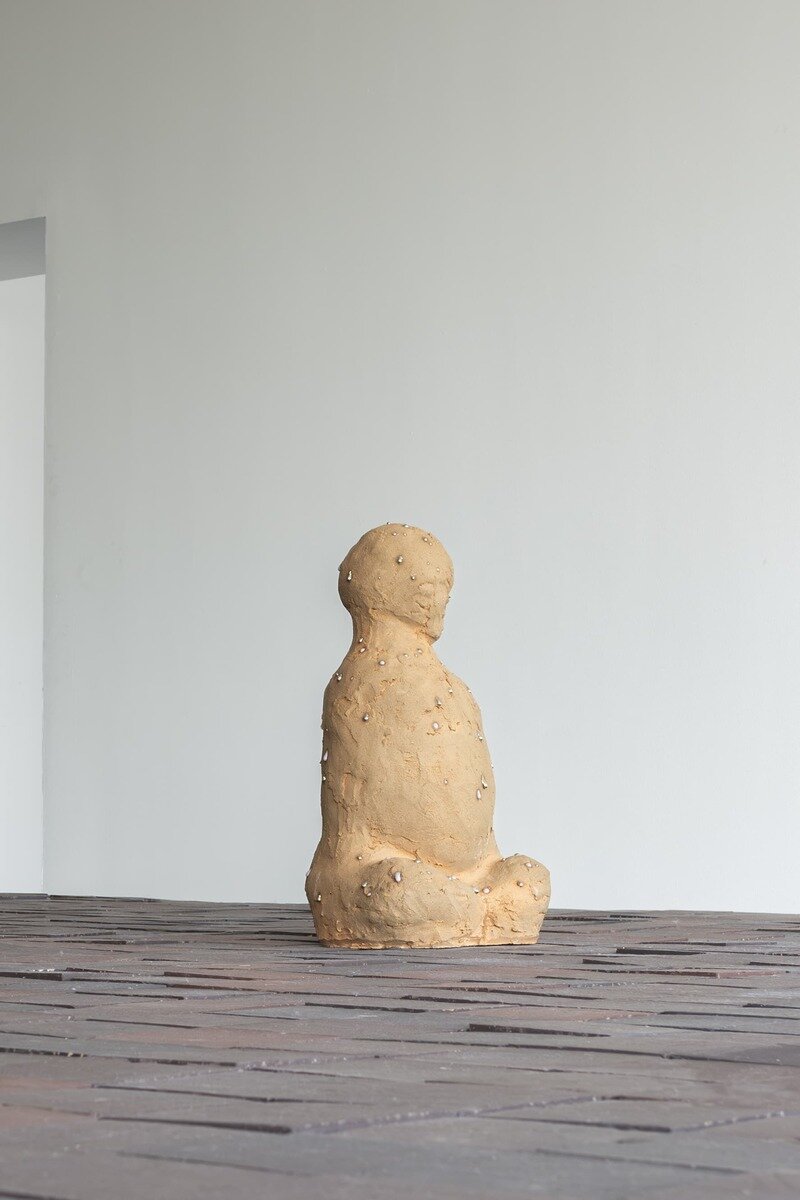
Composite Meditation, Theaster Gates, 2025, Photo Credit: Amedeo Martines
A different perspective is offered by the artist Maxime Cavajani, who presents a body of work shaped by personal experiences during an extended stay on Fogo Island, Canada, in 2025. During this period, the artist investigated the relationship between migration and geological histories through the study of the distinctive red ochre paint commonly used on sheds, houses, and fences across the island.
Historically, this paint was produced locally by boiling together cod liver oil, animal blood, and red ochre over fire for several days before applying it directly to wooden surfaces. This singular shade of red becomes the conceptual and material lens through which Cavajani reads the landscape of Fogo Island, translating it into a series of works that move between drawing, embroidery, and video.
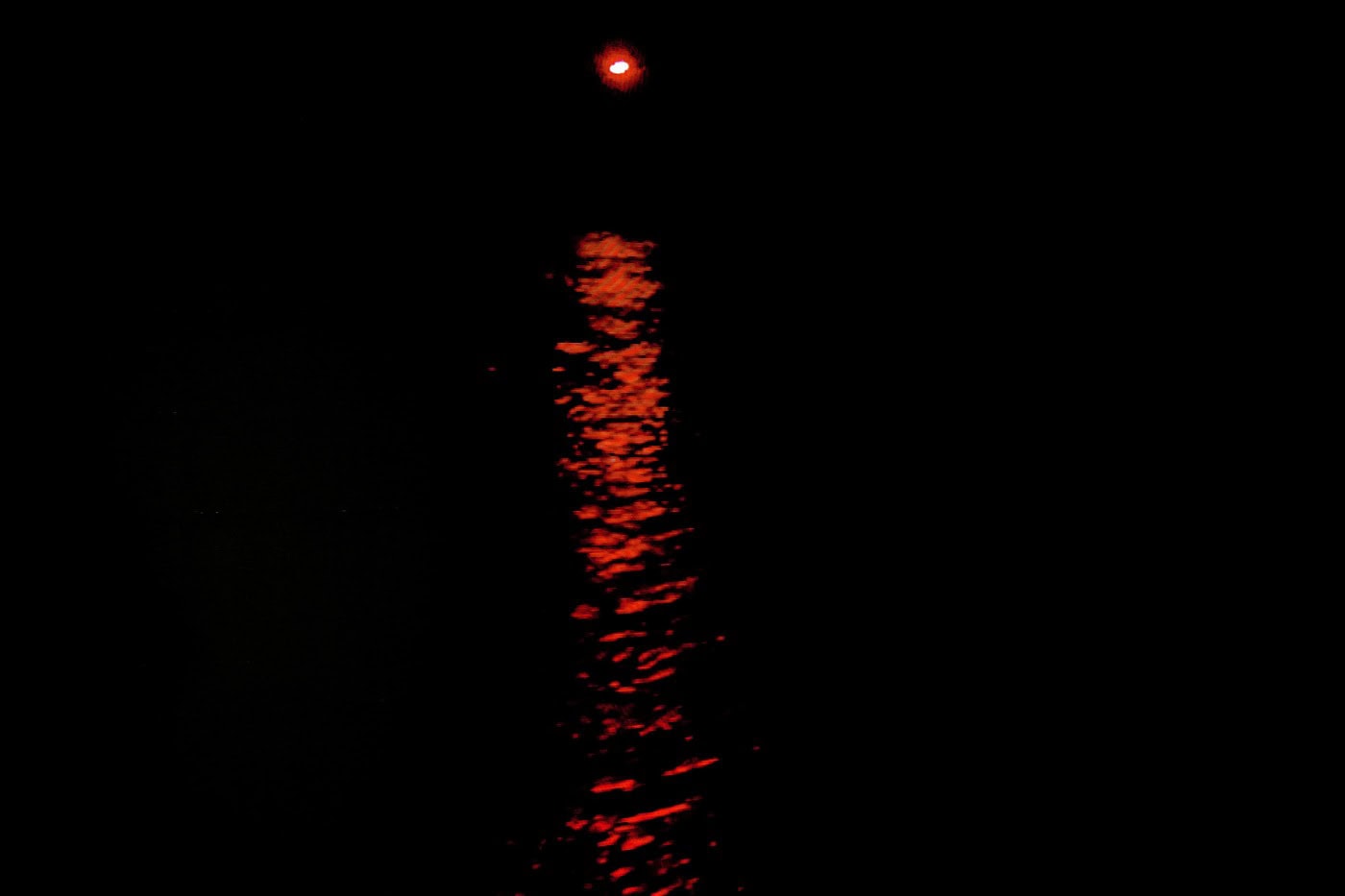
Fogo (39), Maxime Cavajani, Video, 2025, Photo Credit: Amedeo Martines
In particular, in this body of work, Fogo (1–37), the artist uses the pigment to create a series of drawings composed of abstract, dynamic lines, opening a reflection on how human patterns of life emerge from the resources communities gather, forage, fish, and hunt. Installed along a corridor, the drawings unfold as traces or resonant waves. They echo the intermittent red light of a distant harbour signal, visible in the accompanying video work further along the wall.
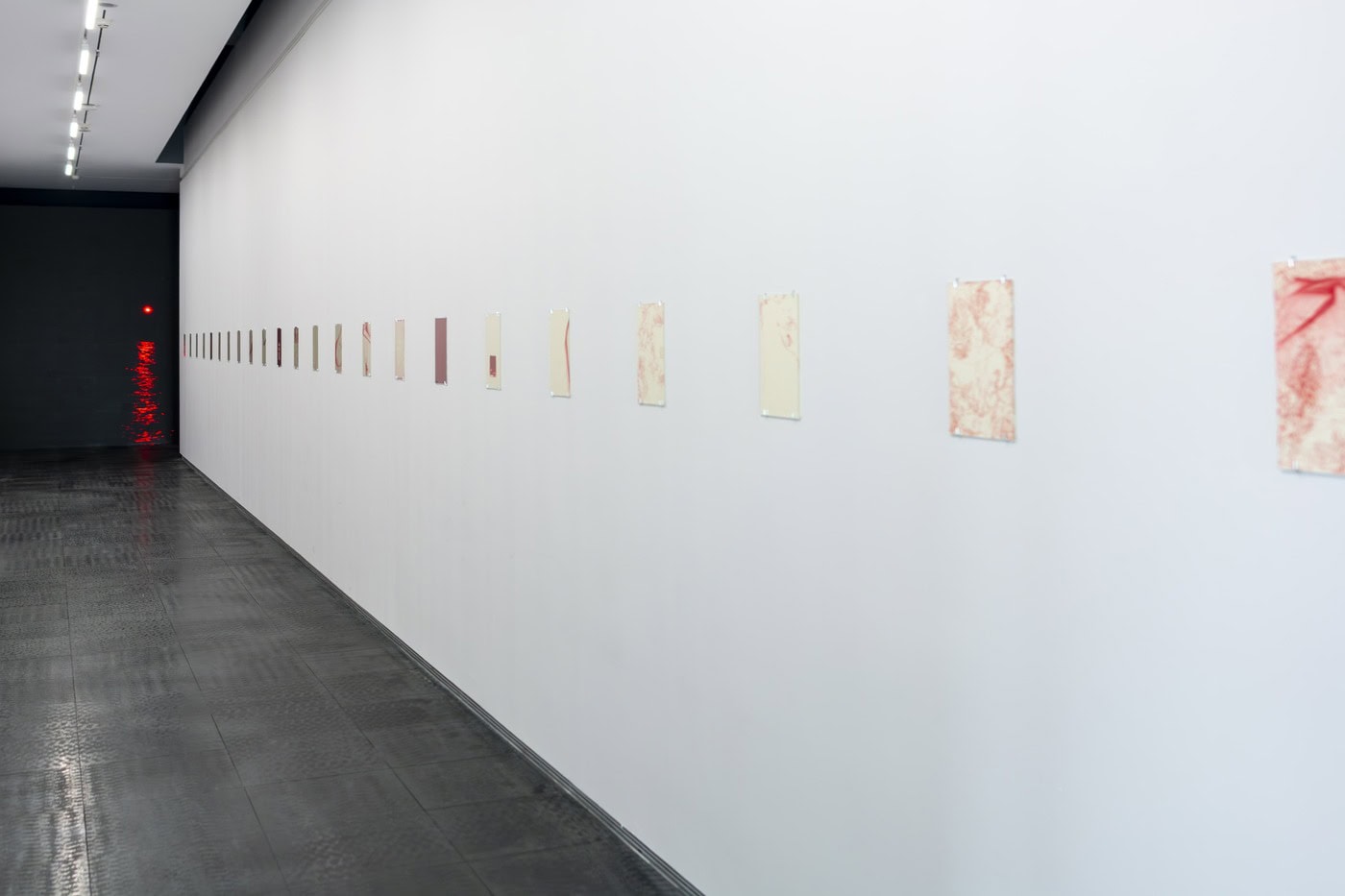
Fogo (1–37), Maxime Cavajani, 2025, Photo Credit: Amedeo Martines
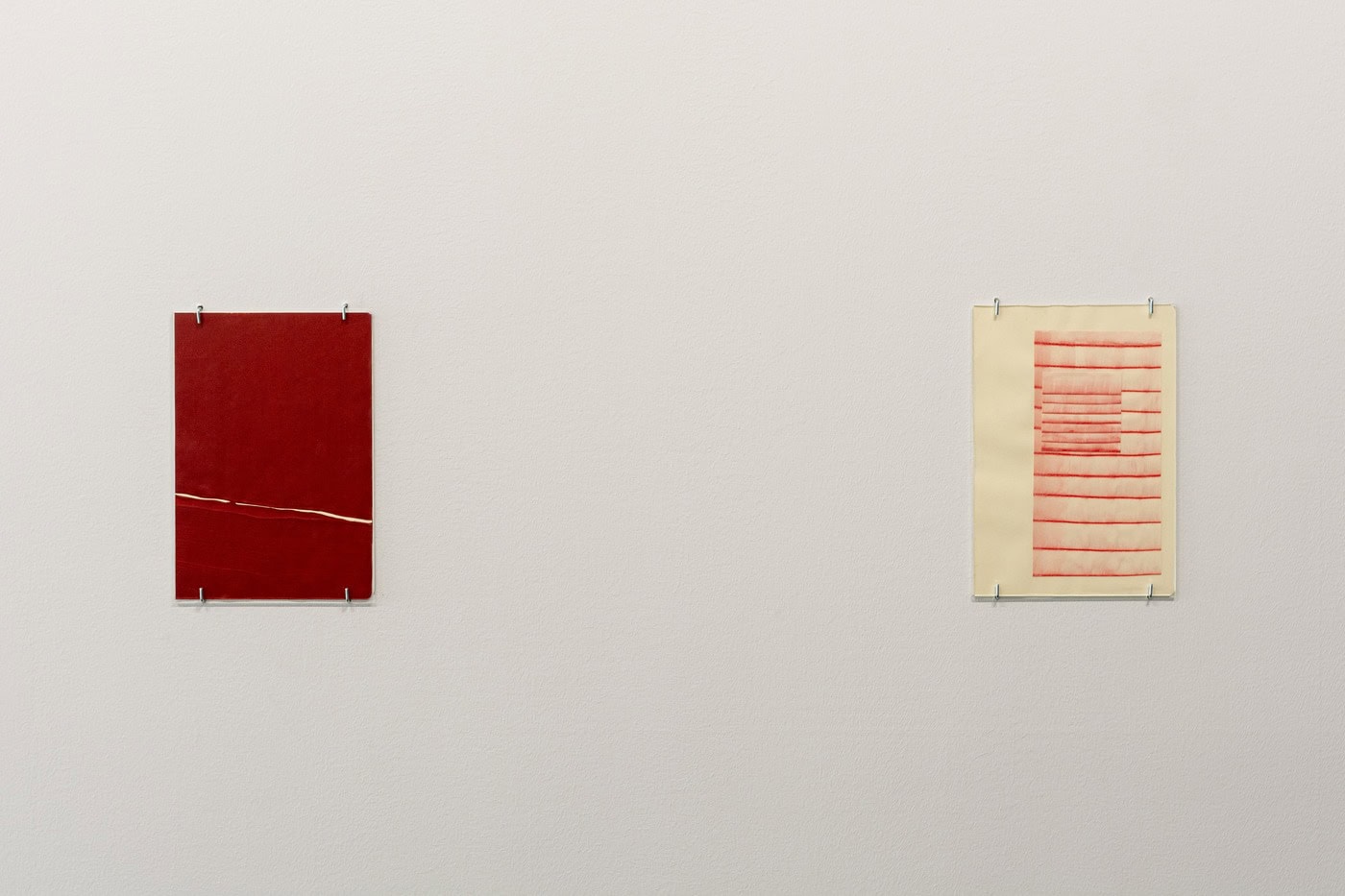
Fogo (1–37) Detail, Maxime Cavajani, 2025, Photo Credit: Amedeo Martines
In the textile artwork, Fogo (38), the colour acquires a more tactile dimension: embroidered yarns on canvas translate the same flowing patterns into a more spatial and material form. Here, red is not merely an aesthetic choice, but a material trace of the territory itself, present in rocks that bleed rust-coloured stains, in maritime signal lights, in the peeling paint of wooden houses, and even in the flush of human skin.
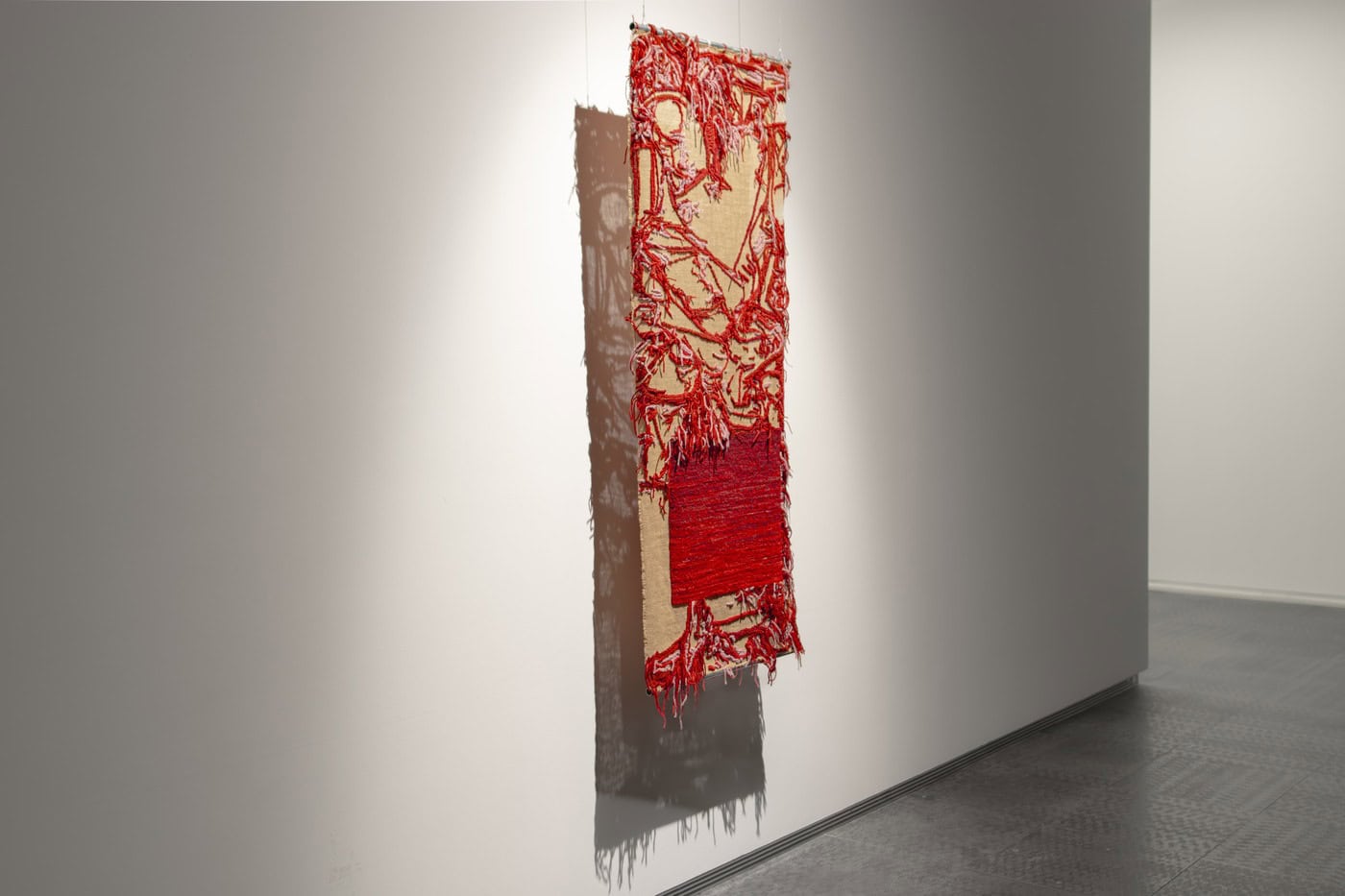
Fogo (38), Maxime Cavajani, 2025, Photo Credit: Amedeo Martines
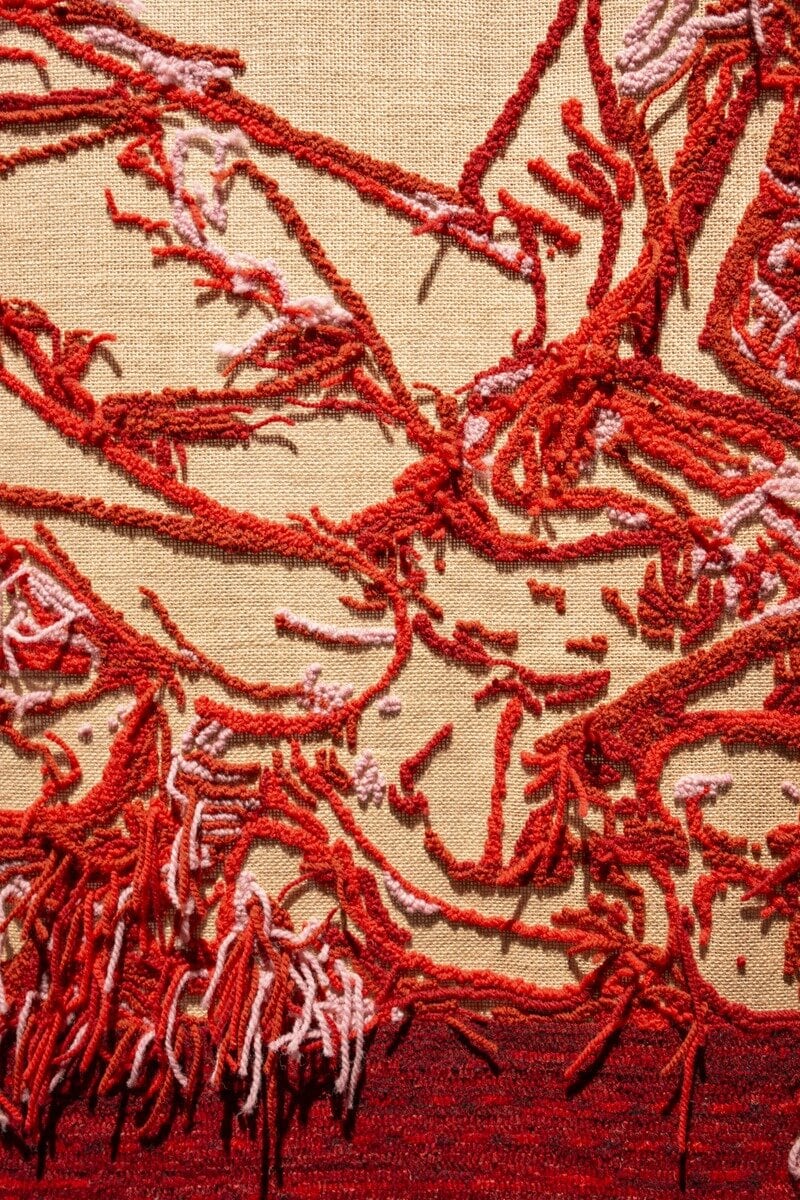
Fogo (38), Maxime Cavajani, 2025, Photo Credit: Amedeo Martines
Within the exhibition, Maxime Cavajani develops a visual research grounded in personal memory and lived experience, which resonates with the narrative and poetic works of Liu Shuai, who presents three artworks connecting the interior and exterior spaces of the museum. The Distance Between the Nest and the Grave Is a Single Tree is a two-part work reflecting on the duration of life and death through the figures of a sparrow and a heron.
One part of the work invites visitors into a small, singular grass courtyard that opens at the centre of the museum, where a series of paving stones visually trace the rhythm of a sparrow’s distinctive hops across the ground. The work honours the life of a sparrow found dead by the artist on the roadside, possibly a consequence of unseasonal heat. By stepping or jumping on these stones, visitors, in an analogue and intuitive way, unknowingly imitate the sparrow’s tempo and gestures, briefly approaching the movement of the life being remembered.
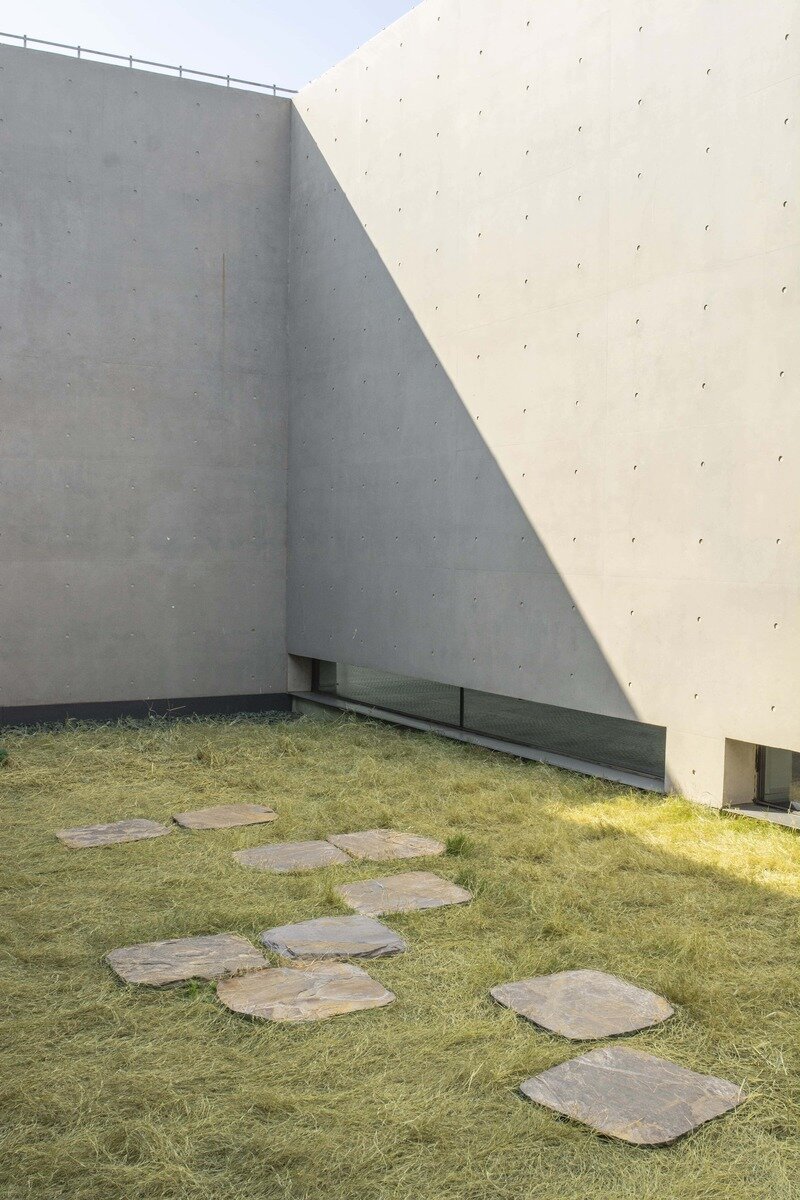
The Distance Between the Nest and the Grave Is a Single Tree I, Liu Shuai, 2025, Photo Credit: Amedeo Martines
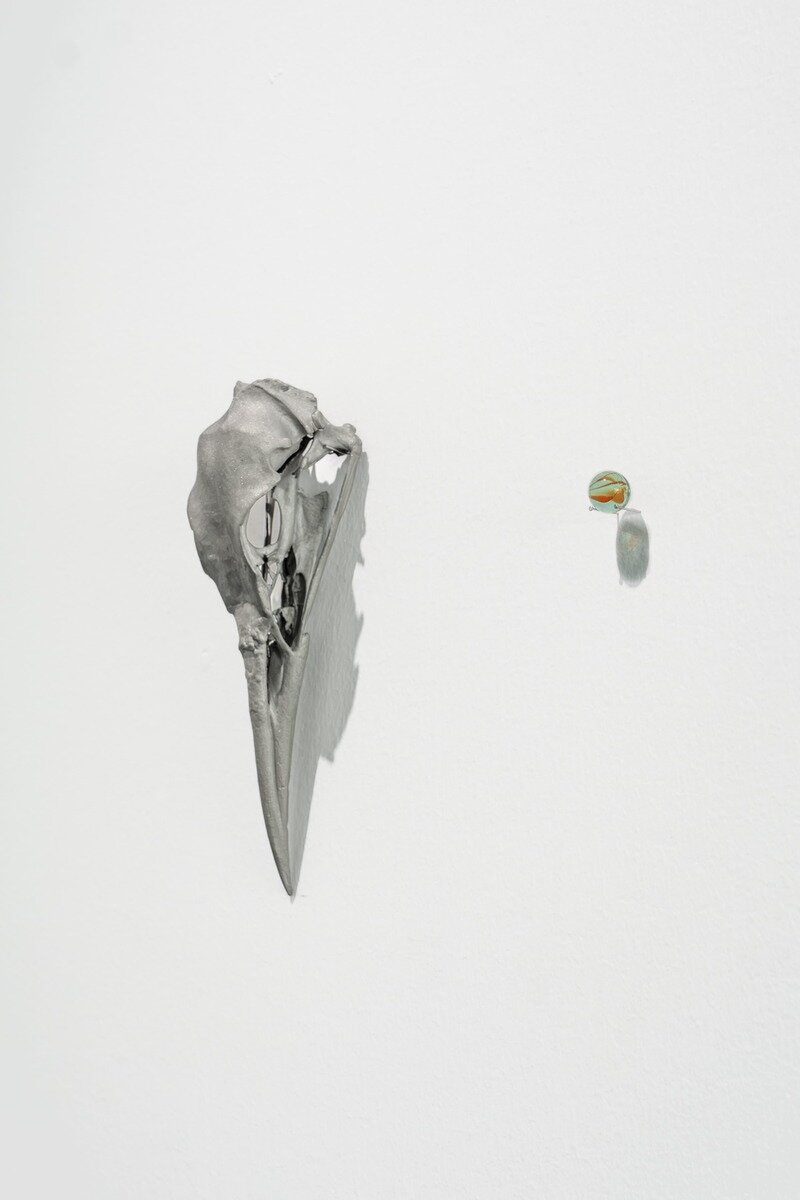
The second part of the work shifts attention to the death of a heron, whose scattered bones the artist discovered. Among them, he identified a single glass sphere, which the bird may have swallowed by mistake, ultimately leading to its death beneath a tree. Through this finding, the artist reflects on the impact of human-made objects on local fauna, often mistaken for food.
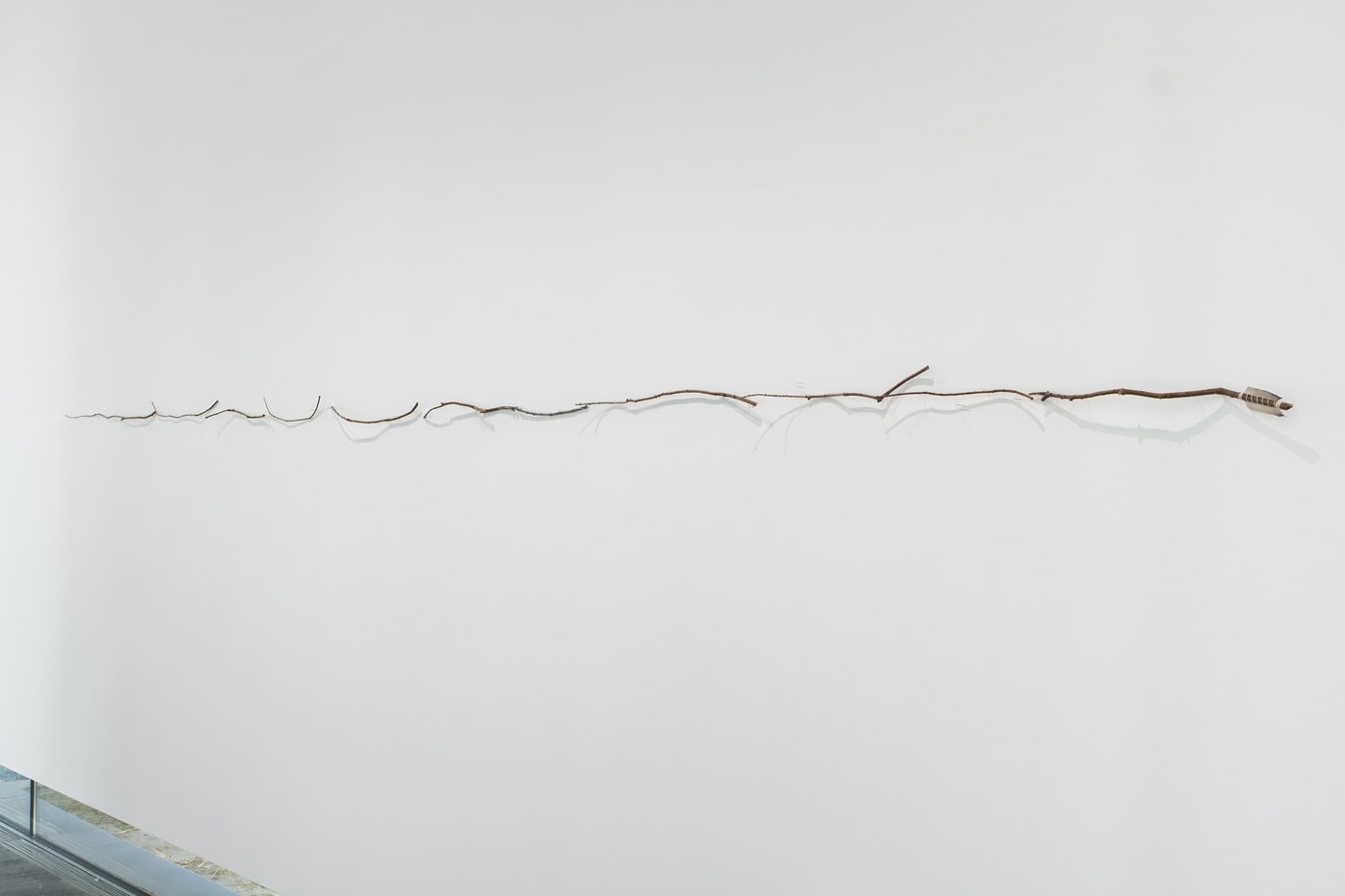
The exhibition integrates these elements by placing the bird’s skull, cast in metal, alongside the glass sphere, allowing them to function both as a memento and as a subtle call for awareness. Similarly, branches from an abandoned bird’s nest are presented, yet rather than forming their typical circular structure, they are aligned into the shape of a long arrow shaft, with feathers at one end and bones forming its tip. As described by Liu Shuai, this arrow traces the trajectory of a bird’s life: breeding, migrating, and falling.
The Distance Between the Nest and the Grave Is a Single Tree II (Detail), Liu Shuai, 2025, Photo Credit: Amedeo Martines
The Distance Between the Nest and the Grave Is a Single Tree II (Detail), Liu Shuai, 2025, Photo Credit: Amedeo Martines
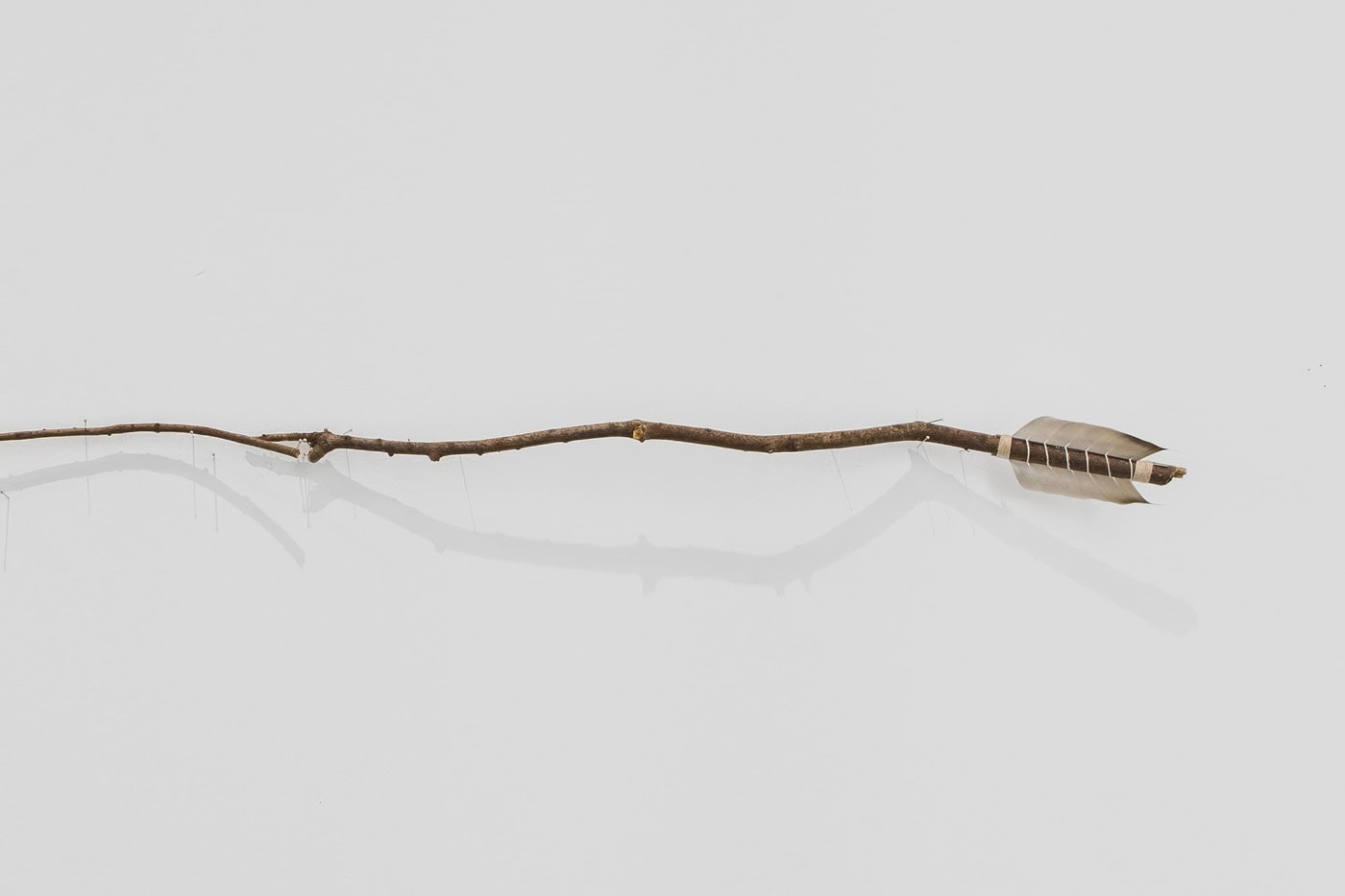
The Distance Between the Nest and the Grave Is a Single Tree II (Detail), Liu Shuai, 2025, Photo Credit: Amedeo Martines
Continuing through the exhibition, a larger space opens onto a broader body of research by Liu Shuai, titled Your Blood, My Blood, which visually explores the relationship between himself and a mosquito, understood not as an irritating presence, but as a lifelong companion. A mosquito lives for about thirty days; a single day spent near a human body thus becomes a significant portion of its lifespan.
Within the artist's practice, mosquitoes that have fed on his blood don't get killed. Instead, their bodies are collected after natural death and carefully cremated into a fine powder, later combined with an accelerant to produce fireworks. When ignited, these fireworks become a moment of passage, marking a form of afterlife for these fragile beings.
This practice is extensively documented throughout the space, through video works that capture the intimate and symbiotic relationship between humans and mosquitoes, as well as through installations displaying traces of the process, burnt residues, preserved specimens, and the ephemeral presence of air itself.
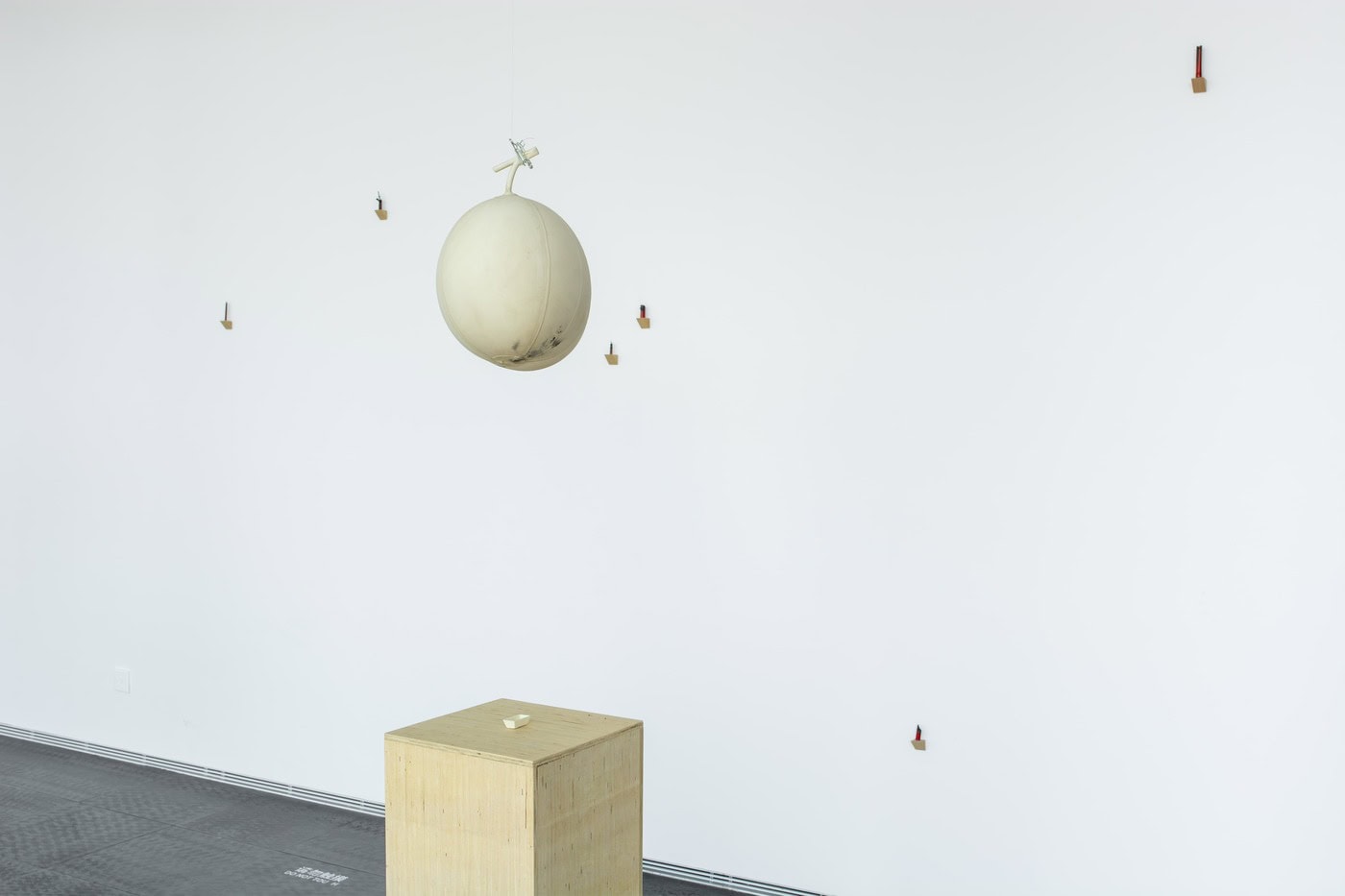
Your Blood, My Blood (Detail), Liu Shuai, 2025, Photo Credit: Amedeo Martines
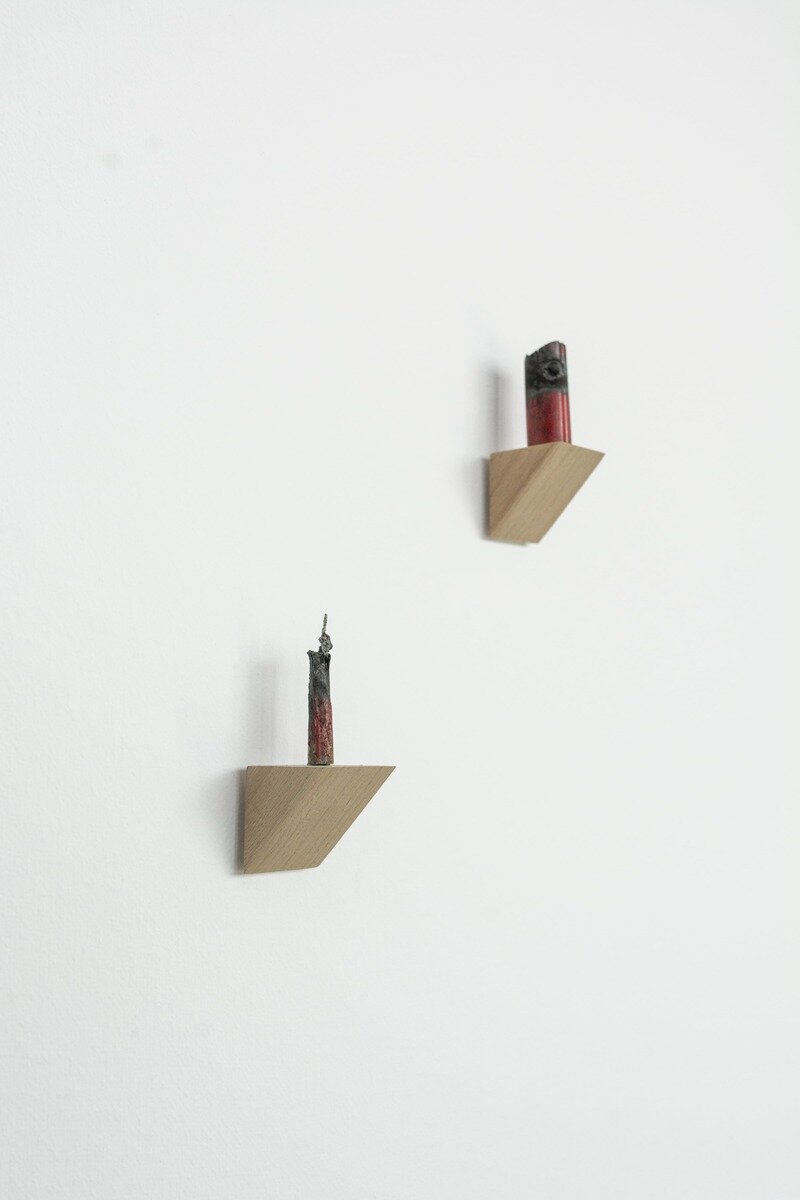
Your Blood, My Blood (Detail), Liu Shuai, 2025, Photo Credit: Amedeo Martines
As the exhibition comes to an end, a final work by Liu Shuai, Nostalgia of Red Fire Ant: I Don’t Belong Here, I Don’t Belong There, returns to the themes of territory, belonging, and displacement that resonate throughout the exhibition. Presented across two video works, it traces the journey of fire ants from Argentina to Guangdong, China, and their unintended spread through global trade, where they are now considered an invasive species.
Prompted by the experience of being stung in a rice field in Guangdong, the artist retraces this migratory trajectory by drawing a parallel between geography and memory. Using sugar, he writes fragments of Chinese and Argentine song lyrics near an anthill, verses that evoke a sense of time, transformation, and not belonging. As the ants gradually carry the sugar back into their nest, the text disappears, leaving behind a quiet reflection on movement, identity, and the fragile traces of presence.
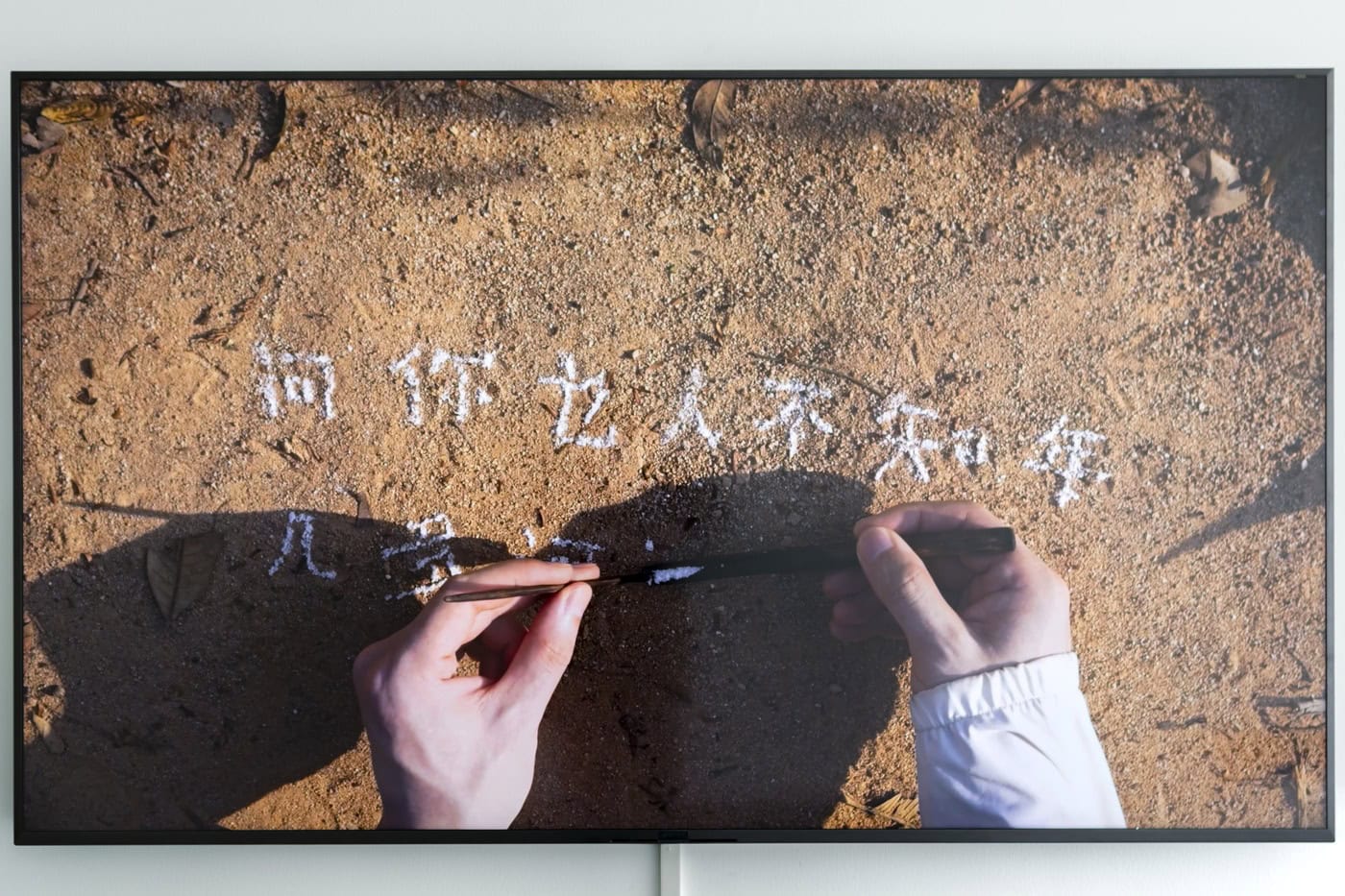
Nostalgia of Red Fire Ant: I Don’t Belong Here, I Don’t Belong There, 2022 (Detail), Liu Shuai, 2025, Photo Credit: Amedeo Martines
In this way, the exhibition unfolds as a recursive experience, where beginning and end mirror one another in a continuous loop, linking different perspectives and individuals through a shared inquiry into belonging. Both Theaster Gates, Maxime Cavajani, and Liu Shuai approach this question through distinct material and cultural lenses, yet their works converge in proposing a world that is not centred on the human alone.
Instead, they suggest a condition of coexistence in which histories, bodies, and environments remain deeply entangled, unfolding across multiple scales: from the spiritual, through the collective, and down to the minute world of insects.

