

 日本語
日本語 English

How will human creativity evolve with the surge of artificial intelligences, and what challenges await the artists of today? A new show at the Jeu de Paume in Paris searches for answers
History of art has often been confronted with technological, cultural, and conceptual revolutions that seemed to challenge its very foundations and its deepest legitimacy. One of the most striking examples is the shock experienced by artists at the invention of photography. For centuries, painting had served as the primary means to depict reality, preserve memory, capture faces, landscapes, and history: but, all of a sudden, this task could be delegated to a system of lenses, gears and mechanical parts which had no consciousness, intention, or understanding, in other words, a machine. The unsettling question soon emerged: what would become of painting, and of art itself, if a device, devoid of conscience, intention, gaze, totally incapable of understanding what it frames, could nonetheless replicate reality with perfect precision?
It was, in fact, the beginning of a profound transformation: painting moved away from its documentary role and turned toward the psychological dimension of its subjects, focusing on all the emotions the artist sought to convey. Aesthetic creation gradually ceased to be logical: with the exploration of the unconscious, Dalí and the Surrealists challenged the idea of art as a rational representation, surrendering instead to dreams, automatisms, nightmares, and hallucinations. Painting also ceased to be figurative: with Klee and Kandinsky, it became pure form, colour, and line, seeking to express the rhythms of nature, music, and human spirituality. It also soon ceased to be erudite, losing the Baudelairean “halo” under the influence of pop artists, who embraced the flatness of a consumer society dominated by mass media. With each of these upheavals, there had always been someone who announced the death of art. And yet, art remained: perhaps more fragmented, more diverse, at times disconcerting or provocative, sometimes even seen as opaque or devoid of meaning: but alongside this, art continued and continues, and it still has the power to move us, to surprise, and to make us reflect, through languages that are new, yet no less genuine.
Today, at the dawn of the 21st century, a new upheaval is shaking both art and society: the development of artificial intelligence at an ever-increasing pace and on an ever-larger scale. This expression, introduced in 1955 by John McCarthy, refers to a vast field of technologies, applications and methods designed to carry out increasingly complex operations: detection, recognition, classification, forecasting, decision-making, analysis, manipulation and generation of data ... Around it, a system of metaphors, ideologies and beliefs has been created, oscillating between enthusiastic technophilic fascination and frightened technophobic rejection, but always focused on the same question: how does artificial intelligence condition (or replace?) creative thoughts and human agency, impact society with its political, social and environmental challenges, and redefine the frontiers of art and our visual relationship in the world? These questions are at the heart of an exhibition, the first of its kind, at the Jeu de Paume in Paris: Le monde selon l’IA, open from 11 April to 21 September 2025, and focused on a wide range of expressive forms—artworks, photography, sculpture, film, and literature—created with the assistance of artificial intelligence, yet aimed precisely at reflecting on its economic, political, and social impact.

The exhibition begins with a reflection on the enormous fracture between the ideology of the dematerialization of the cloud, a technology imagined as almost ethereal, composed of intangible algorithms summoned with the touch of a screen, and its undeniable dependence on materiality, as its operativity is based on a limited quantity of polluting and very physical resources. Without the rare earths of electric motors and cooling fans of supercomputers, or the lithium of the batteries that power data centres, or the silicon of the tiny chips that control even the most sophisticated AI, or the water used to cool the heat generated by servers, what would really remain of this intelligence? The work Metamorphism focuses precisely on the materiality of AI, in which the author Julien Charrière blends a mixture of earth and diversified computer material: motherboards, processors, modules and peripherals ... all made of precious materials that took billions of years to form in the geological depths of our planet, from which they were extracted and then returned to us in perhaps very short times, under the astonishing carelessness of man, in the form of waste ...

Figure 1 Julian Charrière, *Metamorphism LI*, 2016, installation with artificial lava and melted electronic waste, 170 × 25 × 25 cm.
The visit continues through a remarkable room whose walls are entirely covered with an immersive cartography bearing the eloquent title of Calculating Empires. This works seeks to unravel the complexity of AI, understood as a “hyper-object” shaped by a dense network of disciplines, knowledge systems, theories, spaces, temporalities, technologies, political forces, and capital flows. The two artists Kate Crawford and Vladan Joler wanted to propose a genealogy of this phenomenon, to understand how we arrived at this point, and to reflect on where we can (or perhaps cannot?) go from here. A digital version of this visual map is accessible at: calculatingempires.net

Figure 2 Kate Crawford & Vladan Joler, Calculating Empires: A Genealogy of Technology and Power Since 1500, 2023, two paper prints mounted on wall, 300 × 1,200 cm each.
The exhibition then turns to analytical AI, which is centred on the recognition, classification, and categorization of data and objects: these apparently neutral technologies in fact embed specific worldviews, cultural filters, and invisible biases, as they operate according to human-defined categories, which are frequently flawed or problematic. Many artists have questioned the consequences of these mechanisms: Faces of ImageNet by Trevor Paglen, for examples, exposes how facial recognition systems are trained to identify faces using simplified human labels— denying the complexity and diversity of reality, and in doing so, potentially reinforcing systems of control, exclusion, and discrimination.

Another work by Paglen, Behold These Glorious Times!, presents a dialogue between two types of images: those employed to train AI systems to recognize objects, faces, gestures, and emotions, and those that reveal what AI “sees” during the processing of this data – in other words, the internal representations generated by algorithms. This visual dissonance highlights how algorithmic vision is never a neutral or transparent reflection of reality, and how it rather represents a selective, reductive, and partial construction of the world. This theme is powerfully evoked also in Man in Arab Costume by Nouf Aljowaysir, which critiques how artificial intelligences, primarily shaped by Western languages, cultures, and perspectives and tailored to their needs, create narrow and incomplete representations of the world: in this way, they often fail to account for the richness and diversity of global cultures, such as those of the Arab world. In this artwork, the figure is conspicuously left blank, symbolizing this erasure. Since most algorithms are trained on English-language content and developed by tech giants based in Europe and the United States, a pressing question emerges: can AI truly be purposeful for all of humanity, or will it continue to serve a privileged few?
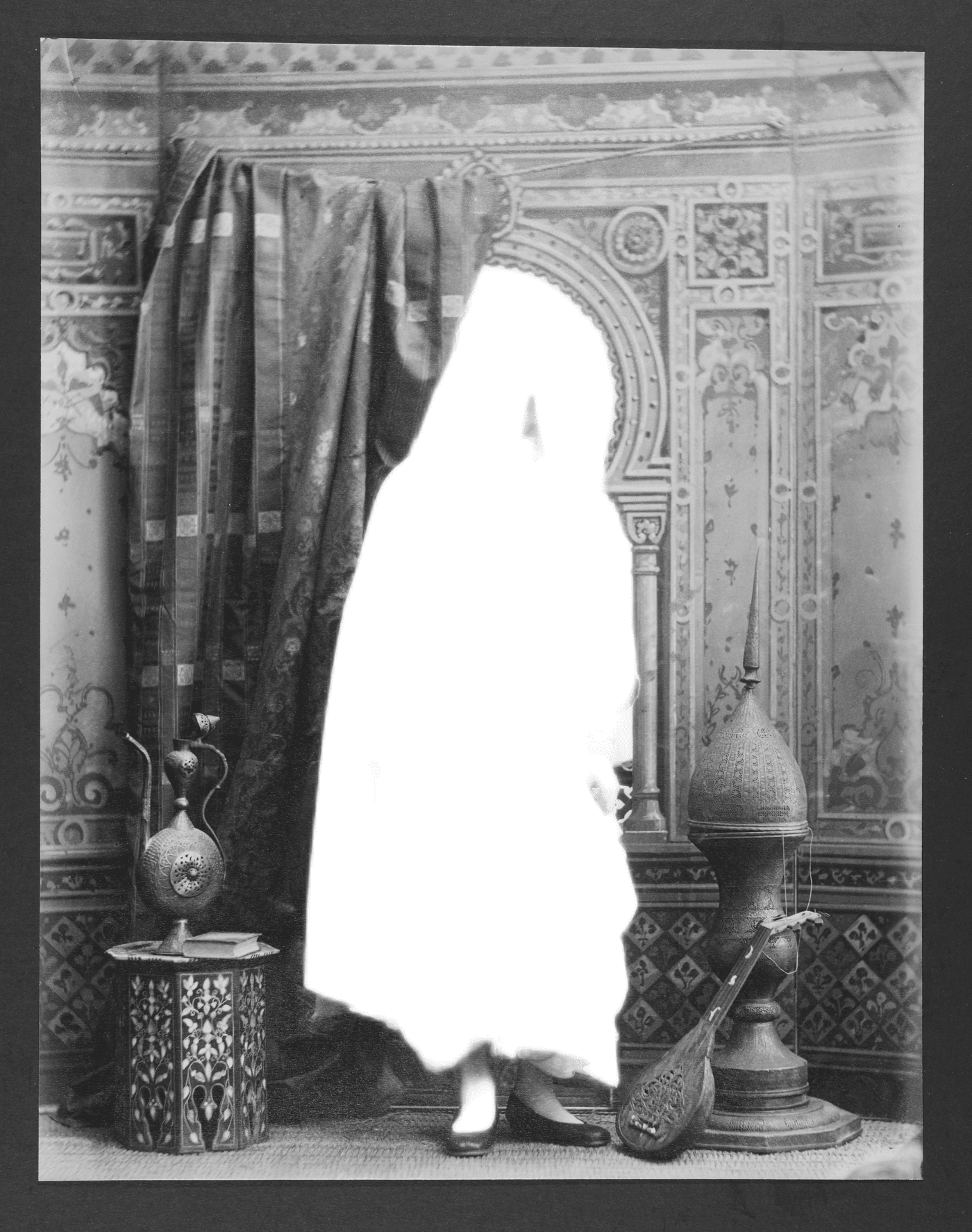
Figure 3 Nouf Aljowaysir, *Salaf #74: Man in Arab Costume \[Ancestor #74: L’Homme en Costume Arabe]*, 2020, AI-generated photograph based on Jean Greiser (1848–1923), ca. 1870, © Nouf Aljowaysir.
An installation by Hito Steyerl, created specifically for the exhibition, is instead focused on the political consequences embedded in the development of these models. Far from functioning as autonomous systems, their performance relies on an invisible and poorly paid workforce of “click workers”: individuals who moderate content, verify data, evaluate responses, and tag images to refine how these systems operate. This dispersed army of digital labour spans across the globe: if, for some, it may represent a supplementary source of accessory income, for others it is an unstable, precarious, exhausting, and unprotected job. The work brings to light the deep contradictions of a technological system that presents itself as autonomous and intelligent yet remains dependent on a hidden chain of fragmented human labour, whose existence remains on the margins of the official narratives surrounding technological innovation.
The second major section of the exhibition turns to generative AI and its capacity to create new texts and images from the vast amounts of data gathered online to train these systems. What, then, becomes of art in the “age of its technical reproducibility,” to borrow Walter Benjamin’s words - or perhaps more precisely, in the age of its artificial generativity? What does it mean to create, when sophisticated algorithms can absorb, deconstruct, and reassemble pre-existing materials, often without the knowledge or recognition of the original authors? And how much room remains for intuition, subjectivity, and imperfection, which have always shaped the human artistic gesture? Many artists have approached this new aesthetic with a critical eye. Egor Kraft, for example, in Content Aware Studies, investigates the potential of AI to reconstruct mutilated Greco-Roman artefacts: lost fragments are generated by algorithms, offering the possibility of being materialized through 3D printing...

Figure 4 Egor Kraft, Content Aware Studies 2019 © Egor Kraft
In Mindful and What Do You See, YOLO9000?, the collective Taller Estampa subjects an automatic image recognition system (YOLO9000) to an artistic stress test and presents the outcomes: at times accurate, at times surreal, and at others absurdly wrong. This work calls into question the supposed realism and objectivity of systems described as “intelligent,” which, in reality, do nothing more than process data and generate responses based on statistical correlations. Their predictions are probabilistic, devoid of the intentionality, contextual awareness, sensory experience, and emotional depth that characterize human brains ... Where the word “Tokyo” might, for a person, evoke precious childhood memories, emotions, aspirations, or dreams, for an AI it remains nothing more than a token processed through patterns, entirely detached from meaning, memory, or sentiment ... This raises the unsettling prospect of entrusting critical and creative processes to mechanisms for which the works of Shakespeare, Raphael, or Dostoevsky are reduced to mere strings of data to be rearranged, distorted, misread, or emptied of their essence. However sophisticated, AI possesses neither consciousness, nor understanding, nor empathy; it remains blind to beauty, irony, suffering, and the touchingly profound complexity of human thought...
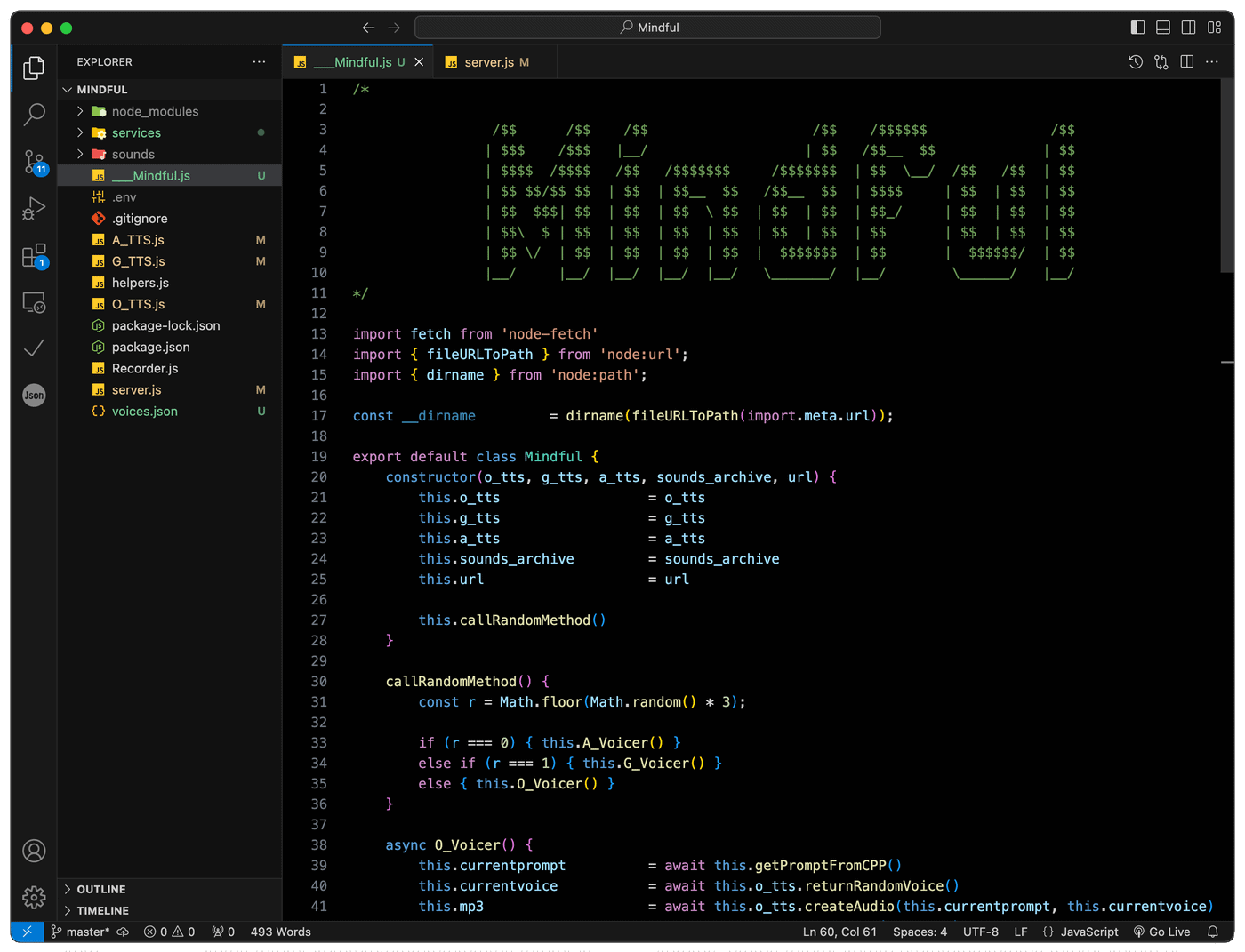
Figure 5 Jeff Guess, *Mindful*, 2025, custom real-time software, AI voice synthesis, directional speaker, Raspberry Pi, © Jeff Guess.
Another field of application of AI is represented by self-generating writing: with the development of large language models, the automatic production of literary texts has reached new levels of complexity, giving rise to works with increasingly sophisticated narrative structures. Some authors, such as poet Sasha Stiles, use AI as a genuine creative partner: her digital alter ego, Technelegy, proposes phrases and ideas that seem to belong to her, yet originate elsewhere. An example is her poem Ars Autopoetica, later translated into Cursive Binary, an alphabet designed for a transhuman audience and finally transcribed by a robotic scribe.

Figure 6 Sasha Stiles, *Ars Autopoetica*, 2023, digital print of a poem co-written with Technelegy and calligraphed by the Artmatr robot in the artist’s invented Cursive Binary alphabet, 45.72 × 35.50 cm each, © Sasha Stiles.
The exhibition finally concludes with The Organ, an interactive installation by Christian Marclay, an artist long engaged in exploring the relationship between sound and image. In 2017, through a collaboration with Snapchat - a platform where billions of short-lived photos and videos circulate daily - Marclay created this large electronic organ connected to a screen. When visitors press the keys, they trigger vertical sequences of snaps that share the same sound frequency, selected by an audio recognition algorithm. The result is an unexpected interplay between sound and image, where the fleeting fragments of the digital world are transformed into a shared visual and musical experience.

Figure 7 Christian Marclay, *The Organ*, 2018, interactive audiovisual installation with keyboard connected to a screen projection using video excerpts from Snapchat, © Christian Marclay & Snap Inc.
Ultimately, AI emerges today as a instrument that is at the time powerful, but ambivalent: it can generate, analyse, reproduce, and recombine. in ways once unimaginable, yet fundamentally devoid of embodied experience, emotional memory, and the awareness that enrich the human creative act. While it opens new pathways for expression and allows us to explore unfamiliar aesthetic domains, it also compels us to confront significant ethical, political, and cultural questions. What does it mean to create when the boundary between human and machine becomes increasingly porous? Whose voice is being heard, whose image is being shown, whose thought is being expressed? The challenge lies not in blindly rejecting or celebrating this technology, but in understanding its limitations, acknowledging its consequences, and, above all, reaffirming, as in every act of cultural creation, the irreplaceable value of our humanity: fragile, imperfect, yet profoundly alive.

Figure 8 Gregory Chatonsky, La Quatrième Mémoire, 2025, installation with generative film, 3D prints, digital prints, robot, aluminum, stones, variable dimensions, © Gregory Chatonsky

