

 日本語
日本語 English

Wall and Fence Repairs & Precautions
Japanese detached houses with gardens are often surrounded by walls or fences. Traditional earthen walls made of soil still exist around some older houses, shrines, and temples, but they are easily damaged by wind and rain and require frequent maintenance. Because there are fewer plasterers today who can repair or build these walls, the number of traditional earthen walls continues to decline. Walls that look like earthen walls are often made of concrete instead.

A crumbling earthen wall. Roof tiles are placed on top to prevent damage from rain. Even when the sides are coated with plaster, wind and rain often cause them to erode and crumble. Some walls are made entirely of earth, while others use stones or tiles stacked inside with mud, then finished with earthen or plaster surfaces.

A fence built using the same techniques as earthen walls found in inns and old houses. To prevent erosion and collapse from rain splashing up from the ground, the lower half is covered with boards, and the earthen surface above is coated with plaster.

Though uncommon today, stone walls like this still exist. Because they show the character of the region, it would be unfortunate to remove them solely for safety reasons.
Up until around the 1940s, wooden board fences and hedges were common. However, after homes were destroyed by air raids during WWII, along with repeated earthquakes and large fires, fire-resistant concrete block walls began to spread rapidly. As a result, many secondhand properties with gardens still have concrete block walls today―but these require caution.
In the 1978 Miyagi earthquake, 18 people died after being crushed by collapsing block walls. In the 2018 Osaka earthquake, a young schoolgirl was killed when a block wall at her school collapsed. The Building Standards Act was revised in 1981 to require boundary walls to meet seismic standards, but those rules do not apply to block walls built before that date.
Although reinforcing bars are normally used when constructing block walls, many older walls were built simply by stacking blocks with no reinforcement at all. Some were even constructed using thin landscaping blocks instead of the thick structural blocks meant for walls. Additionally, the lifespan of a block wall is generally only 20–30 years. Many existing walls have far exceeded this limit. Large numbers of these neglected walls remain, and they are extremely dangerous.
If your property has old block walls or earthen walls―heavy structures that could crush someone if they collapse during an earthquake―I strongly recommend removing them, reinforcing them, or rebuilding them into safer versions. Leaving a wall that does not meet modern seismic standards is not illegal, but if it collapses and injures someone, you as the owner will be held responsible.
Some local governments offer subsidies for removing or repairing block walls. However, as mentioned earlier in Part 3 (“Subsidies for Home Renovations”), foreigners in Japan typically cannot receive these subsidies unless they are married to a Japanese citizen or have special permanent resident status.
Removing or repairing concrete block walls is dangerous and physically demanding work. Because there is a high risk of damaging neighboring property, it is generally best to hire a professional contractor. Even if you plan to do it yourself, never swing a hammer wildly at the wall. Pieces of concrete can fly off and cause injuries, and the wall may not break as easily as expected. On the other hand, if the wall has no reinforcing bars and is simply stacked, it may collapse all at once, which is extremely dangerous. If you insist on doing the work yourself, at the very least confirm whether reinforcing bars are present, and consult a contractor about the proper demolition or reinforcement method before starting.

Concrete block wall. On closer inspection, the wall facing the street leans slightly outward, creating a gap.
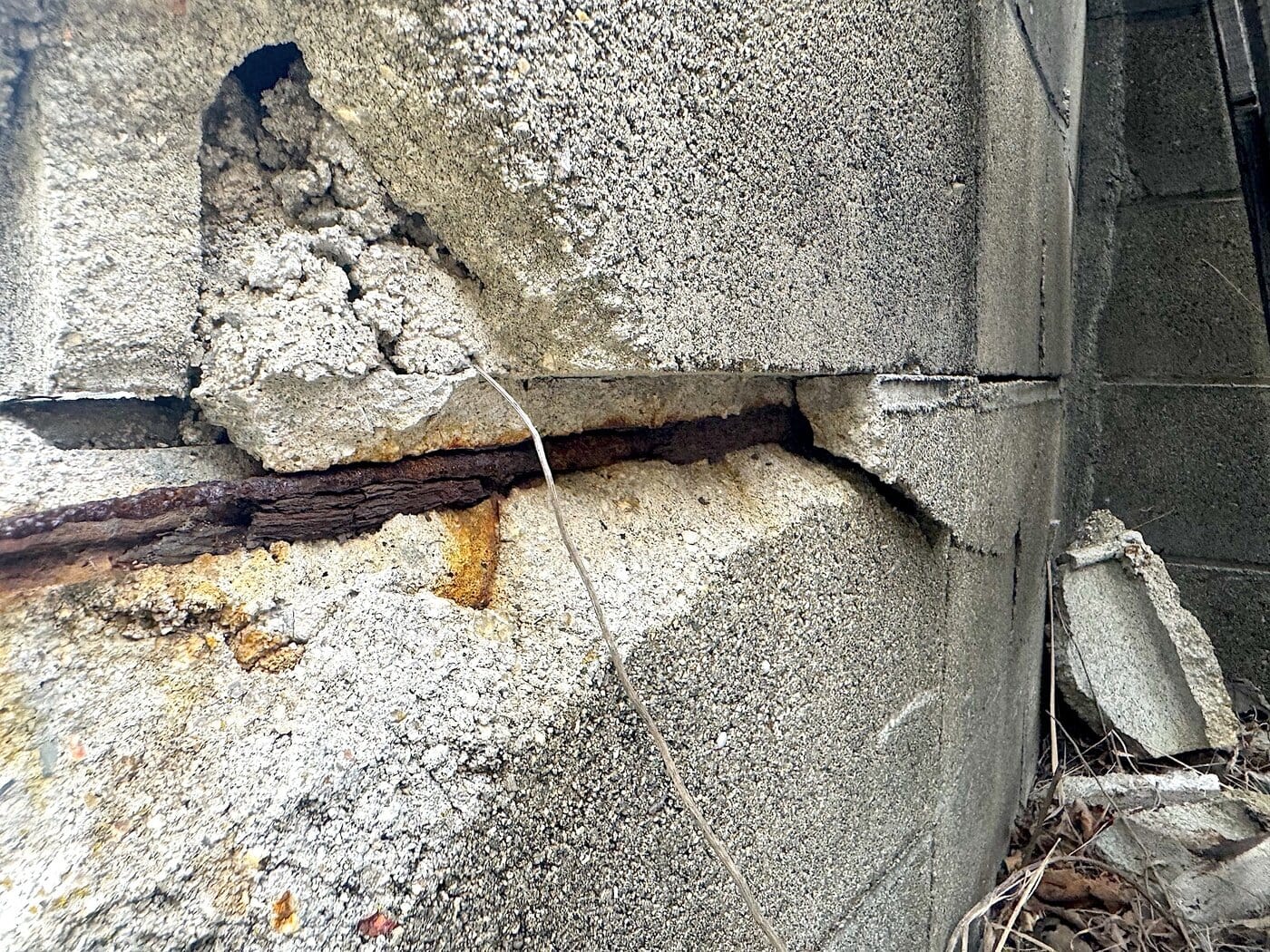
Inside this block wall, rusted reinforcing bars have expanded, causing the blocks to crack under pressure. Even if the wall has reinforcing bars, rusting can still make it dangerous.
Hedges also require attention. While they do not collapse easily and are less flammable than dried wood, they need regular maintenance such as pruning and pest control, which takes time and money. Because hedges are planted along property lines, allowing branches or leaves to grow into a neighbor’s property can cause disputes.
Under Japanese law, you are allowed to cut branches that cross into your property without the neighbor’s permission. However, if your plants start invading the neighbor’s yard, they will likely complain―or at least hint―that you should prune them. Japanese complaints can be subtle; if a neighbor brings up your hedge, even in a polite or positive-sounding comment, it might actually mean, “Your hedge is causing trouble.” A comment like “Your hedge looks so full and impressive” may actually be a gentle request to cut it back.

Hedge plants must be trimmed regularly to prevent branches from spreading into roads or neighboring properties and causing problems.
Recently, many people have been choosing wooden plank fences instead of dangerous block walls or labor-intensive hedges. However, Japan’s hot, humid climate encourages termite activity, and wooden plank fences tend to rot quickly. To make them last longer, you must either use expensive, rot-resistant wood (like the kind used for decks) or regularly apply insect-repellent and preservative coatings. In densely populated neighborhoods, fire-prevention measures may also be required.

Traditional-style wooden fence.
As described above, each type of fence―wooden plank fences, hedges, block walls, and earthen walls―has its own strengths and weaknesses. Other options, such as metal fences, also require regular maintenance, such as painting to prevent rust.
Recently, there has also been a trend toward avoiding tall fences. Japanese houses often have large windows, making the interior visible from the outside, so tall fences were traditionally built to provide privacy and security. However, it has become widely known that burglars and intruders actually prefer homes with tall walls, since neighbors cannot see inside and suspicious activity is more easily hidden.
In addition, tall block walls carry a higher risk of collapsing during earthquakes. For these reasons, fences that significantly block visibility have become less common in recent years.

