English
 日本語
日本語

Exploration of Architectural Anthropology
Since its origins, architecture has had the fundamental purpose of sheltering and protecting. But how does it succeed in doing so today? The 19th International Architecture Exhibition — La Biennale di Venezia has been held for 10 May–23 November 2025. In a time marked by constant change and growing instability, the Polish Pavilion offers a compelling exploration of architectural anthropology with the exhibition "Lares and Penates: On Building a Sense of Security in Architecture."

The entrance and main façade of the Polish Pavilion, overlooking the Giardini of La Biennale di Venezia. Built in the 1930s, the Pavilion has hosted Poland’s national exhibitions since 1932 and now presents Lares and Penates: On Building a Sense of Security in Architecture at the 19th International Architecture Exhibition
Photo credit: Jacopo Salvi, Zachęta archive
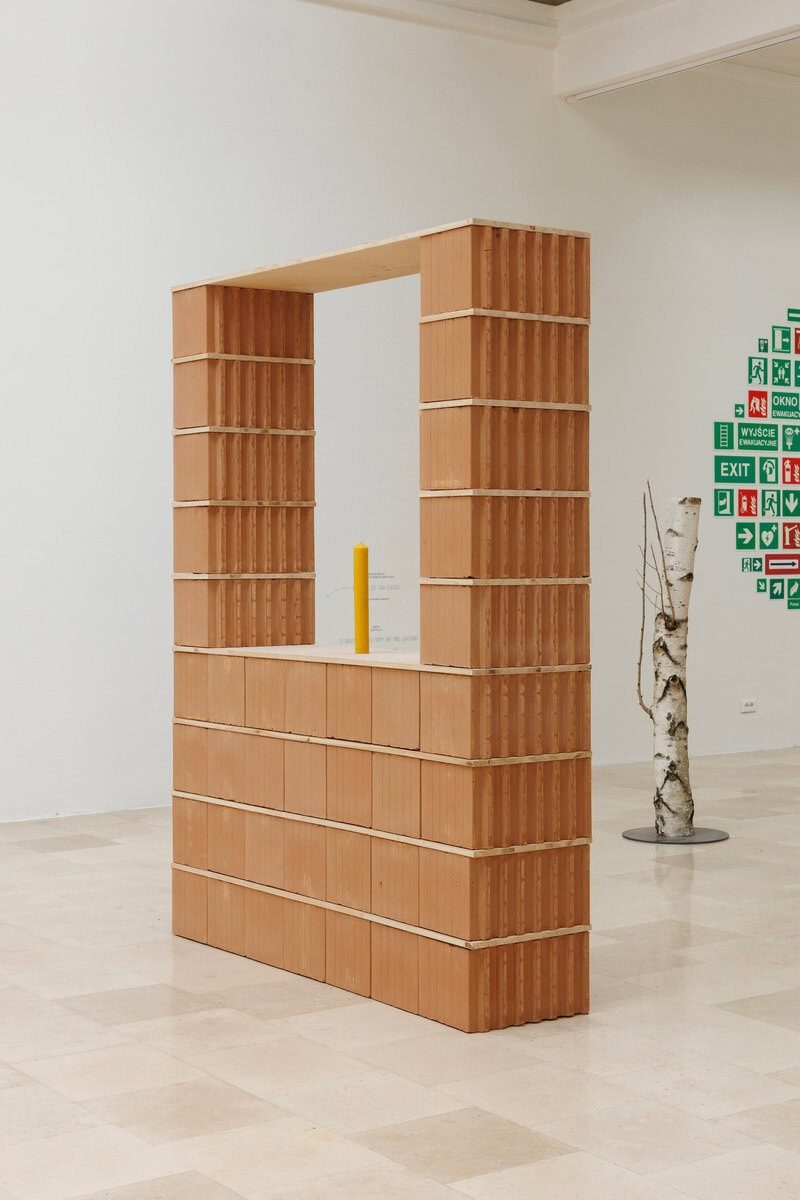
A blessed beeswax candle (gromnica), traditionally lit during storms and placed in the window to protect the house from lightning—a ritual rooted in Candlemas traditions
Photo credit: Jacopo Salvi, Zachęta archive
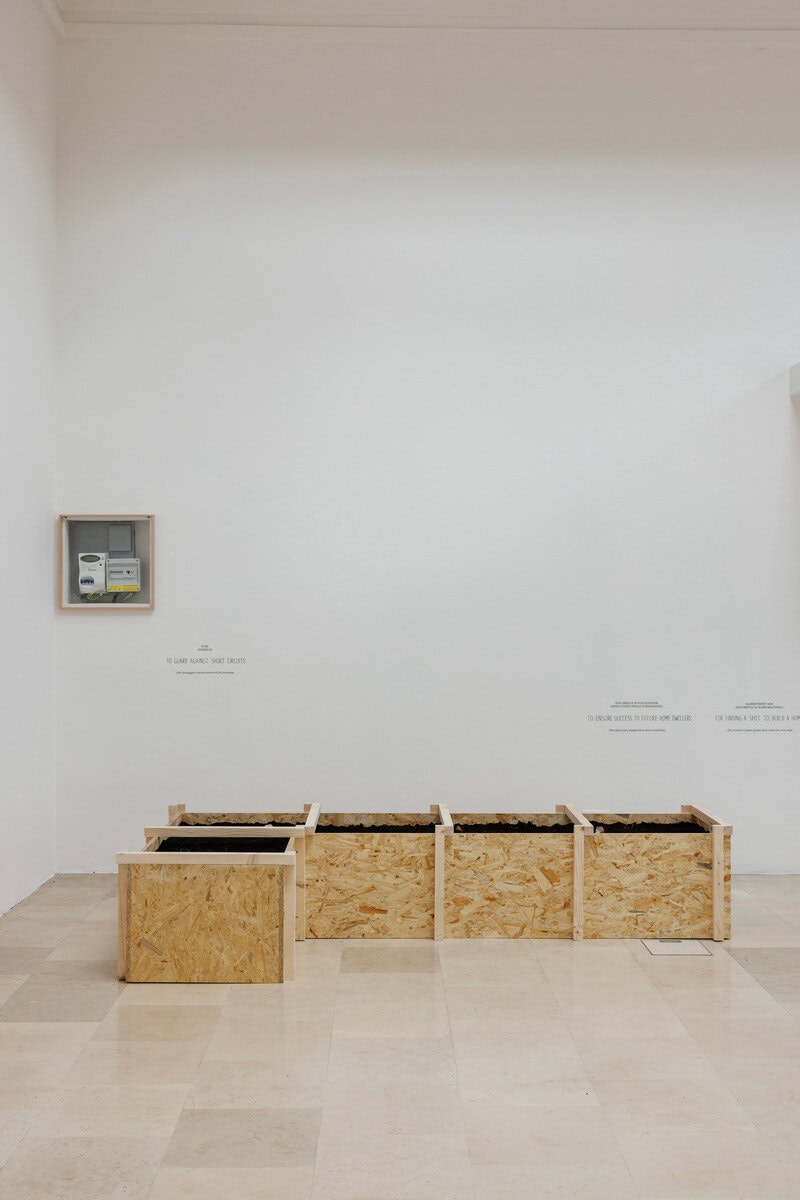
Foundation offerings (zaktadziny), once buried beneath the home’s corners—eggshells, grain, money, blessed candles—to secure protection and abundance for the new dwelling
Photo credit: Jacopo Salvi, Zachęta archive
The goal of the multidisciplinary team—comprising the historian Aleksandra Kędziorek, artists Krzysztof Maniak and Katarzyna Przezwańska, and architect Maciej Siuda—is to examine architecture not from the designer's viewpoint, but through the eyes of those who live within it. "Lares and Penates were Roman deities charged with protecting the household hearth. In many languages today, they still evoke the idea of guardianship and domestic safety," explains Aleksandra Kędziorek.
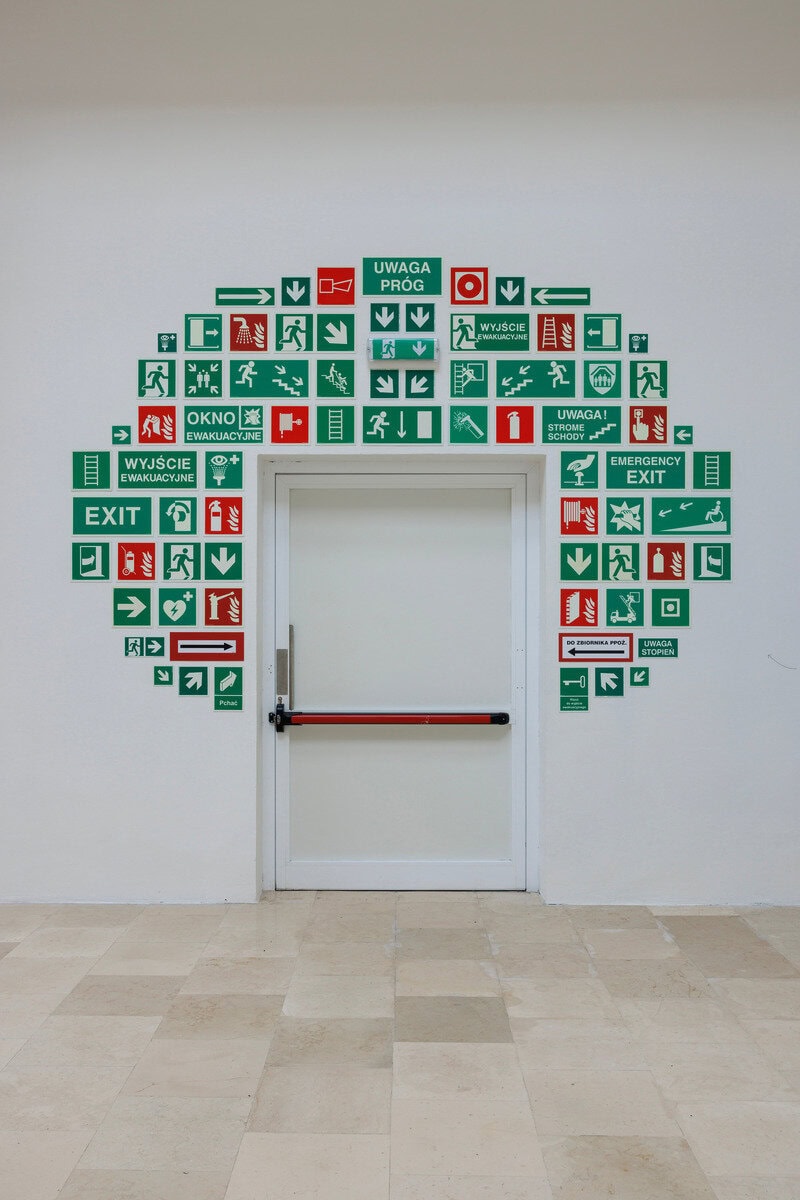
Existing emergency infrastructure—such as evacuation signs and fire alarms—is highlighted within the exhibition to reflect how safety regulations shape architectural space
Photo credit: Jacopo Salvi, Zachęta archive
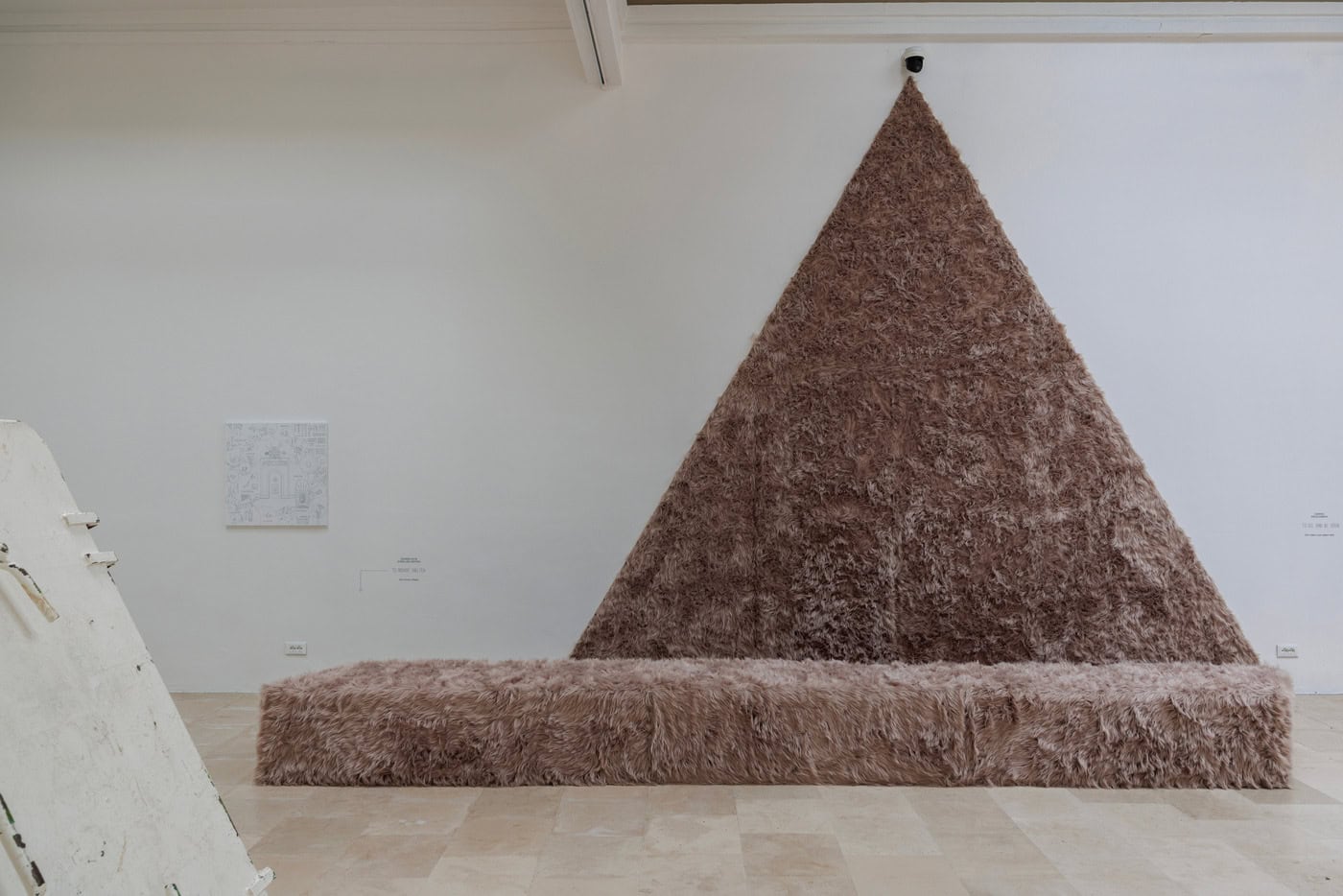
Surveillance camera originally installed in the Pavilion, now deliberately revealed and framed as part of the exhibition—shifting its functional gaze into a curatorial presence
Photo credit: Jacopo Salvi, Zachęta archive
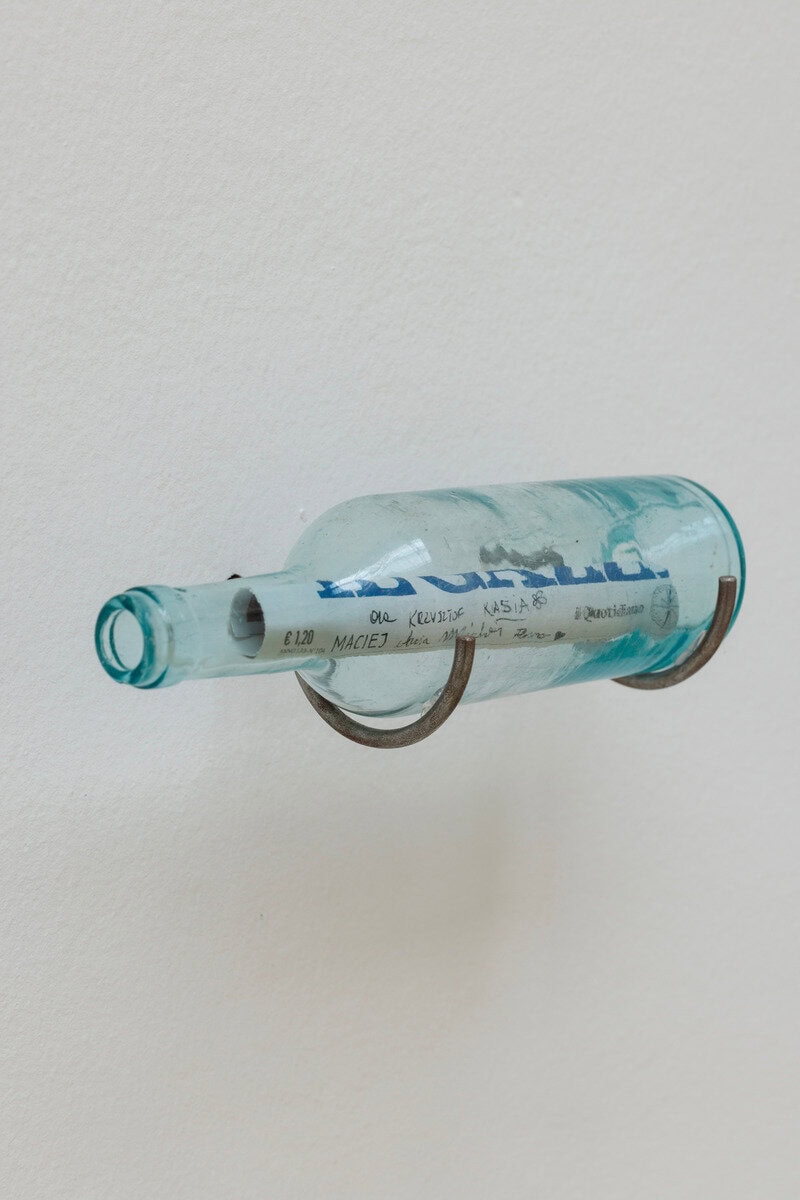
A bottle sealed into the wall, containing workers’ signatures and a newspaper—part of a long-standing tradition of leaving a trace inside the building for posterity, a practice still observed today
Photo credit: Jacopo Salvi, Zachęta archive
Careful research conducted across Poland reveals customs and gestures still practiced today and passed down across generations: a candle placed in the window to ward off storms, a garland hung—"wiecha" in Polish— at building sites to prevent accidents, an ancient threshold salvaged from a village marking the symbolic boundary between outside and in, or a rod used to locate underground veins at new construction sites.
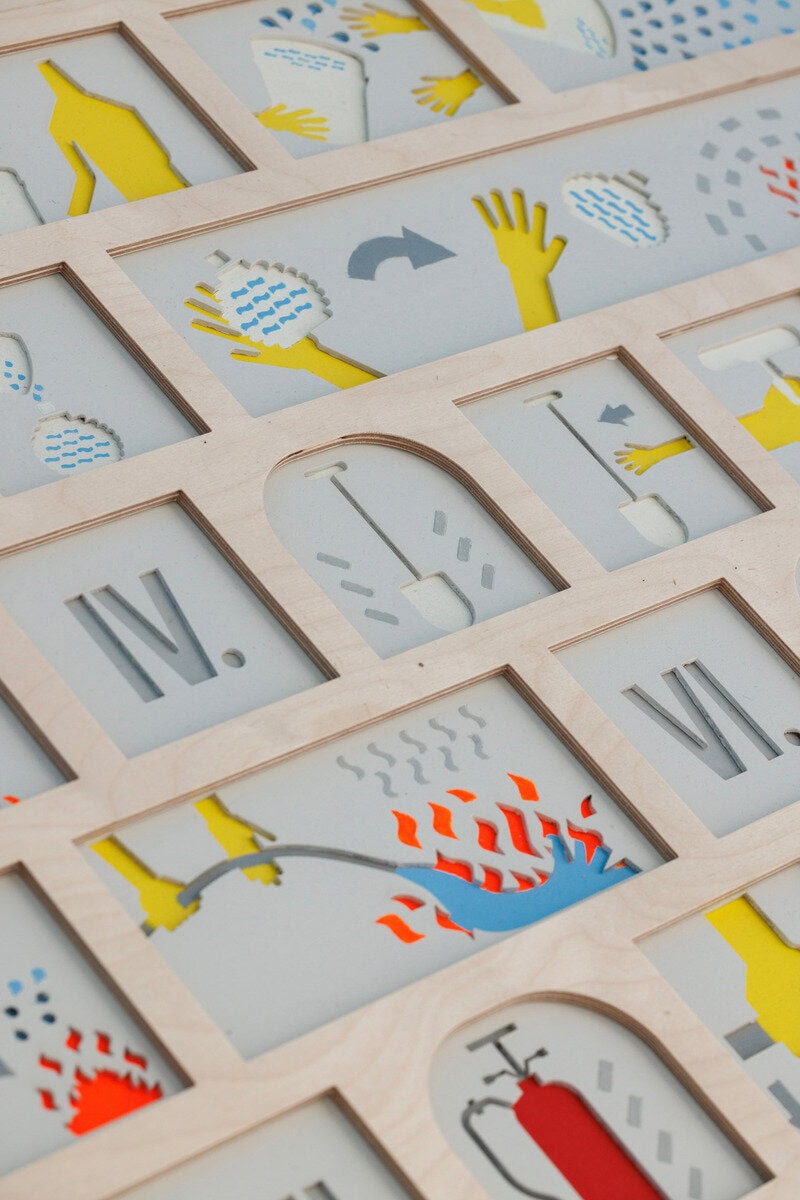
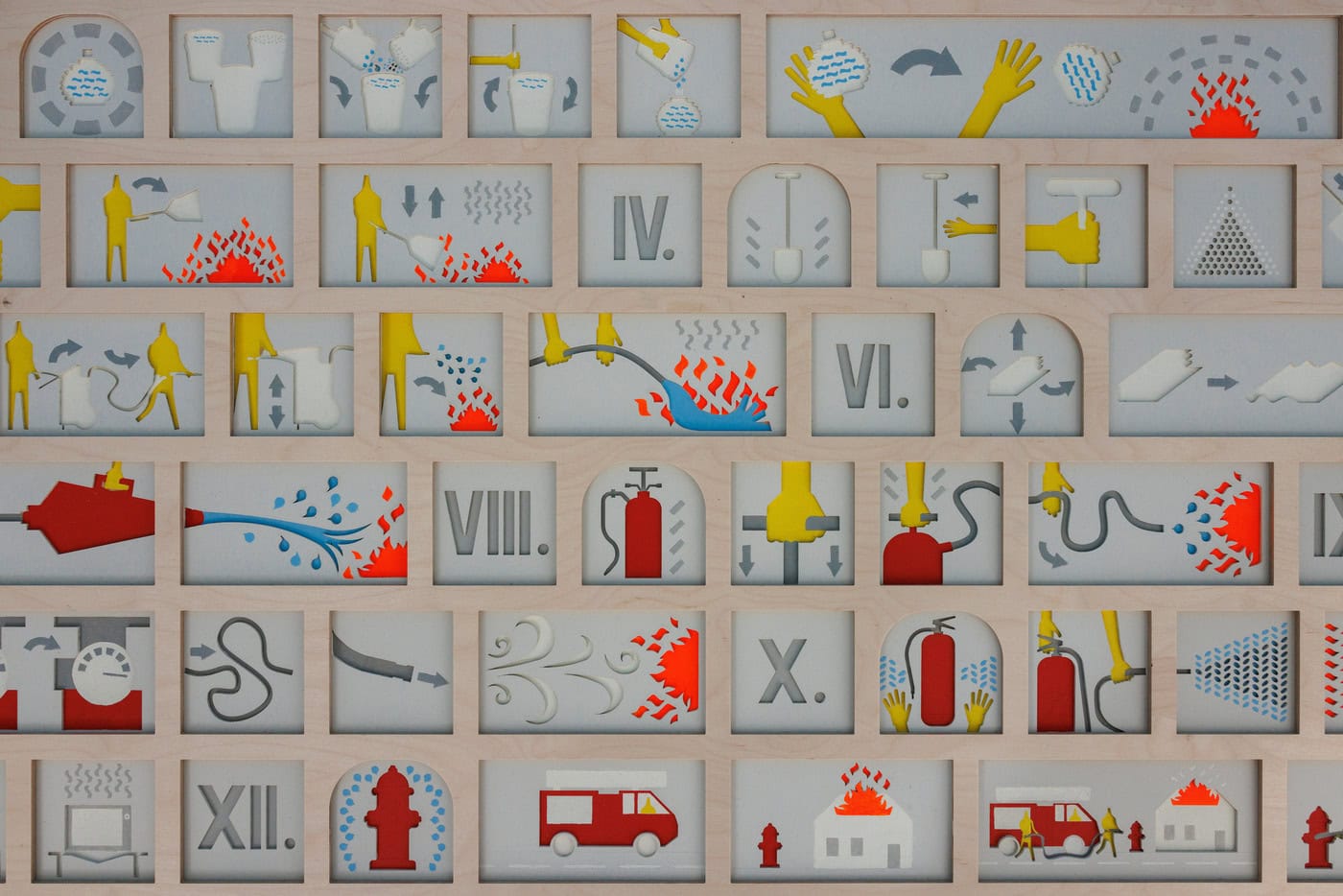
Instructional graphics by Maciej Siuda illustrating how to use a fire extinguisher—functional drawings integrated into the installation as part of a reflection on safety and everyday ritual
Photo credit: Jacopo Salvi, Zachęta archive
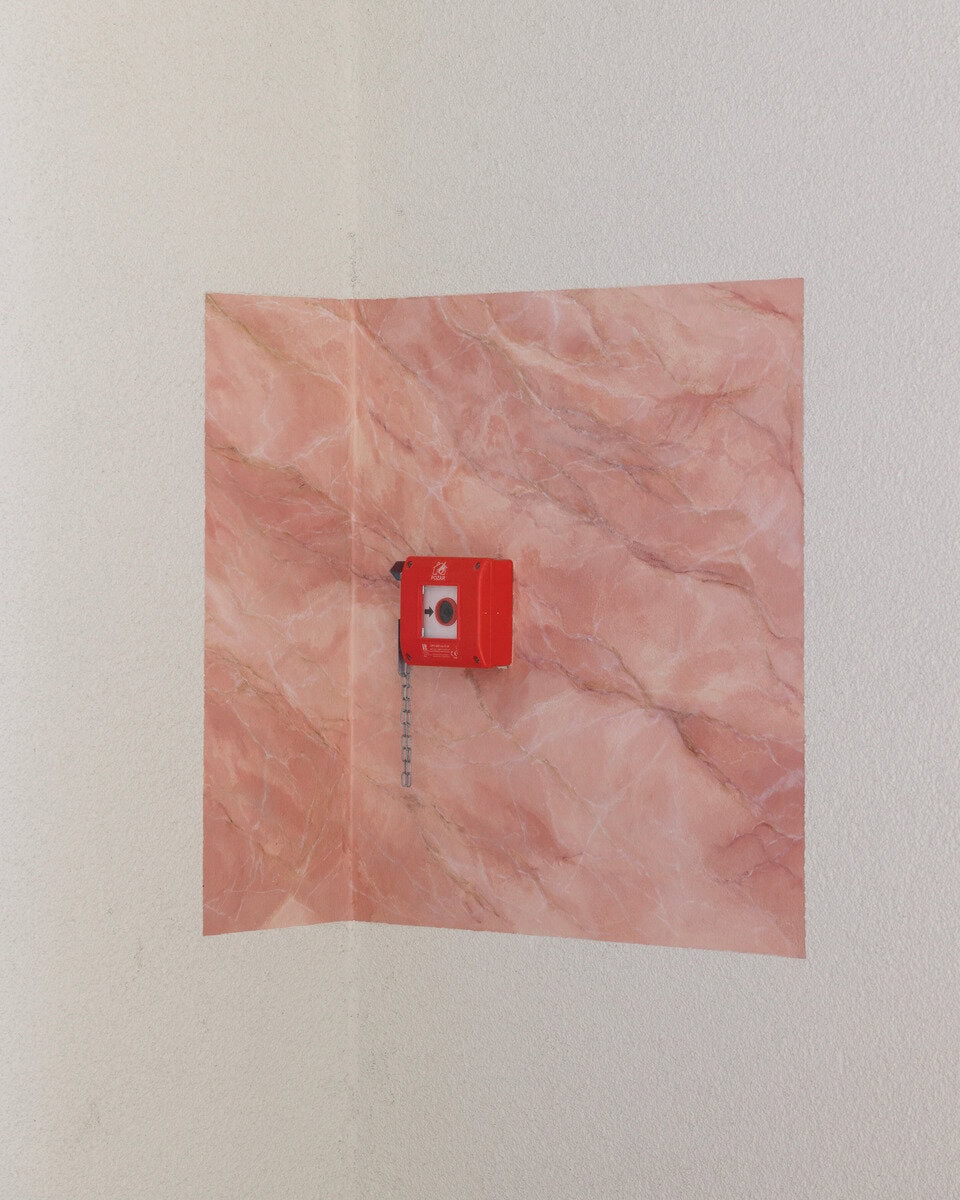
A real fuse from the Pavilion’s electrical system—usually concealed—deliberately exposed and framed within the exhibition, transforming a regulatory safety element into an integral part of the installation
Photo credit: Jacopo Salvi, Zachęta archive
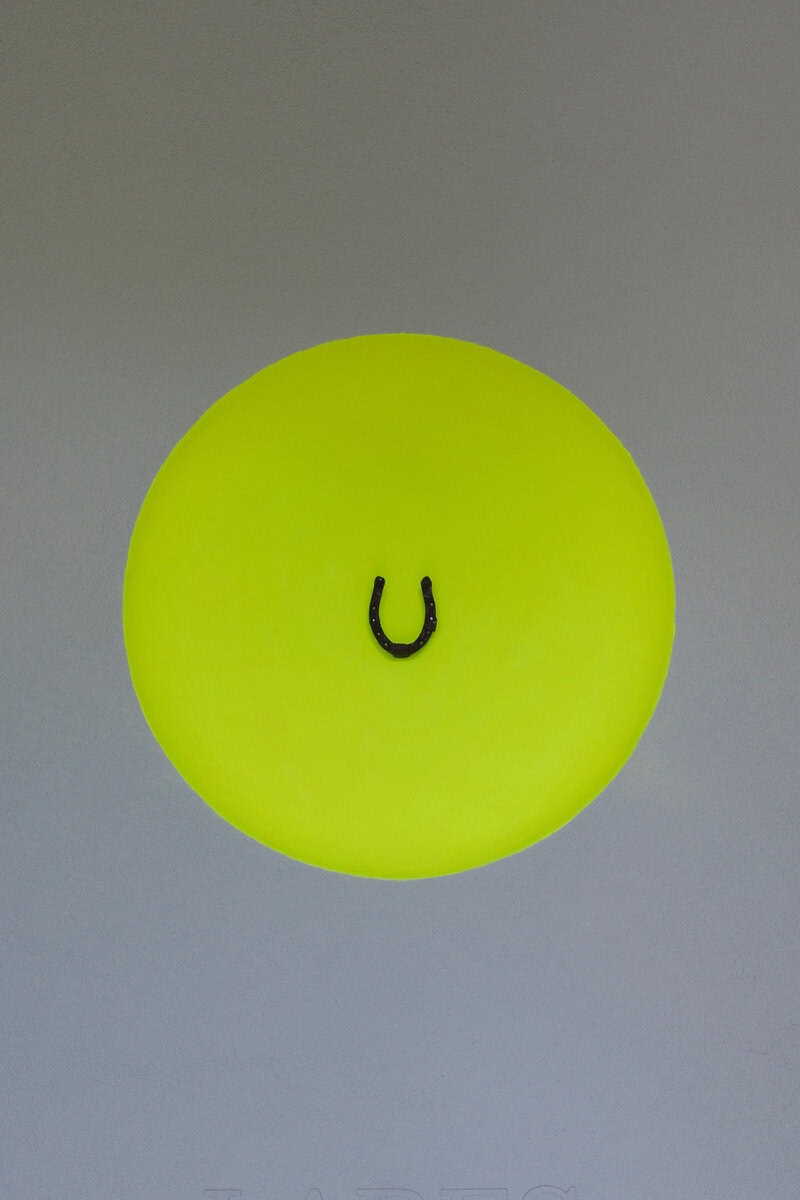
A found horseshoe, hung in a ‘U’ shape to keep luck from spilling out—presented here as part of an open-ended dialogue, without judgment, between ritual gestures, living myths, safety regulations, and emotional needs
Photo credit: Jacopo Salvi, Zachęta archive
At the same time, the exhibition draws attention to safety features and infrastructure aligned with contemporary regulations, such as the emergency exit or the fire alarm. These elements, already part of the Pavilion's architecture, are framed and highlighted as part of the display. Also included are peepholes, alarm systems, and padlocks—devices through which we watch and protect, often unseen.
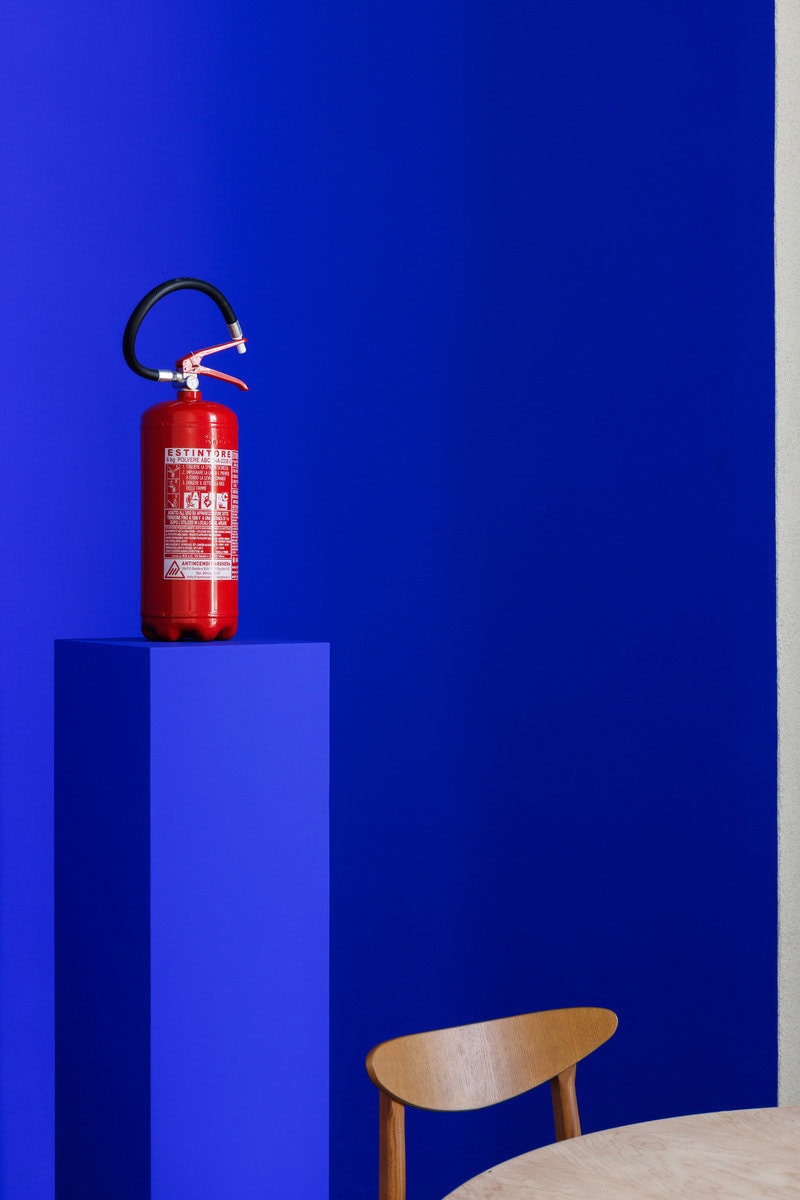
The modern archetype of protection: a fire extinguisher displayed with reverence, echoing centuries of firefighting evolution and domestic vigilance
Photo credit: Jacopo Salvi, Zachęta archive
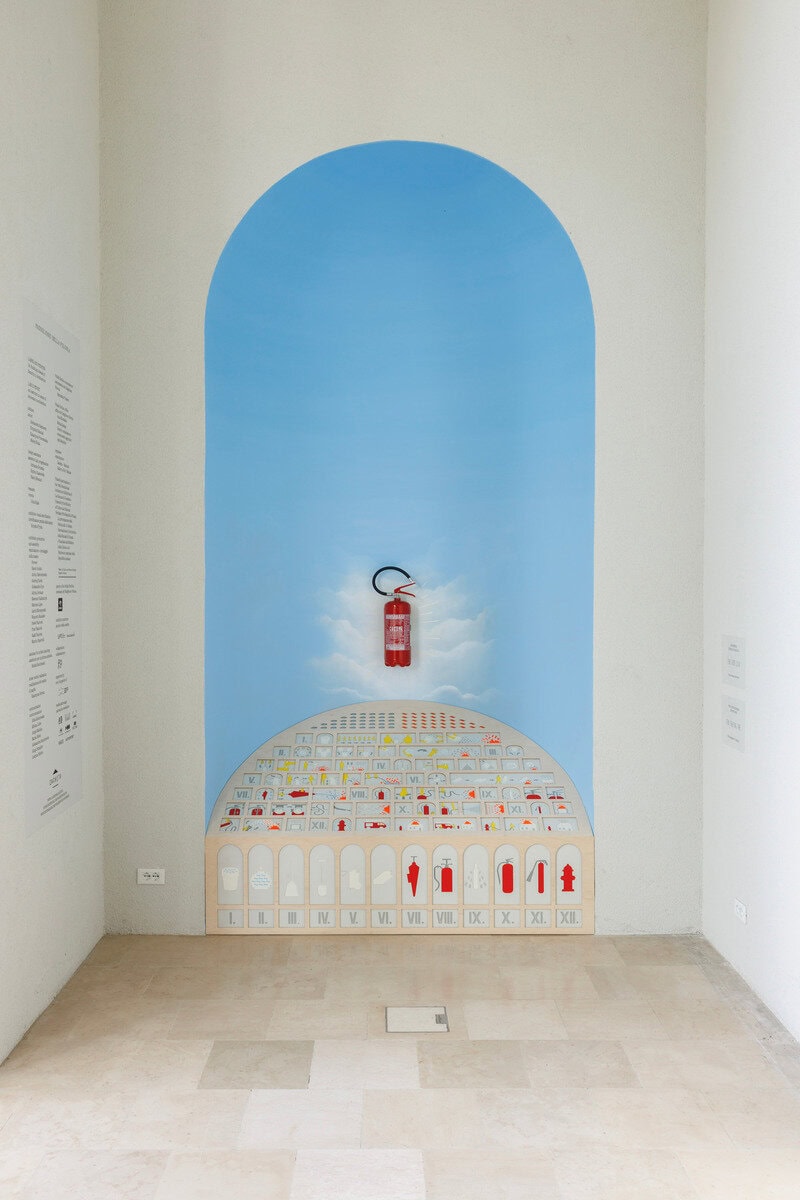
A hand fire extinguisher, part of a long history of firefighting tools—from bucket brigades to chemical cartridges—now reframed as both a safety device and a design element
Photo credit: Jacopo Salvi, Zachęta archive
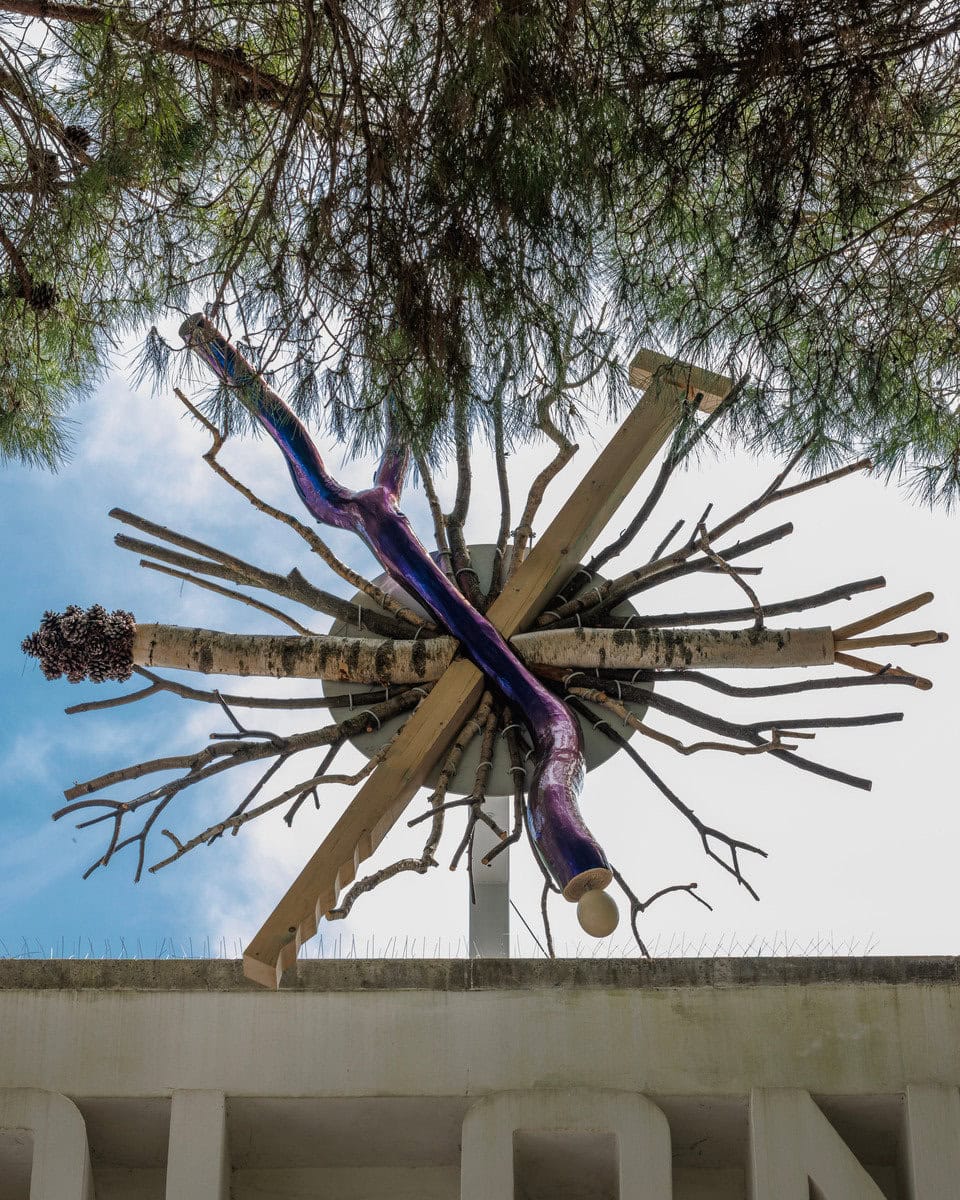
A wiecha—wreath of branches with ribbons and tools—placed atop the building to mark its structural completion, a tradition in Poland since the 15th century
Photo credit: Jacopo Salvi, Zachęta archive
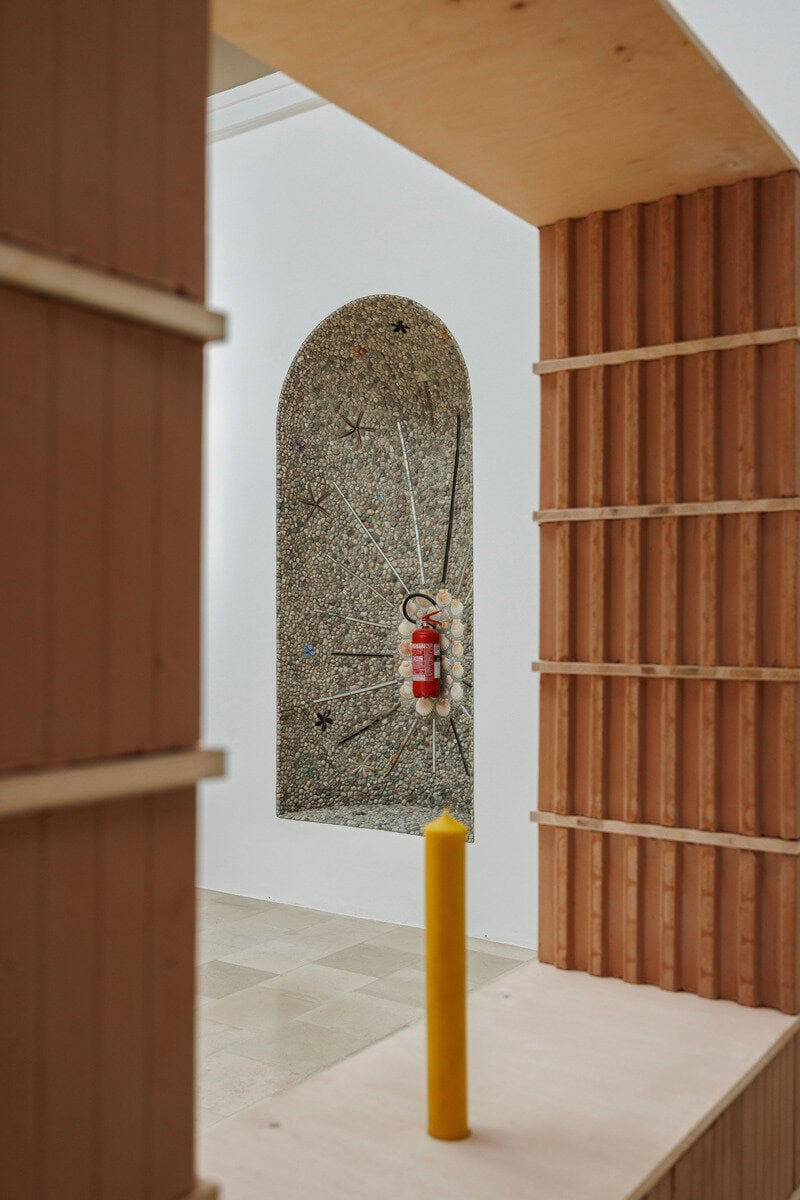
With a humanistic gaze, the exhibition constantly weaves together the regulatory and emotional layers of architecture—two domains often perceived as separate. Thus, a fire extinguisher—quintessentially utilitarian—is set into a niche decorated like a fresco, or framed in a Venetian-style mosaic, revealing its symbolic and reassuring qualities.
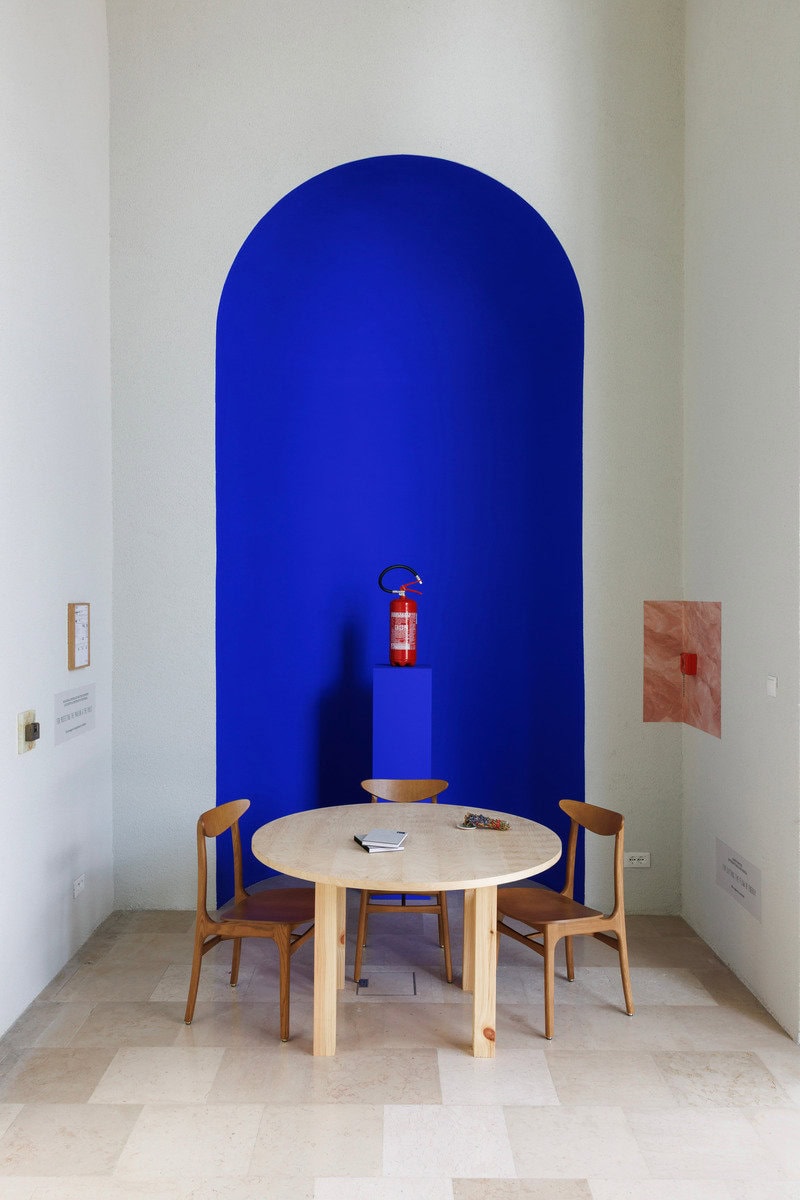
Entrance to the exhibition Lares and Penates: On Building a Sense of Security in Architecture, where visitors are invited into a space shaped by rituals, regulations, and everyday gestures of protection
Photo credit: Jacopo Salvi, Zachęta archive
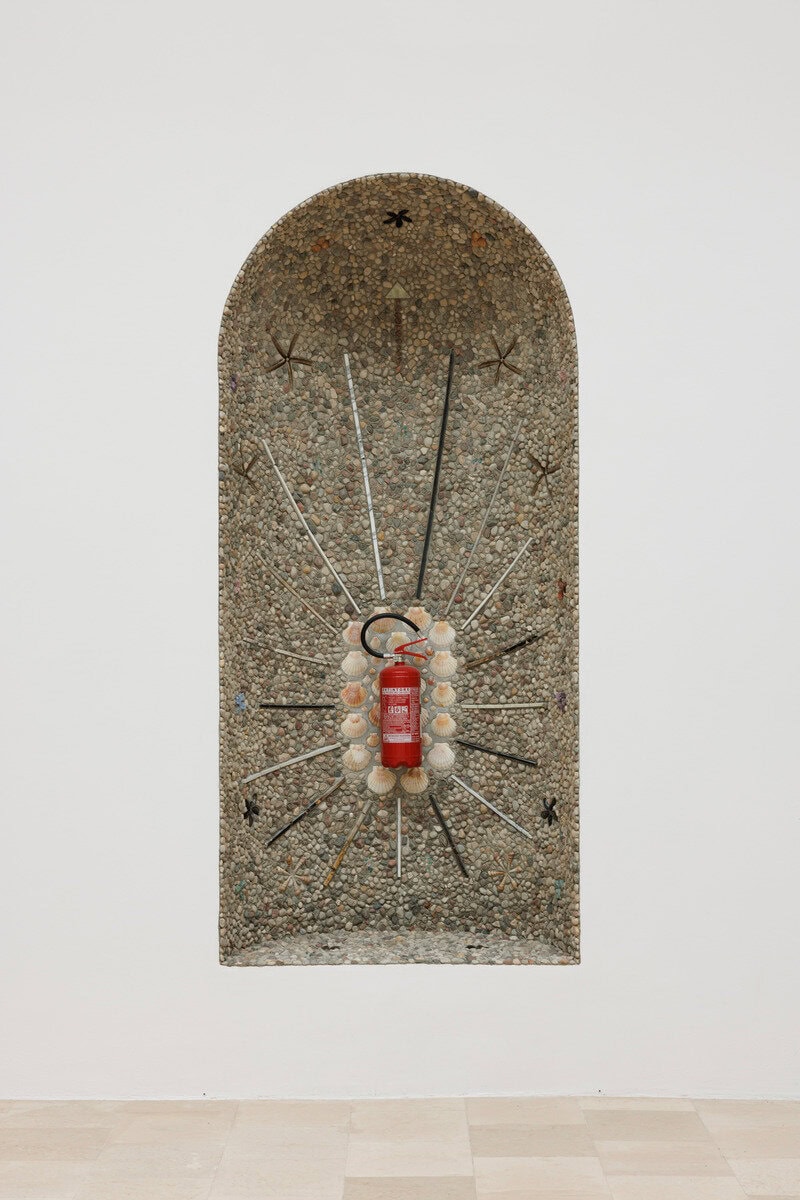
Presented as part of the building’s architecture, the fire extinguisher draws attention to the emotional dimension of functional safety elements
Photo credit: Jacopo Salvi, Zachęta archive
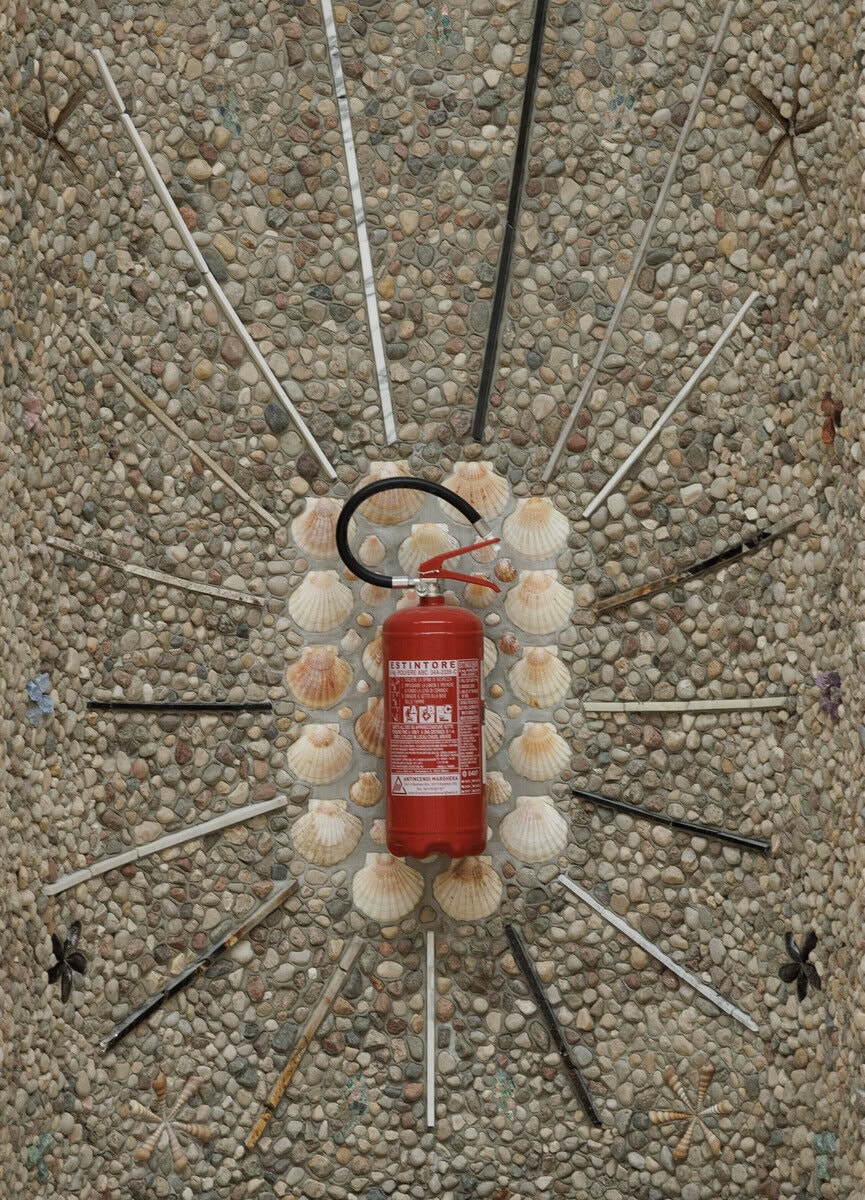
A fire extinguisher set into a niche decorated like a fresco, revealing its symbolic and reassuring presence within the domestic space
Photo credit: Jacopo Salvi, Zachęta archive
The exhibition eschews digital abstraction. Instead, visitors encounter a constellation of found or assembled objects, presented at full scale and celebrated for their material presence within an essential scenography. These tactile, three-dimensional models are rooted in a shared cultural memory.
-

- From fire rituals to radiesthetic rods, from holy corners to certified safety devices—this exhibition invites us to rethink how architecture has always mediated our need for protection Photo credit: Jacopo Salvi, Zachęta archive
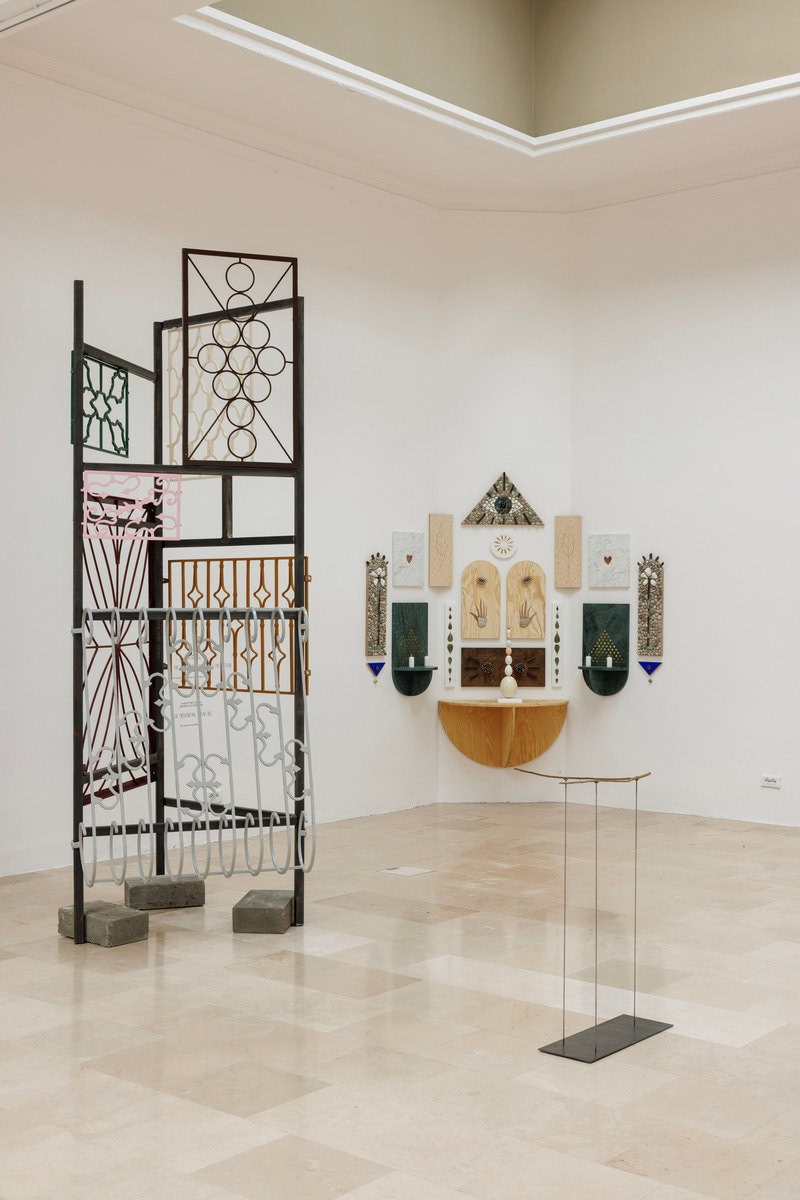
-
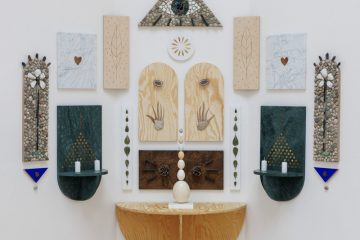
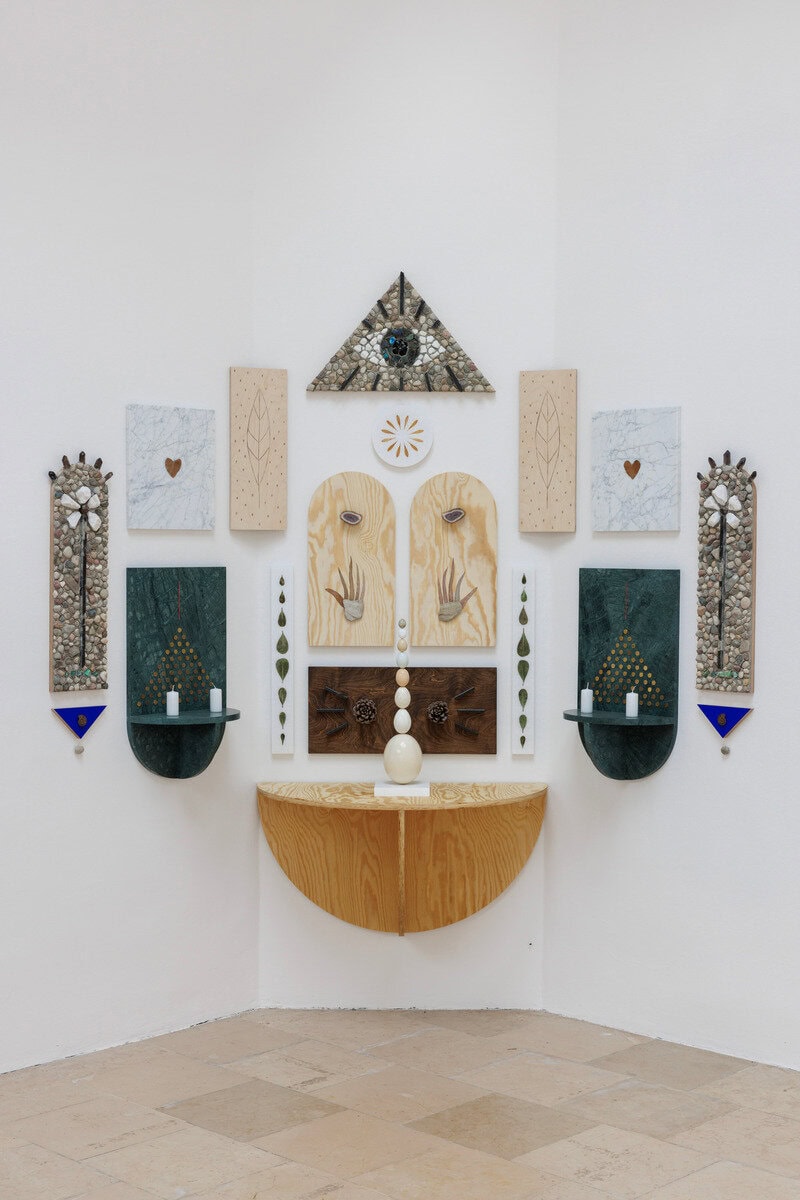
- The holy corner (pokuc), a sacred space in traditional Slavic homes, located opposite the entrance and adorned with icons, linen fabrics, and flowers—a domestic altar of protection and reverence Photo credit: Jacopo Salvi, Zachęta archive
-
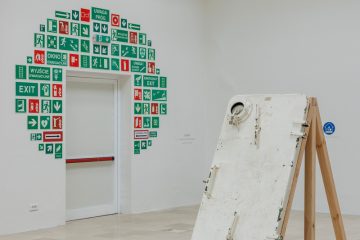
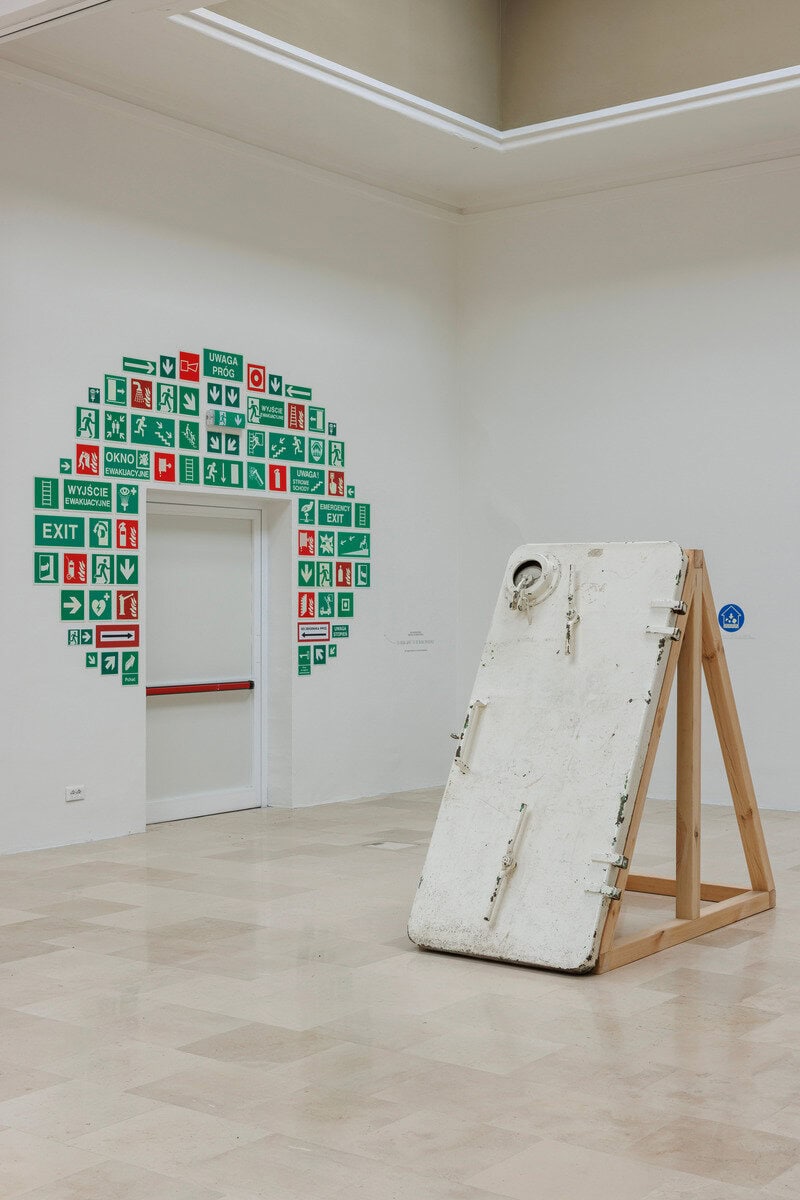
- Hermetically sealed armoured door, a standard element of underground shelters built to withstand shock waves and, in the case of nuclear shelters, to block radiation. Like all objects in the exhibition, it was selected by the curators as part of a dedicated research process—from real, existing pieces sourced and assembled specifically for this project Photo credit: Jacopo Salvi, Zachęta archive
-
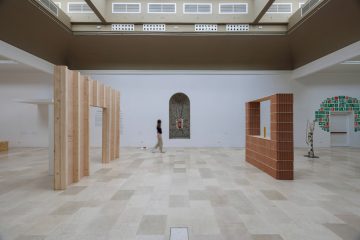
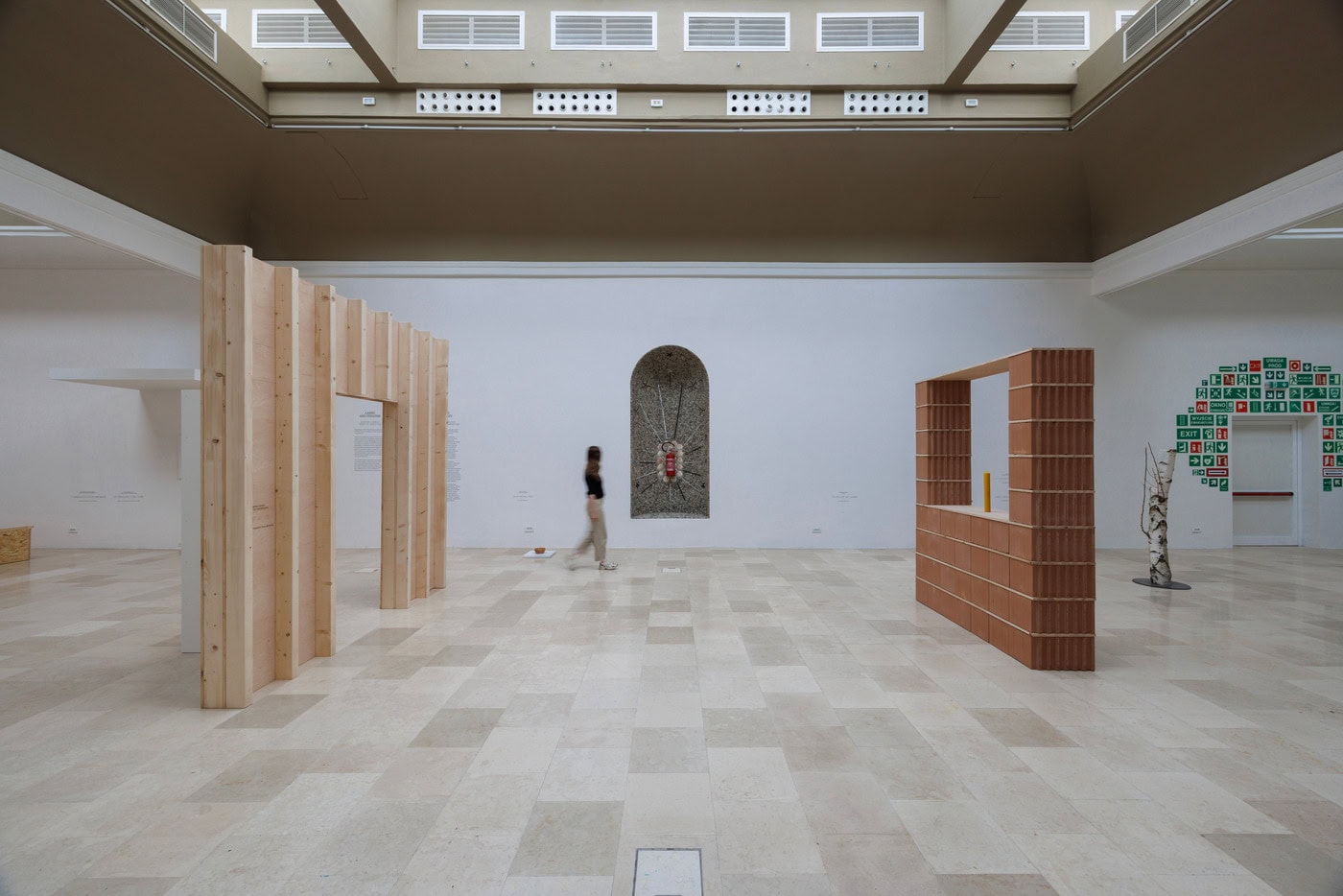
- Here, gestures old and new—placing a candle in the window, installing a fire alarm—are presented side by side, revealing the continuous thread between ancestral rituals and modern safety protocols Photo credit: Jacopo Salvi, Zachęta archive
-
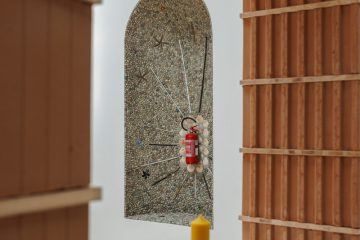
- The exhibition at the Polish Pavilion reflects on the continuity between ancient rituals and contemporary safety practices—where lighting a blessed beeswax candle and framing a fire extinguisher are gestures driven by the same human need for protection Photo credit: Jacopo Salvi, Zachęta archive
-
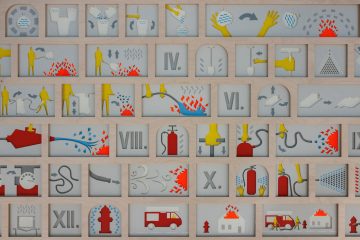
- Graphics by Maciej Siuda Photo credit: Jacopo Salvi, Zachęta archive
-
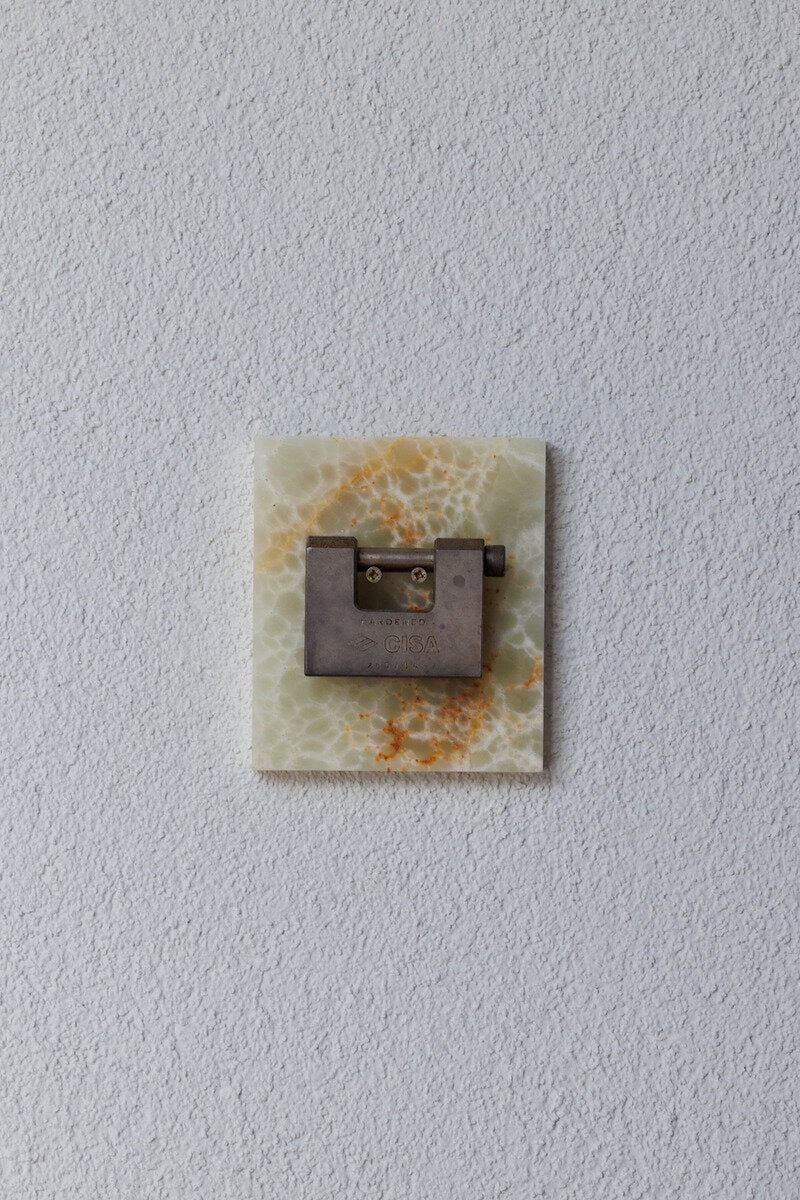
- The actual bolt used to lock the main entrance to the Polish Pavilion in the Giardini, here framed and displayed at the threshold of the exhibition—a gesture that turns a functional element into a symbol of security Photo credit: Jacopo Salvi, Zachęta archive
The Polish Pavilion at the 2025 Venice Architecture Biennale
| Address | Giardini della Biennale, Sestiere Castello, 30122 Venice, Italy |
| URL | https://labiennale.art.pl/en/ |