

 English
 日本語
日本語

A Fusion of Craft and Contemporary
In the heart of Bangkok’s historic old town, VMA Design Studio has reimagined a narrow urban lot into an elegant and atmospheric boutique lodging. The Double B Hostel, a 27-room project nestled within a community long known for traditional Buddhist craftsmanship, presents a compelling blend of local heritage and modern architectural innovation.

Hostel Entrance
Photo credit: Art Chitsanupong

Hostel Wooden Facade
Photo credit: Art Chitsanupong

Recessed Entrance Gateway
Photo credit: Art Chitsanupong
At first glance, the hostel’s most striking feature is its sinuous wooden facade, which flows like waves from the exterior into a serene inner courtyard. These curved timber elements not only serve as a visual anchor but also function as a bridge between old-world craftsmanship and contemporary organic design. Drawing inspiration from the site’s artisan legacy, the project is a respectful yet bold reinterpretation of the neighborhood’s cultural and material vernacular.
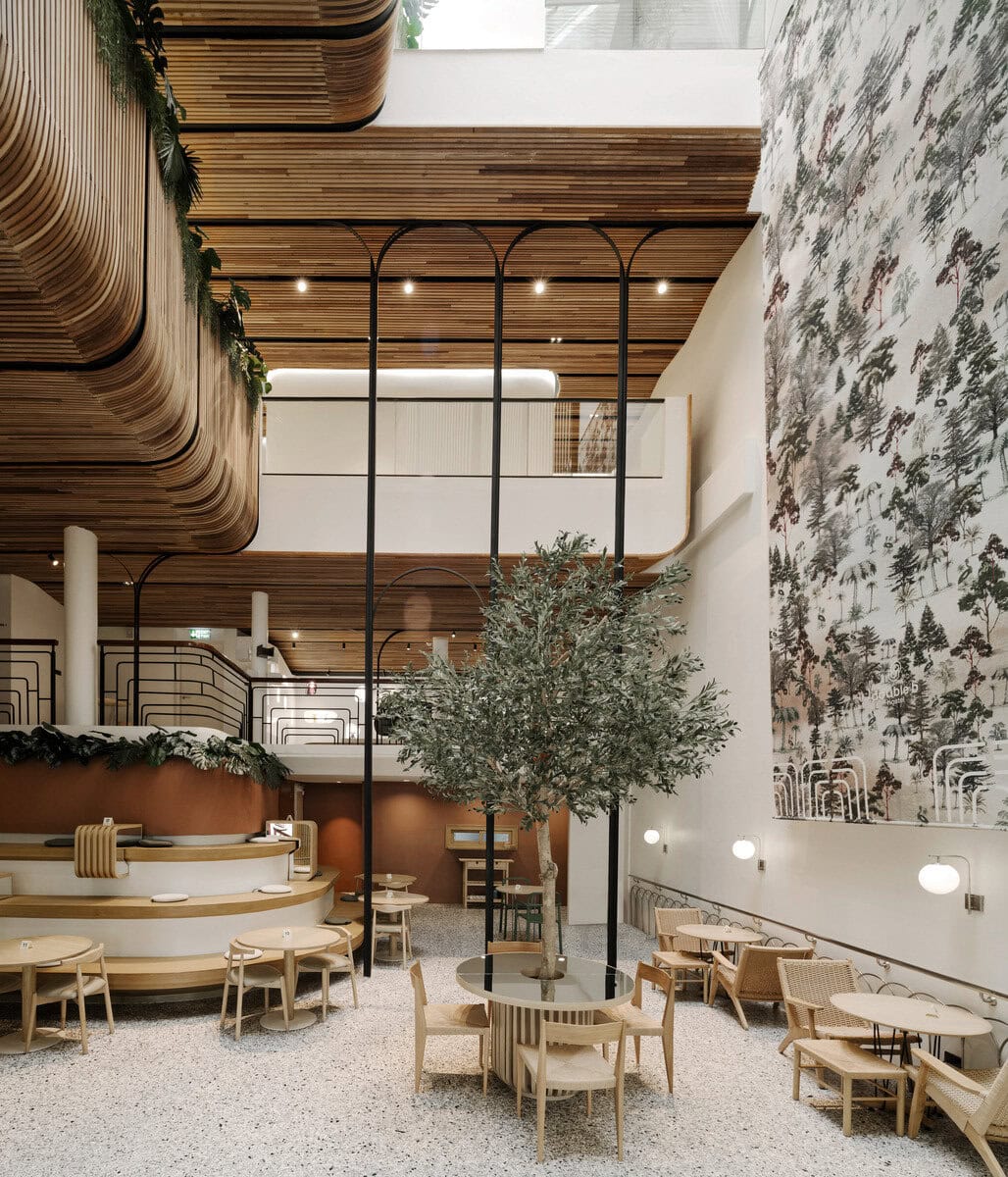
Cafe Area
Photo credit: Peerapat Wimolrungkarat

Internal Facade
Photo credit: Art Chitsanupong

Old wood new wood
Photo credit: Peerapat Wimolrungkarat
One of the key challenges the architects faced was the dense, wall-to-wall urban fabric of old Bangkok. Like many buildings in the area, the plot offered limited access to natural light and airflow, creating a design imperative to reintroduce openness and brightness. VMA’s solution was to reorient the building inward, carving out an internal courtyard that acts as the heart of the hostel. Covered by a large glass roof, the space floods the interior with daylight and becomes a shared gathering point for guests—a public zone hidden within a private retreat.

Internal Wooden Ceiling
Photo credit: Peerapat Wimolrungkarat

Hostel Corridor Void
Photo credit: Art Chitsanupong

Private Bunk Bed
Photo credit: Peerapat Wimolrungkarat
The facade's "W-shaped timber profile" is not merely decorative. It enhances the play of light and shadow while ensuring design continuity from the street to the courtyard, unifying the hostel’s spatial experience. This architectural move allows the facade to function almost like a second skin—wrapping the interior and exterior in a single gesture that feels both natural and crafted.

Hostel Dorm Room
Photo credit: Peerapat Wimolrungkarat

Reception Lobby
Photo credit: Peerapat Wimolrungkarat

Center Courtyard
Photo credit: Art Chitsanupong
Yet such architectural ambition had to be grounded in local building practices. Bangkok’s construction industry relies heavily on wet systems and on-site casting, rather than prefabrication. To navigate this, VMA turned to advanced computational design tools for form development but translated those designs into simplified, buildable procedures using hand tools and molds. The curved timber panels were shaped by heating and bending over molds, enabling local artisans—already skilled in woodworking—to produce intricate forms without unfamiliar technologies.

Courtyard Cafe Seatings
Photo credit: Peerapat Wimolrungkarat

Daylight reaches the cafe below
Photo credit: Peerapat Wimolrungkarat

Center Courtyard
Photo credit: Peerapat Wimolrungkarat
Material choices were equally strategic and symbolic. For interior applications, the team repurposed reclaimed timber from a dismantled warehouse once located on the site. These old woods now live again in the hostel’s ceilings and courtyard surfaces. For the facade, composite wooden rods were selected to withstand Bangkok’s intense heat and humidity, ensuring the hostel’s aesthetic endurance. Inside, thoughtful detailing continues. Each room features a recessed pocket balcony, lined with glass and greenery, drawing in natural light while shielding guests from urban noise and neighboring structures. These small lightboxes help break the density of the site, creating a sense of openness without sacrificing privacy.

Skylight Roof
Photo credit: Suppasit Sirinukulwattana

Second Level Courtyard View
Photo credit: Art Chitsanupong

Pocket Space Balcony
Photo credit: Peerapat Wimolrungkarat
The courtyard itself doubles as a "green lung", filled with planters and natural ventilation systems. A large exhaust above the glass canopy pulls warm air upward, while cooler air is drawn in below—an ecological design strategy that requires little mechanical support. This layering of light, air, and nature creates an internal atmosphere that feels tranquil and breathable, despite the hostel’s location in one of the city’s most congested districts.

Mezzanine Level Co-working Space
Photo credit: Peerapat Wimolrungkarat

Hostel Corridor
Photo credit: Art Chitsanupong

Light Box in Guestrooms
Photo credit: Peerapat Wimolrungkarat
Double B Hostel is an architectural statement about how design can respect tradition while embracing innovation, using smart materiality, contextual sensitivity, and craftsmanship to elevate urban living. Through thoughtful integration of old and new, VMA Design Studio has created a quiet landmark—one that invites visitors not only to rest, but to reflect on the rich cultural layers of Bangkok itself.
VMA Design Studio
VMA Design Studio is a Bangkok-based architecture and design studio that brings together local craft and advanced design tools to create spaces that are thoughtful, original, and rooted in purpose. Their approach is grounded in research and curiosity— always starting by deeply understanding each project's context, its users, and what's truly possible. VMA Design Studio works across architecture, interior design, planning, and product design, developing solutions that respond meaningfully to each brief, while exploring new design possibilities.

