English
 日本語
日本語

Spatial Clarity, Calibrated Acoustics, and Color-coded Identity
A Beijing-based design studio, studio vapore, has completed the renovation of music classrooms at the Western Academy of Beijing as part of a wider campus upgrade. The project reconfigures existing spaces to support a range of music education formats, from individual practice to group rehearsals, through a coordinated approach to layout, acoustics, and color.

Photo credit: Vincent Wu
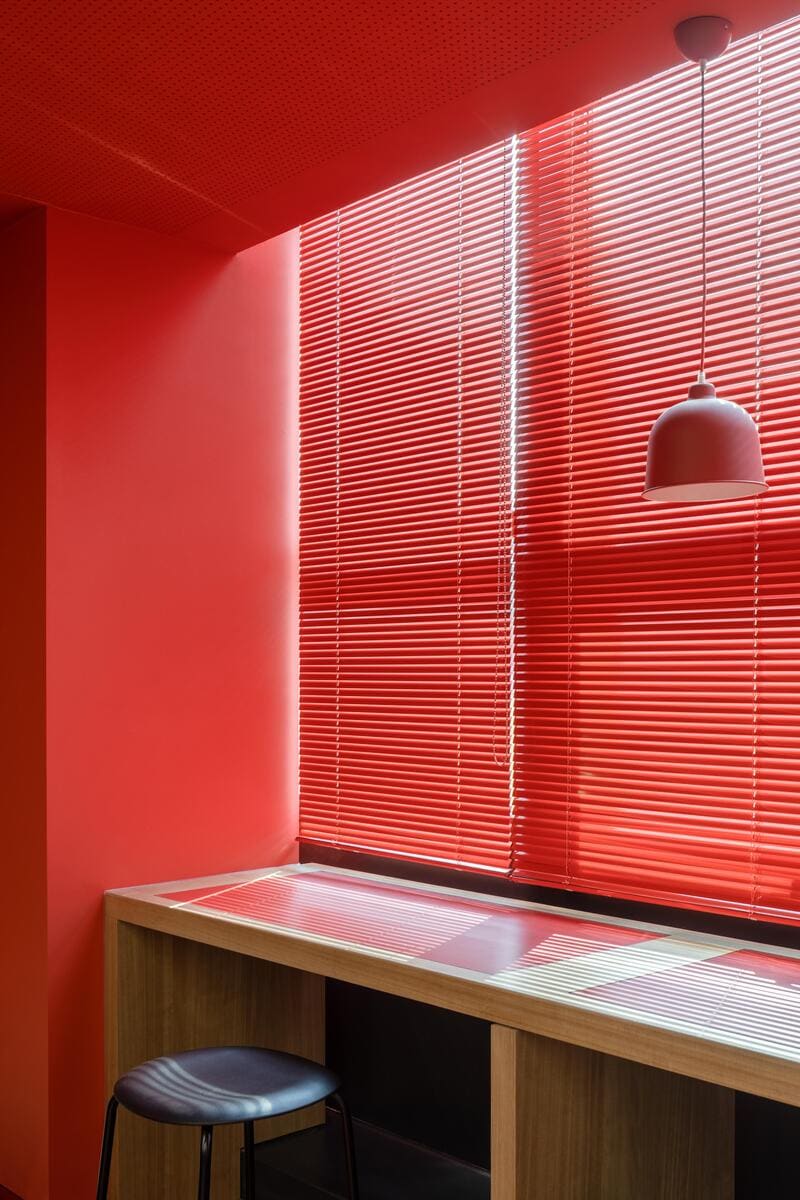
Photo credit: Vincent Wu

Photo credit: Shawn Koh
The redesigned department is organized along a shared corridor linking a sequence of classrooms. Each classroom is assigned to a specific teacher and paired with adjacent practice rooms. This arrangement allows for a clear division of functions: classrooms accommodate teaching, group work, and ensemble rehearsals, while practice rooms support individual or small-group sessions. Glass partitions between the two maintain visual continuity and enable supervision, while allowing multiple activities to take place simultaneously within a compact footprint.
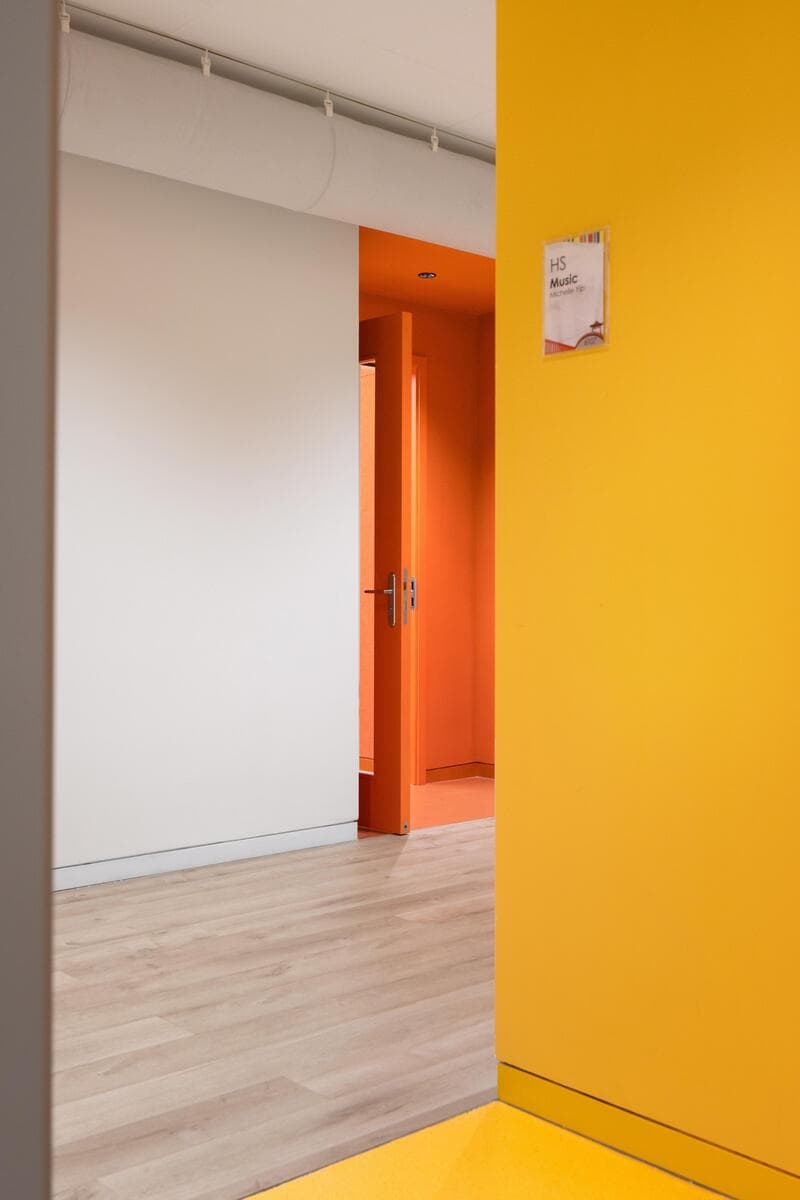
Photo credit: Vincent Wu

Photo credit: Vincent Wu

Photo credit: Vincent Wu
Acoustic performance plays a central role in the design. Developed in collaboration with acoustic engineers, sound treatments are integrated throughout walls, ceilings, floors, and built-in elements to control reverberation and reduce sound transmission between rooms. Rather than fully isolating each space, however, the design intentionally allows a controlled overlap of sound. As a result, music from adjacent rooms can be heard in the corridor, extending the presence of musical activity beyond individual classrooms and reinforcing a shared auditory environment.

Photo credit: Vincent Wu

Photo credit: Vincent Wu

Photo credit: Shawn Koh
Color is used as an additional organizational layer. Three main classrooms are distinguished by bold tones—red, orange, and yellow—corresponding to different age groups. These colors are visible from the corridor, marking entrances and aiding navigation while establishing a clear spatial sequence. The entrance to the music department is similarly defined by a saturated color field, extending this identity to the wider building.
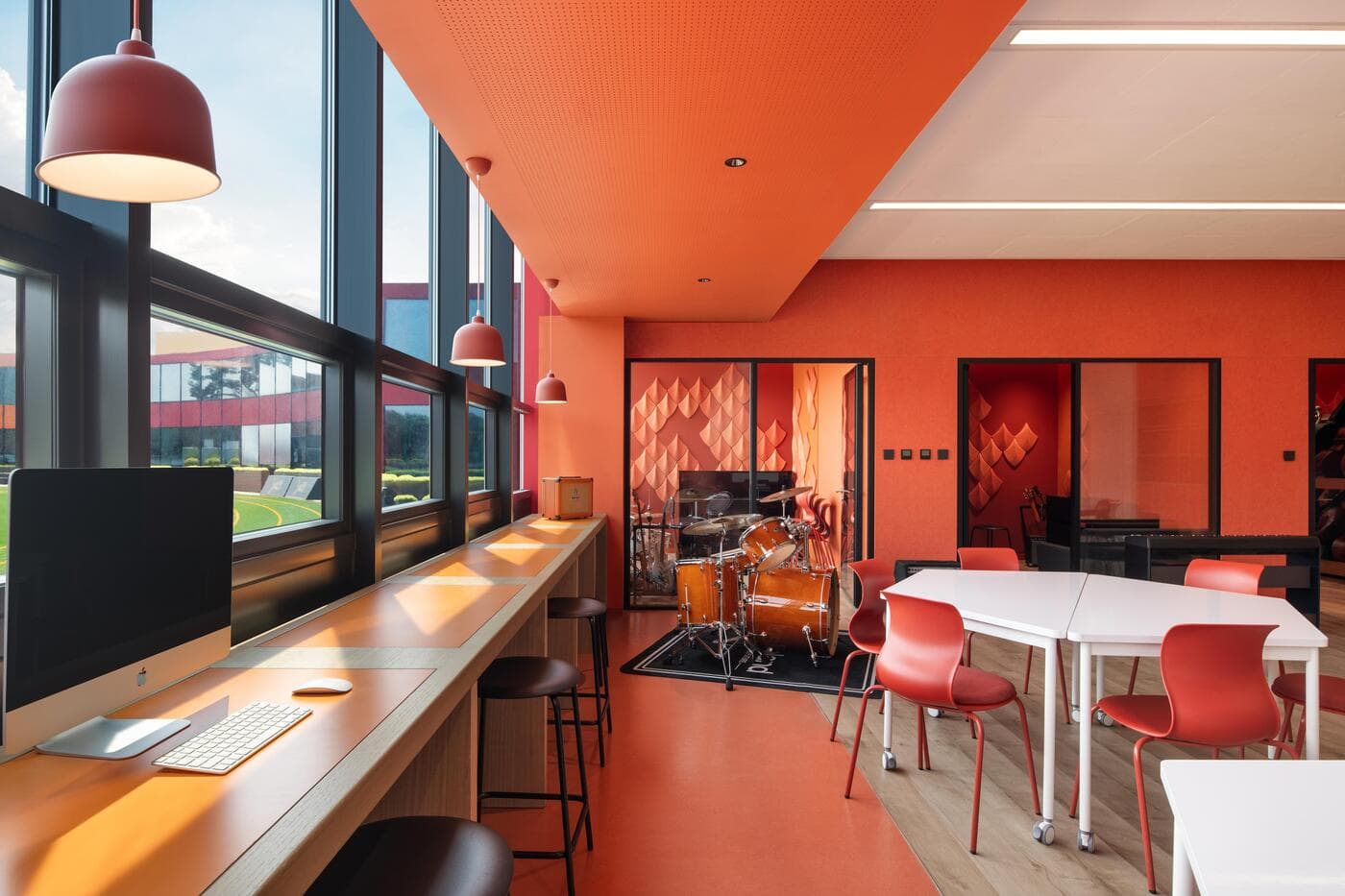
Photo credit: Shawn Koh

Photo credit: Vincent Wu

Photo credit: Shawn Koh
Inside the classrooms, teaching areas remain largely neutral, with a band of strong color along the window side linking each classroom to its associated practice rooms. Lighting in these spaces is even and consistent. In contrast, the practice rooms are fully saturated in color, with variations in tone and material. Acoustic elements such as felt panels and three-dimensional tiles are produced in coordinated hues, while warmer lighting creates a more focused atmosphere.

Photo credit: Vincent Wu
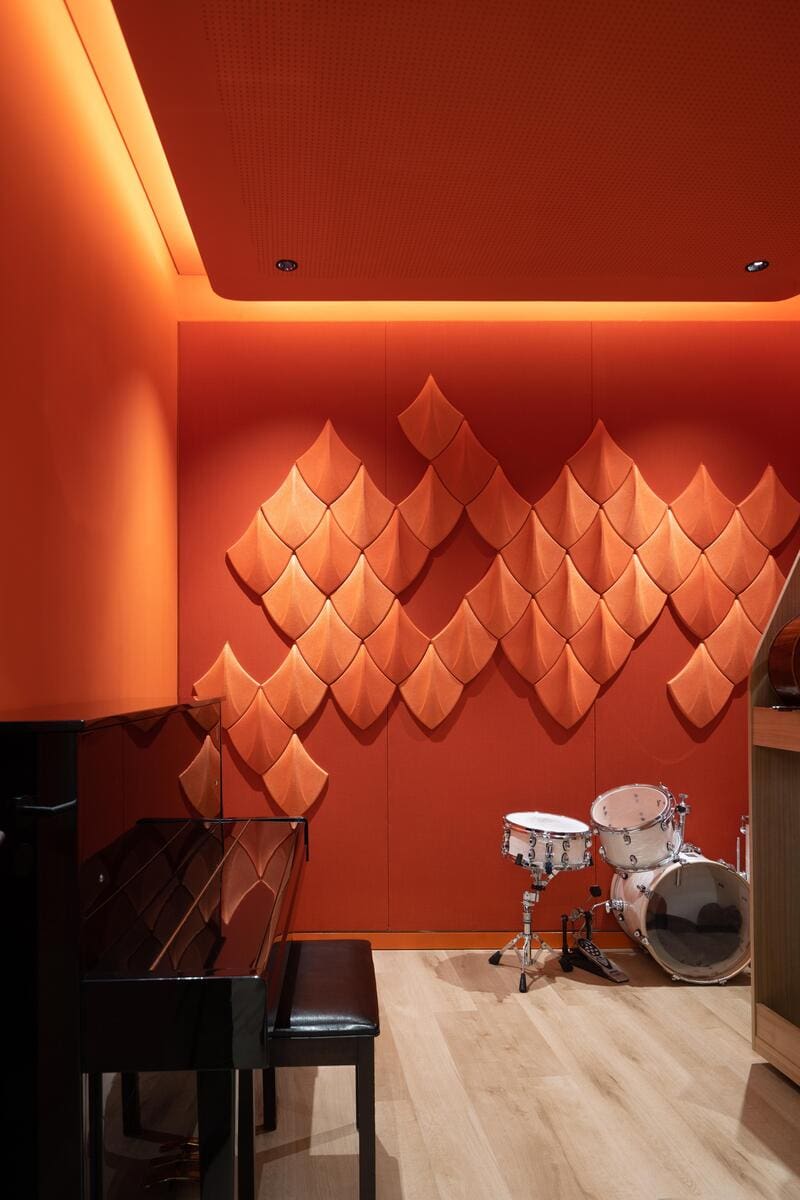
Photo credit: Vincent Wu

Photo credit: Vincent Wu
The three-dimensional acoustic tiles also contribute to both sound performance and visual identity. Their placement helps shape the acoustic environment, while their rhythmic arrangement references the structure of music.
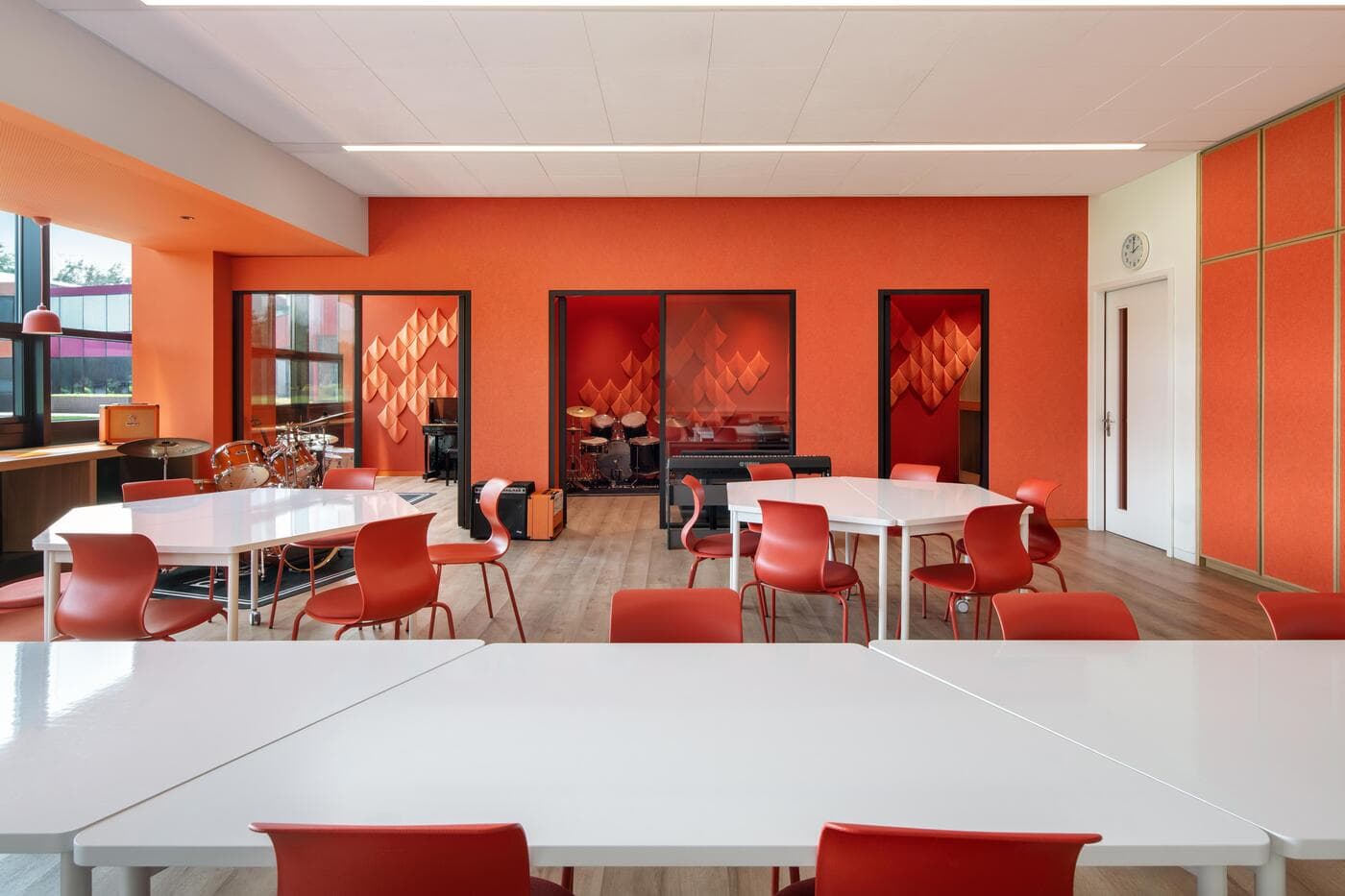
Photo credit: Shawn Koh

Photo credit: Vincent Wu
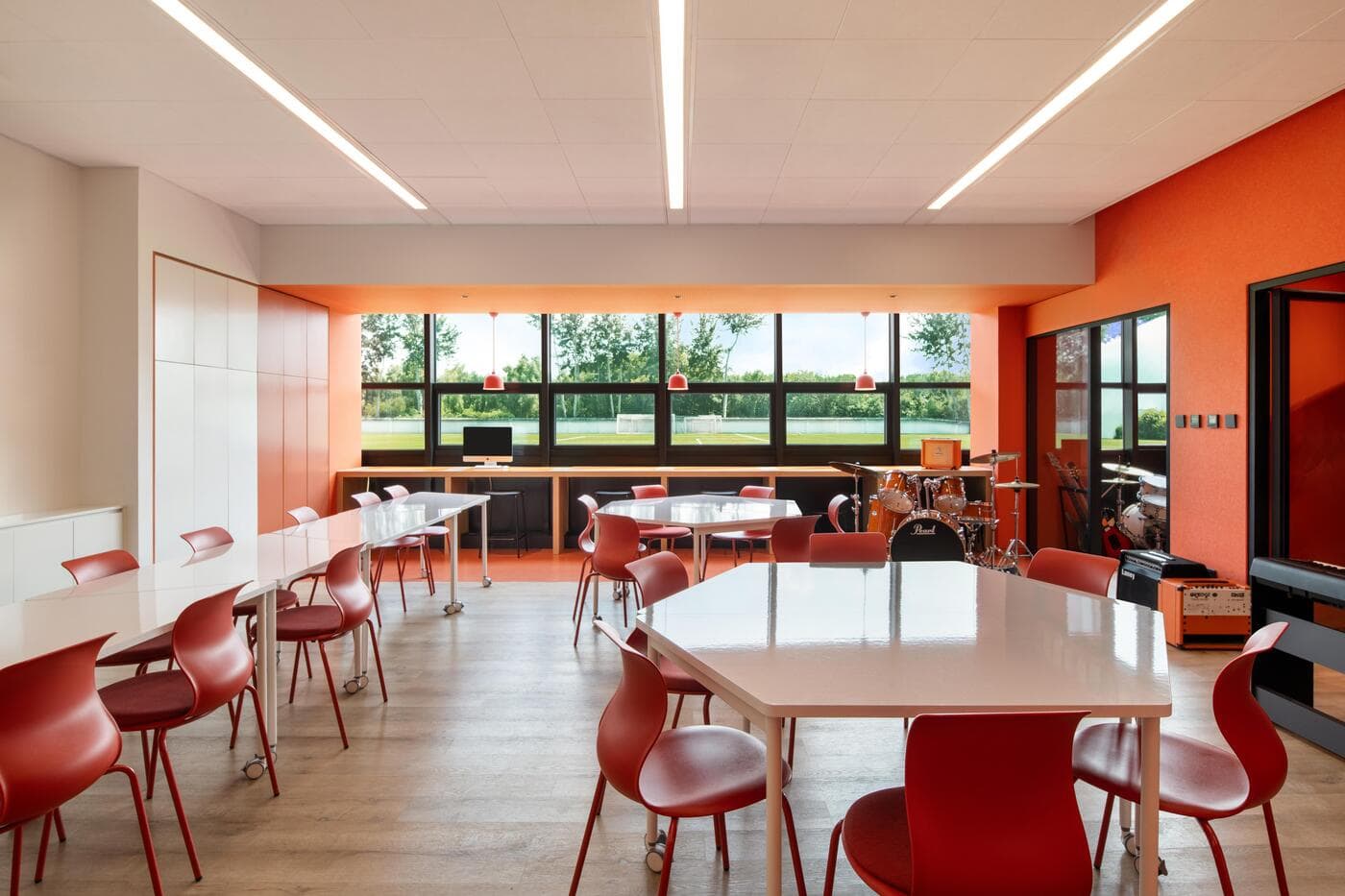
Photo credit: Shawn Koh
Overall, the renovation transforms previously neutral classrooms into spaces with a distinct identity tied to music. By integrating spatial planning, acoustic design, and color, studio vapore creates an environment that supports both concentrated practice and collective learning, while fostering a shared sensory experience across the department.
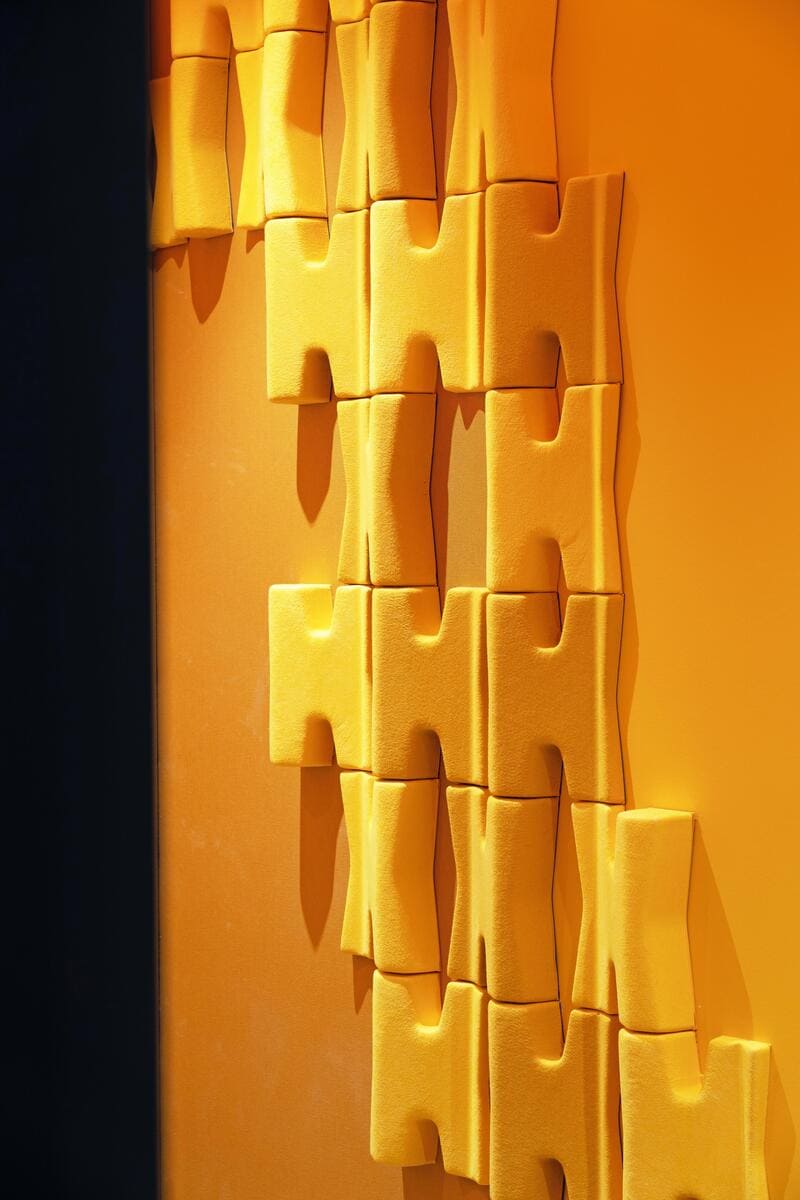
Photo credit: Vincent Wu
studio vapore
studio vapore is a multidisciplinary design studio based in Beijing, China, specializing in architecture, interiors, and product design. Founded by Italian Architect Erica Borsa in 2021, the studio integrates storytelling with technical expertise to create thoughtful and imaginative spaces. With a diverse team and a focus on educational design, studio vapore has collaborated with public and private schools across China, including the Western Academy of Beijing.