

 English
 日本語
日本語

Three Dimensions of Time: Nature, History, and Humanity in Architectural Experience
Located in the northeastern part of the Zhoushan Archipelago in Zhejiang Province, Lost Villa · Huanglong Island Lighthouse Hotel is built on Huanglong Island, a remote area grappling with issues such as poor transportation and rural depopulation. Rather than avoiding these limitations, the design embraces them, weaving the island’s natural, historical, and human contexts into a new narrative of ecological tourism.

Photo credit: Tian Fangfang
Initiated five years ago by WJ STUDIO as part of a tourism development project in Shengsi County, the site remains geographically secluded. The island is 2.5 hours by ferry from Zhoushan, and at least 3–4.5 hours from Shanghai, Hangzhou, or Ningbo by combined transport. While accessibility is limited, this very distance from urban centers became the basis for the project’s central theme: Time, in three layers—natural, historical, and human.
-


- Photo credit: Tian Fangfang

-

- Photo credit: Tian Fangfang

-
- Photo credit: Tian Fangfang

-
- Photo credit: Tian Fangfang

-

- Photo credit: Tian Fangfang

-
- Photo credit: Tian Fangfang

-

- Photo credit: Tian Fangfang

-

- Photo credit: Tian Fangfang

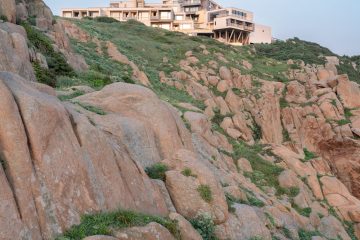
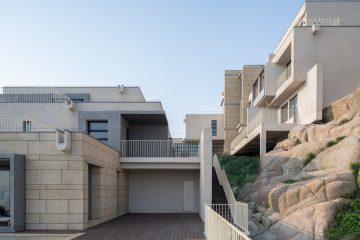
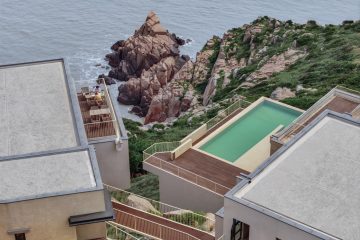
Natural time is reflected in the rugged topography shaped by tides, wind, and fog. Located in a subtropical monsoon marine climate zone, the island is densely covered in low-lying shrubs. The design team chose Dongjutou Village, a cape on the island’s northeastern edge, as the hotel site. The terrain rises up to 30 meters above sea level. These natural processes—sun, moon, weather—form the genius loci and informed the project’s strategy. Historical time is embedded in the island’s nickname: “East Sea Stone Village.” The settlement is composed of terraced stone houses and narrow concrete paths ranging from 1.5 to 3 meters wide. Though aged and infrastructurally limited, the spatial texture of the village offers a strong cultural foundation. The layout and built environment are direct responses to centuries of adaptation to the island’s harsh topography and sea winds. The design sought to preserve this spatial continuity while enhancing circulation. A walking route begins at the southern harbor, passes through communal spaces, and ascends to the eastern cliff, ultimately leading to the lighthouse. Along this path, the placement of three hotel buildings was carefully planned to integrate with the existing village fabric, establishing a core framework for visitor experience and wayfinding.
-

- Photo credit: Tian Fangfang

-

- Photo credit: Tian Fangfang

-

- Photo credit: Tian Fangfang

-
- Photo credit: Tian Fangfang
-
- Photo credit: Tian Fangfang

-
- Photo credit: Tian Fangfang

-

- Photo credit: Tian Fangfang

-

- Photo credit: Tian Fangfang

-

- Photo credit: Tian Fangfang

-

- Interior Design SZ-Architects Photo credit: Tian Fangfang

-

- Photo credit: Tian Fangfang

-

- Interior Design SZ-Architects Photo credit: Tian Fangfang

-

- Interior Design SZ-Architects Photo credit: Tian Fangfang

-

- Interior Design SZ-Architects Photo credit: Tian Fangfang

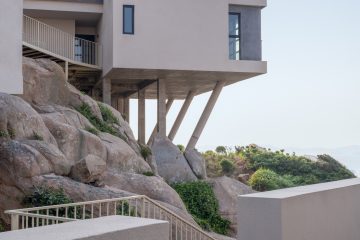
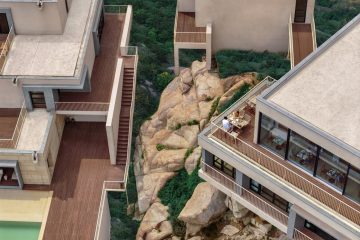
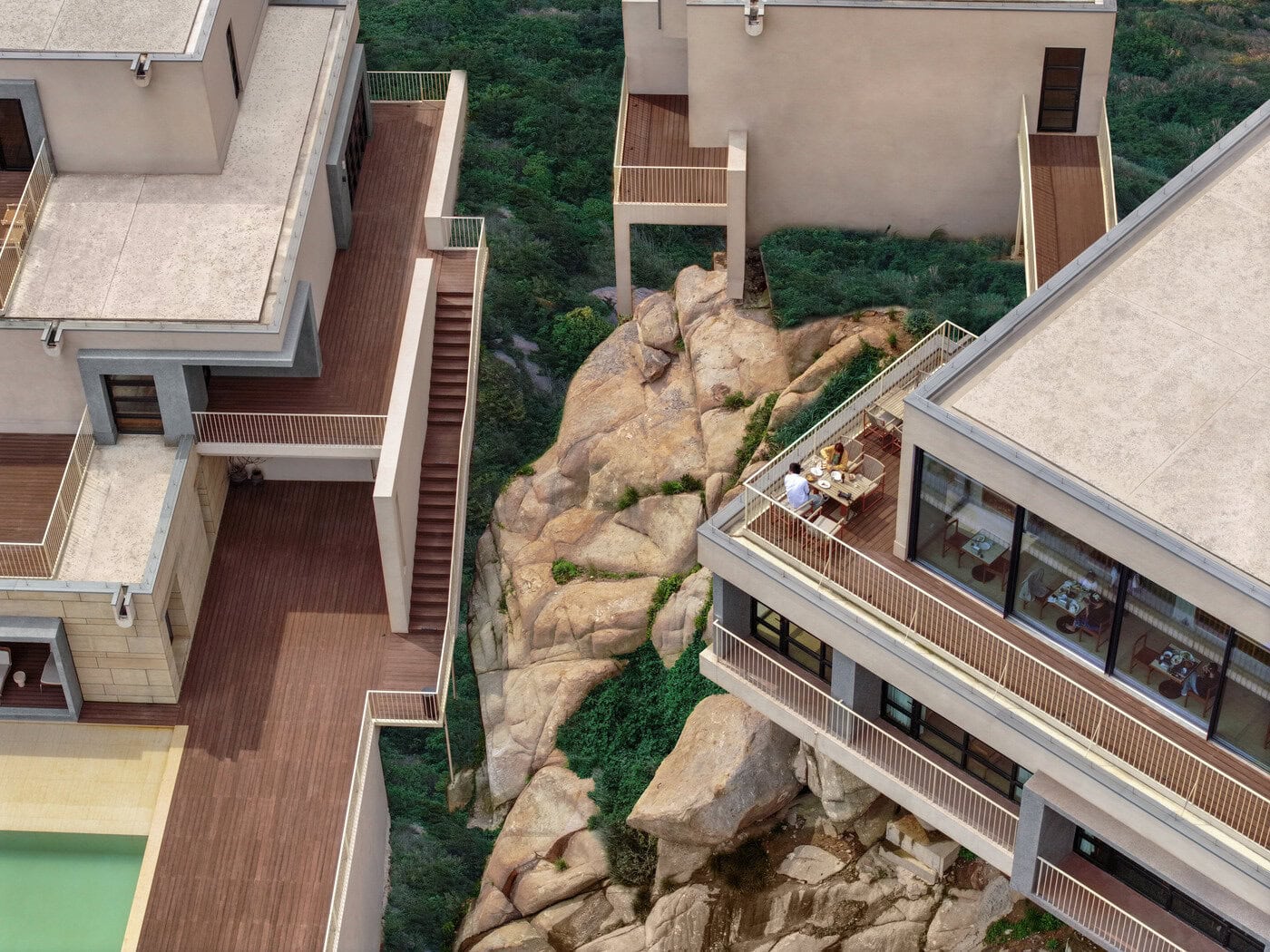
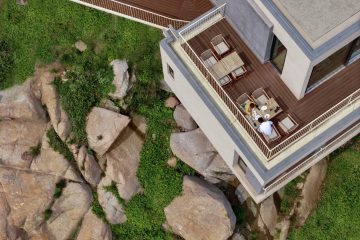
The architectural massing is based on the small-scale units of the village, where dwellings typically range from 60 to 180 square meters. Block A features a vast open hall anchored atop a weathered rock formation. The original reef stone is preserved as a visual and tactile centerpiece. The boundary between “inside” and “outside” is intentionally blurred, drawing visitors closer to the texture and temporality of the natural environment. Block B adopts a dispersed volume arrangement similar to the original village clusters. Three guestroom volumes are arranged with openings oriented to the seasonal sunrise, framing specific views of the sea and sky. When visitors stand by the window, bathed in sunlight and accompanied by the sound of waves and sea breezes, a sense of paused time emerges—connecting inner experience with the surrounding landscape. Rather than overwrite the past with steel and concrete, the hotel project rewrites the island’s memory into an experiential and sustainable narrative. This intervention transforms the challenges of depopulation and aging into an opportunity for place-specific revitalization through deep, immersive tourism rooted in context.
About WJ STUDIO
Guided by the philosophy “Beyond design,” WJ STUDIO approaches architecture as a mode of thinking. Through interdisciplinary collaboration within its research division PRO-LAB, the studio seeks to transcend stylistic boundaries to create culturally integrated, content-rich environments.

