English
 日本語
日本語

New publication by Fujiki Studio and F.A.D.S traces the emergence of a design approach that has reshaped contemporary architecture since the turn of the century
A new book published by Beam Gallery examines the rise of "Seamless Architecture," a design movement that has become increasingly influential in global architecture over the past two decades. Titled Seamless Architecture, the publication documents research and projects developed by Fujiki Studio at Kogakuin University in Tokyo and F.A.D.S, the architectural practice co-founded by Ryumei Fujiki and Yukiko Sato.
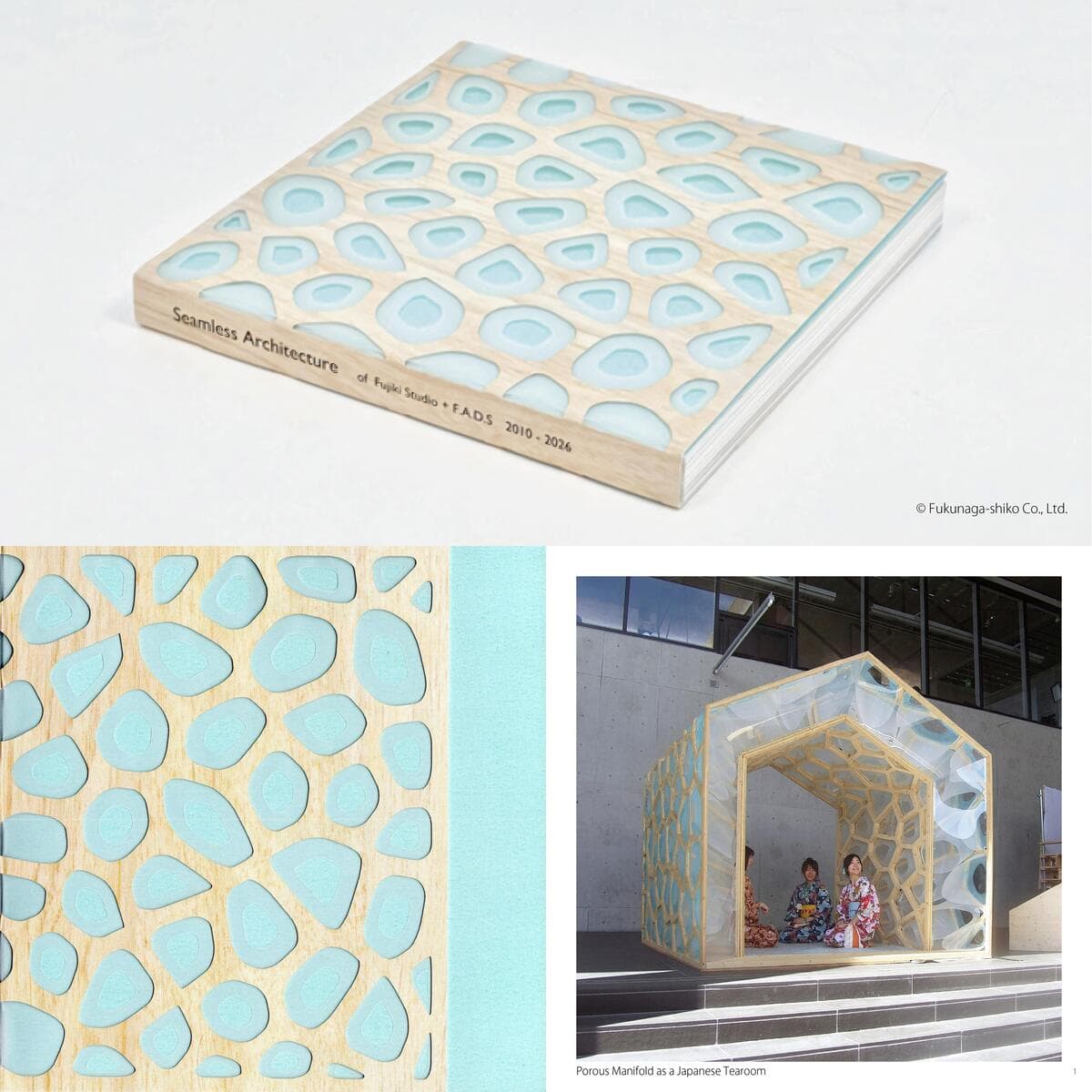
Seamless_Architecture_Book_FADS_01_Book Cover and Endpaper Image (showing the relationship between the architectural work and the book cover design).jpg
Photo credit: ©Fukunaga-shiko Co., Ltd. & ©Fujiki Studio, KOU::ARC
The book builds upon the ideas presented in the authors' earlier publication, Aqua-scape: The Nature-oriented Architecture, expanding their investigation into the relationship between architecture, nature, and emerging design technologies. At its core is the concept of Seamless Architecture, a term coined by Fujiki to describe buildings whose walls, roofs, and, where possible, floors are conceived as continuous surfaces with minimal visible joints or seams.
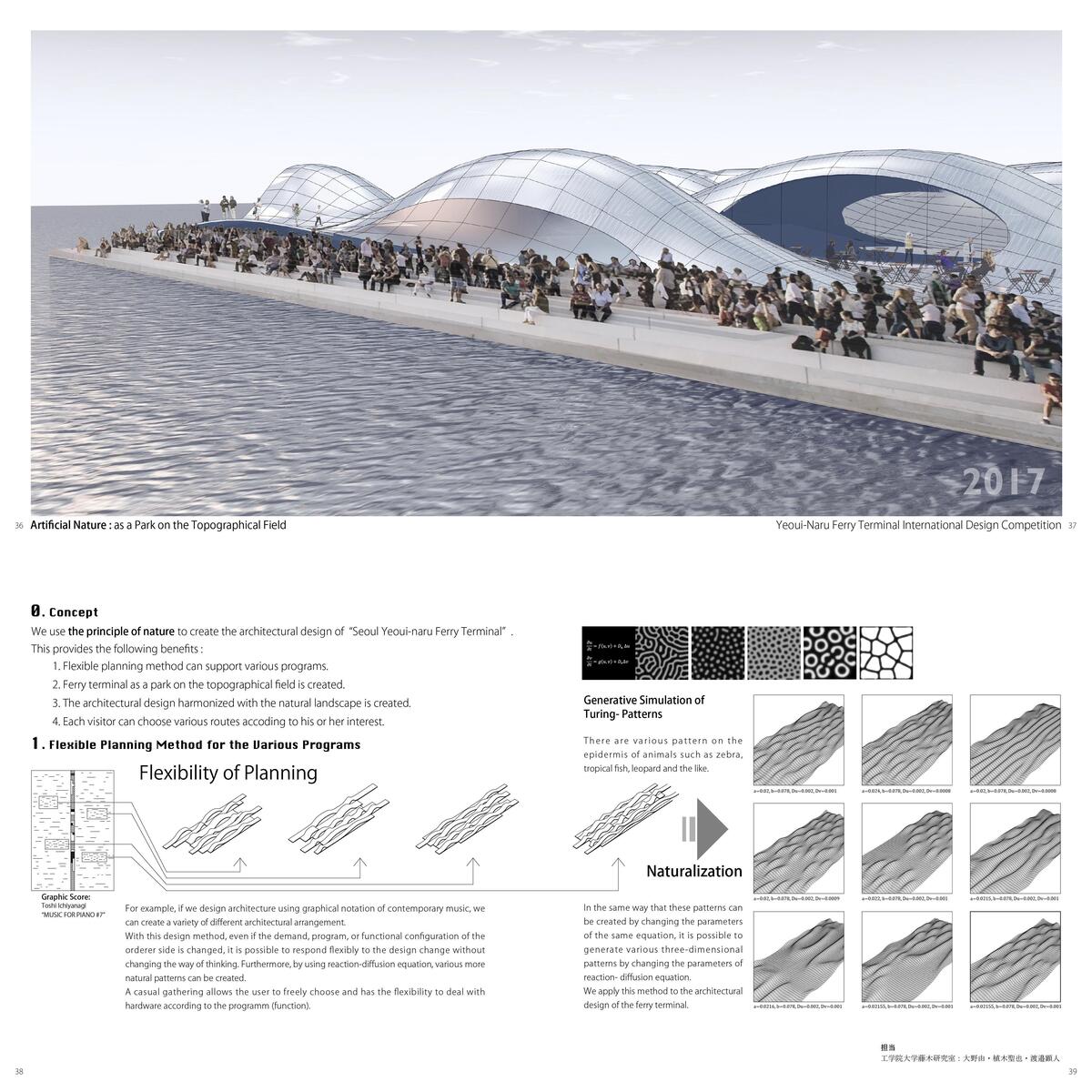
Seamless_Architecture_Book_FADS_02_Artificial Nature : as a Park on the Topographical Field.jpg
Photo credit: ©Fujiki Studio, KOU::ARC
According to the authors, this approach marks a significant departure from the machine-inspired architecture that dominated much of the twentieth century. Instead, Seamless Architecture draws inspiration from biological organisms, where a single skin envelops the body in a continuous form. Advances in digital design, fabrication technologies, and computational modeling have made such architectural expressions increasingly feasible, enabling architects to create fluid and integrated building envelopes that were once difficult to realize.
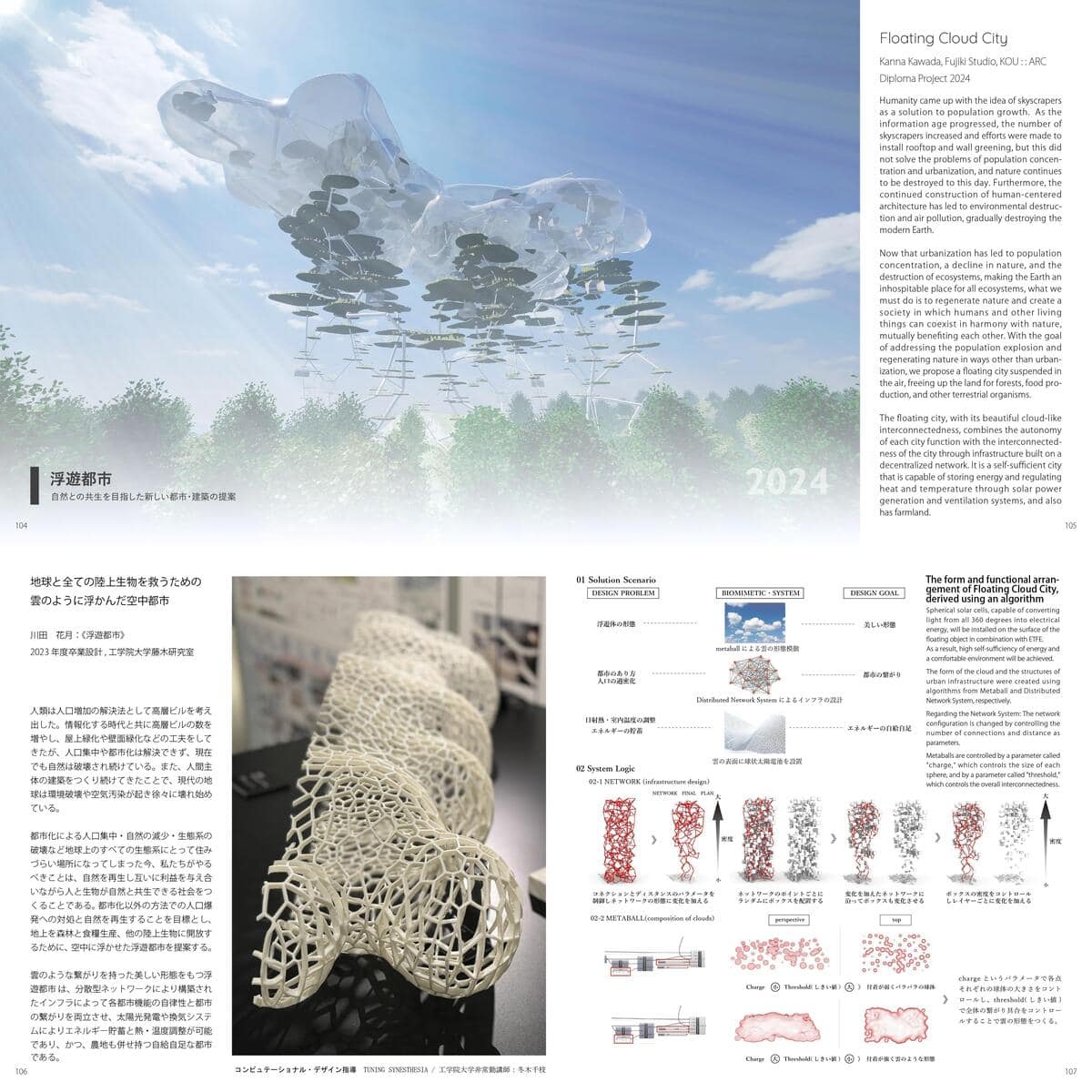
Seamless_Architecture_Book_FADS_03_Floating Cloud City.jpg
Photo credit: ©Kanna Kawada & ©Masahiro Hoshida
The book situates this architectural tendency within a broader international context. Among the projects discussed are F.A.D.S's Continuous Plate House (2001), Peter Cook's Graz Museum (2003), Future Systems' Selfridges Birmingham (2003), Zaha Hadid Architects' Ordrupgaard Museum extension (2005), PTW Architects' Water Cube in Beijing (2007), Ryue Nishizawa's Teshima Museum (2010), MAD Architects' Ordos Museum (2011), and several other landmark projects completed during the first fifteen years of the twenty-first century.
While these buildings differ in scale, function, and geographic location, they share an interest in continuity, surface integration, and the dissolution of conventional distinctions between architectural elements. Together, they illustrate a broader shift in architectural thinking that has increasingly embraced organic geometries and spatial continuity.
Alongside theoretical discussions, Seamless Architecture presents a selection of works produced by Fujiki Studio and F.A.D.S since 2010. Many of the featured projects have received international recognition, including major architectural awards. The publication also addresses environmental considerations, exploring how nature-oriented design strategies can be integrated with advanced computational methods and experimental forms.
The book's physical design reflects many of the themes explored in its pages. Designed by Yukiko Sato, the cover draws inspiration from the award-winning project Porous Manifold as a Japanese Tearoom and incorporates principles derived from traditional Japanese origami. The resulting design links contemporary architectural experimentation with longstanding cultural traditions of craftsmanship and material transformation.
As interest grows in bio-inspired design, parametric methodologies, and computational approaches to form-making, the publication offers a perspective on how these developments have converged within a distinct architectural language. Rather than presenting Seamless Architecture as a stylistic category alone, the book positions it as part of a broader reconsideration of the relationship between technology, environment, and the built form.
The publication has already been acquired by several leading architecture schools and institutions, including ETH Zurich, University College London's Bartlett Faculty of the Built Environment, the Architectural Association School of Architecture, SCI-Arc, and MIT. Intended for architects, researchers, and students alike, Seamless Architecture provides both a record of recent architectural experimentation and a framework for understanding one of the defining design tendencies of the twenty-first century.
Ryumei Fujiki, Yukiko Sato, and F.A.D.S
Ryumei (Takaaki) Fujiki is an architect, researcher, and educator. He completed his master's degree and Doctor of Engineering at the University of Tokyo under Hiroshi Hara and Akira Fujii. In 1991, he founded Fujiki Architectural Design Studio (F.A.D.S) and has served as a professor at the School of Architecture, Kogakuin University (KOU:ARC) in Tokyo since 2001. His work focuses on environmental and experimental architecture, with a particular interest in the advanced systems found in nature.
Yukiko Sato joined F.A.D.S as a design partner in 2000. A graduate of Japan Women's University, she has taught as a part-time lecturer at Japan Women's University and several other universities since 2012. In addition to her academic work, she has contributed to the design and realization of numerous architectural projects throughout Japan.
Together, Fujiki and Sato lead F.A.D.S, an architectural practice that combines research, education, and professional practice. Through the work of both F.A.D.S and Fujiki Studio at Kogakuin University, they continue to explore innovative approaches to architecture that integrate environmental performance, digital design methodologies, and inspiration drawn from natural systems.