English
 日本語
日本語

An introspective dwelling shaped by Zen philosophy, austerity, and the power of emptiness
In Morelia, Mexico, the founder of HW Studio has completed a deeply personal residence that reconsiders the fundamental purpose of domestic space. Rather than foregrounding form or spectacle, the project centers on an idea rooted in Japanese philosophy: that the true essence of a house lies not in its physical structure, but in the void it contains.
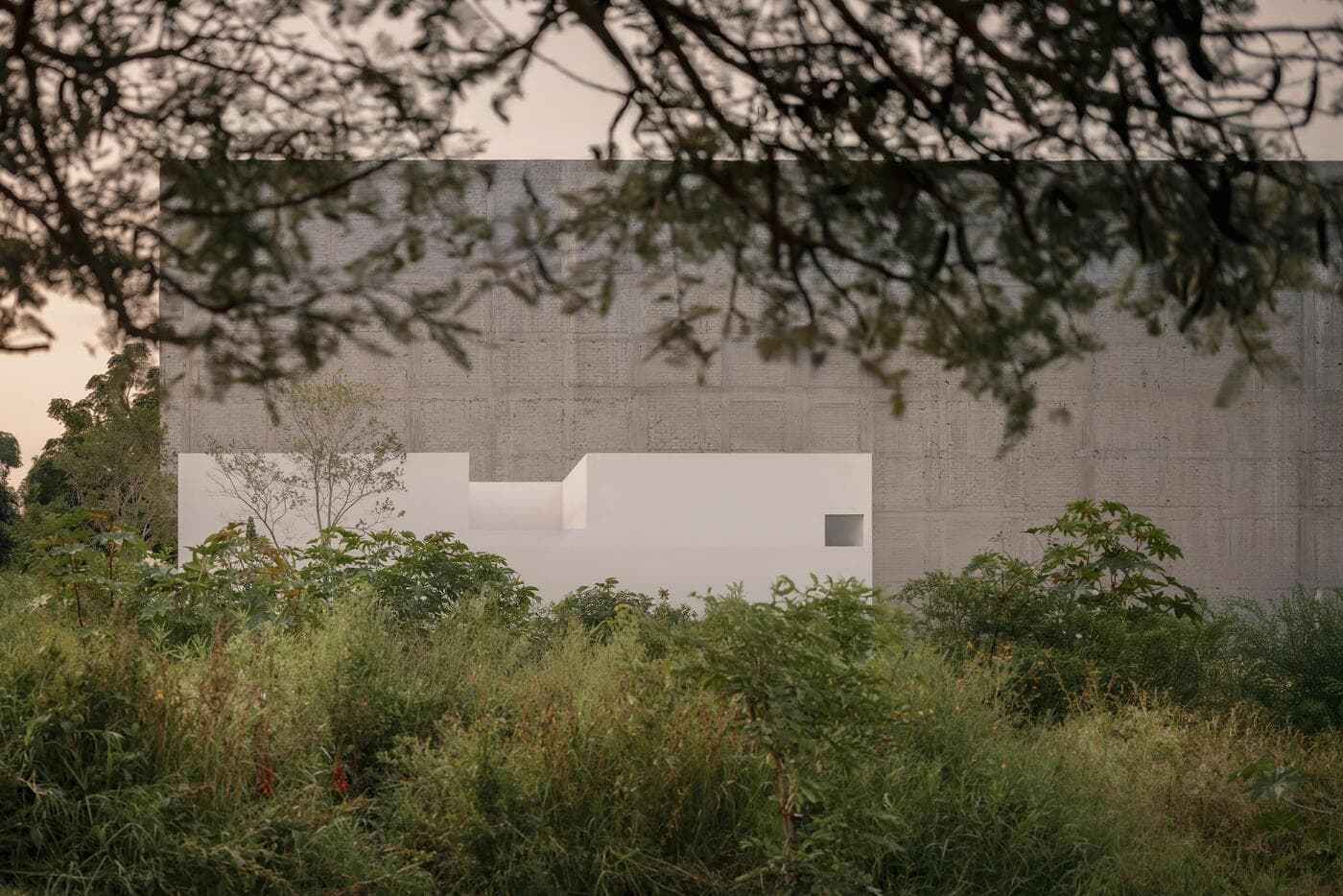
Photo credit: Cesar Bejar

Photo credit: Cesar Bejar

Photo credit: Cesar Bejar
Drawing inspiration from Kakuzo Okakura’s assertion that “the void is absolutely powerful because it can contain everything,” the house is conceived around an absence rather than an object. At its core is an empty, contemplative space—a stone garden—that organizes the entire dwelling. This inward focus marks a departure from conventional residential design, positioning the home as a vessel for reflection, rather than display.

Photo credit: Cesar Bejar

Photo credit: Cesar Bejar
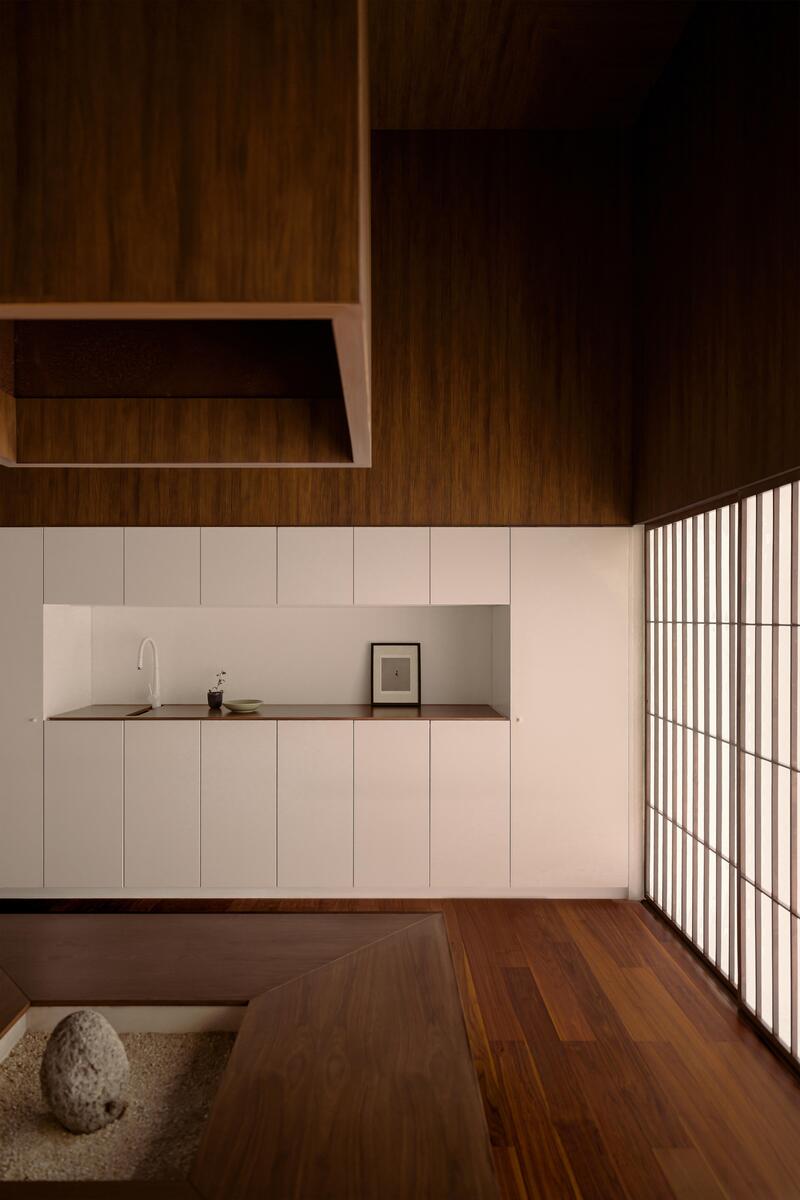
Photo credit: Gustavo Quiroz
The project also serves as a self-examination. For an architect accustomed to shaping clients’ visions, designing his own home presented a more direct challenge: how to construct a life aligned with long-held beliefs. Budget constraints played a significant role, pushing decisions away from aesthetics and toward necessity. Every element was required to justify its presence, both economically and spatially.

Photo credit: Gustavo Quiroz

Photo credit: Cesar Bejar

Photo credit: Gustavo Quiroz
Externally, the house appears as a restrained, almost anonymous box—closed, quiet, and monolithic within the urban fabric. Yet this simplicity conceals a more nuanced interior condition. Upon entering, the building reveals itself not as an enclosure, but as a container for something fragile and intangible. The central stone garden, inspired by those of Kyoto’s temples, is not meant to be walked upon but experienced visually and emotionally. Carefully arranged stones rest on a bed of grey gravel, evoking mood rather than representation.

Photo credit: Cesar Bejar

Photo credit: Gustavo Quiroz

Photo credit: Cesar Bejar
Two elevated wooden platforms hover above the garden, functioning not as conventional floors but as pauses—spaces for stillness and contemplation. Around this central void, the house’s program unfolds in a series of discrete volumes, arranged like satellites orbiting a quiet core.
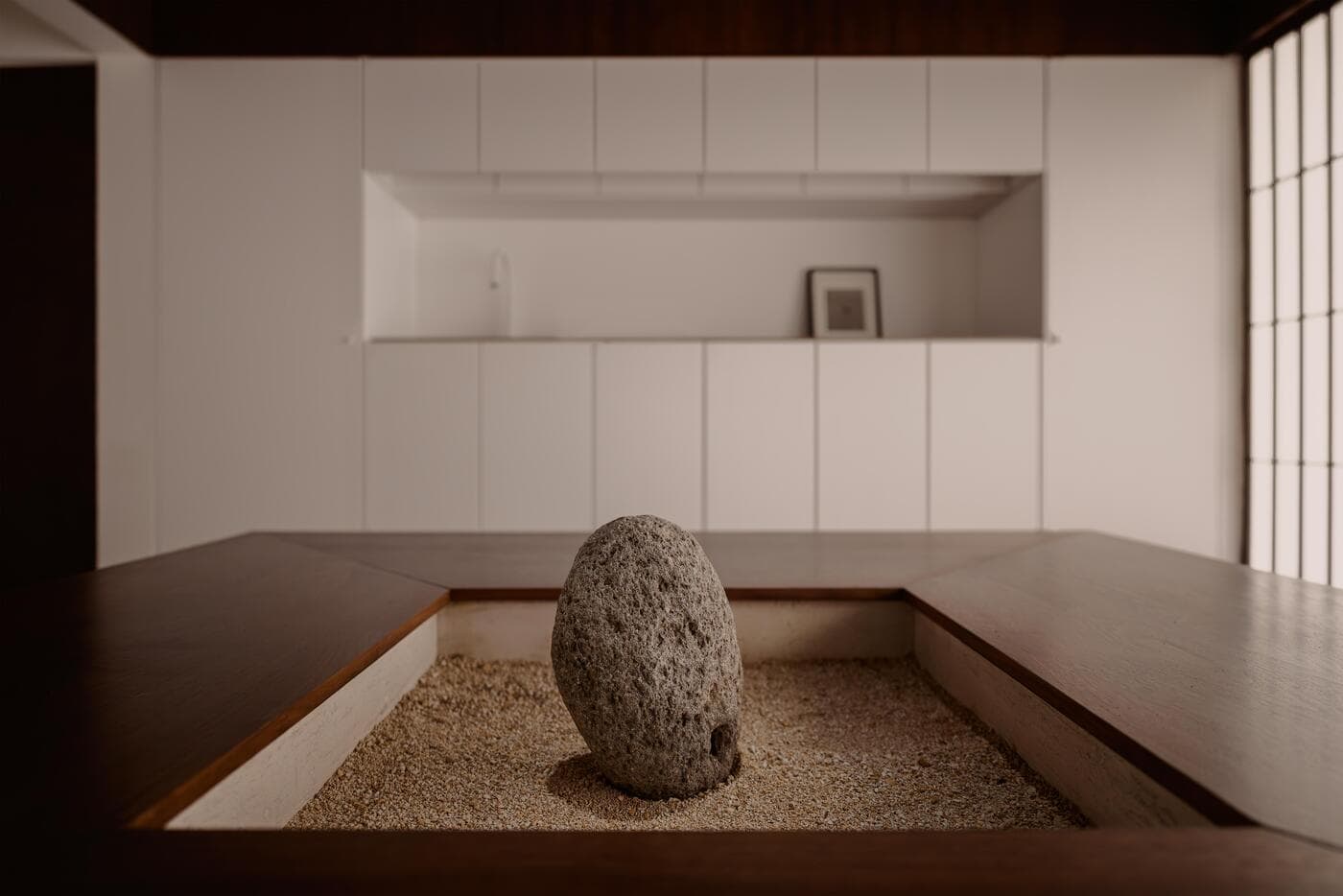
Photo credit: Gustavo Quiroz

Photo credit: Gustavo Quiroz

Photo credit: Cesar Bejar
On one side, a double-height kitchen and dining area integrates a practical awareness of future uncertainty. A volume above is designed to collect smoke from an open fire, acknowledging the possibility that urban infrastructure may one day falter. Opposite, a living room offers a similarly meditative environment, where large stones are positioned like islands within a calm expanse.

Photo credit: Cesar Bejar

Photo credit: Cesar Bejar

Photo credit: Gustavo Quiroz
Notably, the house avoids seamless internal circulation. There is no covered passage between the main living areas; moving between them requires stepping outside. In rain, occupants must either get wet or wait. This deliberate exposure reflects the architect’s intention to reconcile inhabitants with the natural world, rather than shield them from it.

Photo credit: Cesar Bejar

Photo credit: Gustavo Quiroz

Photo credit: Cesar Bejar
Material choices further reinforce this philosophy. Shoji screens made of rice paper serve as the primary interface between interior and exterior, diffusing light into a soft, temporal presence. Here, shadow is treated not as absence, but as a subtle extension of light itself.
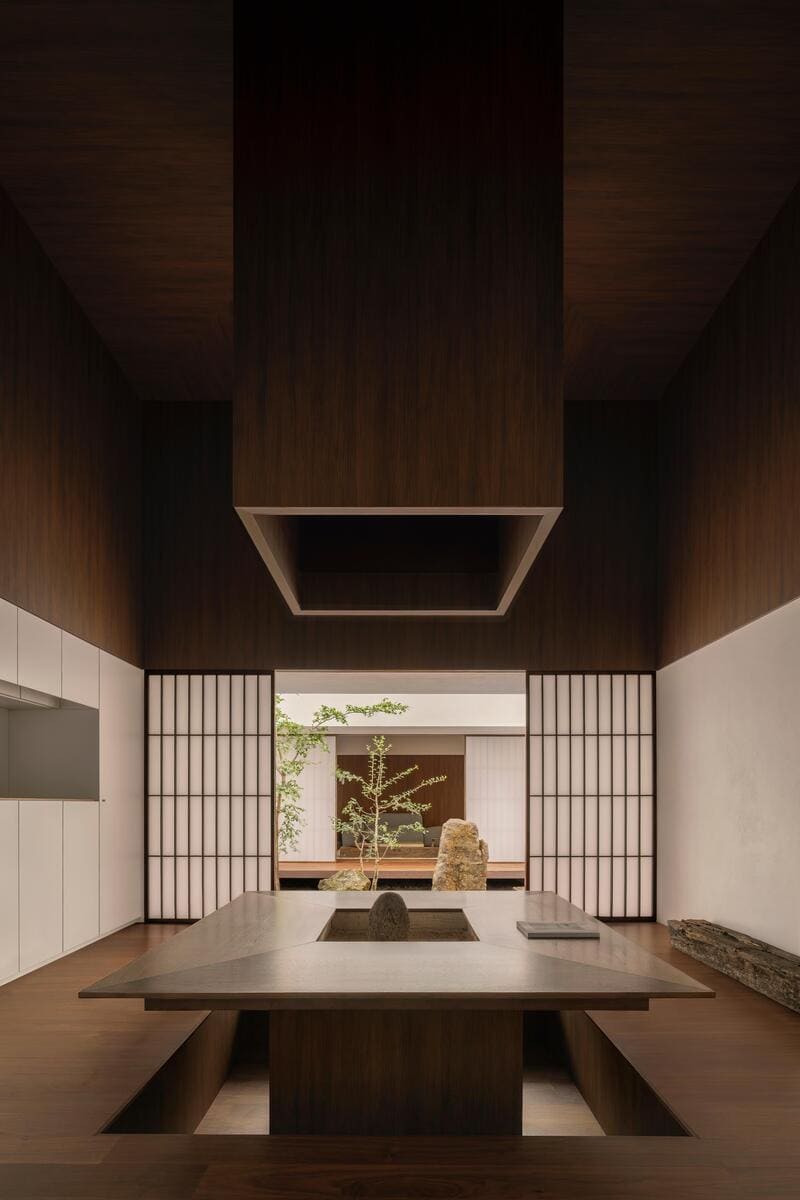
Photo credit: Cesar Bejar

Photo credit: Cesar Bejar
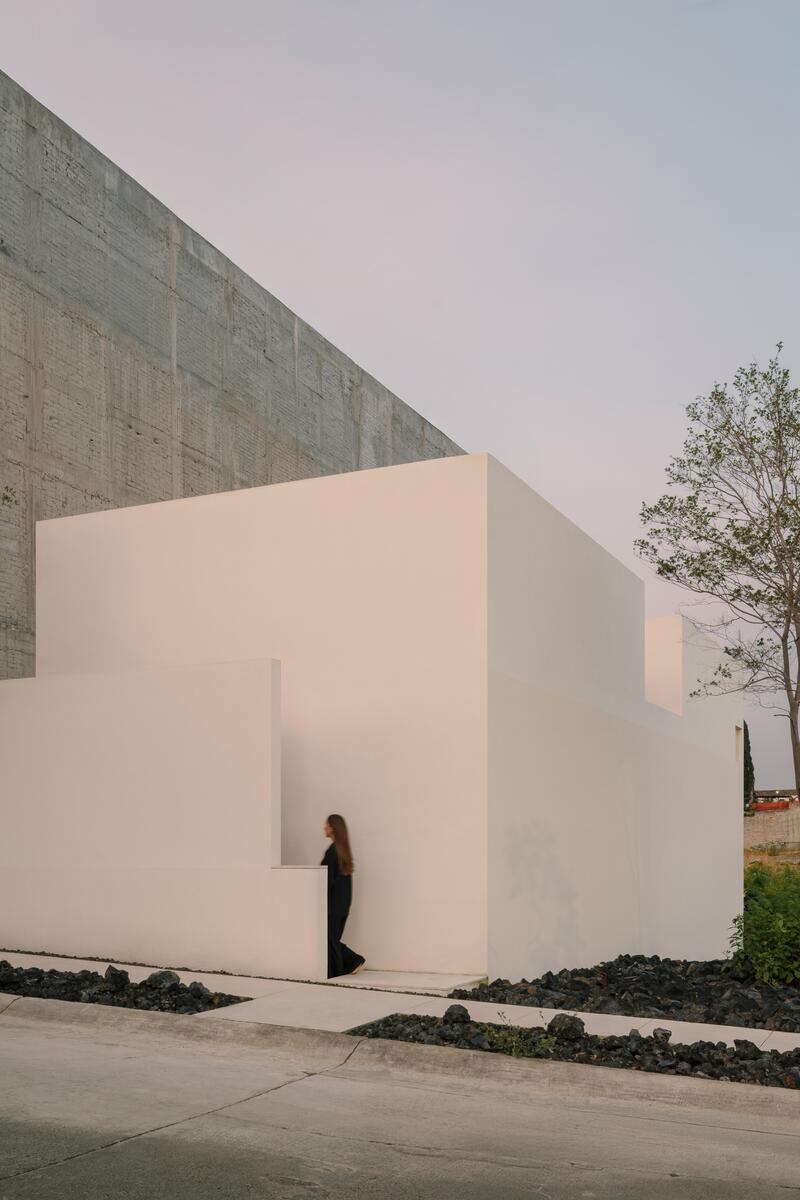
Photo credit: Cesar Bejar
The upper-level bedroom continues the theme of minimalism, offering a single circular window that frames the foliage of a tree rooted in the garden below. This aperture functions less as a conventional view and more as a contemplative device—an “eye” directed inward.

Photo credit: Gustavo Quiroz
The overall program is deliberately austere. The house is largely devoid of glass, with only three small windows opening toward carefully selected views: a distant mountain, a neighboring pine, and the central tree. All other aspects remain enclosed, creating an introspective atmosphere akin to a resonant chamber.
Even the act of entry is redefined. Rather than ascending, visitors descend into the house, a gesture likened to bowing before something sacred. This movement also responds pragmatically to site conditions, reducing foundation costs by building where the ground is most stable. Yet it carries symbolic weight, requiring a degree of humility from those who enter.
Throughout the project, the influence of Japanese aesthetics—particularly the appreciation of imperfection, incompleteness, and transience—is evident. The house resists grand gestures or visual excess, instead embracing quiet endurance.
Ultimately, this is not a home designed to impress, but one intended to sustain a way of living. By prioritizing emptiness, restraint, and attentiveness to both environment and self, the architect has created a space that embodies an “honest life”—one defined not by accumulation, but by clarity and presence.
HW Studio
HW Studio is an architecture practice based in Morelia, Mexico, founded by Rogelio Vallejo Bores. The studio works from a place of silence and attentive presence, seeking to shape spaces that invite calm, reflection, and a deeper way of inhabiting the world. Rather than pursuing iconic gestures, HW Studio focuses on revealing what is already there — the quiet dignity of a site, the weight of materials, the rhythm of light and shadow, the memories and sensibilities of its inhabitants. Each project is approached as a dialogue between the land, the people who will dwell in it, and the architects who give form to that encounter. Working with a small, carefully chosen team, the studio accepts only a few commissions each year, allowing each dwelling or space to grow with intention and sincerity. Their work has been recognized internationally through publications, exhibitions, and awards, becoming part of a broader conversation on architecture as an experience of presence, emotion, and essential beauty.