English
 日本語
日本語

Wind and Prairie Ecology
A plant-inspired kinetic sculpture titled Chorus Ventus has been installed as the centerpiece of the newly redeveloped Children’s Garden at Lauritzen Gardens in Omaha, Nebraska. Created by the art and design studio NEON, the installation combines movement, sound, and landscape design to create an interactive landmark that can also be seen from nearby Interstate 80.
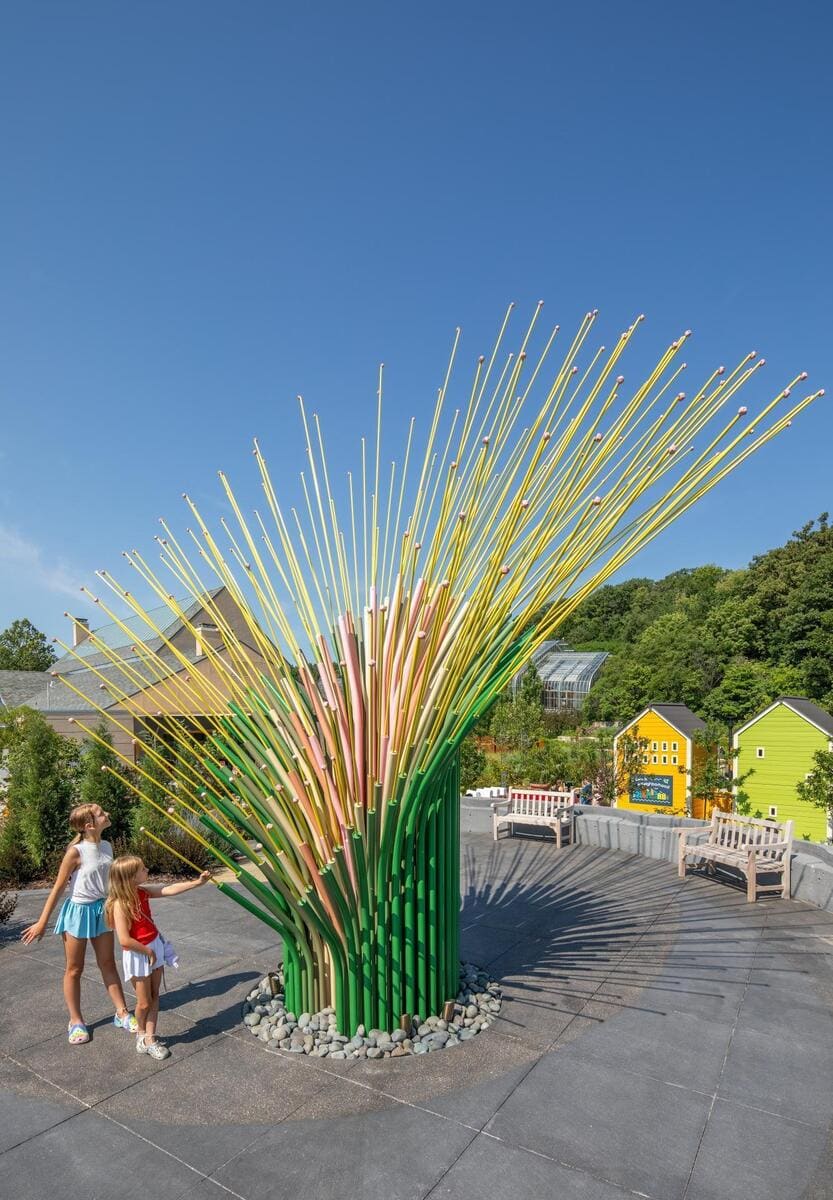
Photo credit: Tom Kessler

Photo credit: Tom Kessler

Photo credit: Tom Kessler
The artwork was commissioned through an international open call organized during the large-scale redevelopment of the Children’s Garden. Project organizers sought a focal installation for the site’s highest point that could engage children, encourage interaction, occupy a relatively modest footprint, and integrate with the surrounding garden while also functioning as a visible landmark from the highway.
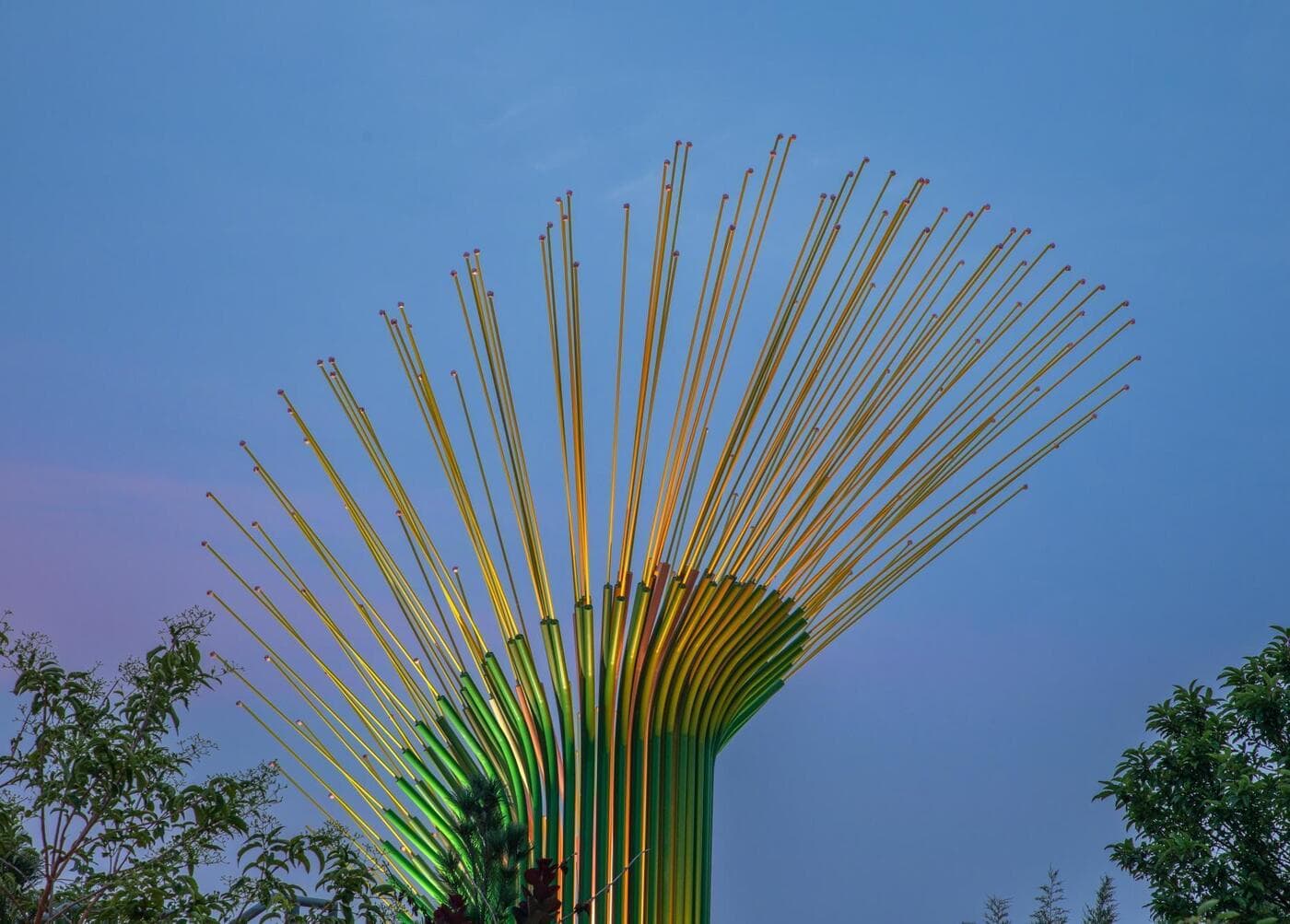
Photo credit: Tom Kessler
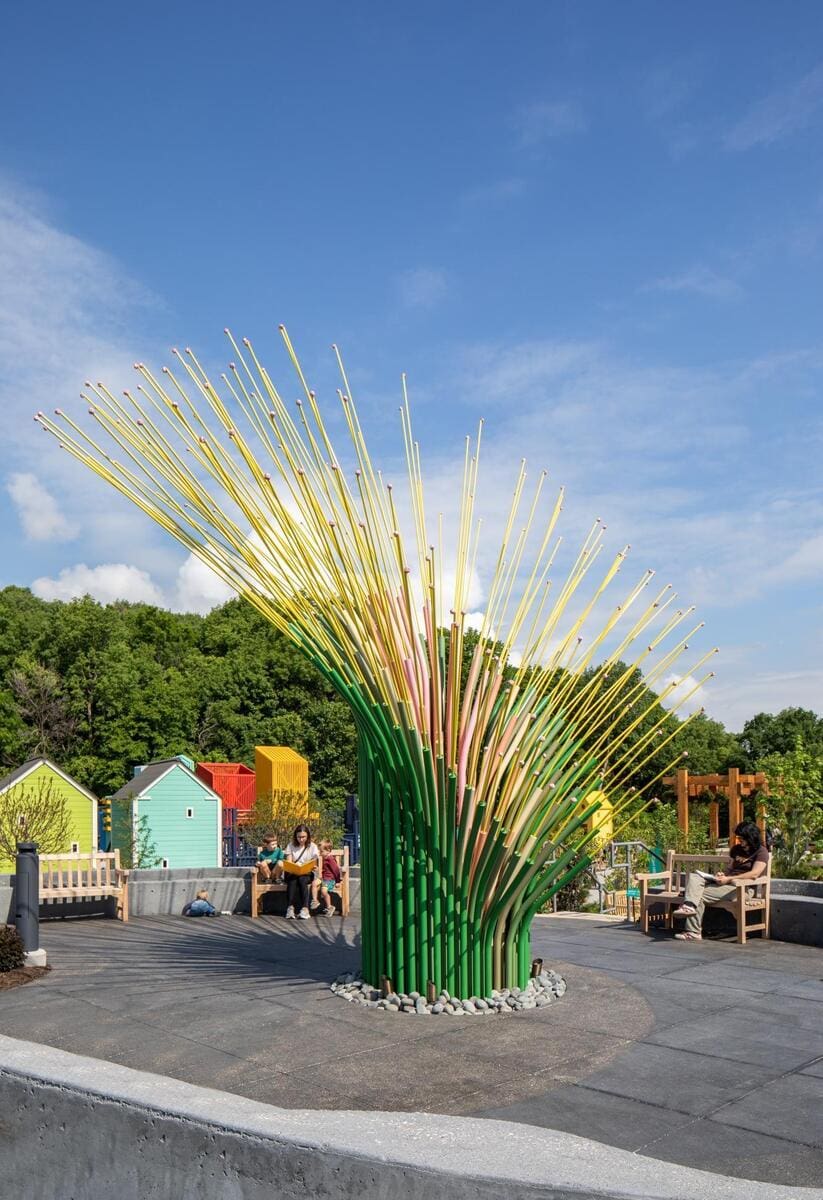
Photo credit: Tom Kessler
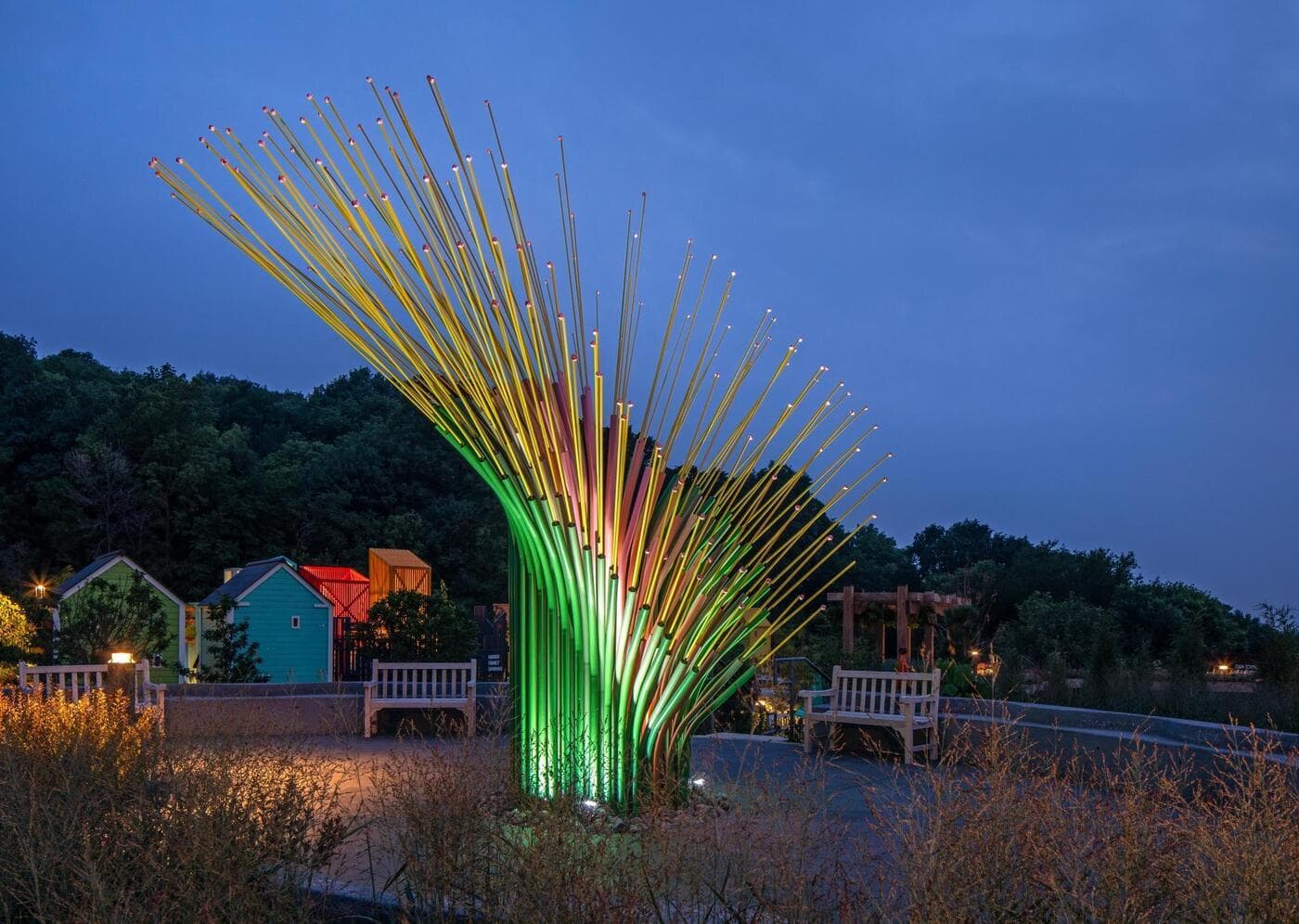
Photo credit: Tom Kessler
The concept for Chorus Ventus emerged from research into the tall-grass prairie ecosystem historically native to central North America. Early explorers described the region as a vast “sea of grass,” characterized by expansive horizons and fields of wildflowers rooted in fertile soil. Today, however, the ecosystem has been dramatically reduced: less than four percent remains intact across the region, and in Nebraska the figure falls below two percent. Ongoing restoration efforts in several locations aim to recover portions of this once-dominant landscape.

Photo credit: Tom Kessler
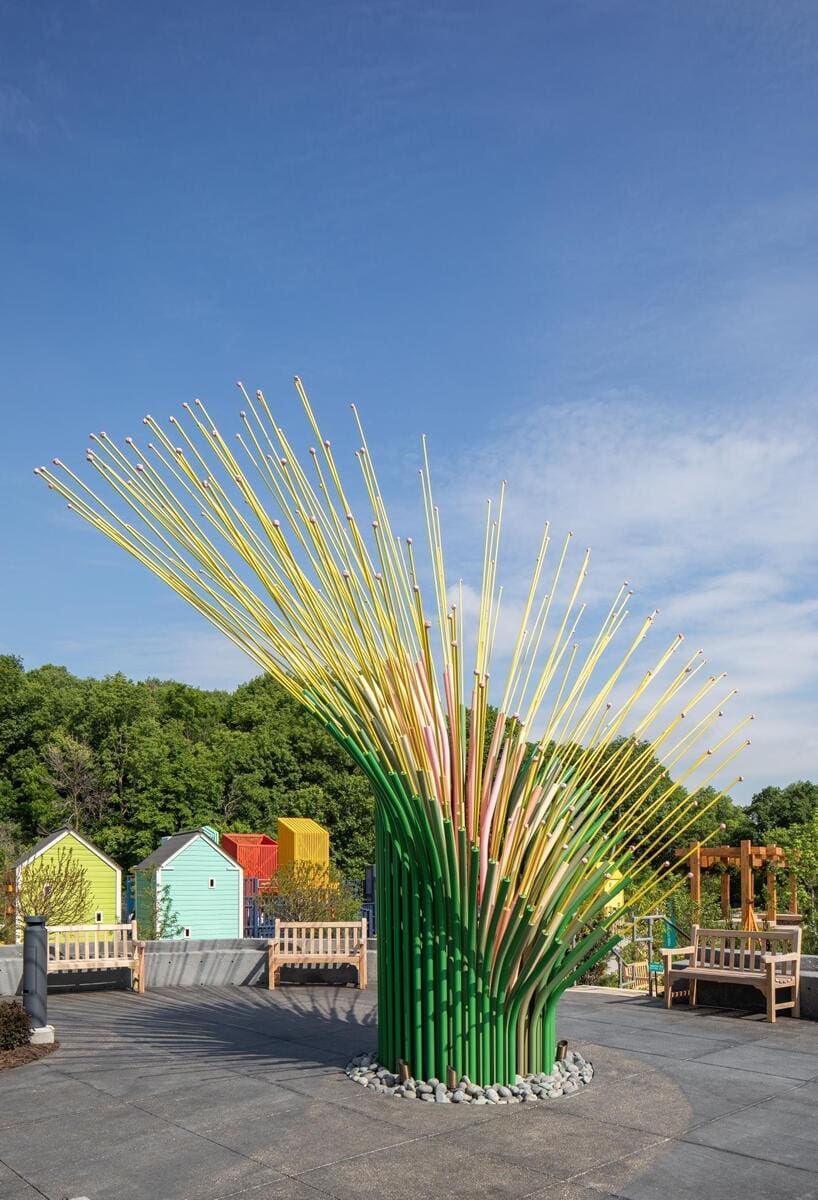
Photo credit: Tom Kessler

Photo credit: Tom Kessler
Drawing on this environmental context, the sculpture imagines a fictional plant species discovered through prairie restoration efforts. Its Latin title translates to “Dance of the Wind,” reflecting the installation’s emphasis on motion and collective rhythm.

Photo credit: Tom Kessler

Photo credit: Tom Kessler
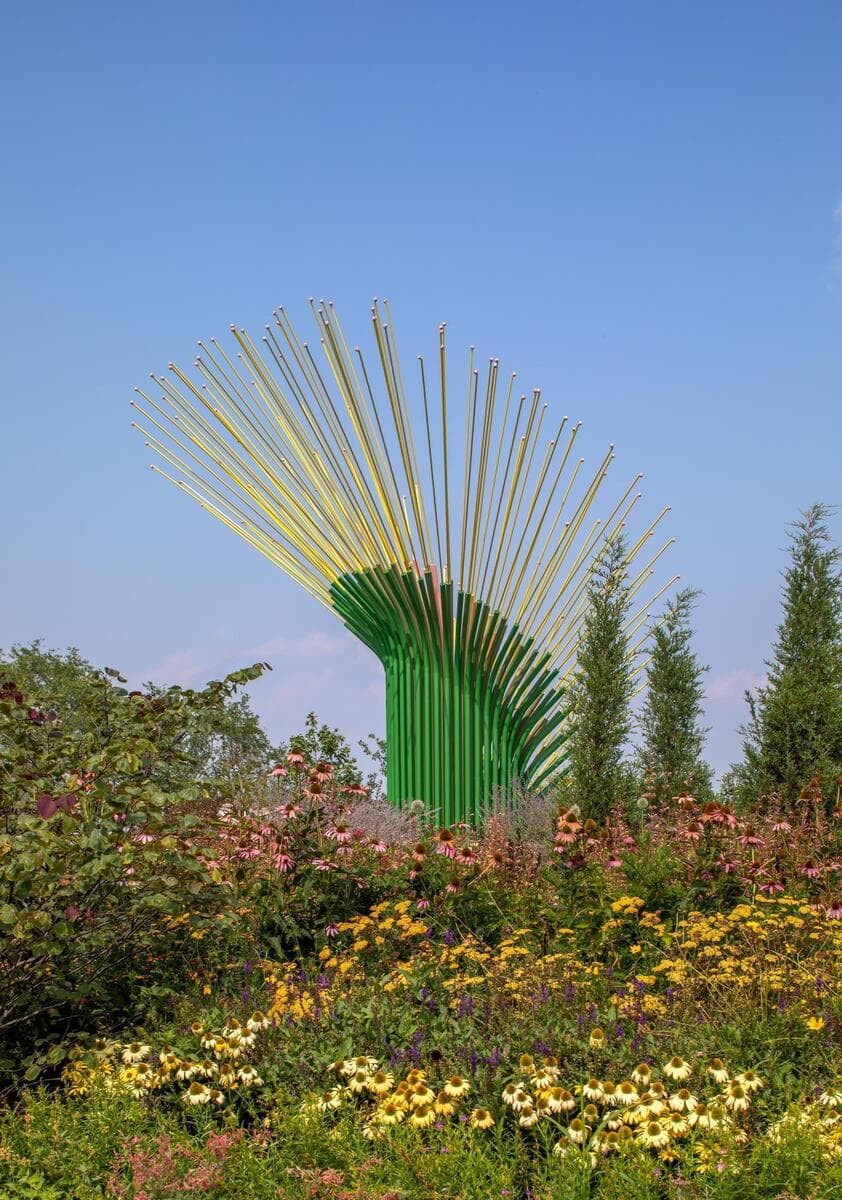
Photo credit: Tom Kessler
The work consists of 151 curved steel tubes arranged radially to suggest a single organic form emerging from the ground. Each tube supports a flexible glass-reinforced plastic (GRP) rod tipped with a small colored bell. Together, these elements form a cohesive field of movement that responds to environmental forces and human interaction.
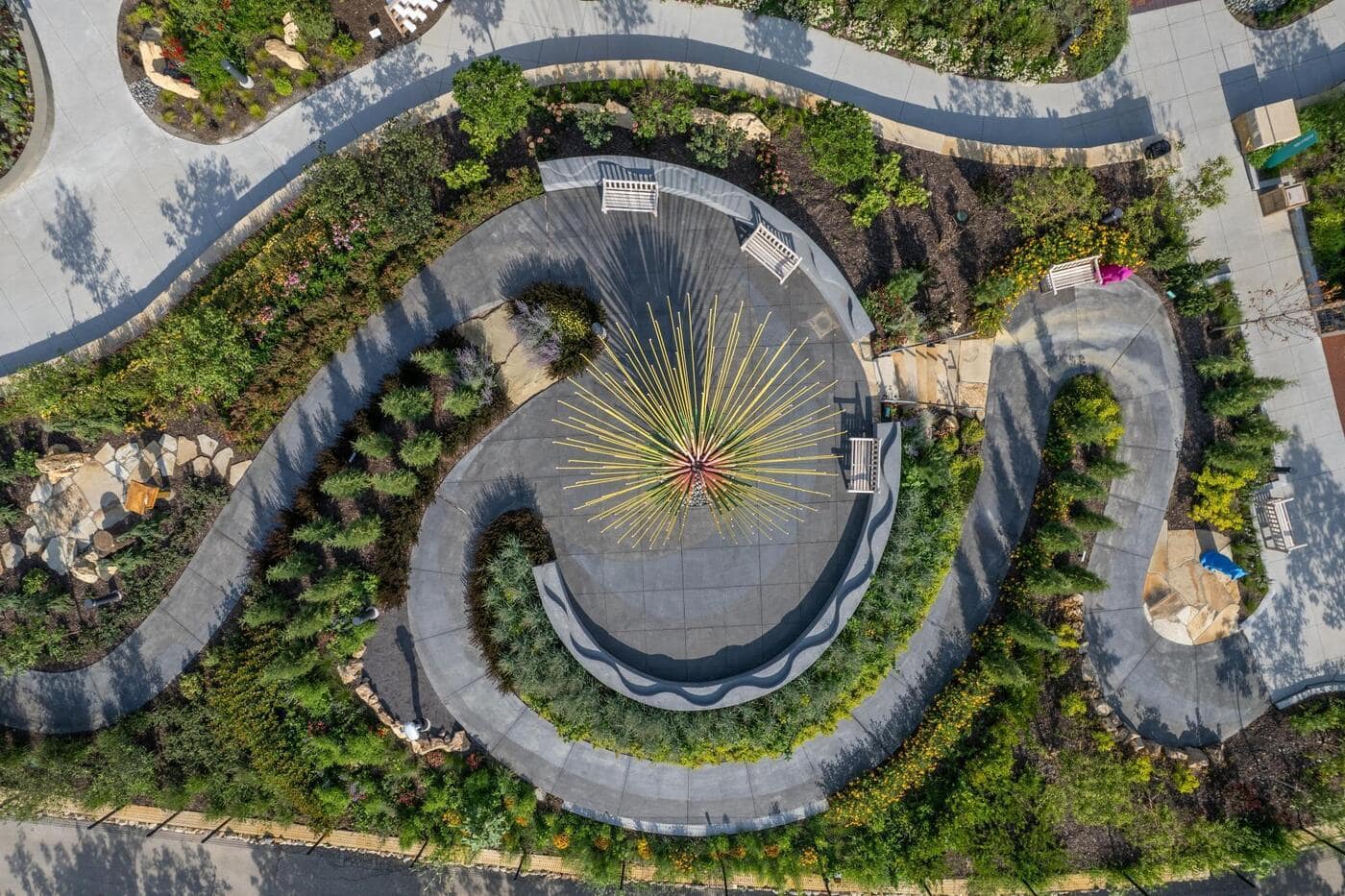
Photo credit: Tom Kessler

Photo credit: Tom Kessler

Photo credit: Tom Kessler
Color plays an important role in reinforcing the sculpture’s botanical character. The steel structure is finished in a gradient that transitions from pink at the center to green along the outer edges, evoking the impression of a flowering organism spreading outward across the ground.

Photo credit: Tom Kessler
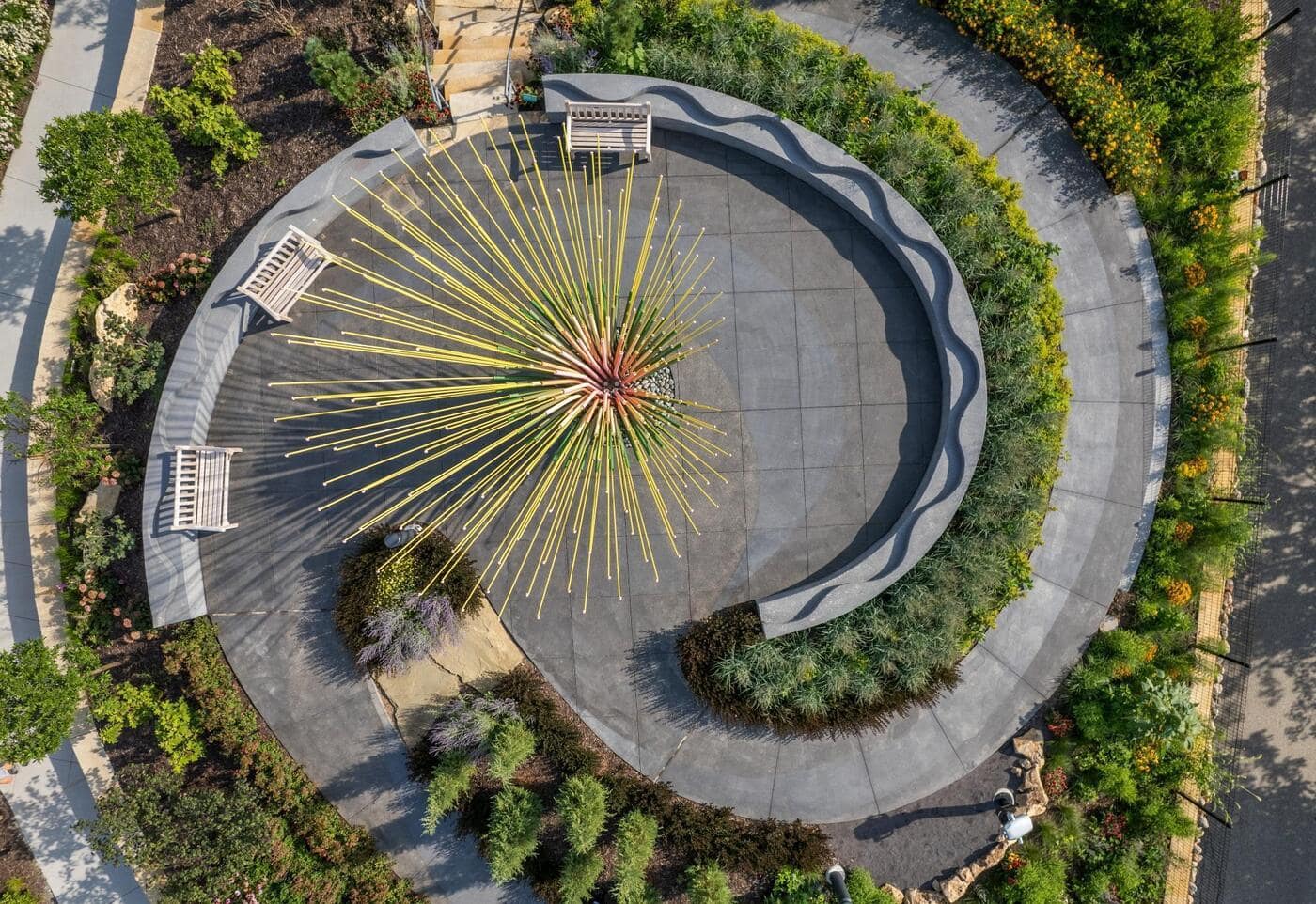
Photo credit: Tom Kessler

Photo credit: Tom Kessler
When wind moves through the rods, or when visitors gently vibrate them at ground level, the bells produce subtle sounds that form a shifting acoustic environment. The result is a kinetic and sonic landscape shaped by both natural forces and the presence of visitors.

Photo credit: Tom Kessler

Photo credit: Tom Kessler
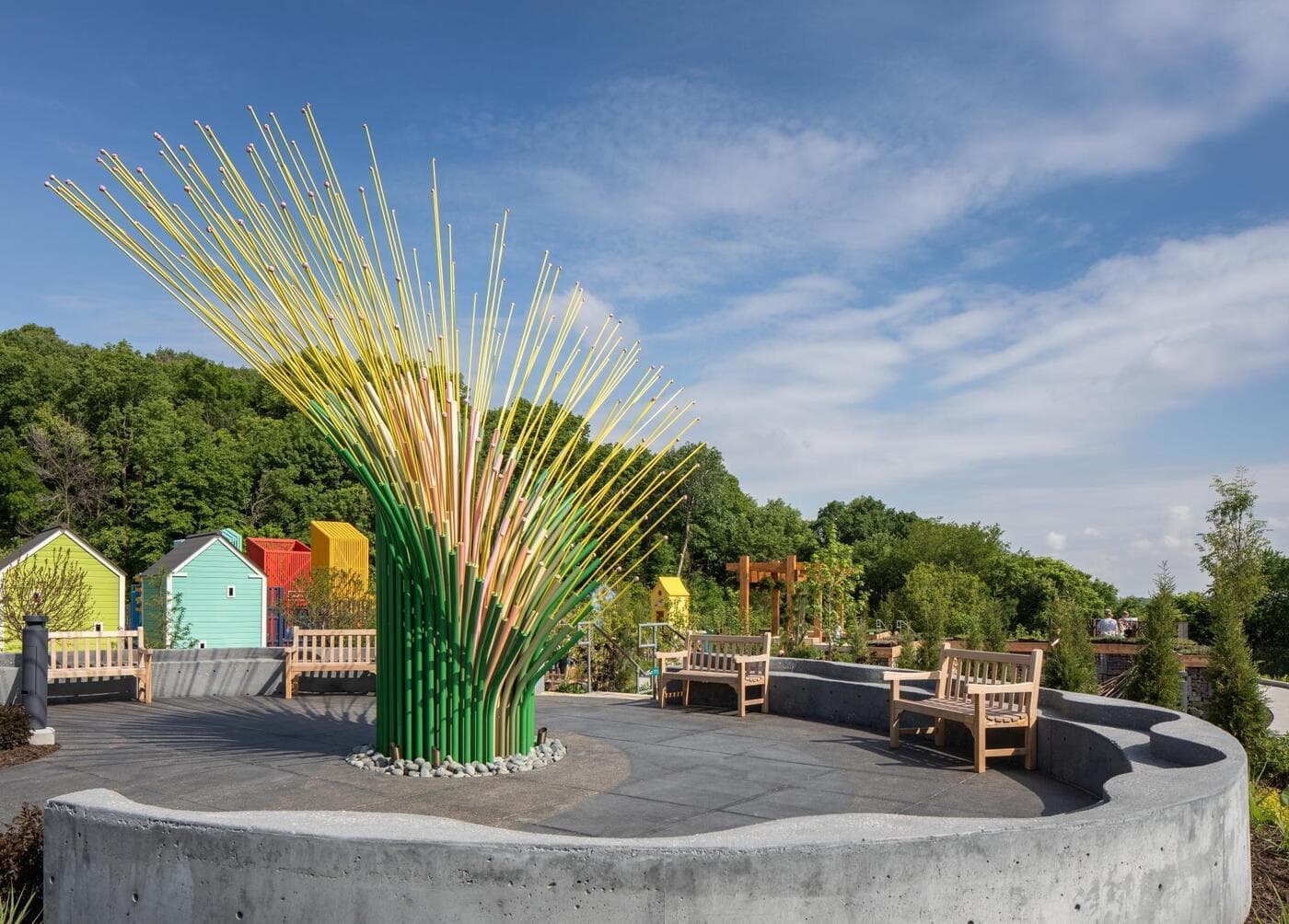
Photo credit: Tom Kessler
Designing the installation for long-term durability posed a significant engineering challenge. Nebraska’s climate includes hot summers, cold winters, and the possibility of tornadoes, requiring a structure capable of withstanding extreme conditions while remaining permanently installed outdoors.
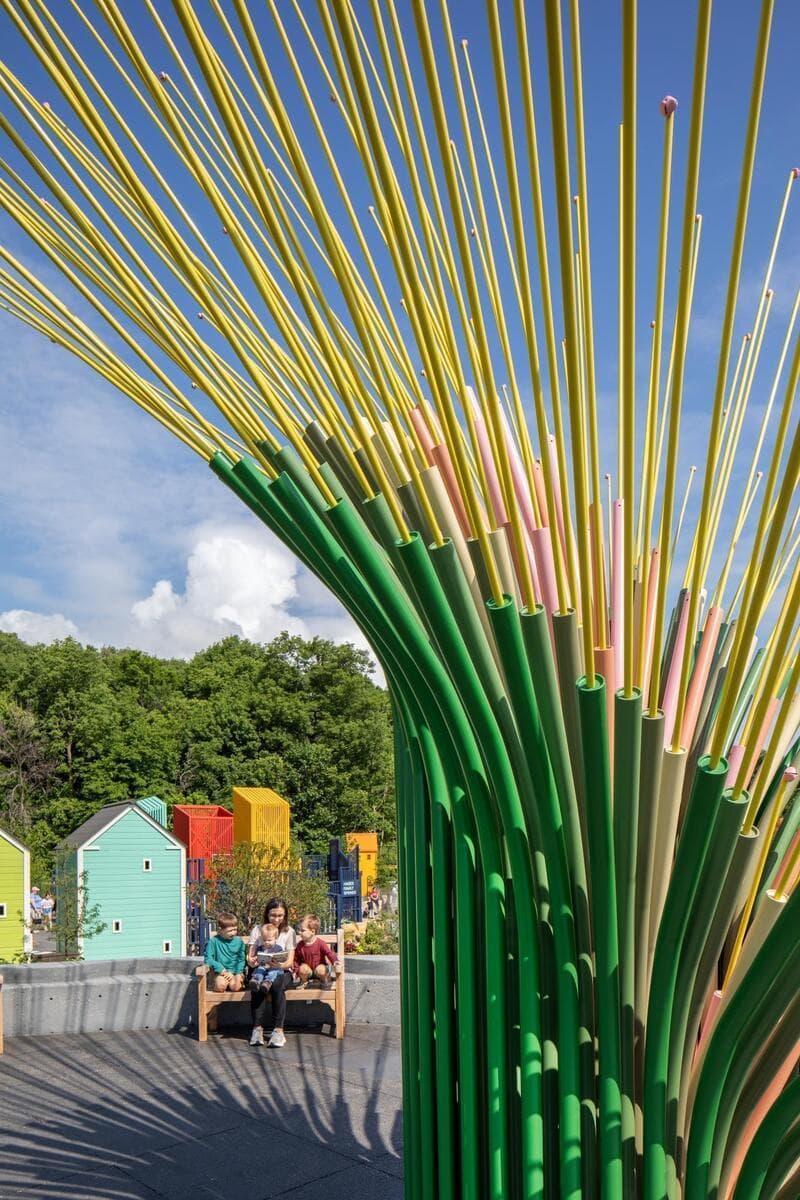
Photo credit: Tom Kessler

Photo credit: Tom Kessler
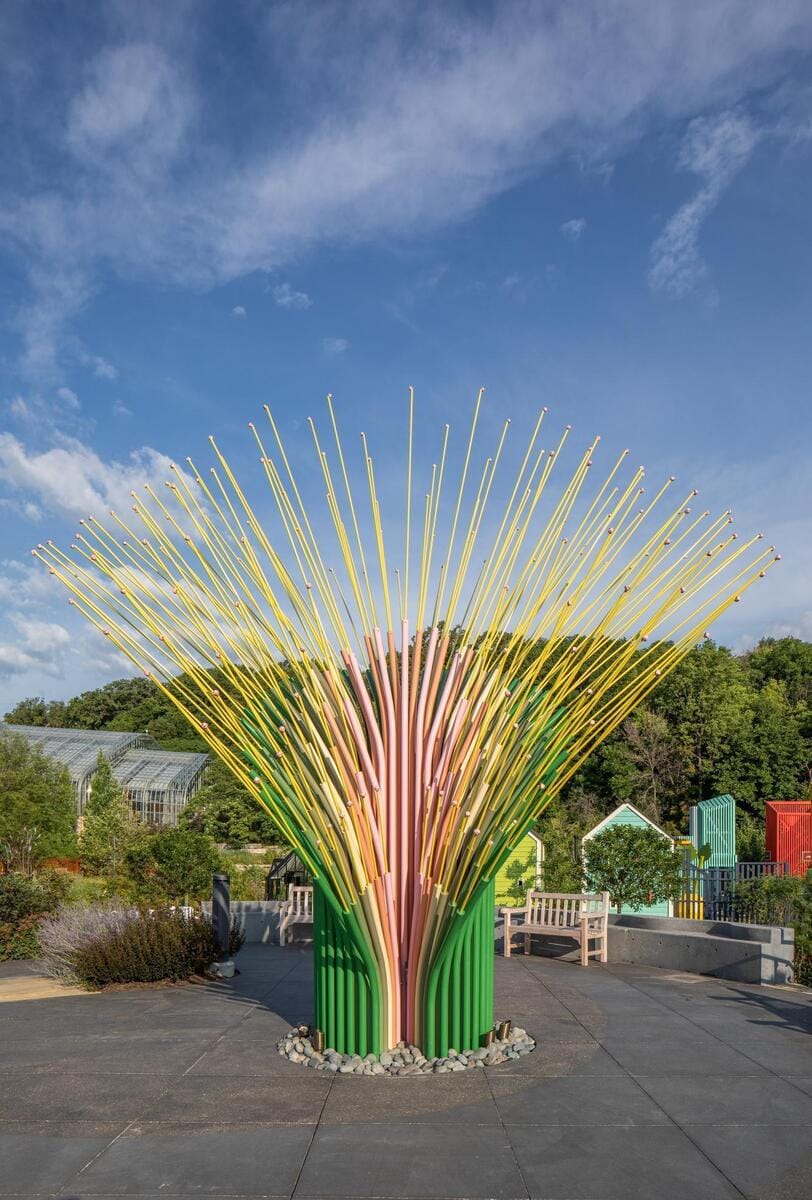
Photo credit: Tom Kessler
To address this, each curved stainless-steel tube is secured below ground by a custom two-layer baseplate system. Above ground, the tubes are finished with a durable powder coating, while the GRP rods are fully pigmented and protected with a UV-stable coating designed to extend their lifespan. The materials are expected to allow the sculpture to remain in place for roughly 30 to 50 years with minimal maintenance.

Photo credit: Tom Kessler
Maintenance considerations also shaped the detailing of the sculpture’s components. Each rod and bell is attached using a simple grub-screw fixing, enabling individual elements to be easily replaced on site if needed. This modular approach helps ensure the long-term resilience of the installation.
The placement of Chorus Ventus within the garden is intended to shape how visitors encounter the work. Positioned at the highest point of the site, the sculpture is deliberately oriented away from many areas of the garden. As a result, visitors initially see only brief flashes of color and movement in the distance, creating a sense of curiosity that draws them toward the lookout.
The approach to the sculpture follows a long spiral ramp bordered by plantings chosen to complement the installation. As visitors ascend, the sculpture gradually comes into view, creating a carefully staged sequence that emphasizes discovery.
At the summit, seating integrated into the landscape design offers a quiet place to pause above the more active zones of the Children’s Garden. From this vantage point, visitors can observe the subtle movement and sound of the rods in the wind while overlooking the valley and the nearby Missouri River.
After dark, integrated RGB lighting within the sculpture’s base gives the installation a soft luminous presence, allowing it to remain visible while blending gently into the surrounding nighttime landscape.
NEON
NEON is a UK-based artistic practice exploring the territory between art, architecture, and design. Led by architect Mark Nixon and visual artist Viliina Koivisto, the studio creates projects that aim to enrich everyday experience through sensory, spatial, and environmental awareness. NEON develops responses to unique sites around the world, drawing out qualities they find particular to each context. As a result, the studio’s work shifts in method and appearance, but always centres on creating meaningful experiences for the public.