

 English
 日本語
日本語

Digital Craft by Art and Design Studio FUTUREFORMS
Art and design studio FUTUREFORMS, based in the San Francisco Bay Area in the United States, has gained recognition for activating public spaces through projects that move fluidly between public art and architecture. The studio is led by architects Jason Kelly Johnson and Nataly Gattegno, who have collaborated for more than two decades. Through the fusion of computational design and craft, the duo continues to create new spatial experiences within the urban environment.
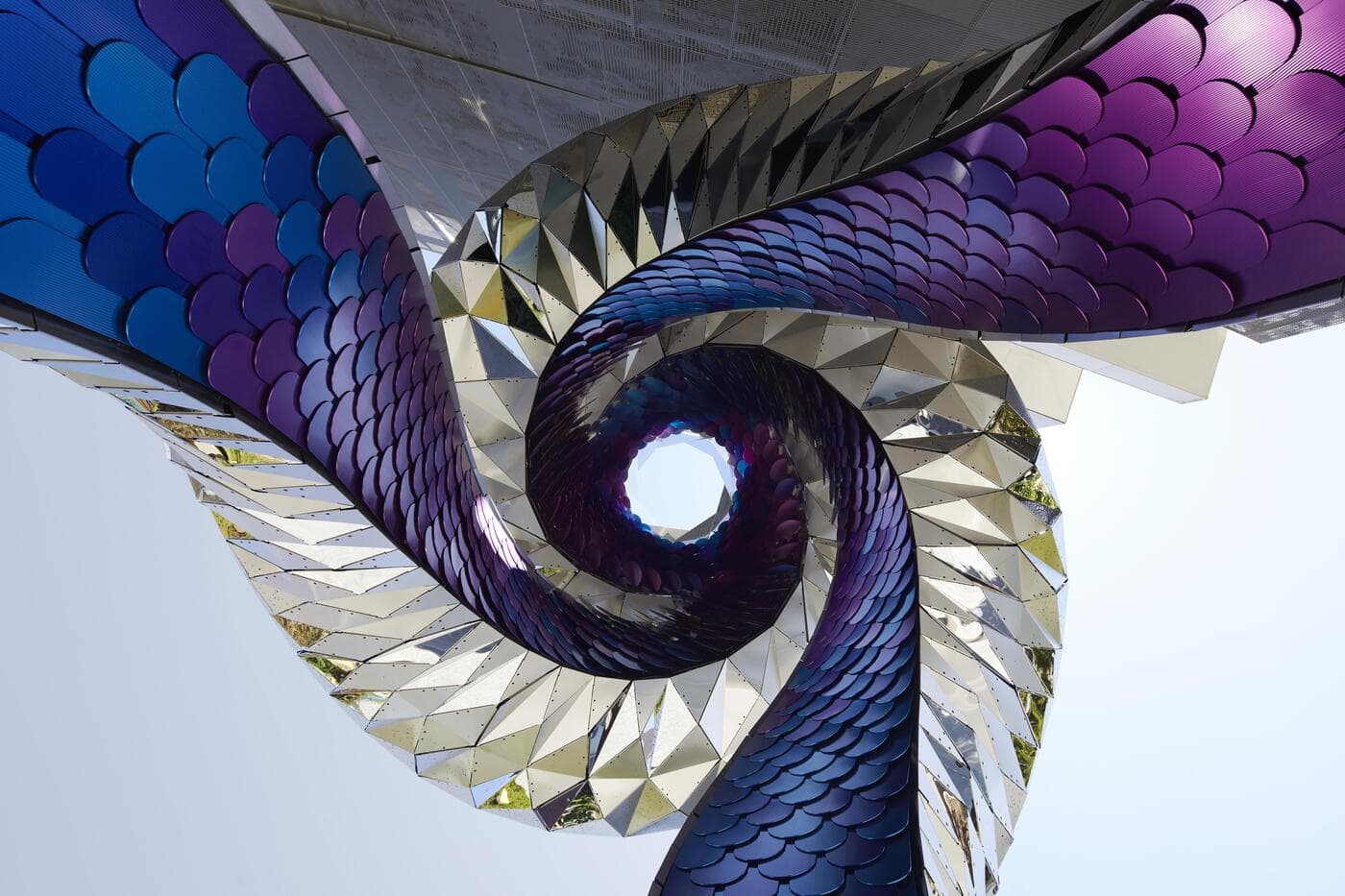
Whether visitors pause to take in its sculptural form or spend time within its colorful interior, Orbital creates a memorable, immersive experience that encourages connection.
Photo credit: Matthew Millman
What does it mean to create public art and architecture in the 21st century? As cities become increasingly digital, the boundary between the built environment and the algorithmic systems shaping everyday life is gradually dissolving. This shift is defined by the concept of Digital Craft, an approach that treats the computer as a tool of craftsmanship. By applying computational logic, designers can move beyond the standardization of mass production and generate spatial expressions that respond to specific contexts. Within this framework, architecture becomes not simply a static object but an intervention that actively engages with its surrounding urban environment.
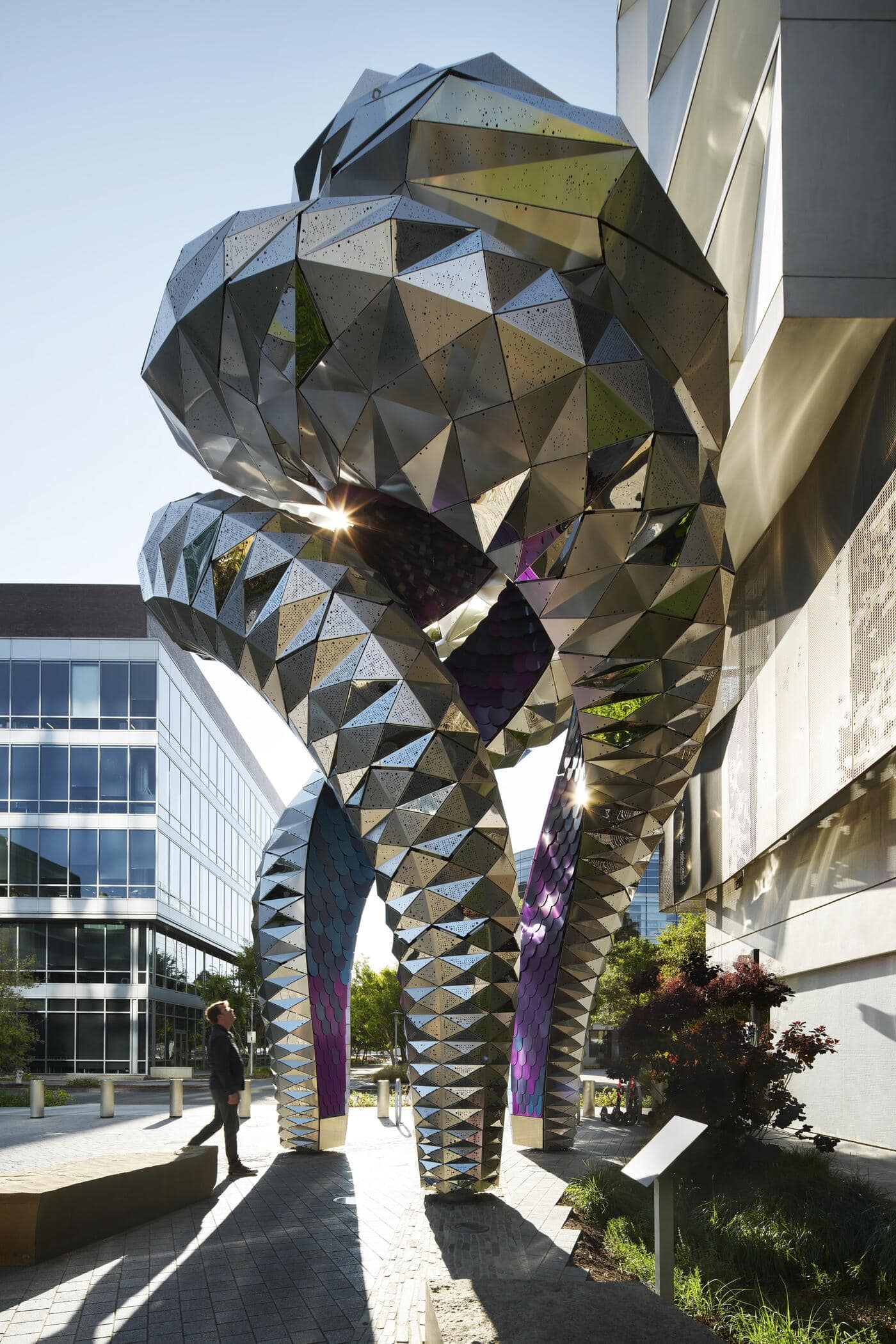
Orbital serves as both an iconic gateway and a vibrant gathering point, offering space for anything from quiet reflection to lively celebration.
Photo credit: Matthew Millman
Public Art Transforming Urban Space: “Orbital” and “Weatherscape”
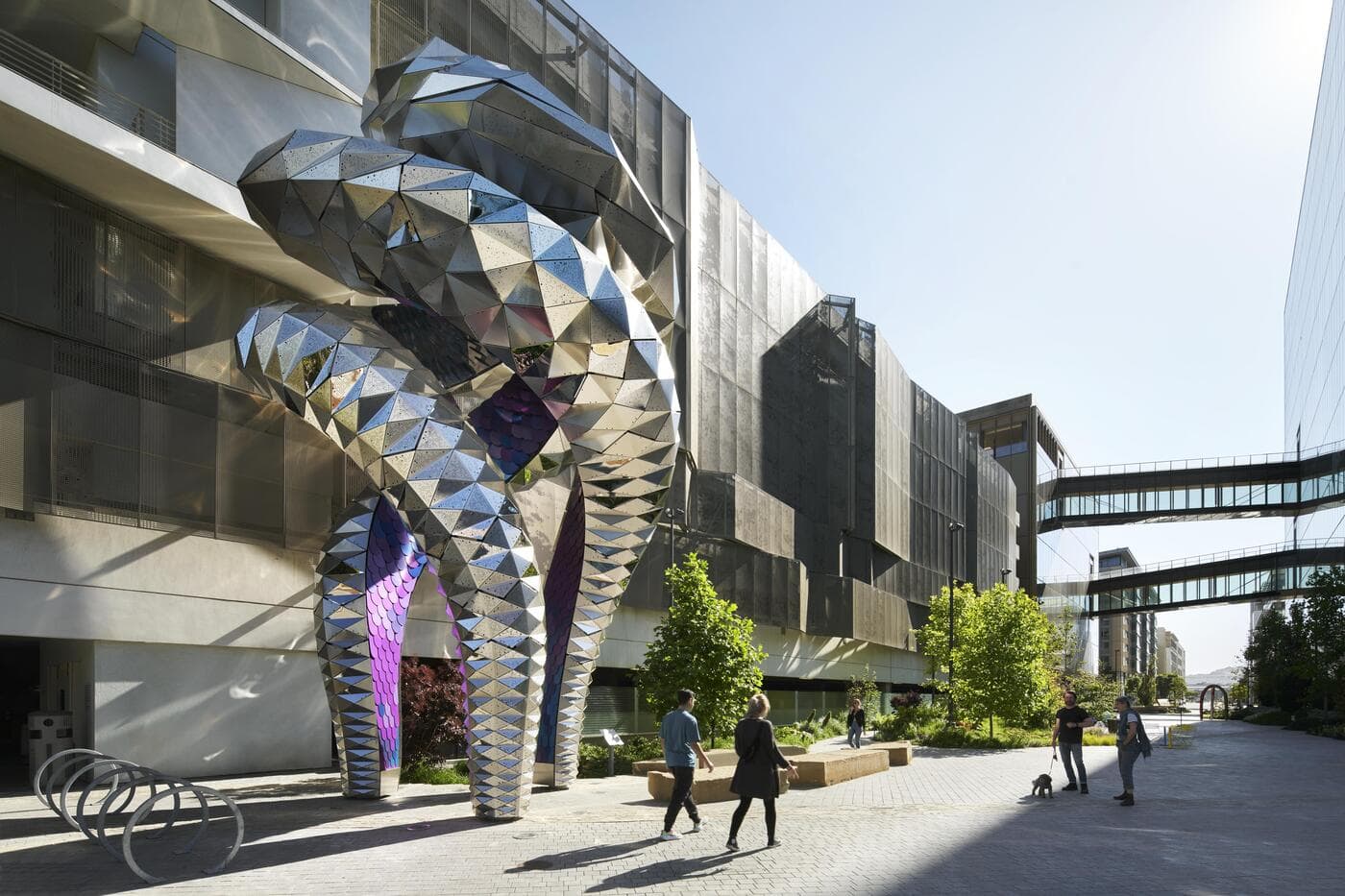
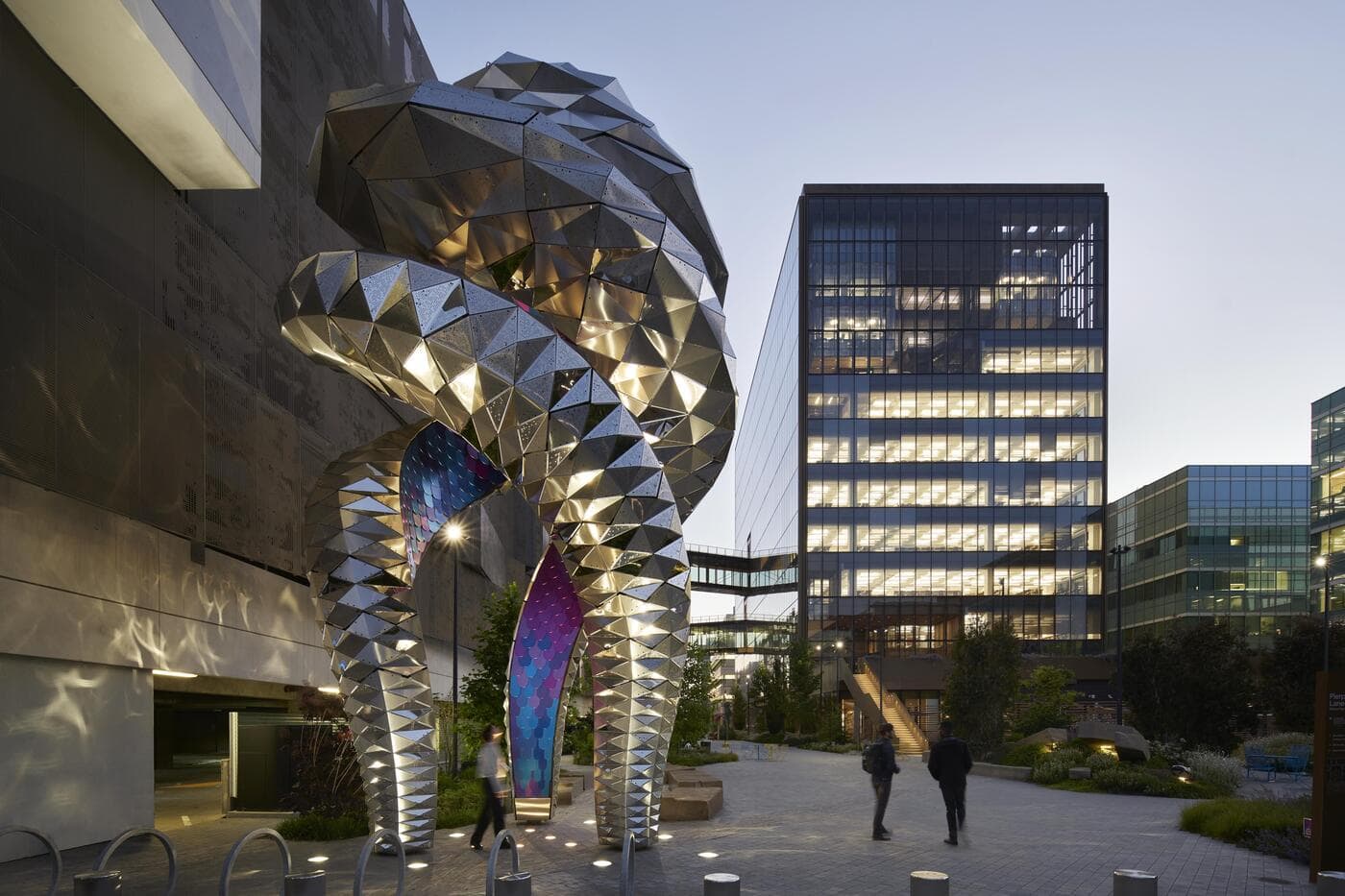
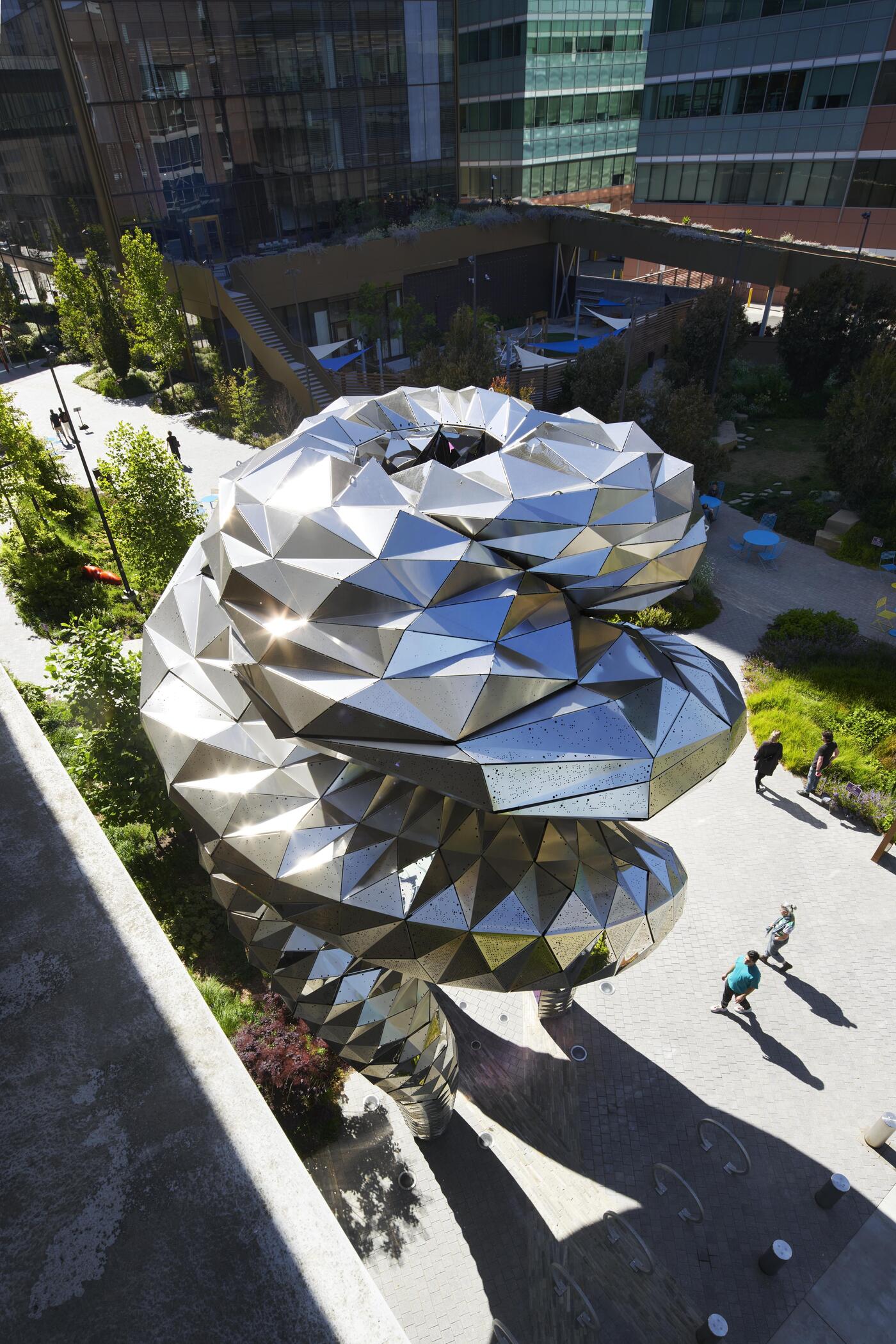
Among FUTUREFORMS’ notable projects are works that demonstrate how technology and public space intersect through experiential design. At the entrance plaza of the OpenAI Headquarters (formerly Uber Headquarters) in Mission Bay, San Francisco, the studio installed the sculptural work “Orbital.” Conceived as a contemporary garden folly, the structure transforms complex computational design into a striking urban landmark. Composed of thousands of custom-fabricated aluminum and steel elements, the structure presents two distinct spatial experiences. Its exterior features reflective perforated stainless steel surfaces that interact with the surrounding environment, while the interior forms a softly illuminated chamber. The artists describe this inner space as a “Creature of the Garden,” offering visitors a contemplative and immersive environment within the urban landscape.
-


- A contemporary garden folly, Orbital explores geometric and material exuberance. Photo credit: Matthew Millman
-
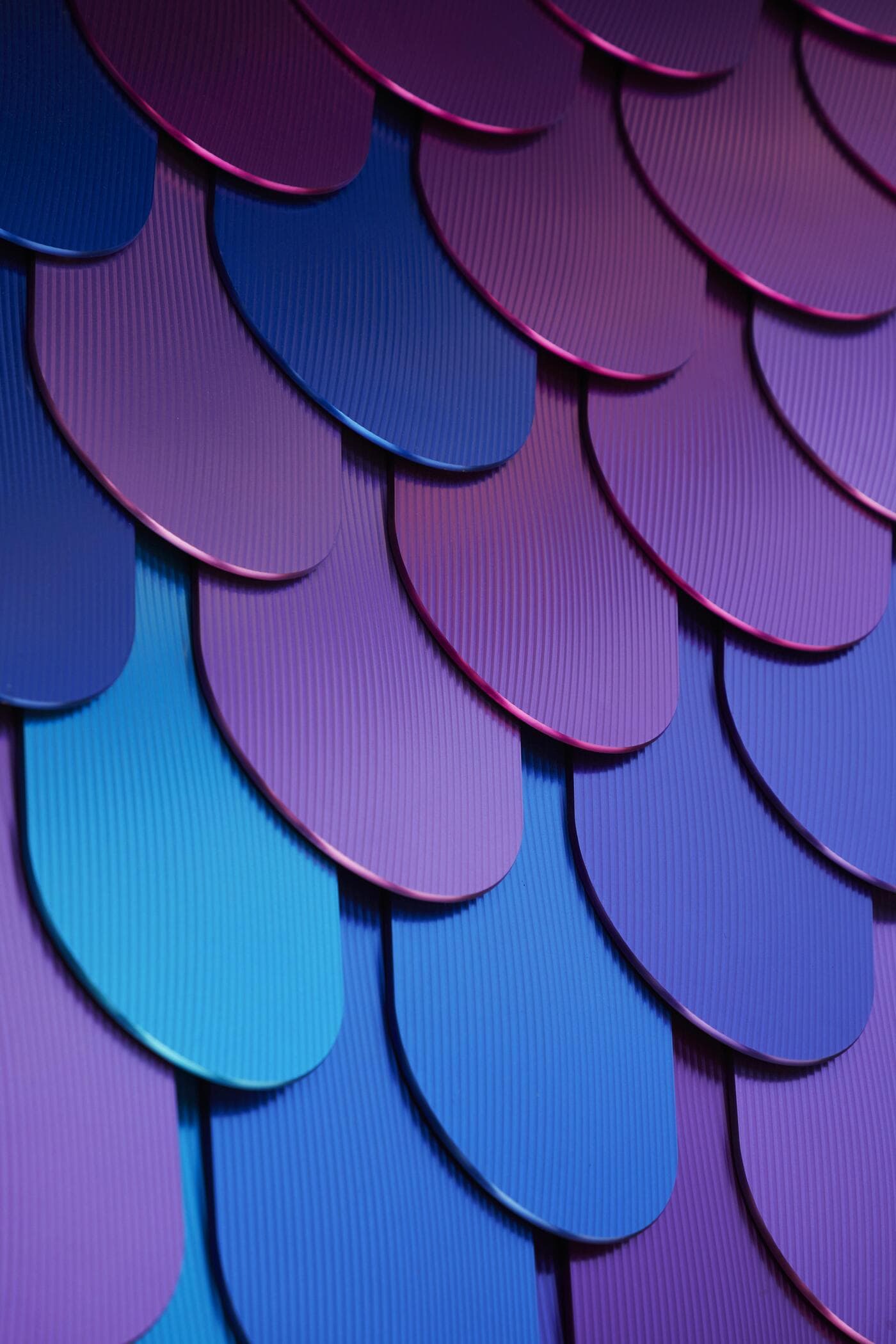
- The faceted exterior is cloaked in a constellation of fine perforations, while the fluid interior reveals a tactile surface of colorful shingles. By night, these layers become a lantern of diffused light, casting an ethereal glow. Photo credit: Matthew Millman
-

- The sculpture evokes organic forms found in nature, as well as giant robots and futuristic space vehicles. Photo credit: Matthew Millman
-
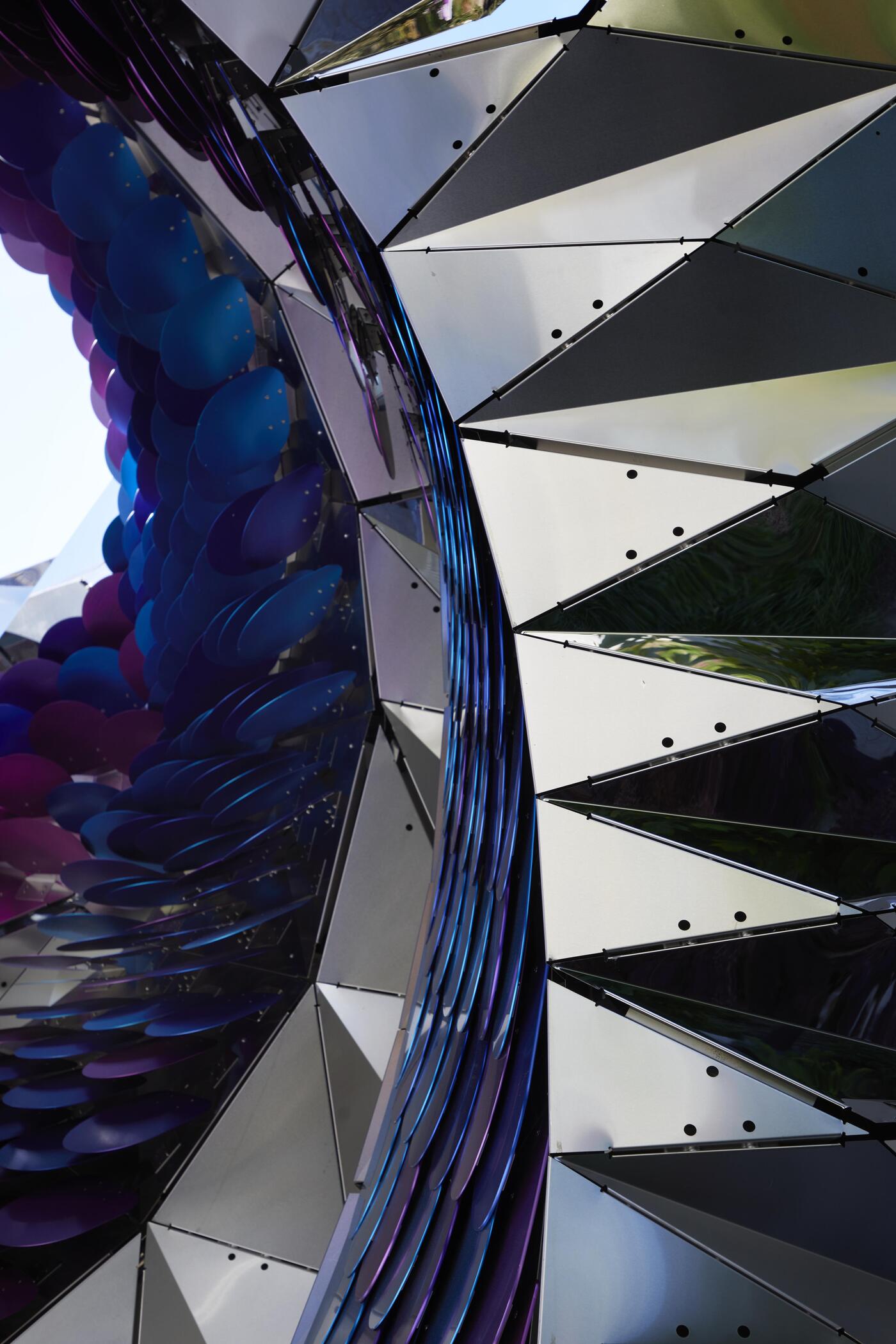
- On the inside a color field surprises, but also grounds the visitor to pause, look up, experience and interact with pattern and form in a dramatically different way. Photo credit: Matthew Millman
-
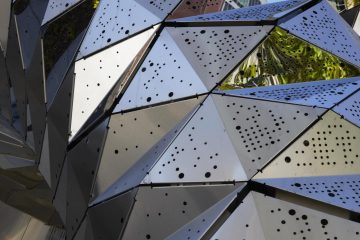
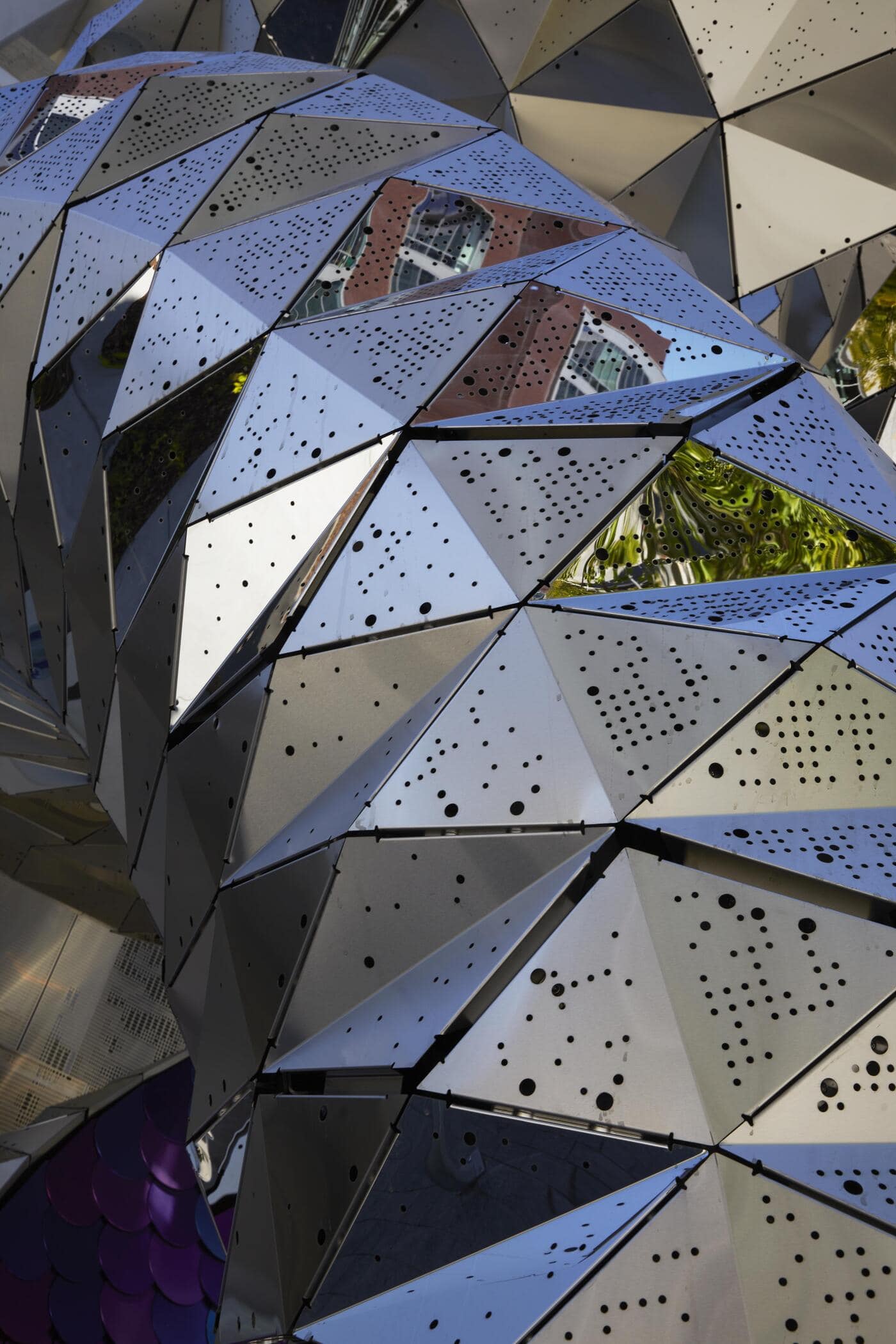
- Orbital explores ways of bringing together these two worlds and creating an artwork that can be experienced in various ways. On the outside a textured, tessellated, high definition surface articulates a towering structure that anchors the site, providing a visual identity. Photo credit: Matthew Millman
-

- The exterior and interior skins of the structure are geometrically similar, but materially distinct tessellated and shingled modules. The highly reflective exterior is contrasted by a tactile and colorful interior. Photo credit: Matthew Millman
-

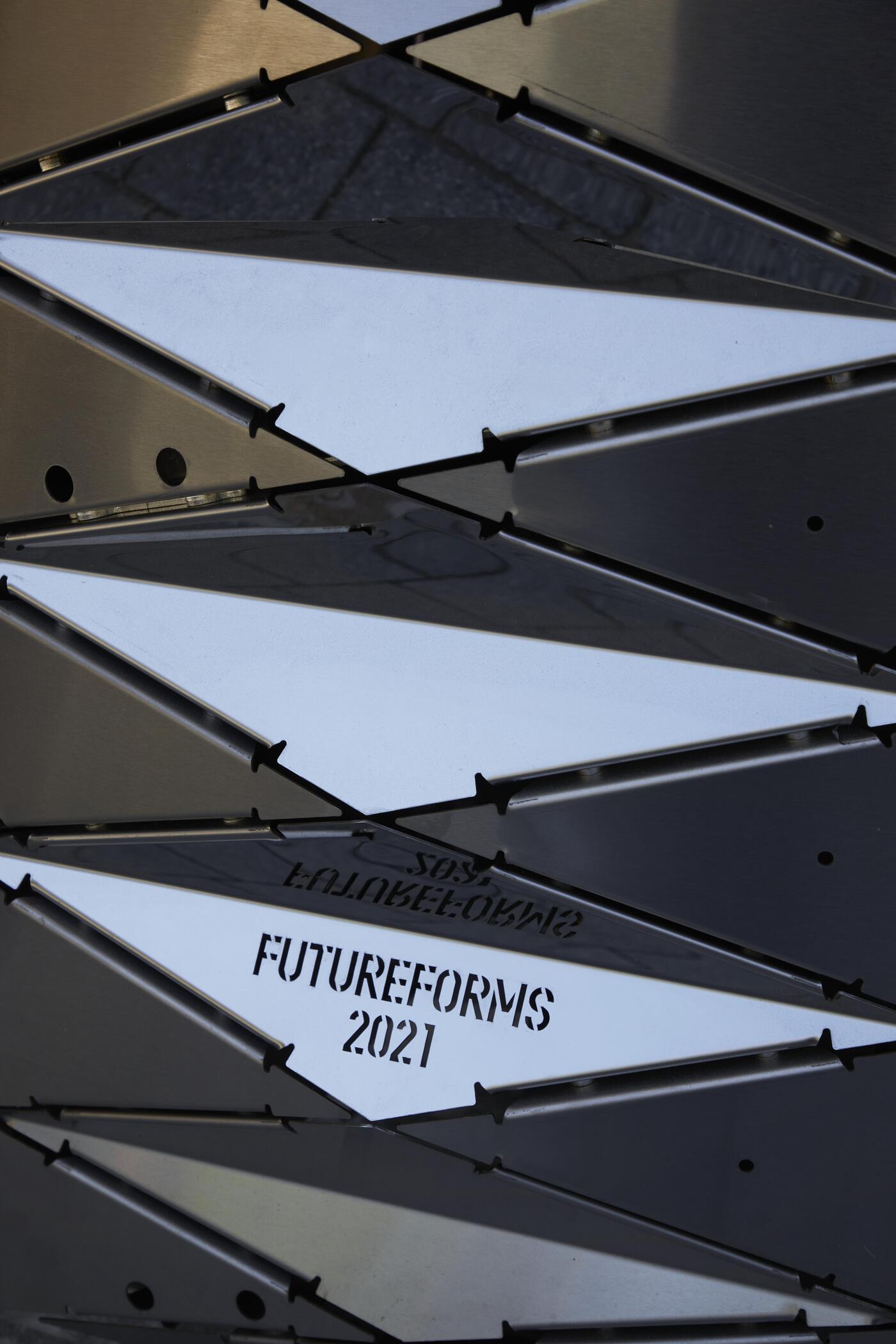
- At its core, this project emerges from FUTUREFORMS’ co-founder Jason Kelly Johnson’s mastery of digital craft—where computation becomes a language and fabrication a form of authorship. Photo credit: Matthew Millman
-

- Weatherscape is a sculptural canopy that channels dynamic weather conditions triggering optical, material and sound effects in multiple ways. Photo credit: Brian Wancho
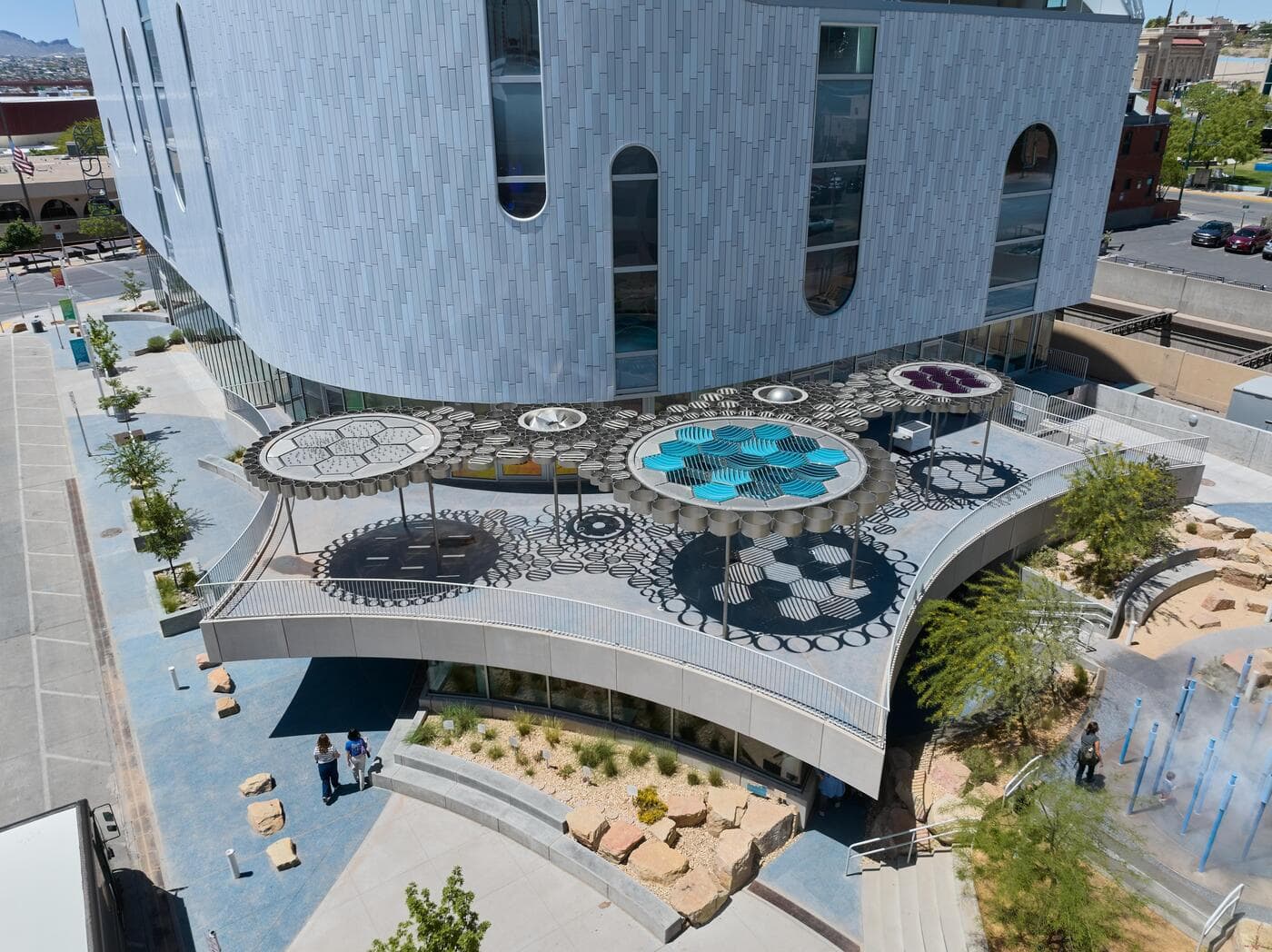
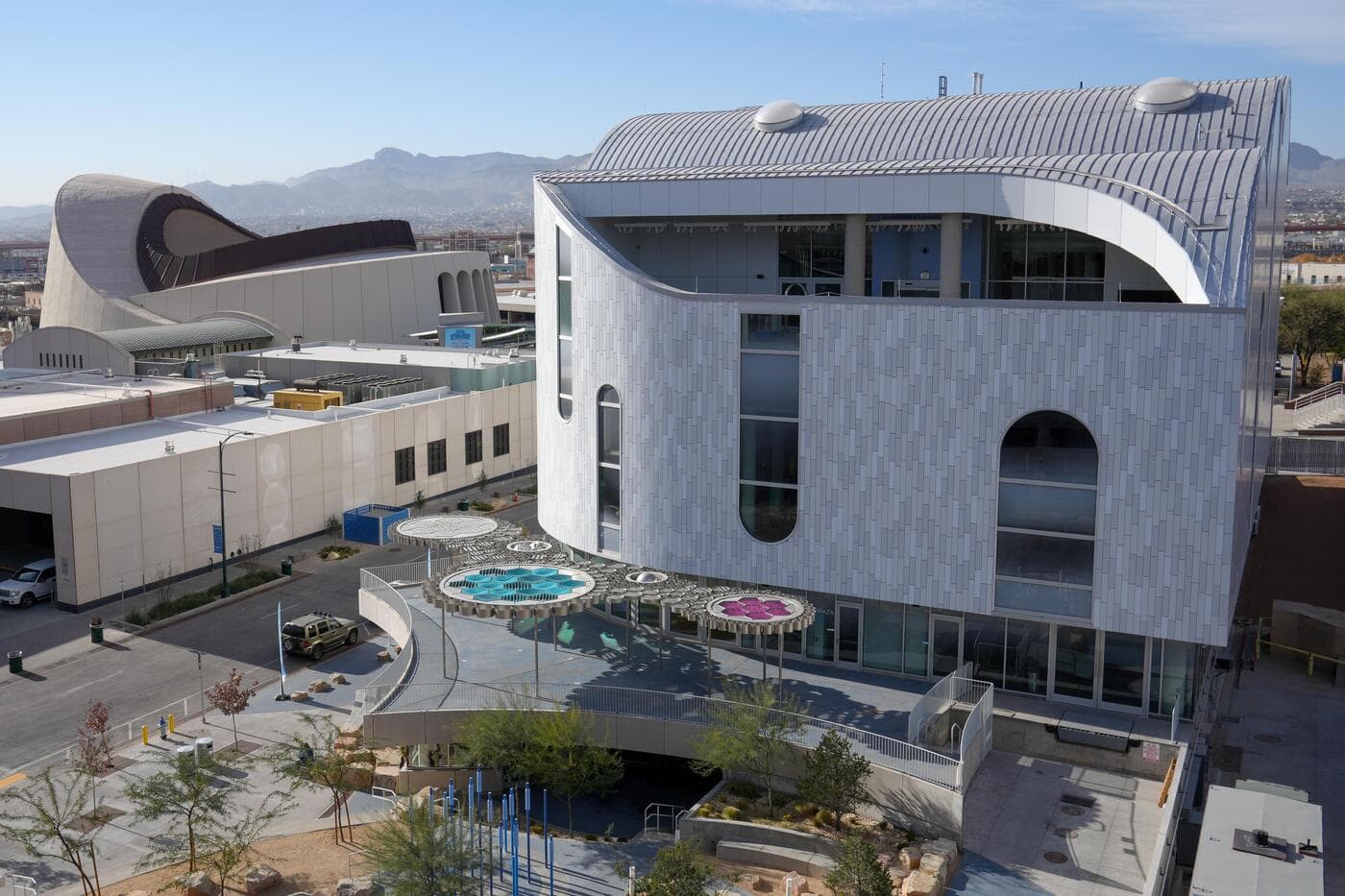
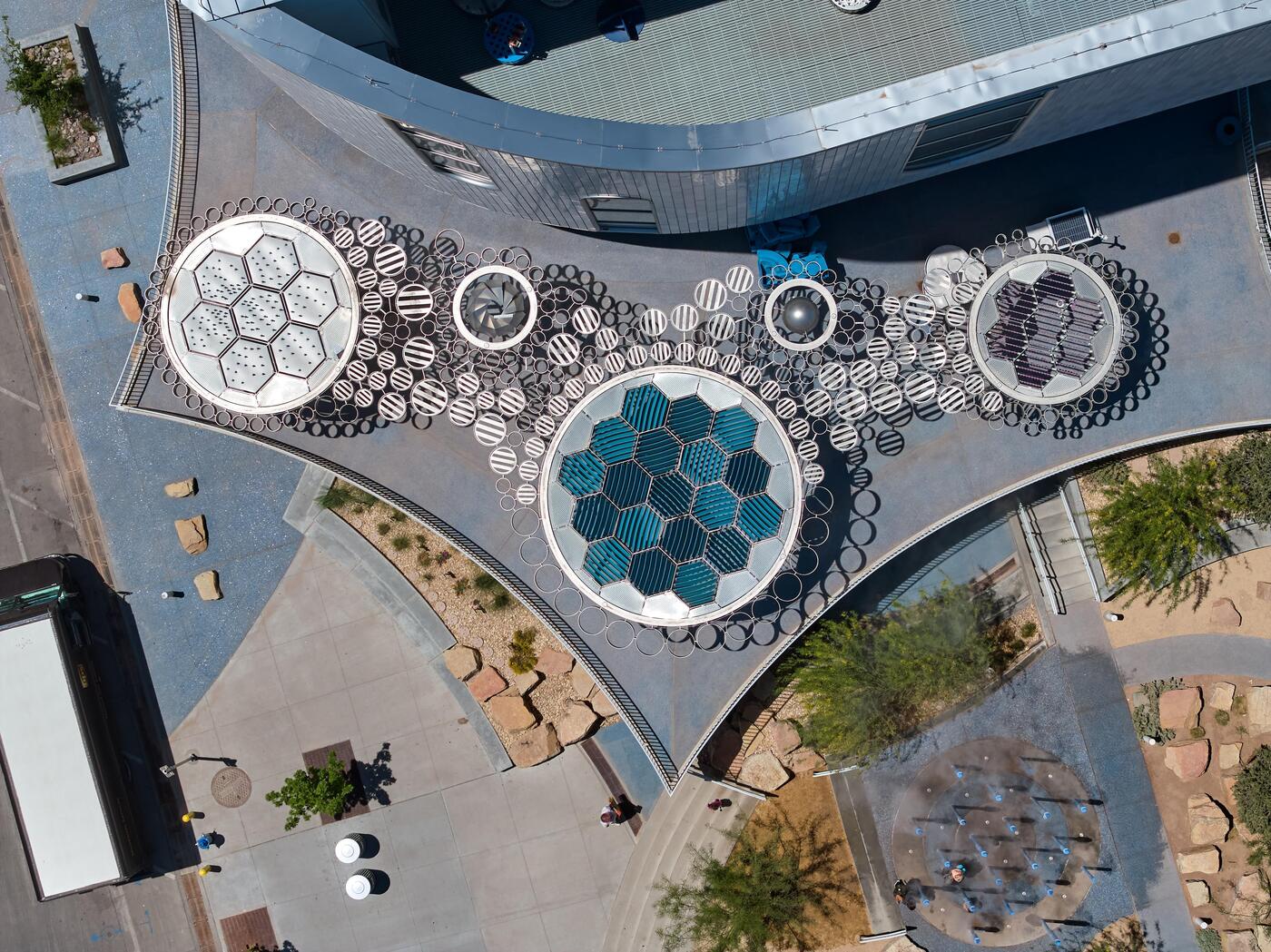
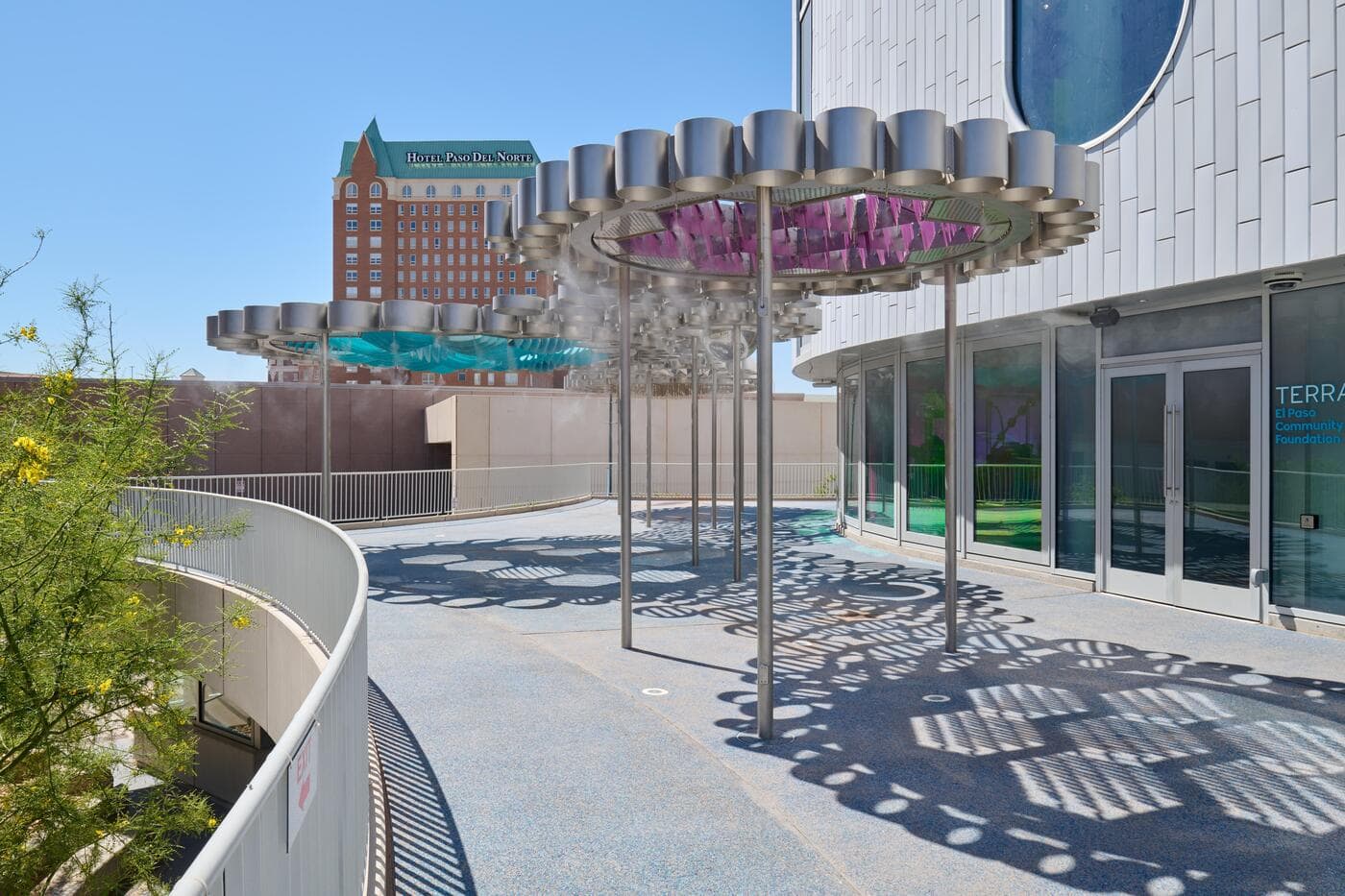
In El Paso, Texas, the studio completed “Weatherscape,” a large sculptural canopy for the El Paso Children’s Museum (La Nube). Measuring approximately 70 by 40 feet, the structure is more than a shading device. Designed as a “living laboratory of wonder,” it transforms natural forces such as sunlight, wind, and water into kinetic motion and mist. By making the invisible forces of the desert visible and interactive, the installation invites visitors of all ages to engage directly with the surrounding environment.
Exhibition “METAXIS” at CCA
In contrast to these large-scale urban installations, an exhibition presenting the studio’s creative process is currently on view. “METAXIS: A Collection of Ideas and Objects” is being held at the California College of the Arts (CCA) Campus Gallery through March 20, 2026. The title “METAXIS” derives from the Greek word metaxi, meaning a condition of existing between two realms. The exhibition features more than 20 works produced between 2015 and 2025, including conceptual models, 3D-printed prototypes, and speculative objects. By presenting both process models and finished pieces, the exhibition reveals how FUTUREFORMS integrates knowledge and tools from multiple disciplines—including art, architecture, and computational design—to explore new ways of imagining and constructing spatial experiences.
-

- In an urban Texan environment, where intense sun and high temperatures dominate, Weatherscape’s canopy offers both shaded comfort and visual engagement. Photo credit: Genaro Limon
-

- Weatherscape creates overlapping micro-climates on the terrace of the museum. Photo credit: Brian Wancho
-

- These metals do not warp, fade, or deform under intense heat or shifting temperatures, making them ideal for places like El Paso, Texas with strong sun and seasonal extremes. Photo credit: Brian Wancho
-
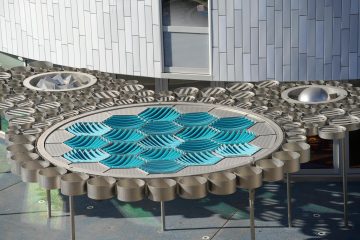
- Detail of Weatherscape’s canopy, which offers both shaded comfort and visual engagement. Photo credit: Genaro Limon
-

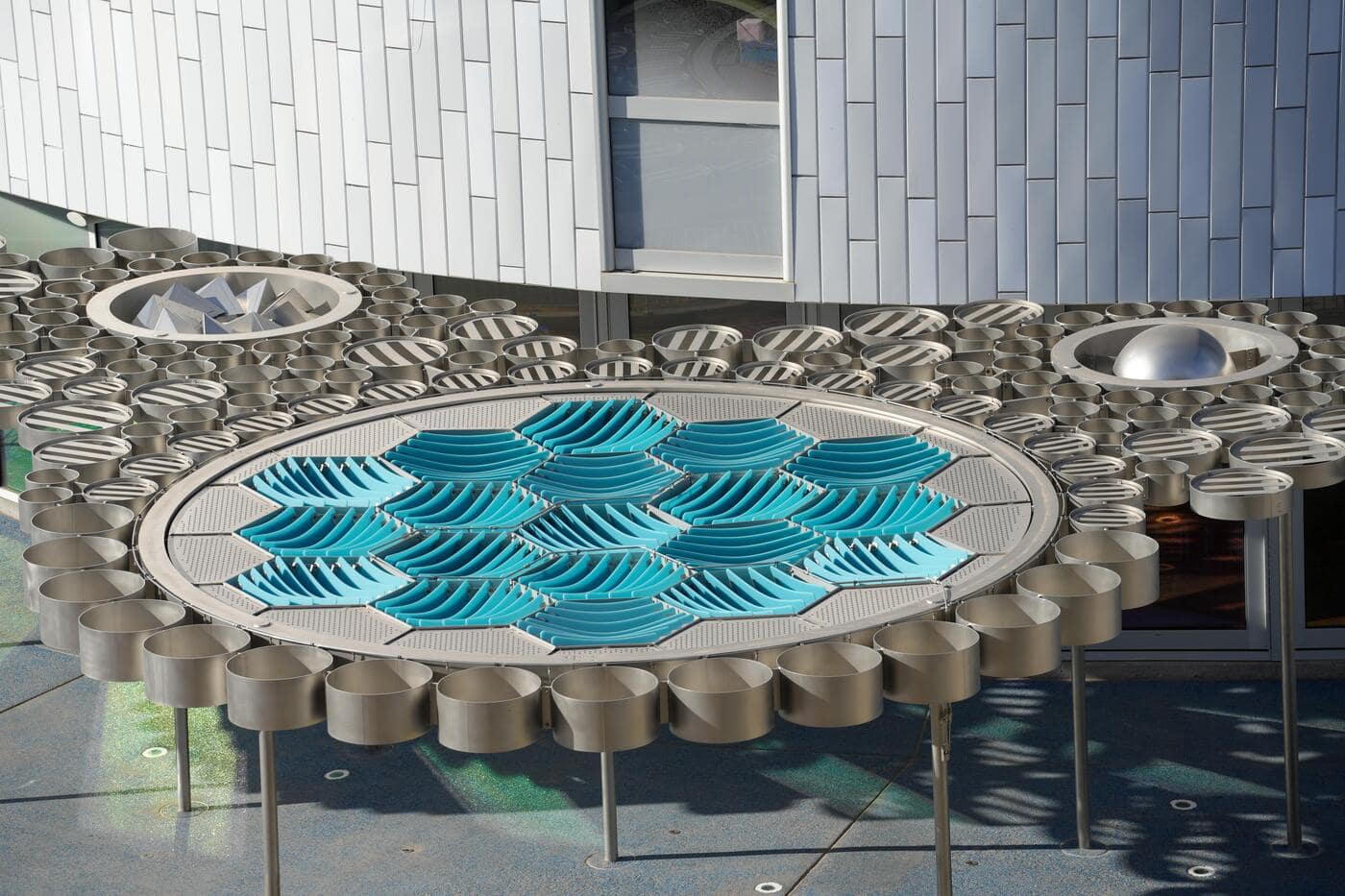
- Weatherscape was envisioned as fundamentally playful—an open invitation to curiosity, much like a collection of petri dishes set out for experimentation. Photo credit: Genaro Limon
-

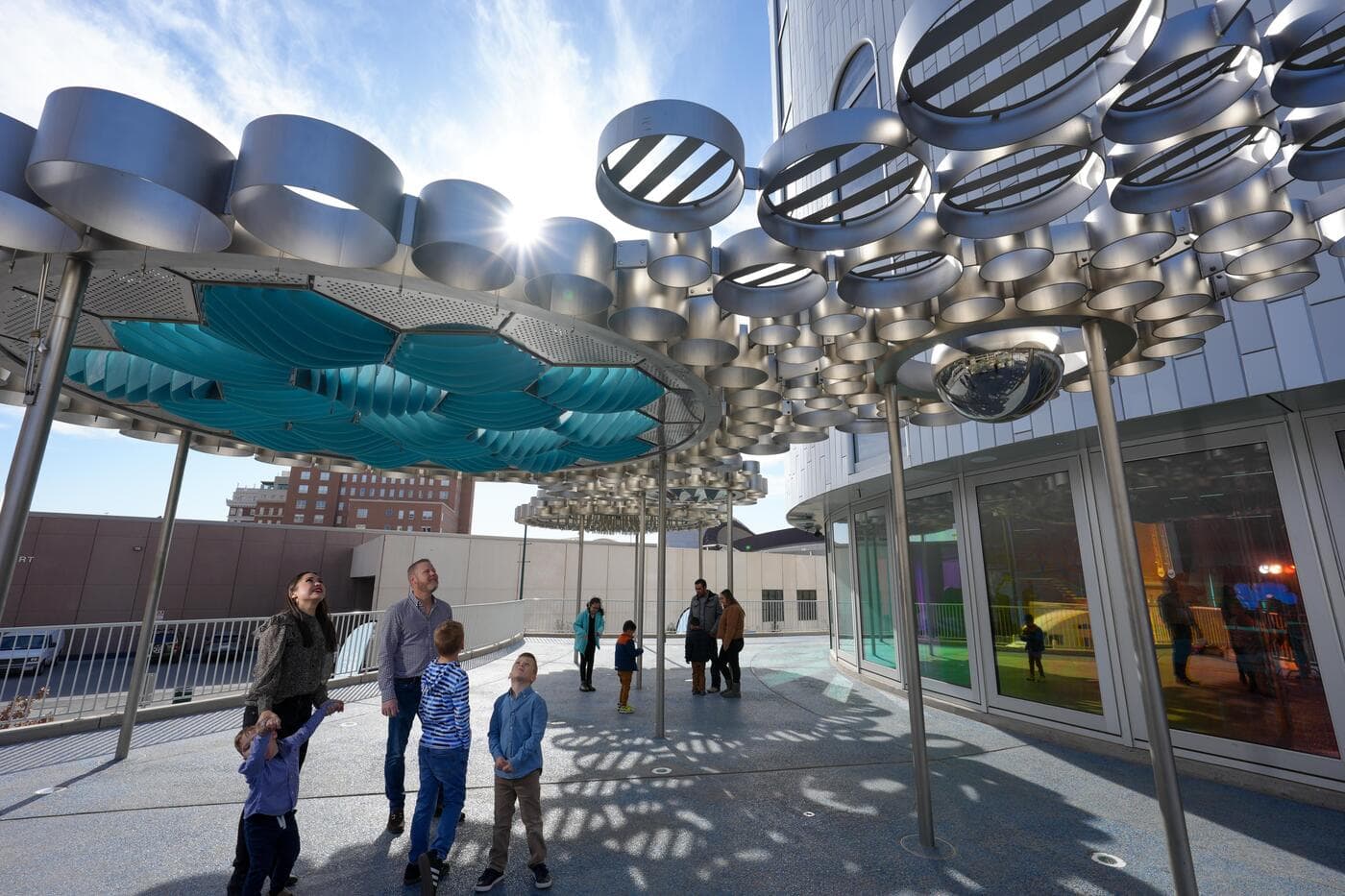
- By combining utility with aesthetic expression, shaded artworks like Weatherscape transform public spaces into inviting, social, and visually engaging environments that respond directly to the local climate. Photo credit: Brian Wancho
-

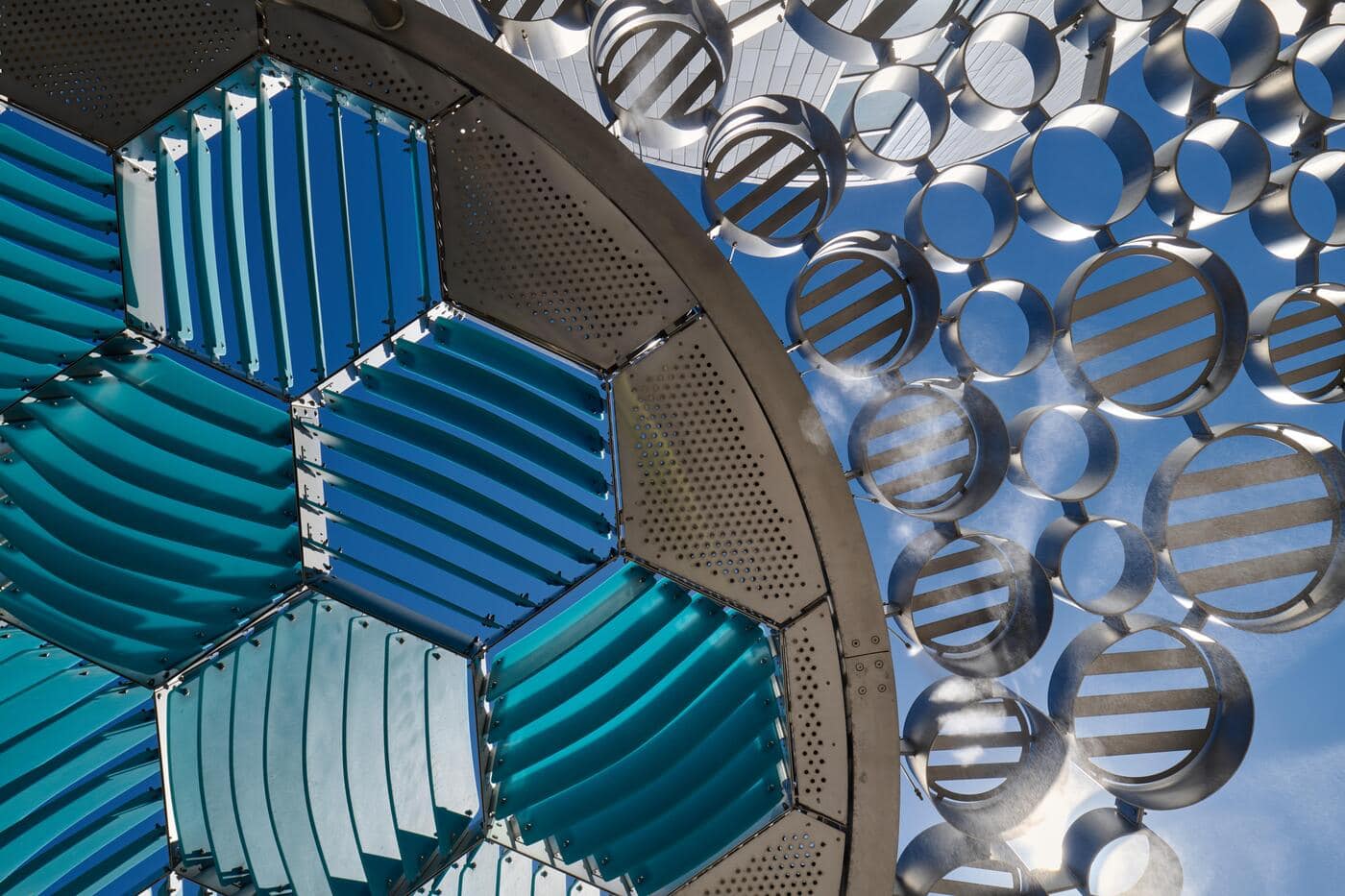
- More than a shade canopy, Weatherscape embodies the creative spirit of El Paso—playful, inventive, and full of energy. It becomes a place of reunion and reflection, where families and friends gather, and where movement is felt as much as seen. Photo credit: Genaro Limon
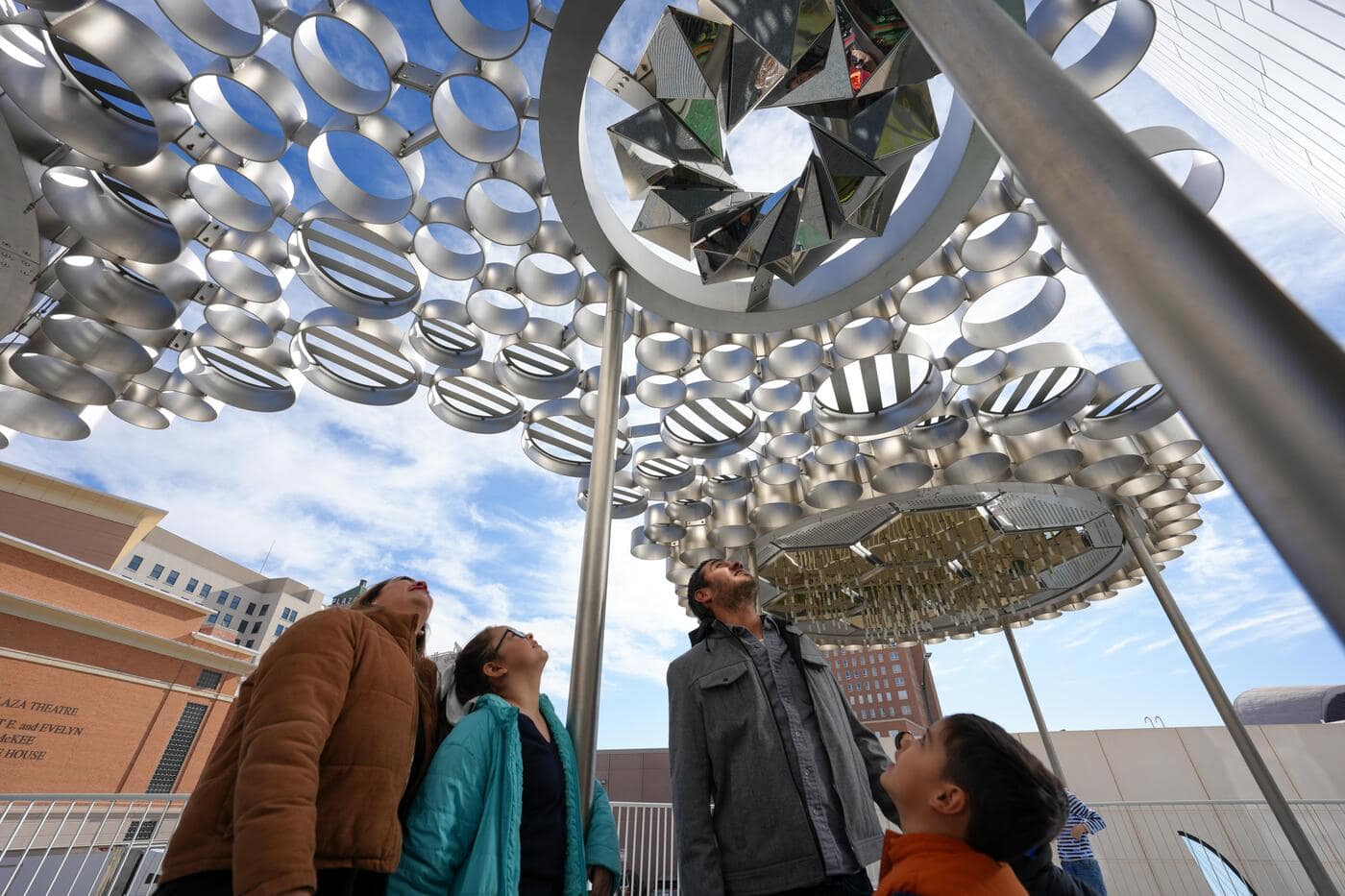
-

- Weatherscape encourages discovery through interaction and observation, allowing viewers to experience the invisible forces that shape our environment. Photo credit: Brian Wancho
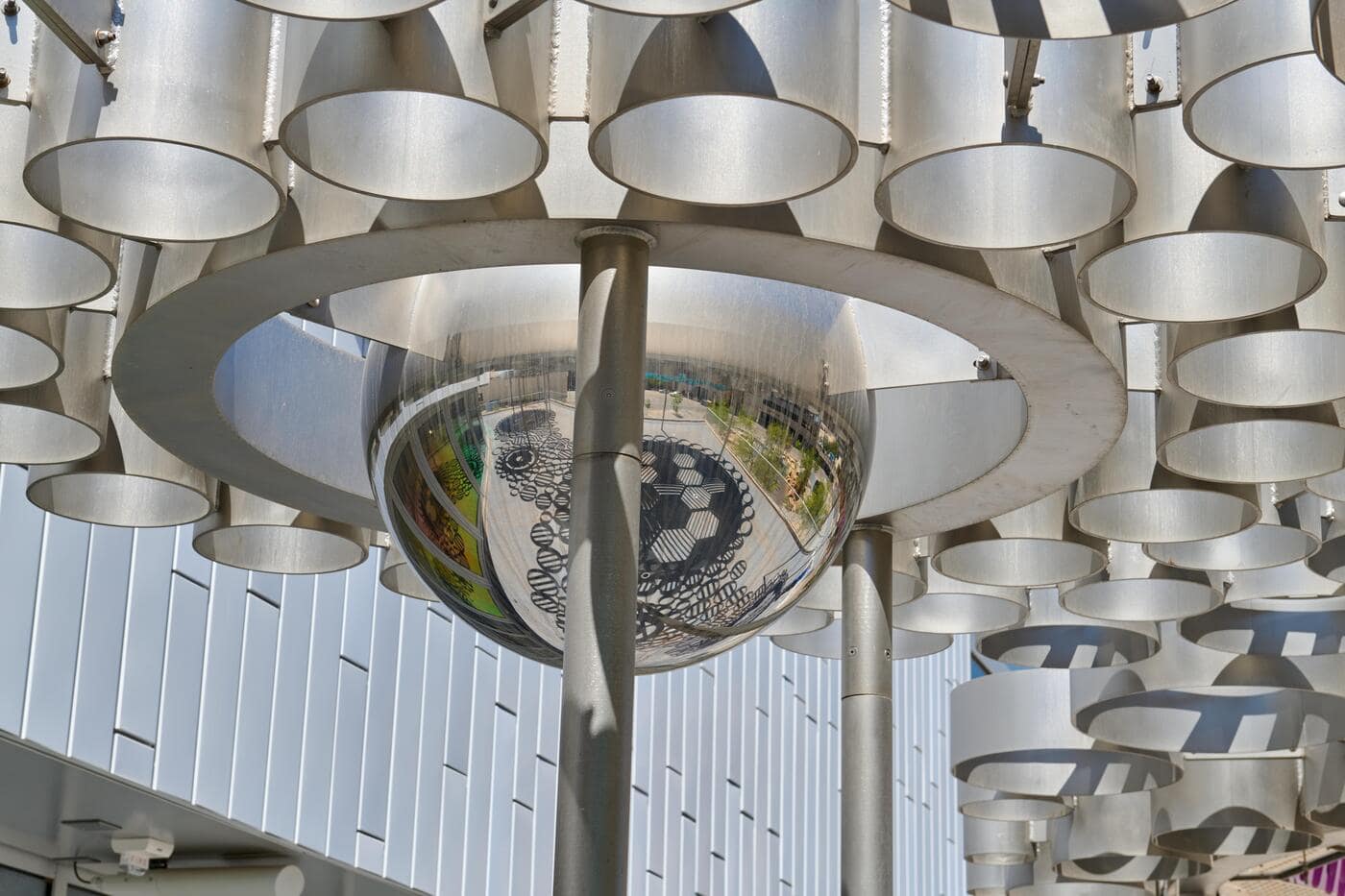
-

- Positioned at the intersection of art and architecture—particularly within the realm of public art—Weatherscape seeks not only to create a distinctive physical encounter for its visitors but also to shape a site’s visual identity and inspire community engagement. Photo credit: Genaro Limon
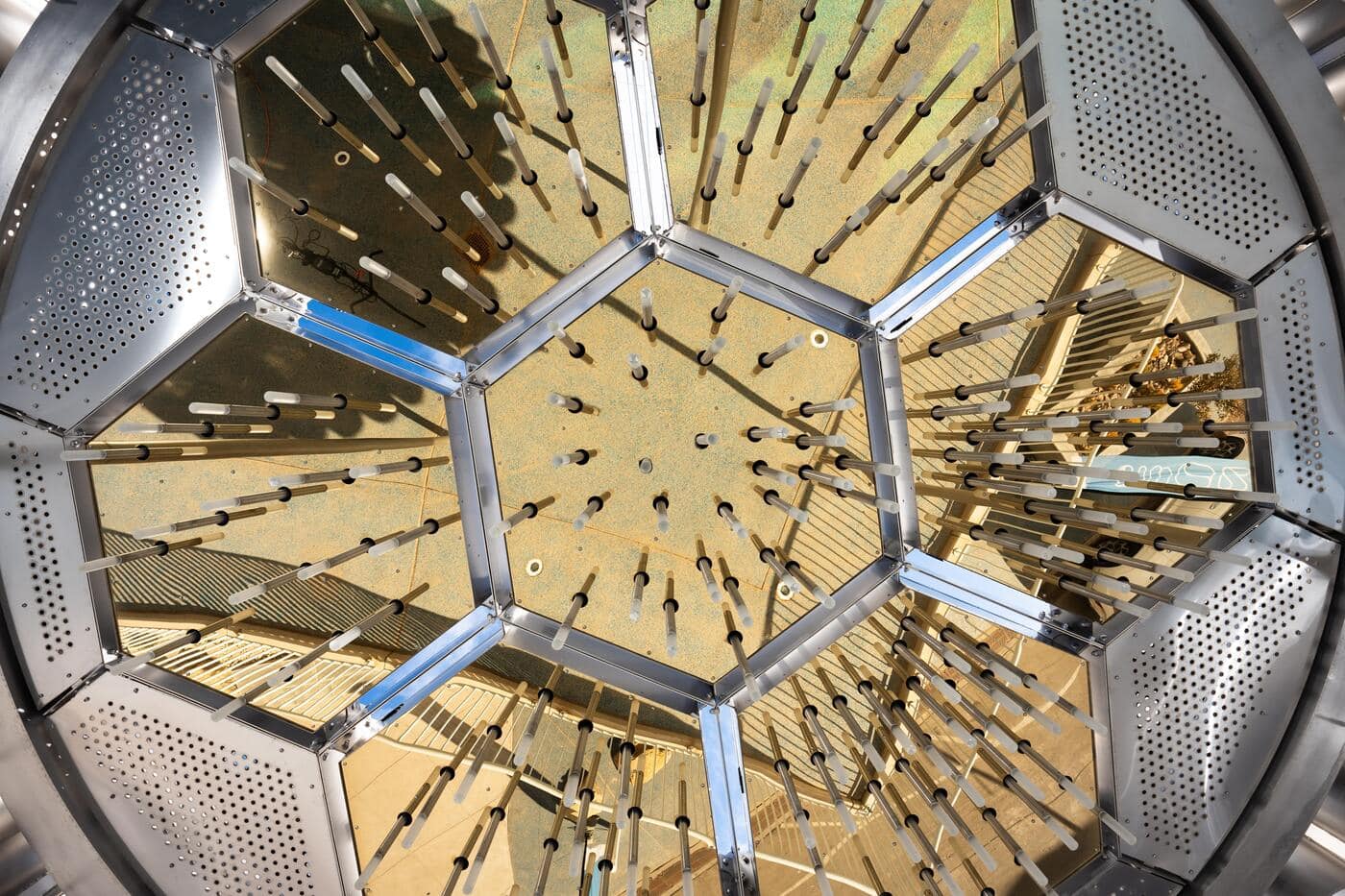
-

- Each element is a test site for natural phenomena: light bending and scattering, water rippling across surfaces, air shifting through perforations, reflections flickering in motion, refractions casting unexpected color. Photo credit: Genaro Limon
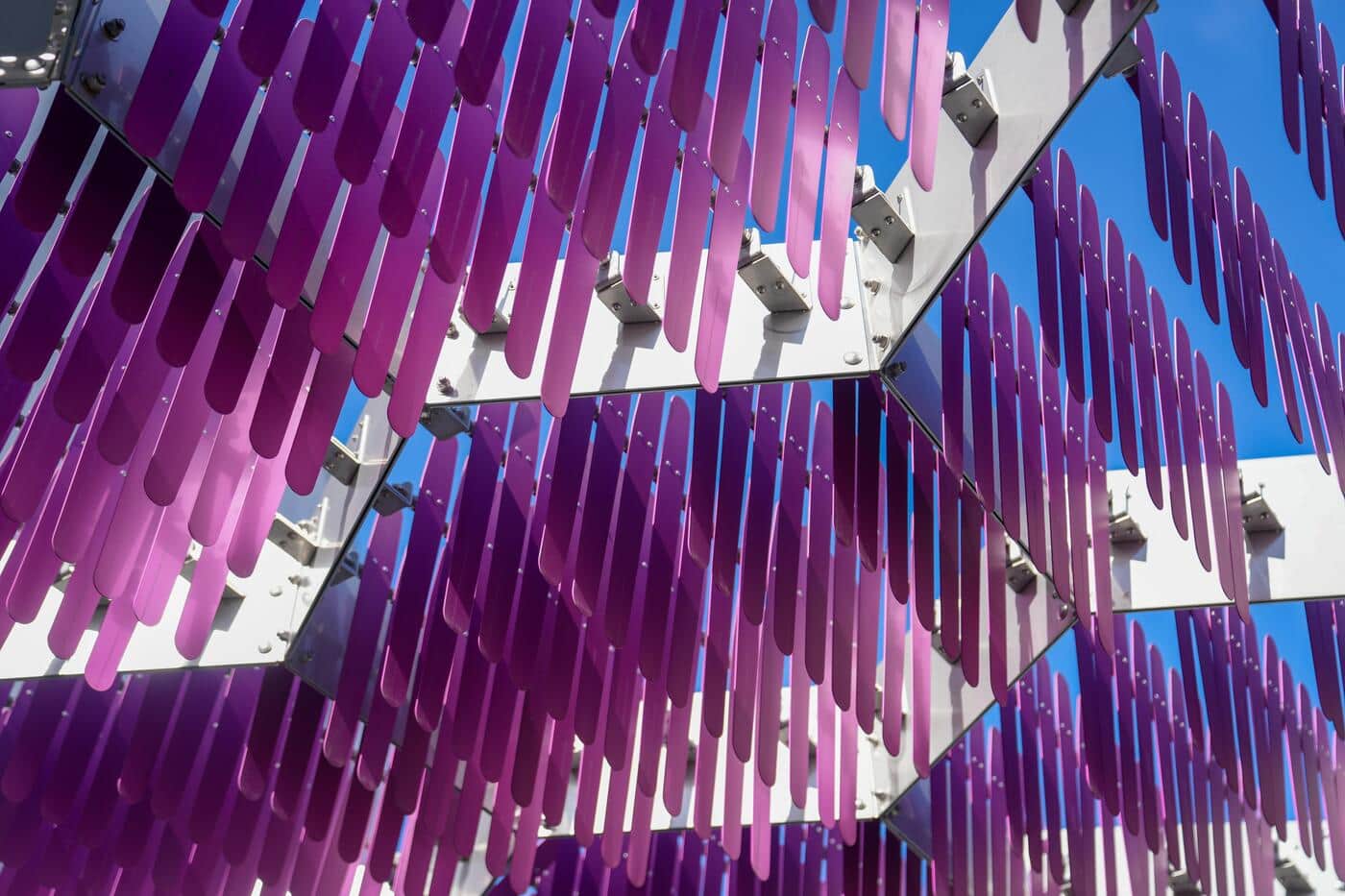
Closing Events
Following its presentation in San Francisco, the exhibition will travel to several venues, including the Elmaleh Gallery at the University of Virginia.
Closing Lecture
- March 19, 2026 17:00–
- CCA Main Building Nave Pres Space
- 145 Hooper St., San Francisco
Closing Reception
- March 19, 2026 18:30–
- CCA Campus Gallery
- 1480 17th St., San Francisco
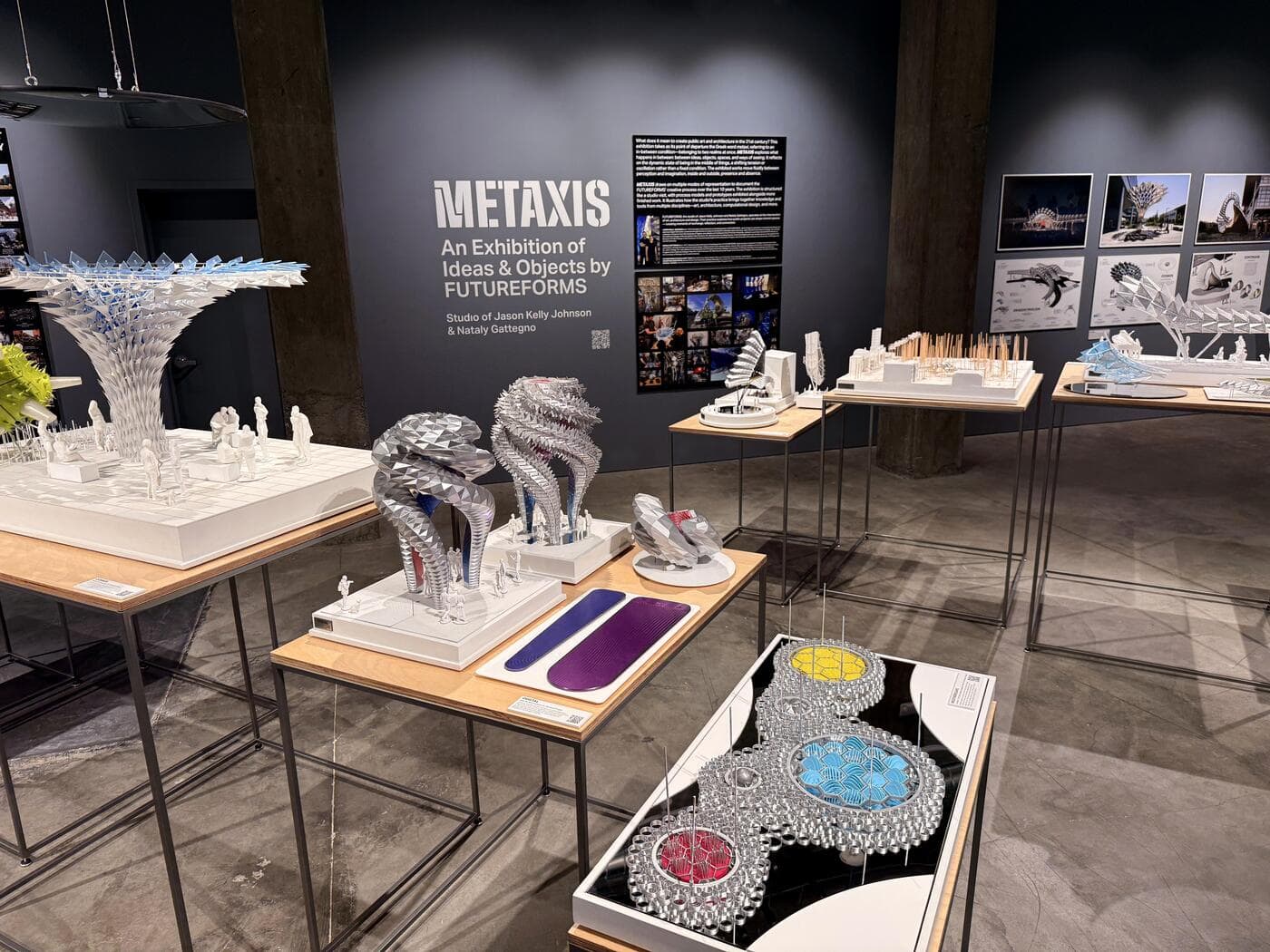
METAXIS is the first solo exhibition of work from FUTUREFORMS. Over 20 models and representations of extraordinary artworks and installations rethink how we dream, design and build with one essential ambition: to create vibrant and meaningful objects that are dynamically intertwined with their sites.
Photo credit: Jared Elizares
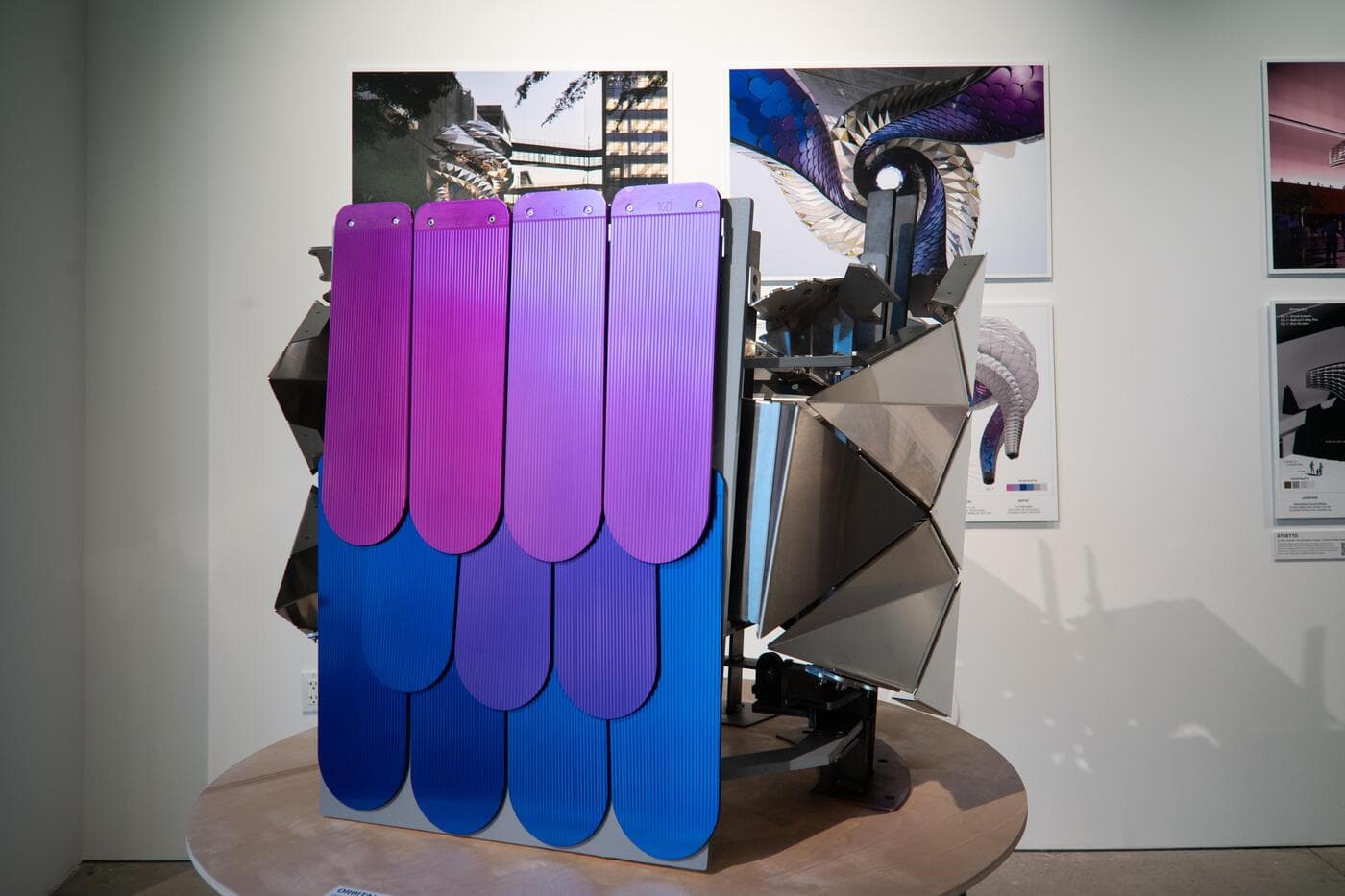
Orbital full-scale mockup, currently on view at the METAXIS exhibition.
Photo credit: Jared Elizares
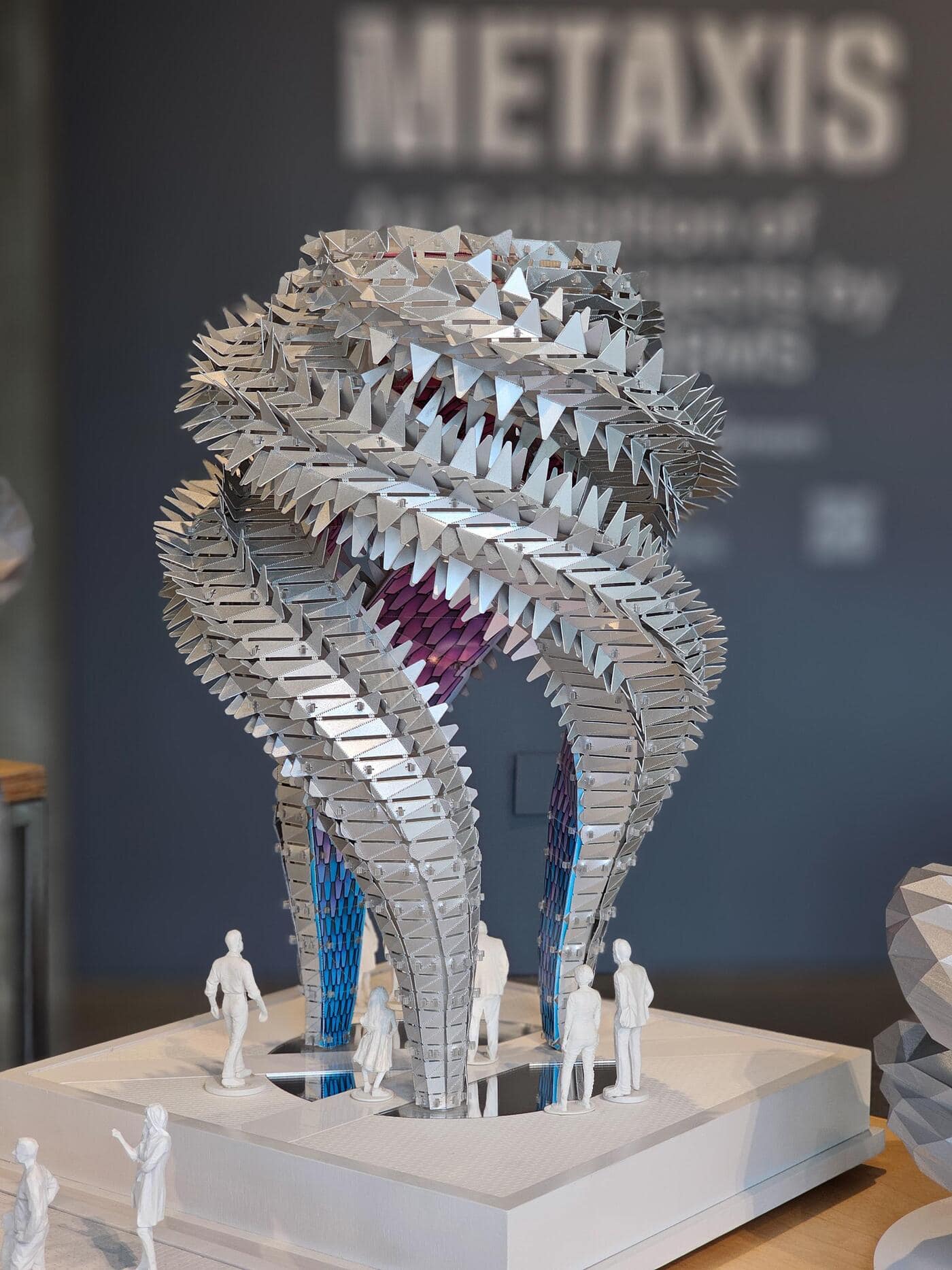
Orbital process model, currently on view at the METAXIS exhibition.
Photo credit: Jared Elizares
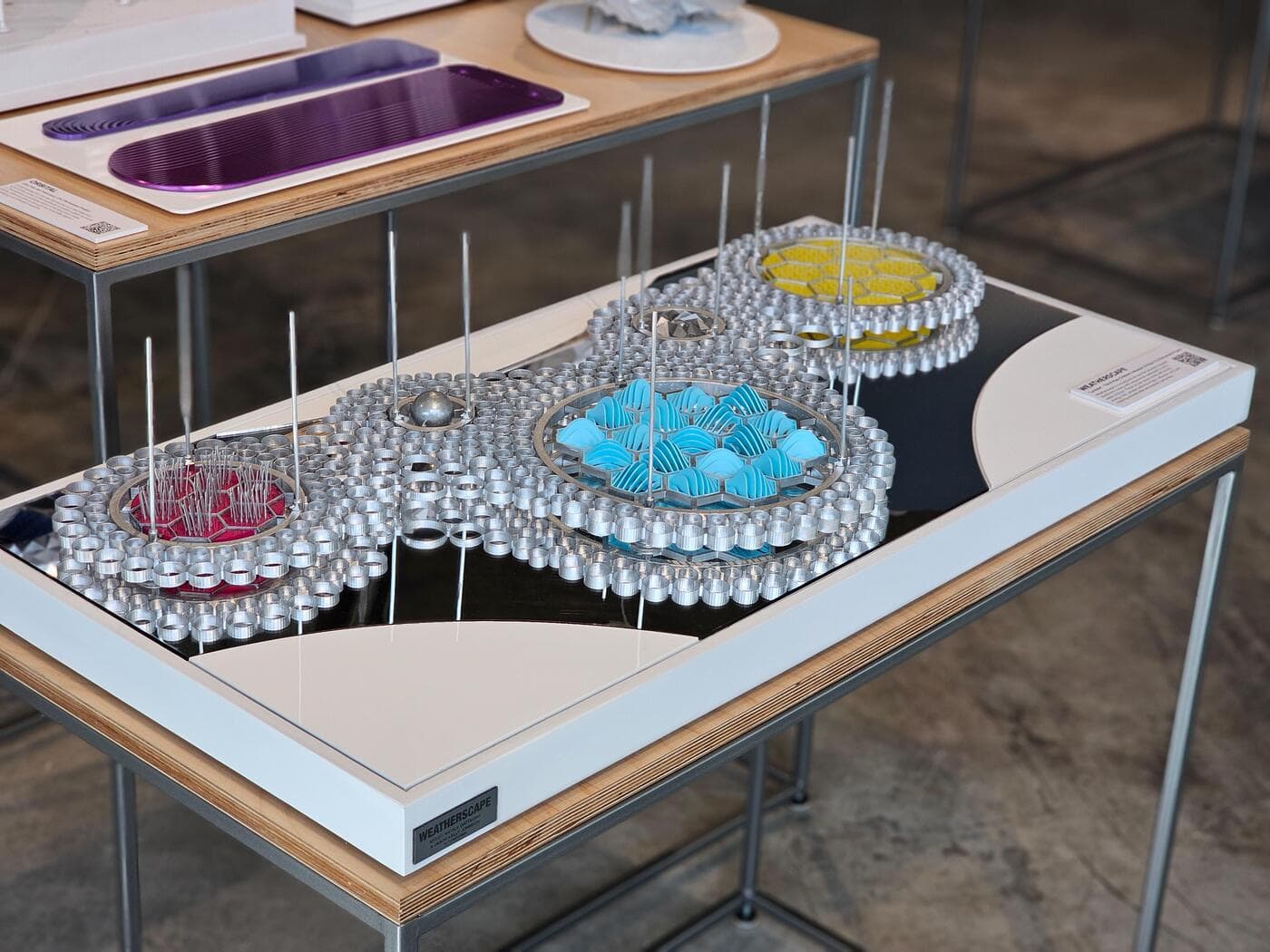
Weatherscape canopy model, currently on view at the METAXIS exhibition.
Photo credit: Jared Elizares
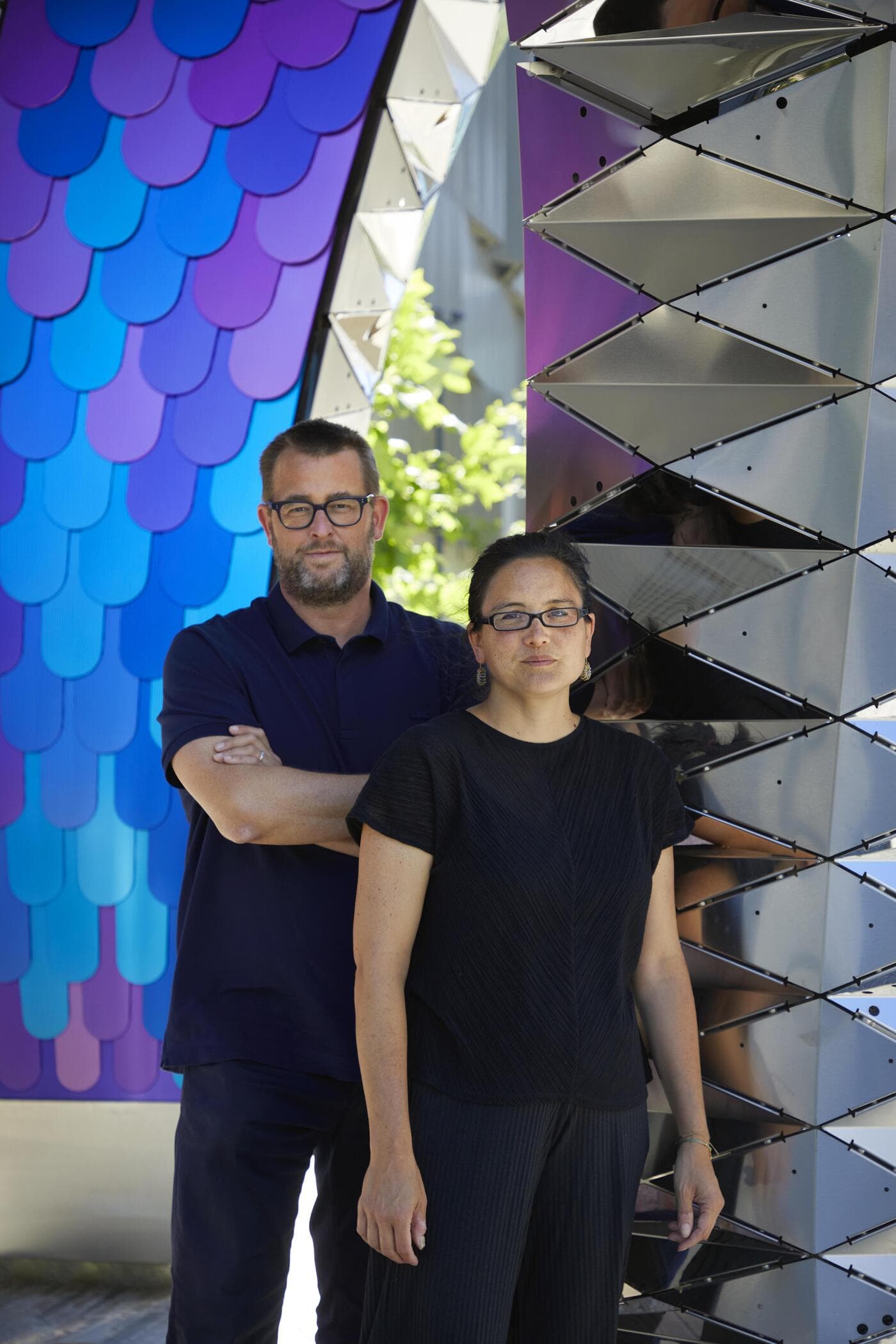
FUTUREFORMS Founders Jason Kelly Johnson and Nataly Gattengo
Photo credit: Matthew Millman
About FUTUREFORMS
FUTUREFORMS is an art and design studio based in the San Francisco Bay Area. Founded in 2009 by architects Jason Kelly Johnson and Nataly Gattegno, the studio explores the relationship between art, design, and public space. Over more than two decades of collaboration, the duo has developed projects ranging from sculptural shade canopies and art pavilions to urban-scale installations, furniture, lighting, and public art master planning. Working in collaboration with engineers, architects, and landscape architects, FUTUREFORMS produces intricately crafted works that integrate geometry, light, and shadow to create immersive spatial experiences. Through public art, the studio aims to activate the urban environment by creating places for exchange, reflection, and discovery—spaces that are open to passersby, tourists, neighbors, children, and adults alike.

