English
 日本語
日本語

Interview with Alexa Kumiko Hatanaka
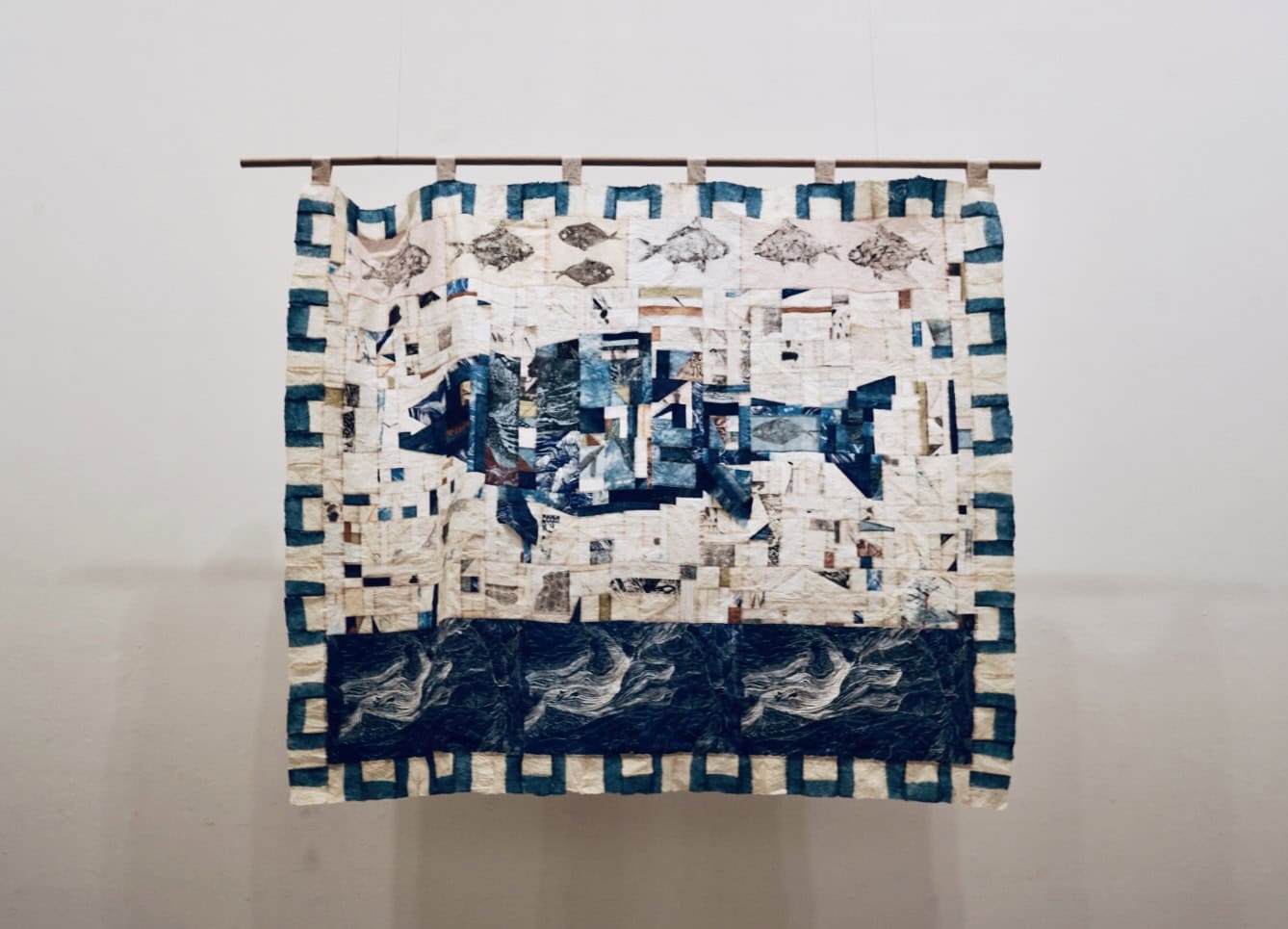
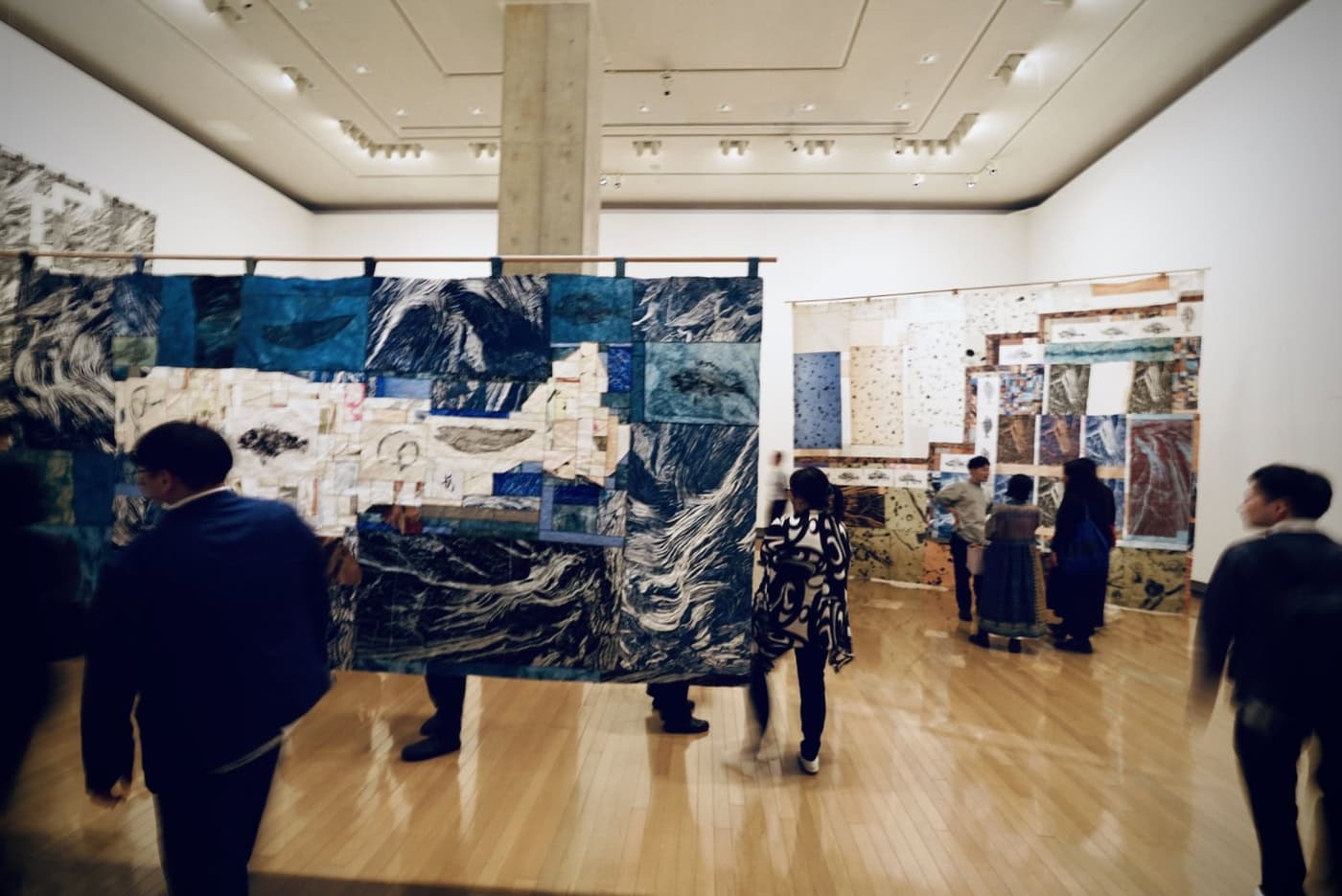
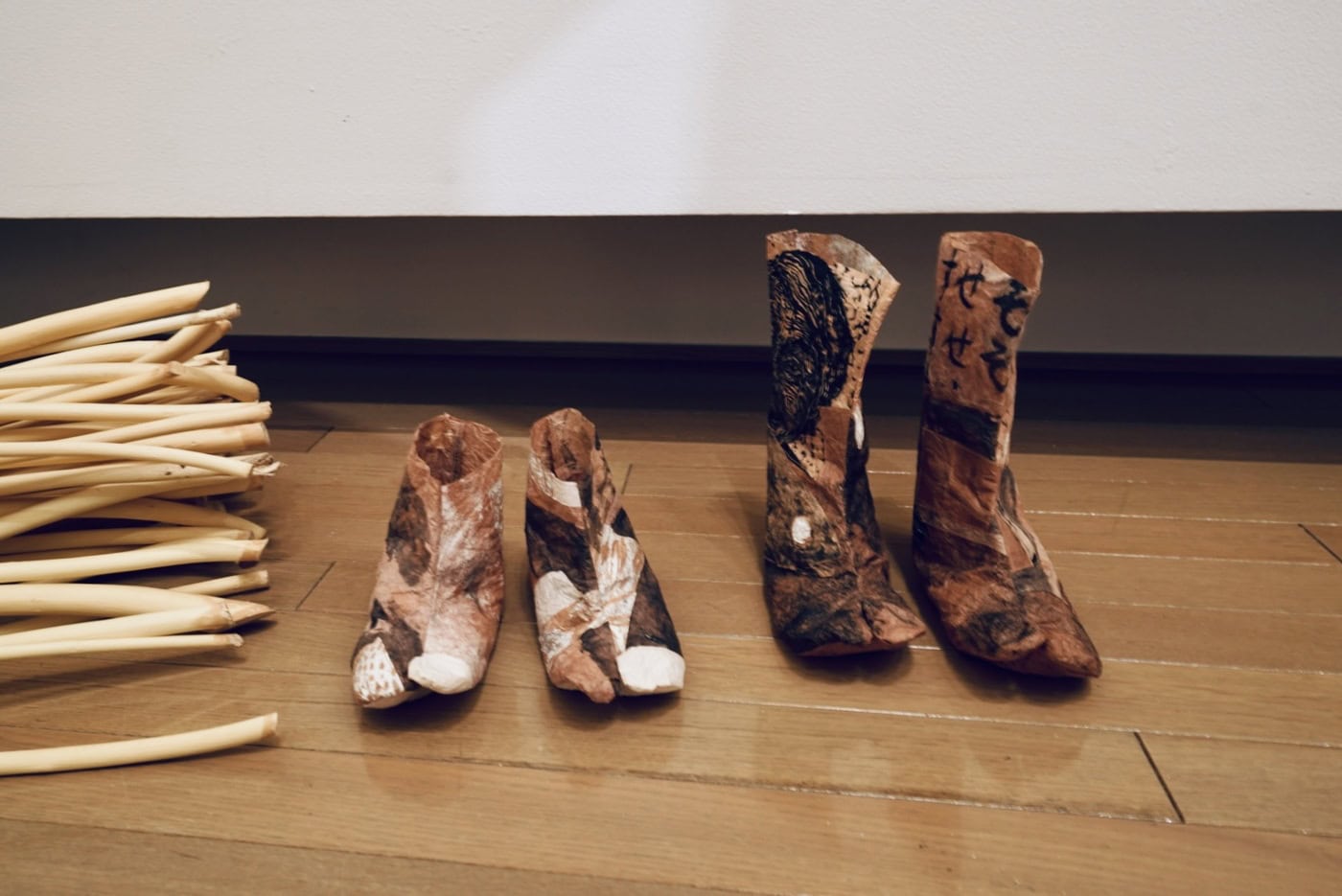
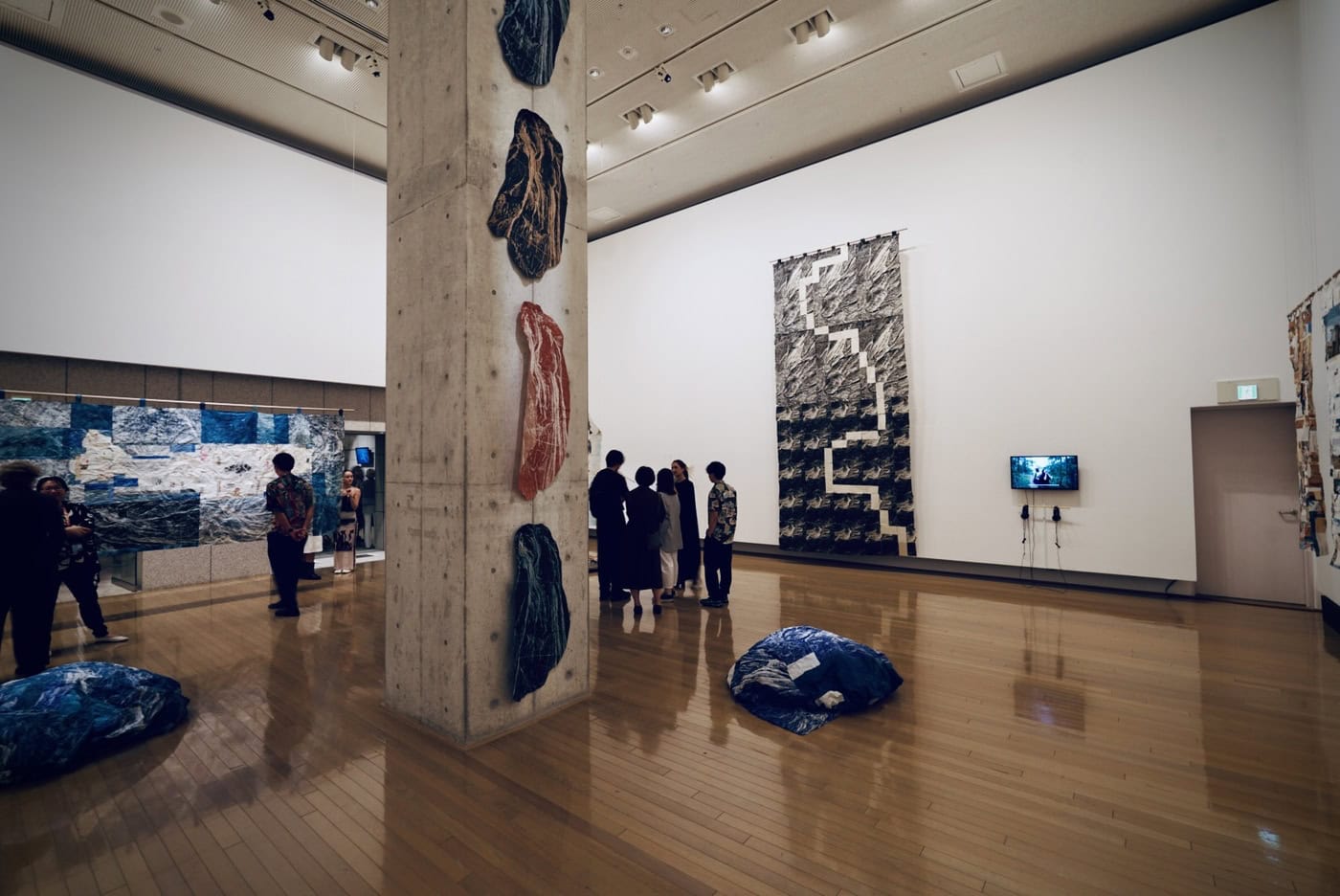
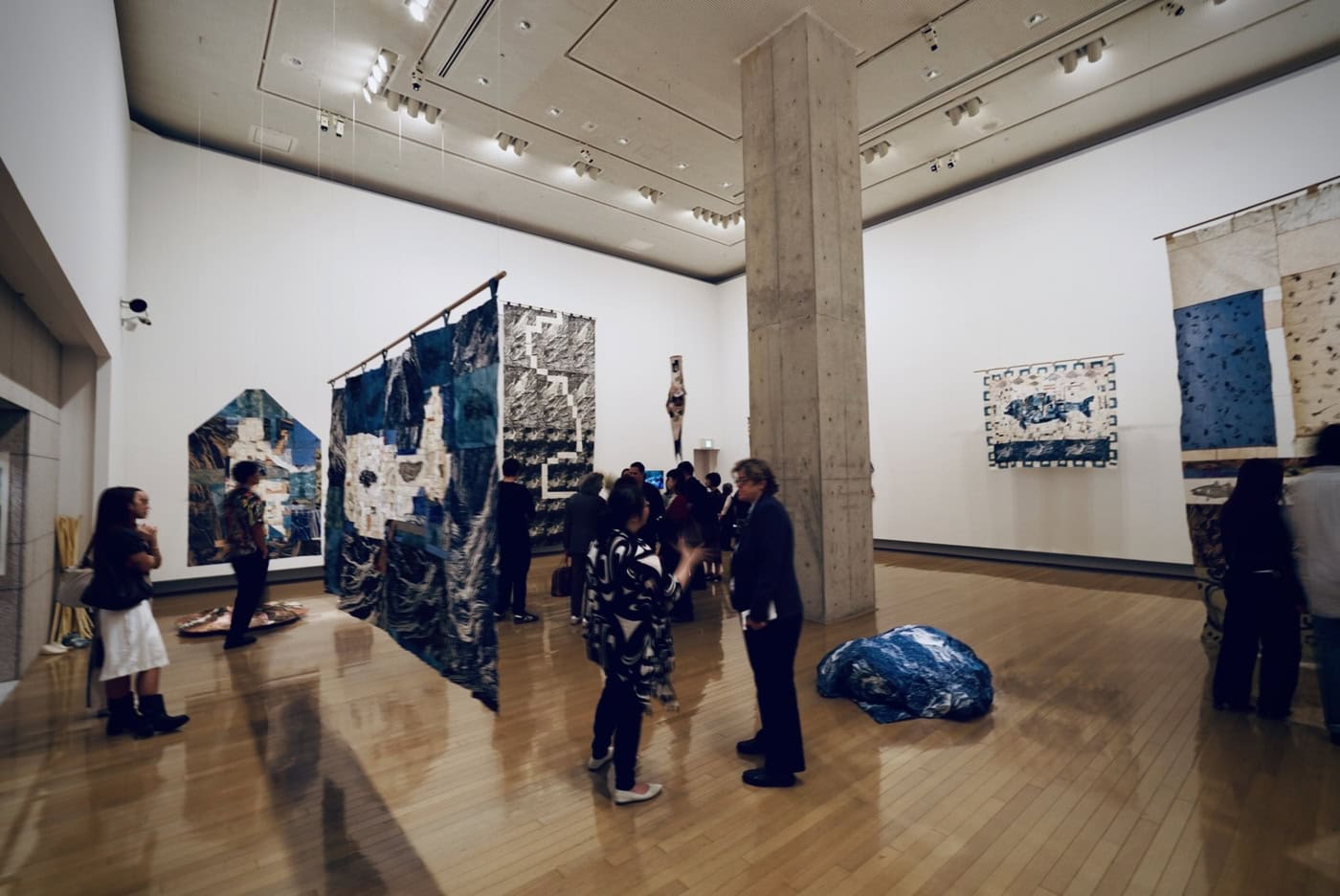
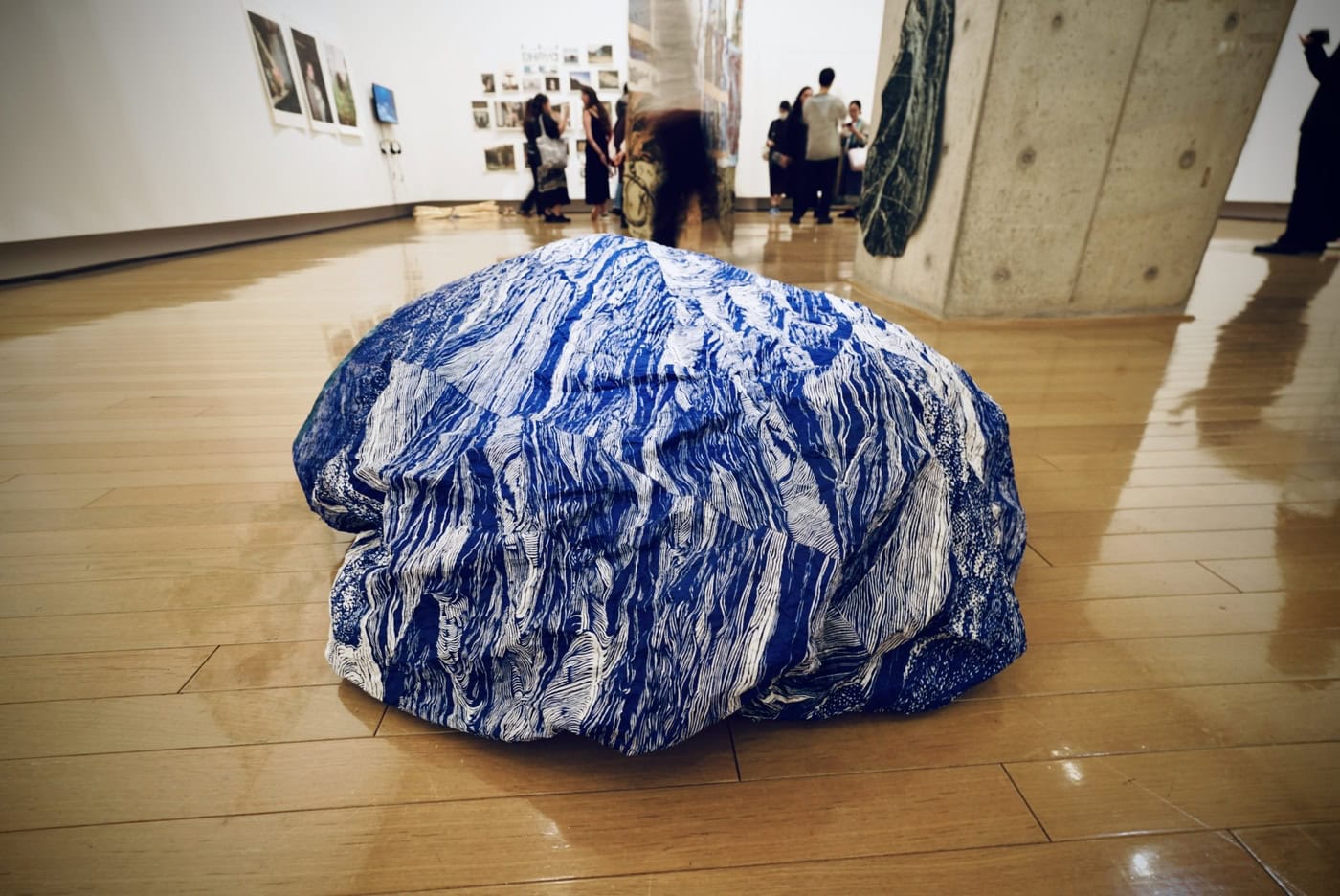
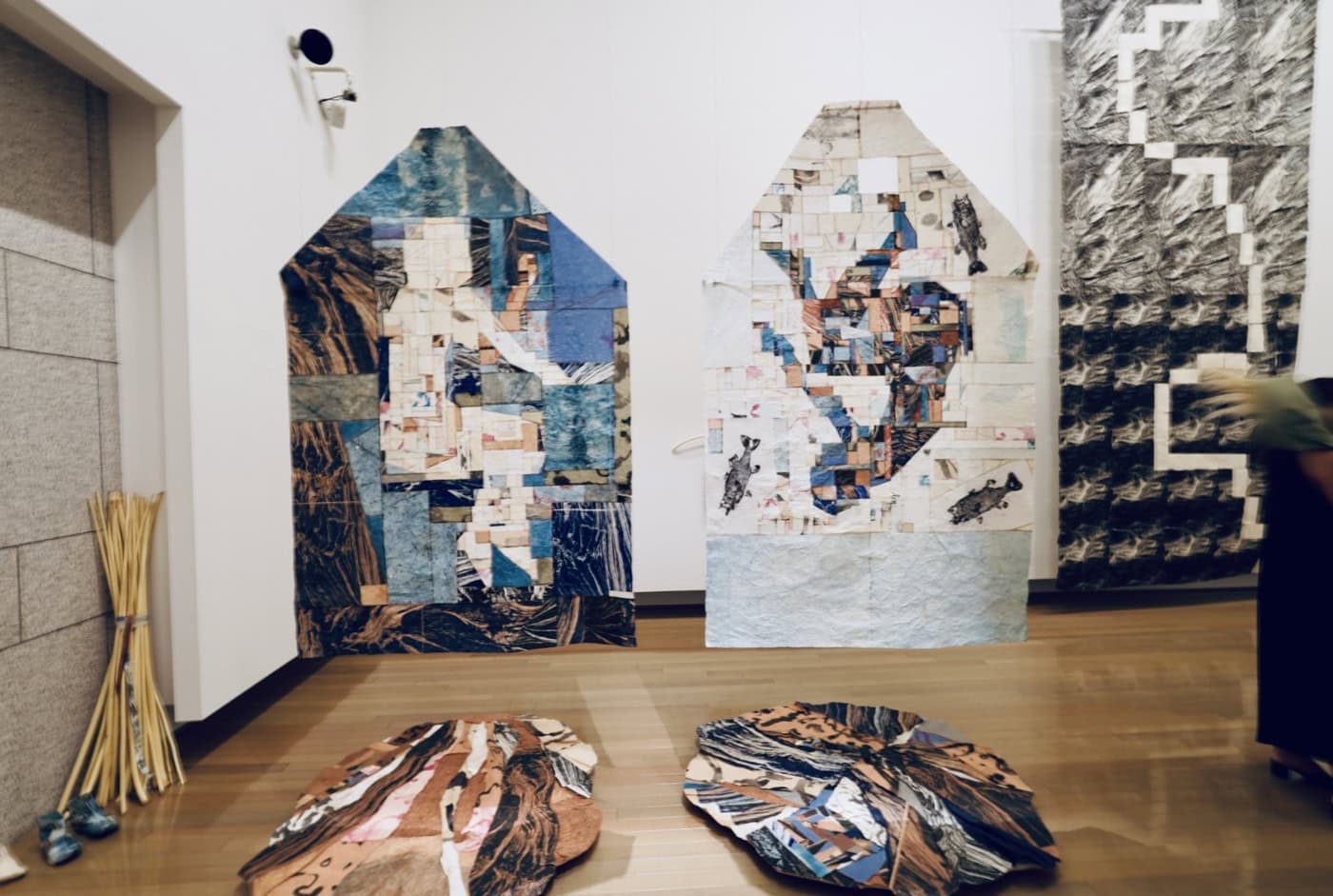
Clothing, sculptures, and textiles made of washi paper spread across the gallery like constellations, enveloping visitors in a sweeping installation. The exhibition “Patience and Persistence” by artists Alexa Kumiko Hatanaka and Johnny Nghiem is currently on view at the Prince Takamado Gallery of the Embassy of Canada until Thursday, January 15, 2026.
ADF (Aoyama Design Forum), spoke with Hatanaka—a Japanese Canadian queer artist who create while living with bipolar —about the background of her practice and her thoughts on working with her condition.

About the Artist's Background and Career
What inspired you to become an artist?
Being a maker came naturally to me. I was always into fashion, stories and imagining other realities. I think I was innately in awe of peoples’ ability to take a simple material and transform it into something. I was industrious…I remember as a child making painted greeting cards for sale, in high school I made bead jewellery, started screenprinting my own t-shirts and painting. My mom studied fashion design and was always crafting, so I learned how to sew when I was young, and did simple forms of printmaking – I found a linocut of Hello Kitty I did as a kid! My dad taught my brother and I to use some power tools when we were young as well. I was inspired by my brother Kellen Hatanaka, who is also an artist, when he started painting and drawing more in high school. In university I started my career as a mural painter and was obsessed with perfecting my spray painting techniques. I also started weaving, printmaking and dying textiles. At that point there was no turning back!
Which artists have influenced you?
Pacita Abad, Isamu Noguchi, Traditional artisans, I most love textiles, Naoko Matsubara, a Japanese-Canadian printmaker who I was honoured to show with in 2021. My close friend Dylan Moore who works with wood.
What role does art play for you?
I was very very shy growing up, which partially was a disposition but mostly I had crazy anxiety and insomnia from undiagnosed bipolar. Making art was something I think I did in hopes of being understood or to connect with others, or expressing my pain and loneliness in some way. It was also something I could lose myself in…in the problem solving of rendering a painting, or getting into a flow of discovery in the process. I think I still relate to art in this way but I feel mostly at peace now knowing that I can never actually fully be understood, even though now I am lucky to have a life full of friendships and connection. For me, art has a dual ability to reflect people’s experiences back to them and makes them feel less alone, but at the same time it offers insights that are very different to our own experience. I also believe art-making can create very tangible change and impacts. Although community-engaged art is very complex – I could talk about this forever after over 10 years of intensive experience 2010-2021 – and often is not done ethically or thoughtfully enough, it is worthy to try to create social impact with art and I do think it is possible.
About the Artist's Creative Process
What motivates your artwork creation?
Right now I am motivated to create more visibility for people with different mental capacities and conditions. I hesitate to say “mental health” or "mental illness” because it separates our brains and nervous systems from the rest of the body, which allows it to be marginalized and stigmatized, and because it poses the conditions as inherently a problem. Whenever I have really struggled I have looked for examples of similar experiences to mine and it’s not easy to find public figures or stories that resonate. I feel the best creations are honest and specific. That is the only way to truly connect with people. In a way it is liberating to be so honest, I think it does away with some of the shame that all of us carry in different ways.
I am also motivated to show my contemporary use of traditional materials and processes to demonstrate their current and future relevance, and their unmatched virtues. Since as a society most of the world went too far towards digital, we now can see a pendulum swing back to the handmade. I feel hopeful that there will be strength in numbers to collectively preserve crafts. Within that however, crafts will naturally need to evolve in order to maintain a stake in our lives. I have a deep respect for traditional artisans. It is an immense labour and dedication. I will use washi as an example as that is the material I am most invested in. Washi makers must now do the entire process from harvesting to sheet making because the farmers that used to do the beginning steps are too elderly and have no one to replace them. It is remarkable that washi-makers have taken this on, and therefore I am motivated to share the results of their labour. I am working with Tatsuyuki Kitaoka to produce custom papers for my works, and I otherwise use washi from the archive of Kashiki Seishi, a seventh generation family mill where I was lucky to do a residency and help harvest. The washi making process is inherently in harmony with nature, therefore such practices are all the more important sources of wisdom given our environmental crises.
How does your Japanese-Canadian identity, your roots, influence your choice of themes and techniques?
I think subconsciously or intuitively I was led to my techniques. My Japanese grandmother involved us in the Japanese Canadian Cultural Centre where I studied Nihon Buyo dance, and was lucky to be dressed in kimono and happi coat. I think the costuming and ritual of being dressed by the elders influenced me a lot. I also had beautiful paper dolls from my grandmother – so I grew to love paper, textile, pattern, colour and craft very young. I discovered the world of printmaking in university and spent all of my time in the studio exploring lithography, intaglio, relief printing and papermaking. A teacher introduced me to washi and it quickly became clear how it absorbs the ink beautifully, and I became enamoured by its range of translucencies. I was using it before I ever considered it as a way to connect to my heritage, but I later came to relate to washi as one way to access my ancestry.
I naturally was drawn to representing fish over the past six or so years. Fishing was a common livelihood for the Japanese-community upon immigration. My great-grandfather fished and later on my grandfather was a recreational fisher and would bring my dad along. My great-grandmother worked at a salmon cannery. In my life I’ve had many significant fishing experiences that have allowed me to become more in touch with nature as well. Most significantly I spent a large amount of my time in Nunavut (an Inuit territory within the arctic of Canada) for 10 years doing community-engaged projects. We would often go ice fishing. I grew up in Toronto, a very urban environment, so it really was in Nunavut that I became more attuned to nature and learned about traditional knowledge of the land. Recently I discovered Japanese mythologies involving fish that naturally melded with some themes I was working with. For example, I was representing earthquakes as a metaphor for abrupt and challenging life events, but I also was reflecting on the earthquakes that have affected my life (Kānto and Tohoku), and the fact that earthquakes are increasing in frequency – a looming threat. I discovered the Japanese story of Namazu, the thrashing catfish that causes earthquakes beneath the earth. This naturally created that connection thematically between earthquakes and fish. I find that story fascinating as well because it has roots in a fisherman’s actual observation of catfish becoming active, sensing the disaster before it struck. I am really interested in the wisdom that humans have gathered by sharpening their attunement to nature to embody important wisdom for survival. This is something that we have been losing.
What do you value most when creating your artwork?
Craftsmanship is important to me. I pay attention to detail and precision. For example, when I sew scraps of washi together I am careful with my lines and overstitching. I switch thread colours as I go, which is a detail that can only be enjoyed seeing the work in person. At the same time, I like the imperfection of human labour vs machine. I like the varied feathery edge of handmade papers. I like when dye isn’t consistent. I like when there is slight variation in ink density in my linocut prints.
I love that the carving in my linocut prints is final; you cannot go back and change it like in a painting. This means each carve is a true mark of that moment. I value play and discovery. There are only a few steps in my process that I can delegate to assistants. My work comes to life in the process and I absolutely need to be the one making those moment to moment decisions. It is important to me to be evolving, it keeps me engaged.
What are the challenges or struggles you face in your creative process?
I struggle when my health is not good. As mentioned, I live with bipolar which means that sometimes I have periods of depression that are uncontrollable. Even as an extremely high functioning human, the condition is serious and I have to push through the heavy times. Those periods are often marked by intense anxiety and paranoia. It becomes very difficult for me to trust my ideas, I start to overthink and feel negative. I will have low energy and it becomes difficult for me to get the social interaction I need because I get very uncomfortable and nervous. I really have to push myself to just keep going and most often when I come out of depression I usually like the work I’ve made or believe in the concept that I originally was insecure about. Beyond that I get bored easily! I’ve been trying to encourage myself to delve more deeply into ideas or forms, rather than move onto something else right away.
About the Artist's Work and Message
Why do you choose "paper" (especially Japanese paper or handmade paper) as your primary material? How does this material influence the themes or messages in your work?
Washi is delicately beautiful, sometimes translucent and fragile looking, yet it is strong, which I feel complements my exploration of the conditions that affect mental health.
I make wearable paper sculptures for performance, dance, and personal expression. In particular I see these as being activated to release grief, to protect, to encourage connection, for courage, for actualization and collaboration. My initial motivation to create the wearables was because I thought it was the best way to demonstrate the versatility and incredible durability of washi. I personally was surprised and delighted to discover that it was once more common to wear washi clothing in Japan than fabric clothing. I find it odd that paper is so ubiquitous, we use and see it everyday, but of all of the craft-based practices that are gaining popularity in contemporary art, paper remains marginalized. The paper we are most familiar with is weak, disposable and incredibly polluting to produce. Yet washi and other forms of traditional papermaking are created in synchronicity with the earth. It requires and maintains the purity of its water source. It is incredibly important to pay attention to such environmentally sustainable practices, yet they are being largely ignored. I want to be part of the collective effort to encourage the use of washi, to support the papermakers doing the hard work to keep it alive.
You mentioned that living with bipolar forms the foundation of your work. When expressing themes related to mental health in your art, what is your intention, and what message do you wish to convey to the audience?
I think depression and anxiety have become more normalized to talk about in certain parts of the world, and that is a hopeful shift. However, certain conditions are still very misunderstood and stigmatized. Bipolar is one of those conditions. I think people fear what they perceive to be inconsistent and unstable. Not just fear, but when someone has changing capacity and energy to work, it doesn't fit our expectations or what is considered virtuous under capitalism. So we can be seen as less desirable or dysfunctional. I hope that my work can provide an invitation to speak more about bipolar, to make it more normal, rather than it being a big secret or that it is expected to make people feel uncomfortable.
Recently I’ve been reflecting on one evolutionary theory of bipolar, which posits it as a useful adaptation to extreme, erratic shifts in weather during the Pleistocene era. In this explanation, one would be “manic” to maximize productivity in favourable weather, with episodes characterized by quick thinking, connection-making, creativity and boundless energy. Otherwise, one would completely shut down to conserve energy, ie "depression." In this sense, bipolar could be seen actually as a useful adaptation, and a wise attunement to the natural world, as opposed to how we see it now as a problem that has to be fixed.
Given our current climate and environmental crises, I am motivated to share how neurodivergence holds important wisdom for our collective future. I see this as connecting to the materials I use, as the practice of papermaking is also overlooked, yet the sensitivity to nature required to produce this very useful material is also a type of wisdom that is crucial for our planet’s survival.
What are your thoughts on the social role of an artist?
I think we dually underestimate the power of art, and at the same time can overstate what an artwork is “doing.” The art world is unfortunately often just talking to itself and we are well aware of it. A lot of artwork is made about social or political issues, and I think that is natural for artists to create things that spawn from our reactions to our conditions. However, people will talk about such artwork as if it is somehow doing something, but I think because the art world is so insular it kind of reverberates within our circles, trapped by the confines of our bubble. This is hardly a unique observation. A very finite amount of art will endure as markers of our time. The immensity of crises in the world is often overwhelming. I think the best way to be of service is to focus on one’s own community or somewhere one has ties. This could look like making art together as a way to strengthen community bonds. This could look like finding ways to give voice to issues that are not being heard. This could look like working with artisans to support them and their hard work in continuing a craft.This could look like bringing beauty into the world, which has always been a necessity of life.
Awe is important to our well-being, and I think it is most often experienced when engulfed by the natural world. Really great art can inspire a feeling of awe. To me, this is very rare but when it happens it is such a gift. We need to feel small in the grand realm of the universe, to feel wonder and love for existence.
As an artist, what are your future aspirations or goals? Are there any new forms of expression, materials, or themes you would like to explore?
I’m working to collaborate with institutions with bigger platforms so that I can reach more people in raising awareness of mental health – not just that it is legitimate and exists, but expressing its nuance in hopes to help change people’s perception.
I am excited to continue to explore other cultures’ traditions of papermaking. I will continue collaborating with Johnny Nghiem on documentaries wherein we learn about the practices, which began in Japan, brought us to Vietnam last year, and next we are planning to go to Korea. Often crafts are defined as “national” but really traditional crafts are manifest of their particular environments and therefore these are regional practices that represent specific places on earth. I am motivated to assert the importance of localized knowledge, knowledge that is embodied, knowledge that is passed down over generations that still have its place today.
I was at an incredible residency in Dakar, Senegal called Black Rock recently where I was experimenting with large scale papermaking using local plants by pouring the pulp onto a large screen to dry in the sun. I want to continue in that vein. I also messed around with bronze casting.
Finally, a while back I was soaking textiles in water and letting them freeze outside. The finished artwork is a photograph of the object in a specific environment. I want to revisit this!

Alexa Kumiko Hatanaka

Credit by Roya Delsol
Born in 1988 Toronto, Canada. A Japanese-Canadian, queer artist, who lives with bipolar, all of which sculpts her practice. She works primarily with paper, and uses printmaking, ink drawing and natural dying combined with sewing. She engages with historical paper processes and materials that both require and contribute to a clean environment. Her adaptations of traditions, in the form of sculpture, large-scale print installations and wearable sculptures, address contemporary questions of climate change, mental health, and survival. Recurring motifs related to landscape, fish, and bodies of water together speak about personal and collective experiences of struggle, resilience, connection and radical joy. Hatanaka’s practice includes a decade of community-engaged projects based in the high Arctic, and collaborative performances that integrate and reinterpret kamiko, garments sewn out of washi (Japanese paper).
"Patience and Persistence"
| Period | September 19 to January 15, 2026 |
| Time | Monday to Friday, 10:00~17:30 (Last entry 17:00) |
| Venue | Embassy of Canada Prince Takamado Gallery |
| URL | https://tinyurl.com/ytk3b3fz |