

 English
 日本語
日本語

Small Commercial Architecture and Wayfinding Design in Sapporo’s Tanuki Koji Shopping Street, Hokkaido
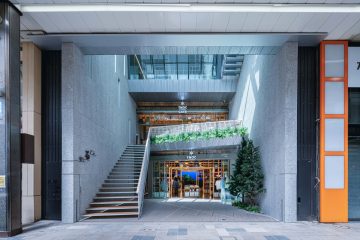
In the heart of Sapporo, the Tanuki Koji Shopping Street stretches approximately 900 meters from east to west under a covered arcade. Within this lively commercial strip stands the "TANUKI NOBORU Building," a small commercial structure designed entirely by MOTIVE Inc. (Takuya Wakizaki), wayfinding design. The project was conceived under unique site conditions, with three sides enclosed by neighboring buildings and only the front facing the pedestrian walkway of the arcade.

Photo credit: Ikuya SASAKI
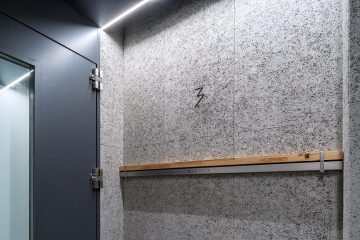
Due to these constraints, construction materials and waste could only be moved in and out during the short window between the arcade’s closing at night and reopening the next morning. The use of large cranes was also impractical. As a result, the architectural design had to account not only for aesthetics but also for the construction process and methods. One example is the use of cast-in-place formwork, in which the formwork panels—normally discarded after pouring concrete—were retained as the final surface finish. This approach reduced waste and minimized the amount of material transported to and from the site. Beyond these unseen measures, the building’s visible elements also stand out. While most shops in the arcade extend their façades toward the walkway to attract passers-by, this building pulls its façade back significantly, creating a distinctive atrium space within the covered street.
-

- Photo credit: Ikuya SASAKI

-

- Photo credit: Ikuya SASAKI

-

- Photo credit: Ikuya SASAKI

-

- Photo credit: Ikuya SASAKI

-

- Photo credit: Ikuya SASAKI

-

- Photo credit: Ikuya SASAKI

-

- Photo credit: Ikuya SASAKI

-

- Photo credit: Ikuya SASAKI

In Sapporo’s cold, snowy climate, this atrium draws valuable natural light deep inside, while also pulling in the energy and attention of the arcade. The wayfinding design by MOTIVE Inc. aligns with the architectural intent of “inviting light and liveliness.” The stone pavement in the atrium is laid diagonally, subtly suggesting a flow line from the arcade into the building. Selected tile joints are whitened to form lines that guide visitors inward while abstractly representing beams of light entering the space.
-

- Photo credit: Ikuya SASAKI

-
- Photo credit: Ikuya SASAKI

-

- Photo credit: Ikuya SASAKI

-

- Photo credit: Ikuya SASAKI

-

- Photo credit: Ikuya SASAKI

-

- Photo credit: Ikuya SASAKI

-

- Photo credit: Ikuya SASAKI

-
- Photo credit: Ikuya SASAKI

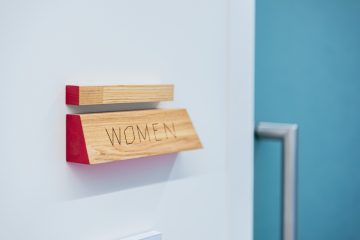
These “lines of light” extend to the elevator at the back of the building and continue to guide visitors to tenant entrances on each floor. Tenant nameplates are made using steel crosspieces originally employed to hold the concrete formwork in place during construction. The restroom signs, which look different from the side and the front, draw inspiration from Japanese folklore in which tanuki (raccoon dogs) transform to play tricks on humans—an apt reference for a commercial building in Tanuki Koji. The “ru” character in the building’s logo is a stylized depiction of a playful, shape-shifting tanuki hiding from view.

Photo credit: Ikuya SASAKI

Photo credit: Ikuya SASAKI

Photo credit: Ikuya SASAKI
About MOTIVE Inc.
MOTIVE Inc. was founded in Tokyo in 2019 by Takuya Wakizaki, specializing in orientation design, also known as environmental information design. Wakizaki believes that environmental “stimulus = information” can prompt human action, just as the direction of the sunrise, the scent of the tide, or the light at the end of a tunnel helps people navigate. The firm explores what kinds of information become a true “motive” for people to adapt and act in their environment, and how that differs from information that does not. Just as furniture designers study the human body to craft comfortable chairs, MOTIVE Inc. draws on human thinking and motivation to shape orientation design and environmental information design.

